A commercial building is an intricate machine for producing tiny mysteries. A room is too warm. An air-handling unit runs at the wrong hour. A meter begins telling an expensive story that nobody reads until the invoice arrives. The building knows something is amiss, but its knowledge is scattered across controllers, spreadsheets, maintenance logs and the institutional memory of the person who knows which ceiling tile to lift.
Deborah Noller has spent much of her career trying to gather those clues into one intelligible account. As CEO and co-founder of Switch Automation, she works in the unphotogenic territory between software and ductwork: the place where a cloud platform meets old equipment, where an alert meets a technician, and where a climate promise either becomes an operational decision or remains a handsome paragraph in an annual report.
Her current argument is also one she has made for years. Seeing a problem is not the same as solving it. In April 2026, Switch announced new operational capabilities developed with Lawrence Berkeley National Laboratory. The aim is to help buildings move beyond finding faults toward correcting some of them and optimizing controls at scale. After years of dashboards, Noller wants the dashboard to acquire manners: speak only when useful, and sometimes take care of the matter itself.
Before the cloud, there were national parks
Noller was born in Dunedin and grew up in Waimate and Christchurch, in a New Zealand family of builders and business owners. Her childhood included hiking through national parks on the South Island. She has described the environment of the 1970s as a durable memory, a baseline against which the following decades of consumption looked increasingly hard to ignore.
At university she first pursued national-park or environmental management, then found that technology suited her mind. She graduated from James Cook University in 1989 with a Bachelor of Commerce majoring in Computer Science. The combination is a neat preface to her career: environmental concern on one side, an appetite for systems on the other.
She became a software engineer. In 1992 she met John Darlington, also a programmer. Their first business handled logistics and freight tracking for large mining companies. It was the start of a partnership that Noller says has produced four businesses. The recurring theme was not any single industry. It was the leverage of code: a digital model could travel farther than a service that required another employee for every new customer.
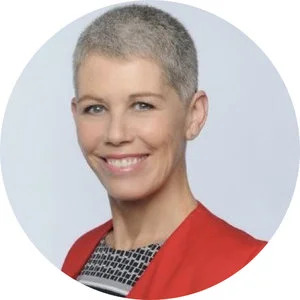
Noller began as a programmer, then accumulated the less orderly duties of a founder: sales, support, finance, fundraising, documentation and, by her own account, washing the dishes.
A garage turntable is not a business model
The path to commercial buildings ran through luxury homes. Around 2002, Noller and Darlington began exploring automation for residences and apartment projects. The work was technically rich and commercially unruly. Wealthy homeowners could request streaming video, panic rooms, security tunnels or a turntable in the garage so a car never had to reverse. Each house was a fresh opera, complete with a new libretto and wiring diagram.
The experience produced a valuable distinction. Their software might scale, but a market in which every installation was bespoke did not. They learned demanding integration work and learned, with equal force, which complications to avoid. By 2005 they had founded the business that became Switch Automation. By 2012 its focus had sharpened around a cloud platform for portfolios of commercial buildings.
Commercial real estate offered both a larger canvas and a stranger technical mess. A single owner might control offices, shops or other facilities built in different decades, each with its own building-management system, meters and naming conventions. Before analysis could be clever, the data had to be collected and normalized. One site's “AHU-2” had to become comparable with another site's equally important but differently named machine.
Selling Uber to the taxi drivers
Switch expanded into the United States in 2013. Noller spent much of her first year traveling along the West Coast, talking with companies that serviced buildings. Their economics were usually based on labor: win a contract, assign people, add a margin. Her proposition was delicate. Keep charging for expertise, she told them, but use technology to deliver the service faster, with better information and a closer customer relationship.
It is a funny line because it preserves the awkwardness. New technology rarely enters an old market as a neutral improvement. It rearranges who does the work, how value is measured and which expertise gets paid. The building engineer may welcome better diagnostics. The contractor may wonder whether efficiency shrinks the contract. Procurement wants proof. IT wants security. Operations wants the building to keep running throughout the experiment.
Noller learned that enterprise sales is partly an education program. She has also been candid about the difficulty technical founders can have with sales itself. The discipline has rules, measurement and repeatable practice, even if it initially feels less solid than code. She has built a sales team three times and found it difficult each time. Candor is one of her more useful operating habits; buildings contain enough concealed faults without the founder adding another.
Computer science graduate
Completes a commerce degree at James Cook University after beginning with an interest in environmental management.
Switch begins
Noller and Darlington found the automation business that will evolve toward commercial portfolios.
The American market
Switch expands into the United States and begins the long work of selling cloud operations into real estate.
Capital and Singapore
A $5 million round led by Gaw Capital supports growth, and Switch establishes a regional headquarters in Singapore.
From insight to action
Work with Berkeley Lab advances automated fault correction and control optimization.
The alert is not the outcome
For years, the smart-building industry has been good at generating findings. Analytics can identify an inefficient schedule, simultaneous heating and cooling, or a faulty component. Yet the promised saving exists only after somebody changes the operation. Noller's practical refrain is that nothing good happens unless a person knows where to turn a wrench. The current work adds a new possibility: for appropriate faults, software may turn the virtual wrench.
The collaboration with Berkeley Lab combines a structured building-data foundation with software designed to implement operational improvements. It also leans on open approaches such as the Brick ontology, a shared way of describing building assets and their relationships. The unshowy work of naming things correctly is what makes the more impressive automation possible.
This is also where Noller's climate concern becomes concrete. She frequently points to the large share of global energy used by buildings, especially heating and cooling. Her aim is not to turn every lobby into a science-fiction set. It is to eliminate waste from ordinary operation: equipment running when it need not, faults persisting unnoticed, and portfolio managers unable to compare one site with another.
The founder after the many hats
At a small Switch, being CEO meant coding, bookkeeping, marketing, customer support, documentation, finance, fundraising and the occasional plate. Growth allowed specialists to take those jobs. Noller's work shifted toward capital, strategy, senior leadership and hiring. She remains emphatic that technology does not create change alone. In a 2025 post, she wrote that the team brings the magic to Switch.
Her public portrait has a few welcome non-building details. She likes cycling and strong coffee. She mentors young women in technology. She was named to Dell's Founders 50, recognized among Rare Birds' Top 50 Female Entrepreneurs in Australia, and selected for Unreasonable Impact Americas in 2019. James Cook University gave her its Chancellor's Award in 2017.
There have also been strategic adaptations. Switch established a Singapore base after its 2020 funding round. In 2023 it chose non-dilutive financing to extend runway without another equity round, a pragmatic response to a harder market. Noller's ambition remained expansive: she has said success would mean Switch becoming a global standard across tens of thousands of buildings. Her advice to founders, meanwhile, is sober. This is a marathon. Take care of family and friends. If one plans to enter smart buildings, bring the ordinary entrepreneur's resilience and multiply it by 100.
The ambition sounds grand until it returns to the room. A valve adjusts. An operator receives fewer meaningless alarms. A tenant does not notice the temperature because the temperature is fine. Successful building technology may leave no anecdote at all, only a lower bill and a machine behaving itself. Noller has spent two decades making buildings easier to hear. Now she wants them to develop the good sense to answer.