modular-construction
(21)
Schelton Assoumou and the price of staying put
A former J.P. Morgan banker brings the machinery of real estate finance to a neighborhood question: can a home become more valuable while its owner keeps a place in the community?

The Building Goes Up When the Joint Comes Down
ConXtech sells an unusual construction bargain: spend more thought on a steel connection before the truck arrives, and spend fewer days joining beams in the sky. Its record shows how a small piece of geometry can change a very large schedule.
The Factory Hidden Inside a Skyscraper
FullStack Modular began with a 32-story experiment that ran late, went to court, and still changed what a factory-built building could be. Now the company is betting that the lesson was never “build boxes faster” - it was “redesign the whole sequence.”

Emily Marineau Wants Construction to Show Its Math
The Juno co-founder moved from Wall Street and Apple into the stubborn economics of housing. Her method is simple to describe and difficult to fake: define the cost, locate the risk, and make every elegant idea survive the spreadsheet.

CiNQ Builds the Rooms Where Industry Never Sleeps
The Dubai engineering group turns drawings into E-houses, offshore living quarters and chilled-water tanks - the quiet infrastructure that keeps power, people and data centers running.
The Fund Betting That the World's Oldest Industry Is Finally Ready to Change
While most venture money chased apps and ad clicks, a small Atlanta firm went looking for founders willing to fix concrete, steel and 3D-printed homes. Here is how Shadow Ventures built a thesis around the industry software forgot.

The VC That Bet the Cost Curve of a Building Can Bend
Two lifelong construction-tech investors raised $148 million, then handed their startups something rarer than money - a rolodex of the general contractors, builders, and design firms who become their first customers.

M.C. Dean, Inc.
The 77-year-old family company has turned electrical contracting into a $3 billion cyber-physical infrastructure business - one that builds critical systems in a factory before they ever reach the job site.
BASE4 - Architects, Engineers, Designers
A Boca Raton firm decided architecture should behave more like a factory than an atelier - so it wired together designers on four continents into a 24-hour workday and pointed the whole thing at one goal: build faster and cheaper.
Zekelman Industries
Most steel companies stop at the loading dock. Zekelman follows the material into warehouses, job sites and even finished apartments - a 149-year industrial lineage betting that control of the chain can make American construction faster and more predictable.

Dextall
Dextall is a New York-founded construction technology company that pairs proprietary design software with factory-built, unitized prefabricated exterior wall panels for mid- and high-rise buildings. Its platform turns architectural concepts into fabrication-ready models and delivers a modular facade system manufactured by regional partners, cutting design-to-install timelines and on-site labor while improving building energy performance. The company raised a $15M Series A in July 2025 to expand its AI-powered prefab platform and address the housing crisis.

Aditazz, Inc.
Aditazz is a Silicon Valley technology company that borrows the automated, rule-based workflows of semiconductor chip design and applies them to the design and construction of complex buildings. Its SaaS platform captures human engineering and architectural expertise as design rules, then uses algorithms and digital twins to generate, simulate and optimize building layouts before a single wall is built. Founded in 2010 by chip designer Deepak Aatresh and architect Zigmund Rubel, the company first targeted healthcare facilities - winning Kaiser Permanente's 'Small Hospital, Big Idea' competition - and has since applied its methods to hospitals, labs, and other infrastructure across the U.S., China and India.

Offsight
Offsight is a San Francisco software company building a project management and production platform for the offsite construction, modular and prefab industry. Its mobile-first software helps factories and specialty contractors track production, quality, materials and labor in real time - replacing the spreadsheets that engineered-to-order manufacturers have long relied on. Founded in 2014 by Vikas Murali and Andrew Xue, the company raised a $2.5M seed round and counts large builders like Performance Contracting Inc., McCarthy Building Companies and Z Modular among its customers.

Vikas Murali
Vikas Murali is the co-founder and CEO of Offsight, a San Francisco software company that gives prefab, modular and offsite construction factories real-time visibility into production, quality, materials and labor. A University of Pennsylvania systems engineer who cut his teeth shipping enterprise software at Texas Instruments and Barclays, Murali spent years as a consultant watching engineered-to-order manufacturers run multimillion-dollar projects on brittle spreadsheets. In 2020 he and co-founder Andrew Xue built Offsight to replace those spreadsheets with mobile-first tracking, betting that the factories building the future of housing need to prove they actually deliver on speed, cost and quality.
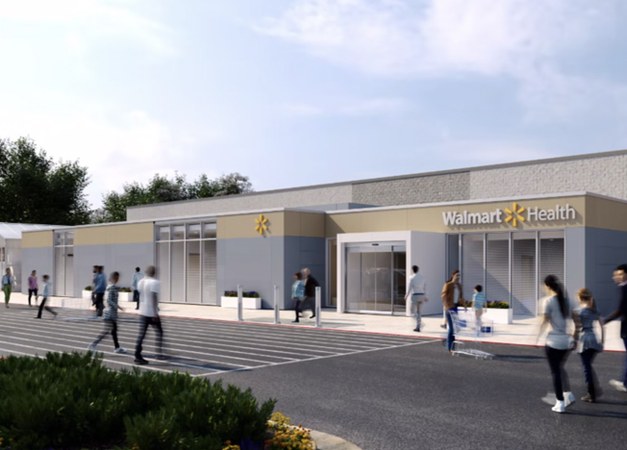
BLOX
BLOX is a Bessemer, Alabama company that builds hospitals the way Detroit builds cars. Using its own Design Manufacture Construct (DMC) method, BLOX engineers and fabricates complete medical modules - patient rooms, exam rooms, trauma centers, headwalls and bathrooms - inside a million-square-foot former railcar factory, then ships them across the country to be assembled on site. Founded in 2010 out of architecture firm GA Studio, BLOX has grown to roughly 600 employees and bills itself as the largest manufacturer of modular healthcare buildings in the United States.
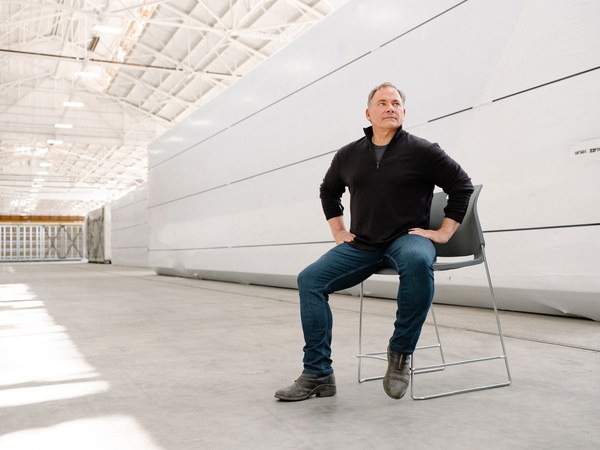
Chris Giattina
Chris Giattina is the founder and CEO of BLOX, a Bessemer, Alabama company that builds hospitals the way Detroit builds cars. A University of Pennsylvania-trained architect who runs the family firm Giattina Aycock (GA Studio), he turned a former Pullman railcar plant into a million-square-foot factory where acute-care medical facilities are designed, manufactured, and assembled using his Design-Manufacture-Construct (DMC) method. His pitch is a clean equation: buildings at twice the quality, twice the speed, and twice the value - what he calls 2x2x2.
Reframe Systems
Reframe Systems is a Massachusetts robotics and AI company building net-zero, climate-resilient homes through a network of small, regional 'microfactories.' Founded in 2022 by three former Amazon Robotics leaders, it pairs proprietary 'pixels to parts' design software with vision-guided robotic workcells to mass-customize modular housing - cutting construction costs by roughly 35% and deploying homes in about 100 days. The company aims to make high-performance housing economically viable and to build one million resilient homes globally by 2045.

Neil Rubler
Neil Rubler is the founder and CEO of Vessel Technologies, a New York company that mass-produces small, prefabricated, solar-ready apartment buildings and sells them through the housing industry's first franchise model. After two decades running large multifamily real estate firms - Vantage Properties and then Candlebrook Properties, which oversaw more than $3 billion in assets across seven states - he left conventional development behind in 2017 to attack the so-called Missing Middle: people who earn too much for subsidized housing and too little for market rate. A Wharton MBA and magna cum laude Cornell graduate, Rubler treats housing like a manufactured product rather than a construction project, aiming to build higher-quality homes faster, cheaper, and more sustainably.

Joe Garcia
Joe Gebbia co-founded Airbnb in 2008 out of a San Francisco living room - air mattresses, breakfast included - and turned a half-crazy idea into an $85B company. His current venture, Samara, builds factory-assembled, solar-ready backyard homes (ADUs) that go from permit to move-in in under seven months. In early 2025 he became America's first Chief Design Officer, tasked with redesigning the federal government's 27,000 websites. A Rhode Island School of Design graduate with dual majors in graphic and industrial design, Gebbia approaches every problem - housing affordability, government UX, refugee shelter - through the lens of democratic, empathetic design.
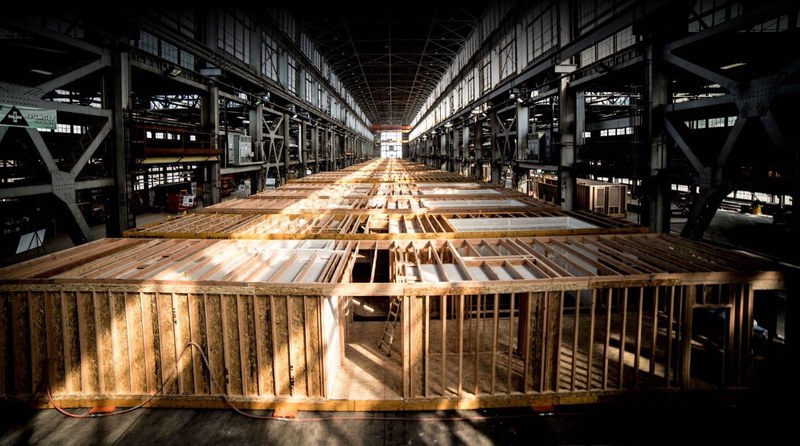
Factory OS
Factory OS is a Vallejo, California modular-housing manufacturer that builds wood-frame multifamily apartments inside a former Mare Island Navy shipyard. Co-founded in 2017 by affordable-housing veteran Rick Holliday and contractor Larry Pace, the company treats apartments like cars: rolling them down an assembly line with union labor, cutting build times by ~40% and costs by 20–40% compared with conventional construction.

Rick Holliday
Rick Holliday is a San Francisco Bay Area real estate developer and social entrepreneur with nearly 50 years of experience building affordable and market-rate housing. He co-founded Factory OS in 2017 to revolutionize multifamily housing production through factory-based modular construction, securing $77.7M in funding from Google, Autodesk, Facebook, and Citi. His career spans co-founding Eden Housing (1978), BRIDGE Housing (early 1980s), and Holliday Development (1988), where he pioneered live-work loft conversions in SoMa. Factory OS, located in a former WWII submarine shipyard on Mare Island in Vallejo, demonstrated 40% faster delivery and 20-30% cost savings over traditional construction.