The early sales problem was a tea kettle. Charles Martin Hall had found a cheaper way to make aluminum, but manufacturers were reluctant to build with an unfamiliar metal. So the Pittsburgh Reduction Company, the business that became Alcoa, developed prototype products. A kettle gave an abstract discovery a handle. Here was something a customer could recognize, pick up, and imagine making.
- Alcoa supplies the industrial ingredients: bauxite, alumina, and cast aluminum.
- Its Sustana products already offer lower-carbon and recycled-content options.
- ELYSIS changes smelting chemistry; industrial testing still has work to do.
First, make it cheap
Hall’s invention arrived in 1886. Working in Ohio, with help from his sister Julia, he discovered how to extract aluminum through electrolysis using molten cryolite. Water had been an unhelpful starting point: the current broke it into hydrogen and oxygen. Changing the medium changed the result. Paul Héroult reached the same principle independently in France.
In 1888, Hall and Pittsburgh investors led by Alfred E. Hunt established their company. The chemistry needed money, equipment, and customers. The Science History Institute records that the initial investment ran out before Mellon banking resources helped support the young business. A successful experiment could still exhaust its bank account.
The price tells the story. Aluminum ingots fell from $4.86 a pound in 1888 to 78 cents in 1893 as Hall improved the process. The metal became easier to buy, which made it easier to experiment with, which gave manufacturers more reasons to buy it.
Nominal price per pound of aluminum ingot. Bar lengths share a zero baseline; figures are historical dollars.
The business before the beverage can
Today’s Alcoa sits near the beginning of that manufacturing chain. It mines bauxite, refines the ore into alumina, then uses electricity to turn alumina into aluminum. Casthouses shape the metal into products such as billet, slab, foundry alloys, and wire rod. Other companies do much of the work that turns those forms into recognizable objects.
Its buyers include smelters, chemical producers, extruders, rolling mills, and cable manufacturers. Their requirements are wonderfully unromantic: the correct alloy, dependable delivery, usable dimensions, a competitive price. Alcoa earned $12.831 billion in revenue in 2025 by serving industrial demand. This is a business of supply contracts, commodity prices, product premiums, and operating costs.
- 01BauxiteMine the ore
- 02AluminaRefine the oxide
- 03AluminumSmelt + cast
The familiar name also hides a corporate distinction. The industrial lineage goes back to 1888; the present independent Alcoa Corporation emerged from the 2016 separation from its former parent, renamed Arconic. Its territory is upstream. Competitors include Rio Tinto, Hydro, Emirates Global Aluminium, and Century Aluminum. Access to raw materials and affordable, reliable power helps determine who can supply metal profitably.
Three products. Three different promises.
Alcoa’s Sustana family makes the buying choices more specific. EcoLum is primary aluminum with a stated Scope 1 and 2 emissions intensity below 3.5 metric tons of carbon dioxide equivalent per ton of metal, covering mining through casting. Its separately stated cradle-to-gate footprint is below 5.0. The accounting boundary belongs beside the number.
EcoSource addresses alumina: its supplying refinery portfolio averages below 0.6 tons of carbon dioxide equivalent per ton, covering Scope 1 and 2 mining and refining emissions. EcoDura addresses material inputs, with at least 50 percent pre-consumer recycled content, calculated through a product-line and facility credit allocation system. Each specification answers a different purchasing question.
Consider Prysmian, the cable maker. Its EcoLum supply agreement was extended through 2026 to support European electrification projects. Electric trucks also began handling the final delivery leg from Rotterdam to Delft. The relationship makes Alcoa’s proposition tangible: a manufacturer can change its material supply and logistics while continuing to make cables.
The anode is the plot twist
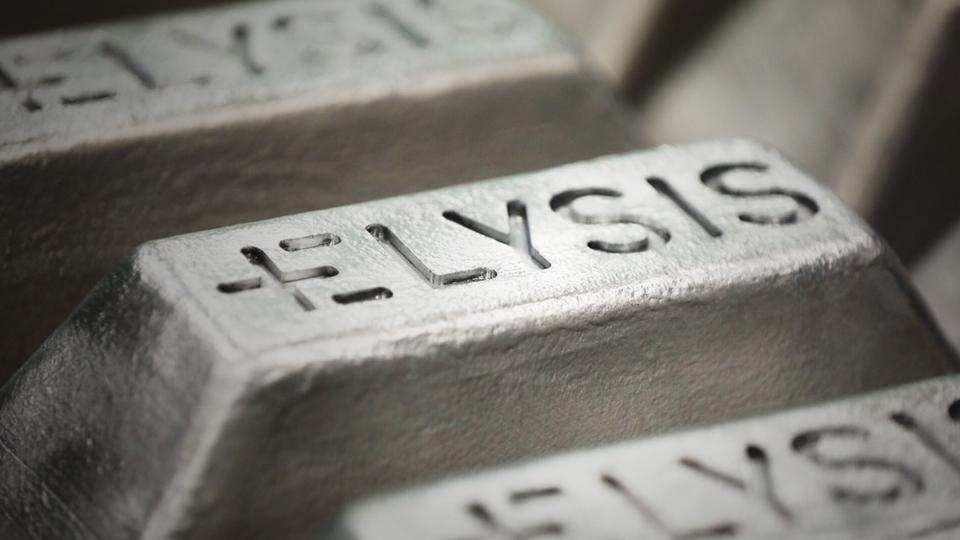
Electricity is only part of aluminum’s carbon problem. Traditional smelting consumes carbon anodes, producing carbon dioxide. ELYSIS replaces those anodes with proprietary inert materials; the process releases oxygen instead. Alcoa developed the underlying technology and joined Rio Tinto to advance it through a venture announced in 2018.
The launch brought a combined C$188 million investment commitment from the companies, Canada, Québec, and Apple. Apple helped bring the industrial partners together. That figure describes the announced launch investment; industrial development continued for years afterward.
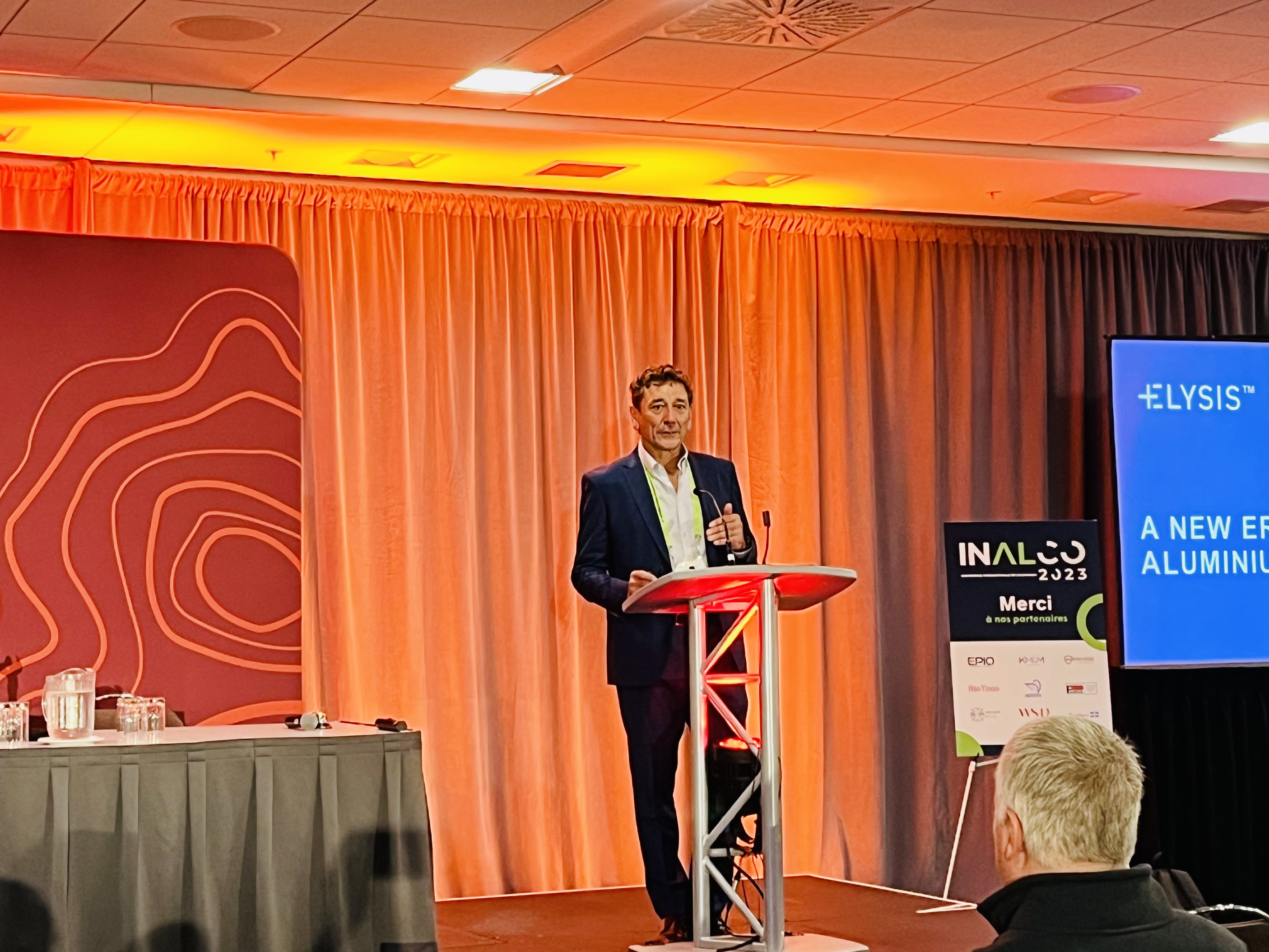
In November 2025, ELYSIS started a cell designed for 450 kiloamperes at Rio Tinto’s Alma smelter. Bill Oplinger described being “one step closer to bringing the technology to market.” The wording is useful. The cell was built for industrial demonstration, with further testing to gather deployment data. Removing direct smelting emissions still leaves mining, refining, electricity, and transport to account for.
“one step closer to bringing the technology to market”Bill Oplinger · November 2025
The bill for changing course
Another Alcoa facility supplies the less photogenic side of reinvention. The Kwinana refinery in Western Australia lost approximately $130 million before tax and noncontrolling interests in 2023. Management cited age, scale, operating costs, bauxite grades, and market conditions when announcing curtailment. Production stopped in June 2024. Permanent closure was announced in September 2025.
Alcoa’s 2025 annual report records $895 million in closure-related charges. Accounting charges differ from cash payments, but either measure defeats the pleasant fiction that an old industrial asset disappears when production stops. Rehabilitation, retirement obligations, and workforce changes remain. The company’s published safety and environmental policy explicitly places those responsibilities ahead of profit or production.
The contrast is instructive. A new process has to establish its operating life; an old plant has to justify extending its own. Both decisions depend on costs that sit beyond the headline price of a ton of metal. Buyers inherit the consequences through supply reliability, pricing, and the evidence behind environmental claims.
Buy the evidence
Alcoa is also buying capacity and control. Its 2024 Alumina Limited acquisition implied roughly $2.8 billion in equity consideration. By October 2026, the proposed AliGroup purchase had South32 shareholder approval, with closing expected in early 2027. Third-quarter revenue reached $3.704 billion. Expansion, closure, and technology development are happening together.
For a manufacturer, the practical lesson is to ask for the alloy specification, delivery terms, and verified footprint boundary together. For anyone building a business, the kettle offers another lesson: give customers a concrete application, then prove the process at operating scale. Cheap, reliable power and durable equipment remain essential. Cleaner chemistry earns its place when a customer can keep making something useful with it.
Alcoa website ↗ · Sustana products ↗ · Newsroom ↗ · ELYSIS ↗
LinkedIn · X · Instagram · Facebook · Watch Alcoa on YouTube ↗