In 1955, a DuPont researcher named Jim White noticed white polyethylene fluff coming out of a pipe. It was an odd beginning for a material that would eventually stand between a medical device and the microbes outside its package. Before it could do that, however, somebody had to turn fluff into a repeatable manufacturing process. Commercial production of Tyvek began in 1967. The accident was quick. Making it useful took twelve years.
- DuPont supplies the materials inside other companies’ products and processes.
- Water and healthcare now sit at the center of a narrower portfolio.
- Its useful lesson: test the entire application, including the cost of failure.
A useful accident, twelve years later
Those twelve years complicate the familiar invention story. There was a pilot facility in 1959. There were trials involving book covers, labels and garments. There was flash-spinning technology, developed by DuPont scientist Herbert Blades, and equipment built to exacting tolerances. A curious observation needed a factory, trained operators and a reason for customers to care.
The reason arrived in several forms. Tyvek could become a building’s weather barrier, protective clothing or healthcare packaging. The material is a nonwoven polyethylene sheet, combining breathability with resistance to water and bacterial penetration. Different applications require different products and testing. The white surface is the family resemblance; the engineering underneath determines the job.
For medical packaging, timing helped. In the late 1960s and early 1970s, hospitals faced pressure to reduce the labor involved in re-sterilizing devices. Manufacturers were developing disposable devices sterilized before use. A package that could help preserve sterility had become part of the healthcare problem. DuPont had a material looking for useful work. Healthcare had useful work waiting for a material.

The business behind the wrapper
The name reaches back to 1802, when Éleuthère Irénée du Pont founded a gunpowder business near Wilmington. The present legal entity emerged from a much later corporate reorganization. That distinction matters: a company can inherit an industrial tradition while its collection of businesses changes. DuPont’s stated values now emphasize safety, respect, accountability, improvement and customer problem-solving. Those are promises against which customers and employees can judge the operation.
This is a good way into present-day DuPont. Its customers include medical-device manufacturers, packaging converters, water-system builders and industrial operators. The company sells materials and components that those customers incorporate into something else. A patient may encounter the result without ever making a DuPont purchase.
Healthcare extends beyond packaging. Liveo supplies silicone materials for medical devices, pharmaceutical uses and bioprocessing. Spectrum and Donatelle bring component development and manufacturing capabilities. On the industrial side, Corian surfaces, MOLYKOTE lubricants and building-envelope products address very different jobs. Their connection is practical expertise in how materials behave under demanding conditions.
“We solve problems for customers”
DuPont’s stated core values
That statement is also a useful test of the business. The customer needs evidence that a component will work inside a larger process. DuPont emphasizes application development, technical collaboration and testing. Its competitive position rests partly on the distance between supplying a sample and helping a manufacturer put it reliably into production.
The water business that stayed
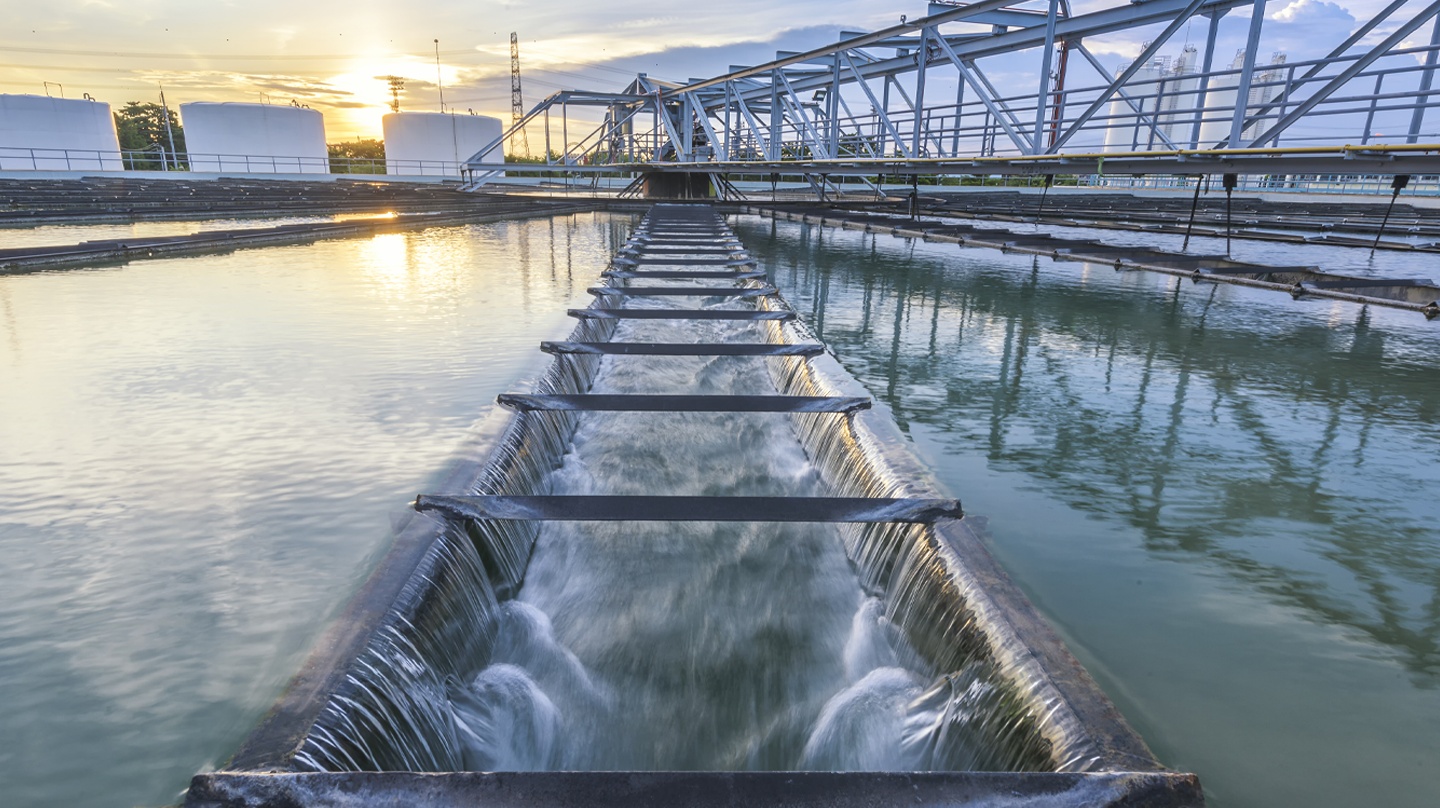
Water makes the argument tangible. FilmTec membranes serve reverse-osmosis and nanofiltration applications. Amberlite resins handle ion exchange. Other products provide ultrafiltration. Together, these technologies can address drinking water, desalination, industrial water and reuse. They operate at different stages and solve different separation problems; choosing among them requires understanding the incoming water and the required result.
Conceptual workflow, not a universal treatment specification.
DuPont’s WAVE PRO software lets engineers model multiple treatment technologies in one environment. That makes the surrounding system part of the sales conversation. A membrane competes with alternatives from suppliers including Toray and Nitto Hydranautics. The meaningful comparison includes cleaning, energy, recovery and replacement, alongside the purchase price.
Water nearly left the company. In May 2024, DuPont announced plans to separate both water and electronics. In January 2025, it reversed the water decision, saying its review of strategic alternatives favored keeping the business. Electronics did leave, becoming independent Qnity in November 2025. The contrast shows management changing the boundary of the company while keeping a business it had previously marked for departure.
Buying focus, paying for mistakes
Some changes arrived with substantial checks. The net purchase price for Spectrum was approximately $1.781 billion. Donatelle cost $365 million, including the initial estimated value of contingent consideration. These purchases added healthcare manufacturing capability. They also show that a materials company can buy expertise closer to the finished medical device.
Other checks bought no operating business. DuPont terminated its proposed Rogers acquisition in November 2022 after timely regulatory clearance could not be obtained. The termination fee was $162.5 million. Even a company with considerable technical knowledge cannot engineer away every condition attached to a transaction.
- $1.781bn
- Spectrum net purchase price
- $365m
- Donatelle net purchase price
- $162.5m
- Rogers termination fee
The portfolio continued shrinking in April 2026, when DuPont sold the Kevlar and Nomex aramids business to Arclin in a transaction valued at approximately $1.8 billion. Remembering a famous invention is therefore a poor guide to identifying today’s supplier. The company now organizes around Healthcare & Water Technologies and Diversified Industrials.
Focus does not erase history’s costs. DuPont’s 2024 filing records a $400 million contribution, plus interest, to the public-water-system PFAS settlement fund. That payment belongs beside the innovation story. For an industrial materials company, responsibility can continue long after a product or corporate structure changes.
A better question for the buyer
There is something readers can borrow here without buying a factory: identify the failure your customer cannot tolerate, then design around the whole application. For a packaging team, that means validating protection and processing together. For a water engineer, it means characterizing the feed stream before choosing a membrane. Brand recognition cannot replace those steps.
The approach has limits. A specialty material earns its place only when its performance justifies the expense and fits the operating conditions. In September 2026, DuPont launched renewable-attributed Tyvek for consumer and industrial uses, preserving product specifications while changing feedstock attribution through certified mass balance. The proposition was revealing: change the sourcing, spare the customer a redesign. Even after the laboratory breakthrough, usefulness remains the real assignment.
Follow the material
Explore the products, engineering tools and people behind them.