A chemical plant has an awkward habit: it ignores the sales department. Feed salt and electricity into a chlor alkali process and you get chlorine, caustic soda and hydrogen together. You cannot tell the equipment that chlorine is having a wonderful quarter and caustic soda should kindly wait until Tuesday. Chemistry sets the proportions. Someone has to find the customers.
That someone, on a considerable scale, is Olin. The company makes materials that sit several steps behind familiar things: treated water, protective coatings, wind turbine blades and PVC. Then there is Winchester ammunition. The portfolio can look like an industrial attic until you examine how it accumulated, and what the chemical businesses share.
- Chlorine and caustic soda are made together, but sold into different markets.
- Olin combines production, downstream chemistry and distribution to find outlets for those materials.
- Its proposed Huntsman merger extends that integration argument; the benefits remain projections.
01 The other half of the reaction
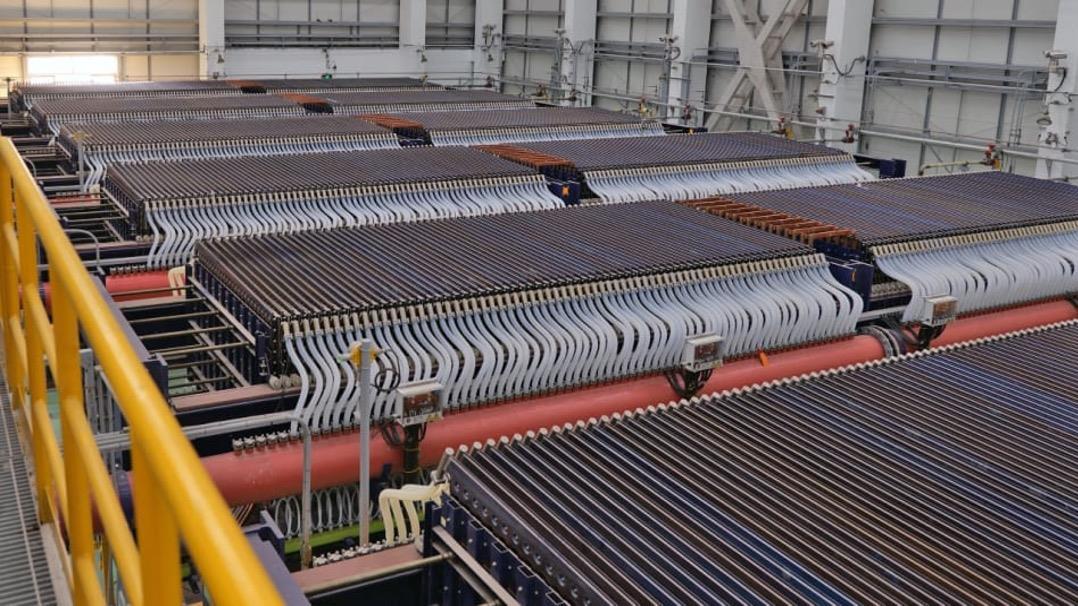
The fixed ratio is the revealing detail. Producing one ton of chlorine also produces about 1.1 tons of caustic soda and 0.03 tons of hydrogen. In the trade, this bundle is an electrochemical unit. For management, it creates a balancing act: the factory delivers a package, while customers buy separate ingredients.
Olin’s answer is to give those ingredients more destinations. Chlorine can enter downstream chemical production. Caustic soda has its own industrial buyers. Epoxy adds another chain of materials and applications. The strategic attraction is straightforward: more outlets create more choices about where production might earn its keep. They do not guarantee attractive prices.
Delivery belongs in this explanation. Chlorine is not a casual parcel. Olin markets a distribution and logistics network alongside the molecule itself. For a buyer trying to keep a treatment process or factory running, reliable supply and suitable handling matter as much as a tidy product specification.
02 A $5.1 billion change of shape
Olin began in 1892 as a blasting powder supplier in East Alton, Illinois, founded by Franklin W. Olin. Winchester joined in 1931. The 1954 merger with Mathieson established another important branch of the family tree. This was a company built through industrial combinations long before anyone could put its strategy on a presentation slide.
The defining modern transaction came in 2015. Olin acquired Dow businesses spanning chlor alkali, vinyls, chlorinated organics and epoxy. The aggregate purchase price was approximately $5.1 billion, including cash and debt securities, shares, pension liabilities and assumed debt. Calling it a cash purchase would miss much of the bill.
What did Olin actually buy? Production assets, certainly, but also a broader set of chemical pathways. Today, its epoxy offering reaches coatings, construction, electronics, adhesives and composites. AIRSTONE systems, for example, serve wind blade infusion, hand layup, tooling and bonding. The useful product is specialized chemistry that helps a manufacturer make a component with the required properties.
03 The venture that changed direction
In January 2023, Olin and Mitsui began operating Blue Water Alliance, a trading venture focused initially on caustic soda and ethylene dichloride, or EDC. The proposition paired Olin’s production and export capabilities with Mitsui’s logistics and commercial relationships. It was an attempt to improve the route from factory output to global buyer.
By September 2025, the partners had announced plans to end the venture by year-end. Olin described a shift toward longer-term structural opportunities. In November, it announced a long-term EDC supply agreement with Braskem, supporting the Brazilian producer’s vinyls business. Olin explicitly connected the Blue Water dissolution with redirecting EDC toward these relationships.
The documented change concerns the commercial model. Rather than assume a trading arrangement would remain the right answer, Olin moved toward a more durable connection with downstream demand. For another business, the copyable question is useful: could an existing output serve a better customer through a different kind of agreement?
“We deliver essential materials and solutions that enhance and protect lives.”Olin’s stated corporate purpose
04 Factories still get the final vote
The caution arrives in the accounts. Olin reported $6.78 billion in 2025 sales, up from $6.54 billion in 2024, but a $100.5 million net loss attributable to the company. Higher sales did not settle the argument about profitability. The chemical and ammunition businesses remain exposed to pricing, demand and operating costs.
In the second quarter of 2026, an unplanned shutdown at the Freeport vinyl chloride monomer plant reduced adjusted EBITDA by about $40 million. Management expected a further roughly $20 million third-quarter effect when reporting those results. A downstream outlet is useful only when the equipment connecting it to the business works.
Safety is part of that operating discipline. Olin’s product stewardship policy includes hazard information, customer handling guidance and the possibility of stopping business with customers unwilling to correct improper practices. For these products, a distribution advantage depends on competent handling throughout the chain.
05 One more connection, still pending
Winchester serves a different set of buyers: recreational shooters, hunters, law enforcement and militaries. Its business includes operating the government-owned Lake City Army Ammunition Plant. That contract model adds another dimension to Olin’s expertise: running specialized manufacturing for an institutional customer with continuing readiness requirements.
Now comes another proposed combination. In June 2026, Olin and Huntsman announced an all-stock merger, projecting more than $400 million in cost synergies and integration benefits. Shareholders approved the transaction in August; the U.S. antitrust waiting period expired in September. Other approvals and closing conditions remained in that announcement.
The rationale returns to the factory’s original problem: connect upstream materials with more downstream uses. Whether those connections pay depends on demand, execution and operating reliability. Olin’s lesson is practical. Before building more capacity, examine the destinations for everything the existing process makes. The second product deserves a strategy of its own.