A golf car and a military tiltrotor have very little to say to each other. One gets you to the ninth hole. The other is being developed to move soldiers across distances that stretch the usefulness of conventional helicopters. Yet E-Z-GO and Bell have shared a parent since 1960. That parent, Textron, made a business out of such unlikely company. Now it is reconsidering the arrangement.
- Aircraft lead: Textron Aviation and Bell supplied 69.2% of 2025 revenue.
- Customers shape the hardware: FedEx helped define the SkyCourier.
- The next decision: a proposed Industrial separation, with a sale process underway.
In April 2026, Textron announced plans to separate its Industrial segment, including E-Z-GO and automotive supplier Kautex, from its aerospace and defense businesses. By July, a sale process had begun. The company that helped establish the conglomerate is proposing a narrower future. To understand why, start with the industry it abandoned first: textiles.
01 /The yarn ran out
Royal Little founded Special Yarns Corporation in Boston in 1923. First-year sales were $75,000. During World War II, the business made parachutes and other military textiles. Peace brought a familiar manufacturing problem: fewer government orders and too much capacity. Little responded by controlling more of the production chain and switching into consumer goods, from lingerie to bed linens.
Then textile demand declined again. In 1952, Little began diversifying into businesses outside textiles, using the existing operations as an earnings base. The underlying vulnerability was demand. Getting better at making one thing could not guarantee that people would keep buying it.
Bell and E-Z-GO arrived in 1960; Textron left textiles in 1963. Cessna followed in 1992, Beechcraft in 2014. The portfolio gradually developed an aviation center of gravity. In 2025, Textron Aviation and Bell together generated 69.2% of revenue. The golf cars were memorable. Aircraft paid most of the bills.
02 /The customer brought the cargo
Textron makes equipment for people with specific work to finish. Flight schools need trainers. Charter operators need jets. Freight companies need lift between smaller markets. Governments need surveillance, military training, armored vehicles, and marine craft. Its Aviation business spans Cessna Citation jets, Caravan and SkyCourier utility aircraft, and Beechcraft King Air turboprops. Bell supplies commercial and military rotorcraft; Textron Systems handles defense equipment and services.
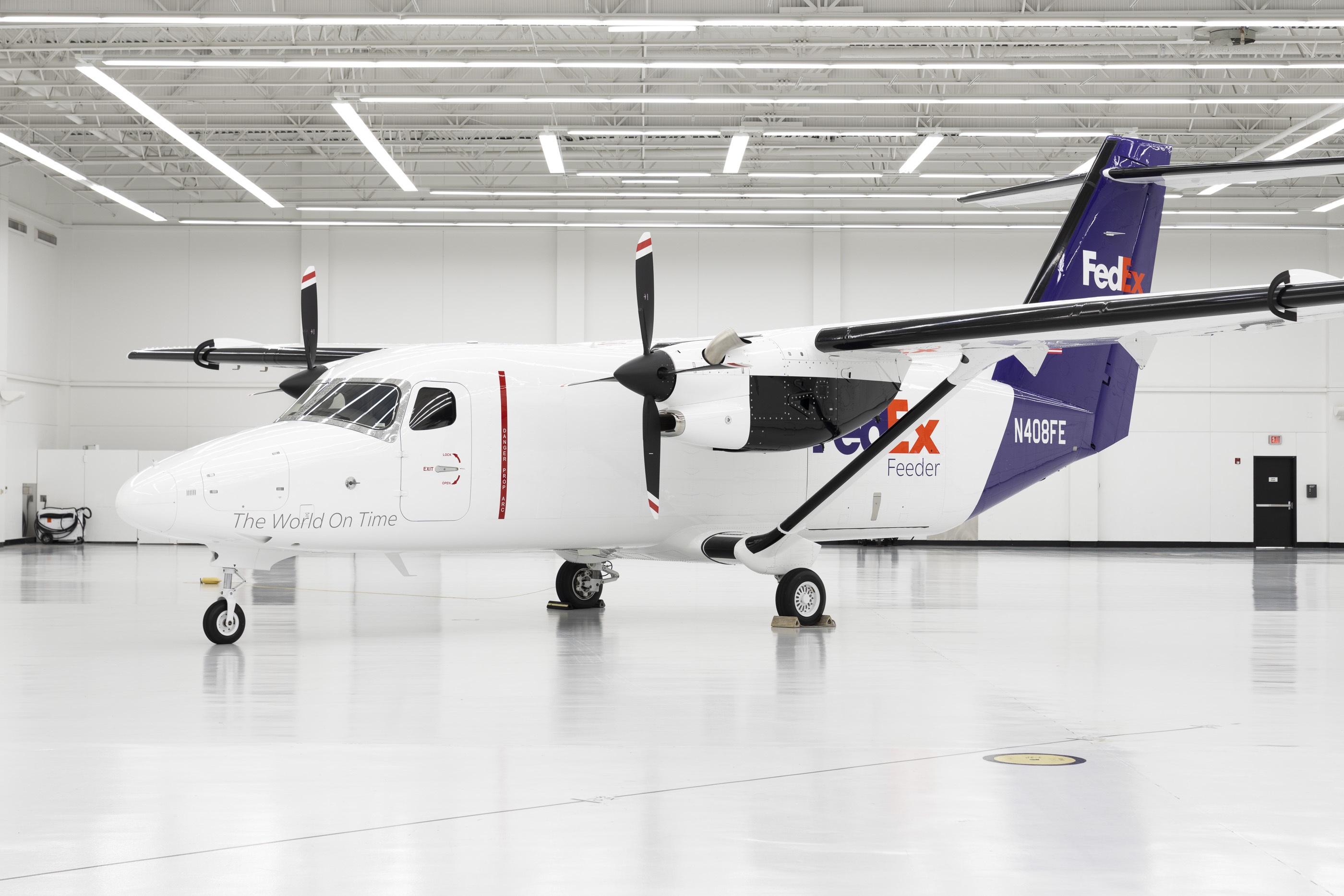
The SkyCourier offers a particularly useful lesson in product development. FedEx ordered 50 freighters, with options for 50 more, and put its design and engineering people on the customer advisory board. The resulting aircraft could accommodate three standard LD3 cargo containers. Freight could move into a smaller airplane without being unpacked into a different logistical universe.
The first delivery came in May 2022. For an operator, the purchase extends beyond the airframe: parts, maintenance, training, and sometimes financing matter too. Textron sells new equipment, earns aftermarket revenue, supplies contracted defense work, and provides customer financing through Textron Financial. Keeping machinery useful is part of the business model.
There is no single Textron rival. Citation buyers can consider Embraer; Bell competes with rotorcraft manufacturers including Airbus Helicopters and Leonardo. Textron’s distinguishing feature is its combination of general aviation, military rotorcraft, and defense systems, backed by manufacturing and support operations. Whether that breadth helps a buyer depends on the particular mission.
03 /Buying time, at a price
Building that range required money. The announced Beechcraft deal was approximately $1.4 billion; Textron’s 2014 annual report records an aggregate closing cash payment of about $1.5 billion, including repayment of part of a working-capital facility. The difference matters: the headline price and the cash required to finish a transaction can describe different things.
The Pipistrel acquisition in 2022 added another kind of expertise. The annual filing records a $239 million purchase price, including assumed debt and contractual obligations. Pipistrel brought light aircraft and an electric trainer, the Velis Electro, with European type certification already achieved.
Its practical appeal has boundaries. Pipistrel describes a typical endurance of about 50 minutes and a charging time of roughly 80 minutes. That suits local training more readily than lengthy cross-country flying. A school needs charging infrastructure and a schedule that accommodates the battery. The useful idea is to fit new technology to a task it can complete today.
Acquisition spending also buys continuing obligations. Textron reported $521 million in research and development spending and $383 million in capital expenditures for 2025. Engineering capacity requires a recurring budget. Owning the brand is only the beginning.
04 /The factory gets a vote
A diversified balance sheet cannot assemble an airplane. In September 2024, machinists struck Textron Aviation. A new five-year agreement was reached in October, but the disruption delayed deliveries and created manufacturing inefficiencies. Fourth-quarter Aviation revenue fell $242 million from a year earlier. Orders and capacity are separate problems.
Elsewhere, softer powersports demand prompted a production pause and strategic review. Textron sold that business, including Arctic Cat, in April 2025. These episodes expose two different limits: customers can stop buying, and factories can stop delivering. A broad portfolio does not remove either risk.
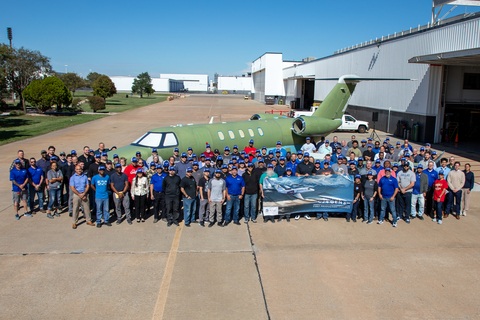
Textron names integrity, respect, trust, and the pursuit of excellence among its values. Its approximately 34,000 employees turn those words into engineering, assembly, and service work. Lisa Atherton, who became CEO in January 2026 after leading Bell and Textron Systems, inherited both the product opportunities and the operating constraints.
05 /The company inside the conglomerate
Bell’s selection for the Army’s Future Long Range Assault Aircraft program in December 2022 helps explain the attraction of greater aerospace focus. The Army described a $1.3 billion contract; the program is now known as MV-75 Cheyenne II. It offers a long development horizon, with the funding and execution demands that accompany one.
The separation proposal reflects management’s stated view that Industrial and aerospace serve distinct markets with different investment requirements.
“This planned separation creates greater clarity and focus for both businesses.”
Lisa M. Atherton / April 2026
Textron targeted completion within 12 to 18 months of the April announcement, subject to approvals and other conditions.
Meanwhile, products keep advancing. On October 20, 2026, Textron announced the first production Citation CJ4 Gen3 rollout, with certification work continuing. The following day, Civil Air Patrol ordered 21 Cessna aircraft for emergency response, training, and community missions.
The lesson for another business owner is conditional: involve customers before freezing the design, budget for support after delivery, and reconsider which activities deserve shared ownership. Separation helps only if the resulting businesses can stand on their own. For Textron, the next test is whether fewer kinds of machinery make for a more coherent company.