Before Lisa Atherton was responsible for aircraft programs, she was responsible for the books at an ice cream shop. She and her husband, Jim, owned a Cold Stone Creamery franchise in Williamsburg, Virginia. He ran the daily operation. She handled the work behind it. An MBA can teach you about working capital; a shop provides a rather persistent examination.
They sold their ice cream interests in 2008. The venture had failed to produce a profit, but it had produced an education. There is something useful about this detail in the biography of the person who became Textron’s president and chief executive officer on January 4, 2026. Her experience of business includes the unglamorous end of the ledger.
At Textron, the products can be vastly more complicated, and the customers can include governments. Yet the questions remain recognizably practical: What does someone need? What will it cost? Who can build it? When will it arrive? Atherton’s route to the top passed through jobs devoted to answering those questions. The executive title came later.
A basketball recruit with a legal studies degree
Atherton grew up in Zephyrhills, Florida, with two parents who taught mathematics. Basketball brought her to the attention of the U.S. Air Force Academy. She was drawn to its structure and to the idea of serving something larger than herself. She graduated in 1996 with a legal studies degree. The eventual aerospace executive had taken a route that would lead through contracts and negotiation.
That background helps explain the kind of aviation career she built. Aircraft manufacturing requires people who understand the machine, but also people who understand the purchase: the requirements, the budget, the negotiations and the obligations that follow a signature. Atherton learned the customer’s side before taking responsibility for the manufacturer’s.
She served as an Air Force contracting officer, then spent eight years working in Air Combat Command’s Directorate of Requirements. It was an education in how operational needs become funded acquisition plans. In that environment, an attractive idea has to survive questions about quantities, timing and competing demands. A requirement on paper eventually has to mean something to the people using the equipment.
- 1996Air Force Academy graduate
- 2007Joins Textron
- 2017Leads Textron Systems
- 2023Leads Bell
- 2026Leads Textron
The useful person in the budget office
One of the less predictable skills in Atherton’s early career was PowerPoint. In her account of her civilian work at Air Combat Command, presentation expertise helped her get started developing budget training. She used the opportunity to ask questions about the underlying process. The slides opened the door; curiosity gave her a reason to stay in the room.
She eventually ran the directorate’s programming integration team. Alongside her work, she earned an MBA at William & Mary. The sequence is instructive. A small, immediately useful skill led into a much larger body of knowledge. It is easy to dismiss presentation software from the comfortable distance of a senior job. It looks different when it gives you access to the people making decisions.
Textron recruited her in 2007. Her experience with government requirements and budgeting offered a practical bridge between a defense company and its customers. She moved through business development and program responsibilities before taking on broader military business leadership. The career accumulated across related problems, with each job exposing another part of how the enterprise worked.
In 2011, Atherton listed her first job as serving at a barbecue restaurant, her interests as reading, gardening, golf and church choir, and her current book as Michael Lewis’s The Big Short. She also described taking on tedious assignments that others avoided. The details place the executive ambitions beside an ordinary working life: books, hobbies and jobs whose chief attraction was that somebody had to finish them.
The job she thought would be enough
For Atherton, the Bell Boeing V-22 Osprey program manager position represented a destination. “My dream job was to be the V-22 program manager,” she said. She got that assignment during her first period at Bell. It is an appealingly specific ambition: an identifiable aircraft, an identifiable team, a body of work she wanted to do.
Her path into Bell included a conversation with Mitch Snyder at an Air Force charity event. She initially moved into operations work supporting the military business. Later responsibilities included V-22 program management, global military business development and executive leadership of the military business. A conversation became a transfer, and the transfer opened a succession of different responsibilities.
The program work also took her beyond the office. She has recalled joining her Boeing counterpart, KJ Jolivette, for an early carrier onboard delivery demonstration aboard USS Carl Vinson. In a career full of budgets and organizational charts, an aircraft carrier provides a useful change of scenery. It puts the customer’s operating environment beneath your feet.
Making room for three difficult words
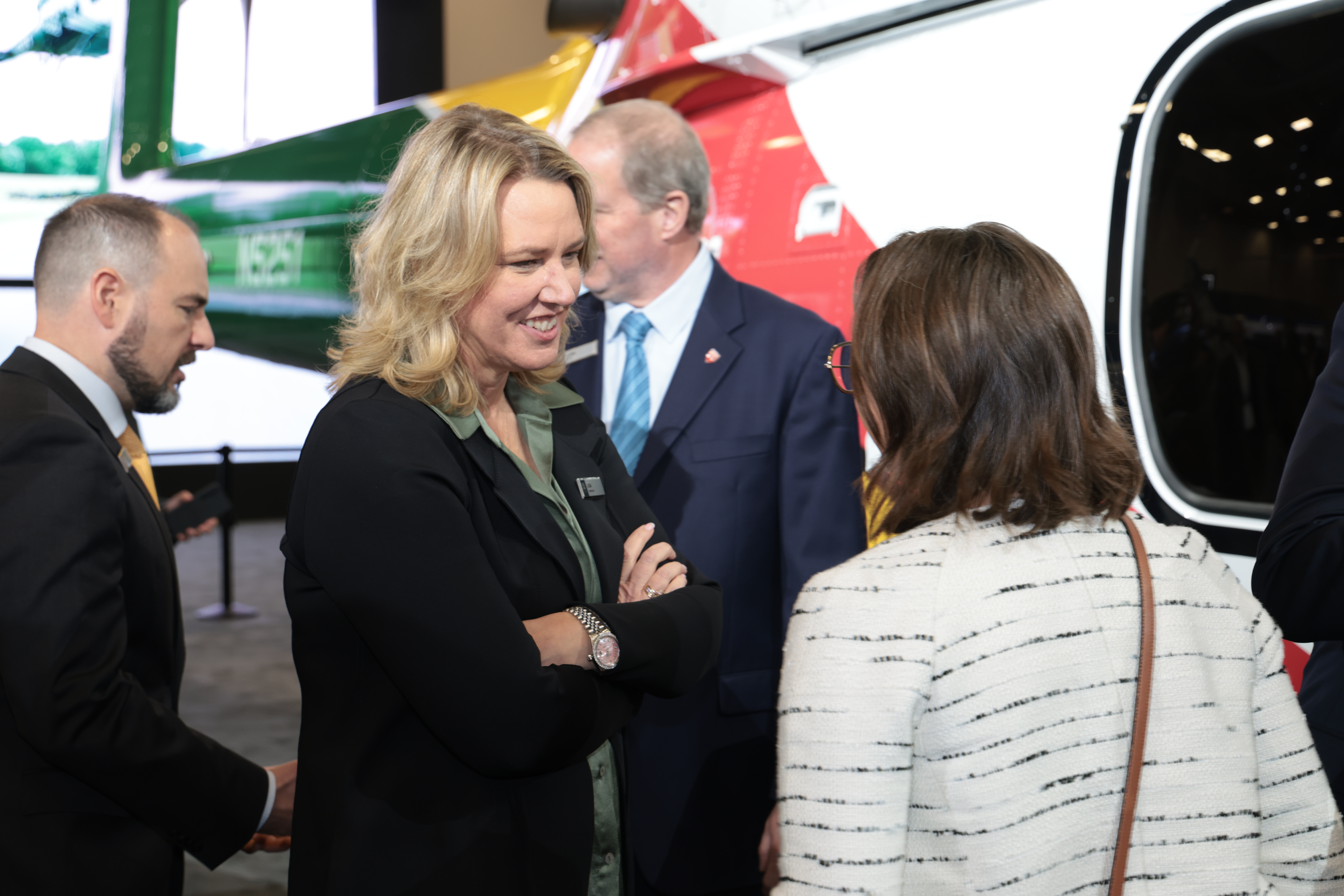
In June 2017, Textron named Atherton president and CEO of Textron Systems, succeeding Ellen Lord. The remit reached across defense and aviation products, including unmanned systems and marine craft. Moving from an aircraft program to a collection of businesses demands a different habit of attention. The person in charge can no longer solve everything by knowing one product in greater detail.
Her response included bringing 160 leaders together to work on a shared mission. She wanted the businesses to function as one team and wanted people to be able to say, “I need help.” Teams used a color-coded matrix to make problems visible. An admission that can feel awkward in conversation became part of the operating process.
The idea has a practical consequence. If a team waits until it has a polished explanation, the opportunity to intervene may already be shrinking. A visible request lets other people contribute while there is still something to change. There is no glamour in a color-coded matrix. That is part of its appeal: it gives the conversation somewhere concrete to begin.
“I need help.”
The request Atherton wanted teams to be able to make
The factory has a vote
Atherton returned to Bell as chief operating officer in January 2023 and became president and CEO on April 28. She succeeded Snyder, the executive who had helped bring her into the business. The return combined familiarity with a wider education gained at Textron Systems. She now had responsibility across Bell’s commercial and military activities.
The timing matters. The Army selected Bell for its Future Long Range Assault Aircraft program in 2022, before she became Bell’s CEO. Her part of the story concerns the work that followed the selection: building the organization and industrial capacity needed to turn a program into aircraft. Winning a competition and fulfilling it require different kinds of persistence.
By 2025, Bell was investing in manufacturing and test facilities around Dallas-Fort Worth to support the MV-75. The work included transmission and rotor-blade manufacturing capacity and drive-system testing. These are physical commitments. A schedule eventually meets a machine tool, a component supplier, a trained worker and the amount of time needed to check the result.
Atherton’s descriptions of leadership return frequently to the people who turn engineering ideas into delivered products. She emphasizes accountability alongside helping others succeed. The combination is demanding: asking for a problem to be exposed early only works if the response makes it worthwhile to speak. Otherwise, the next report will be much prettier and considerably less useful.
The center who rarely hears his name
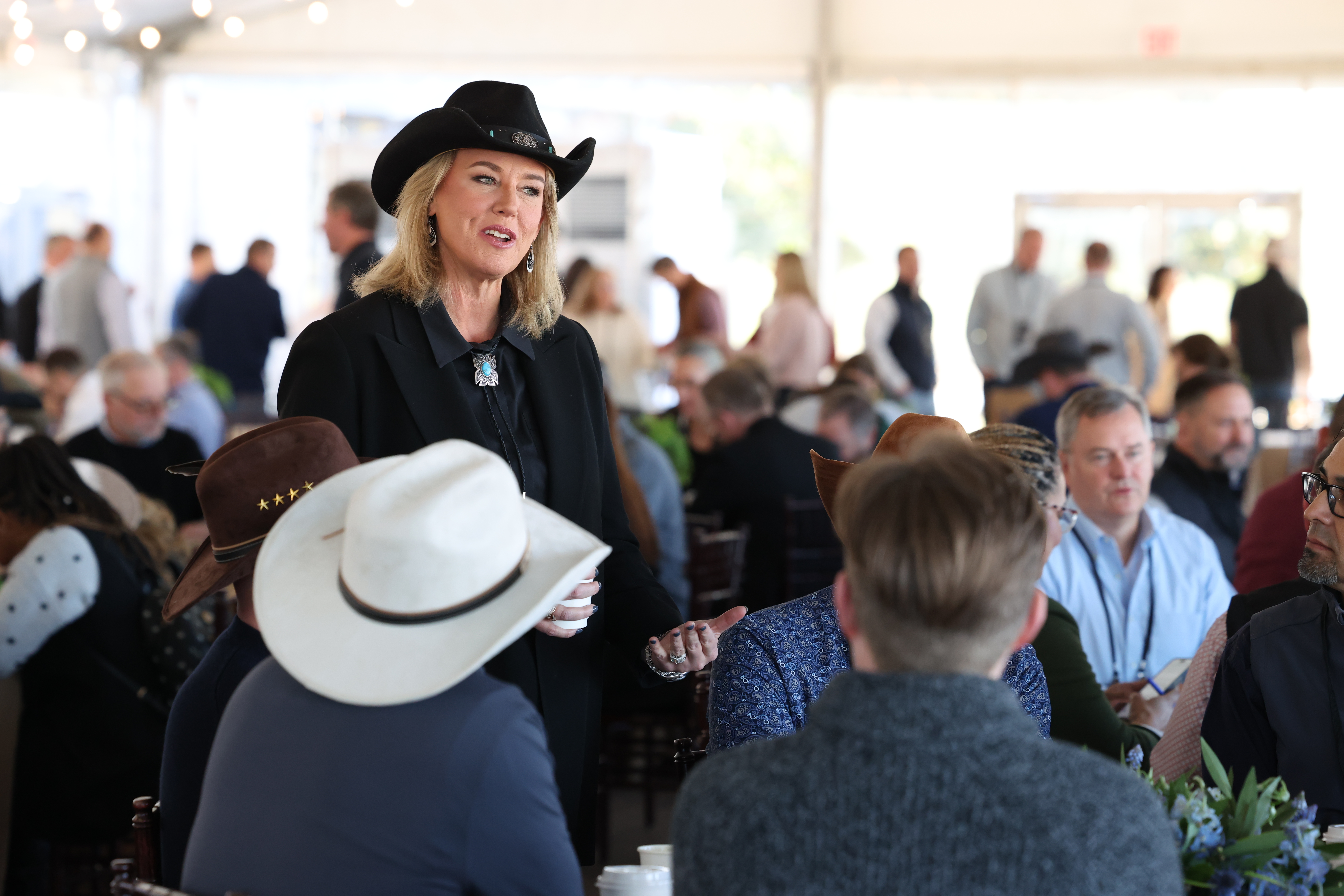
For a smaller illustration of what she values, consider a post Atherton wrote about her son’s varsity football team. He played center. His teammates relied on accurate snaps and consistent performance, while the announcer rarely mentioned him unless something went wrong. She admired his effort, his encouragement of fellow linemen and his willingness to keep doing an essential job without much public notice.
It is a revealing choice of example for someone whose own name now appears above a large corporate organization chart. The center’s contribution is visible in what other people can do next. That offers a useful way to read her emphasis on making colleagues successful. A leadership philosophy becomes easier to understand when it comes with a football position.
Her connections also reach outside Textron. She became a Southwest Airlines director in 2024 and chairs its compensation committee. She was a Presidential Leadership Scholar and has spoken to participants in the Bush Center’s Stand-To Veteran Leadership Program. These roles extend her work into governance and leadership development, alongside the operational responsibilities that made her career.
A larger ledger, with work still to do
The move to Textron’s chief executive position brought together the separate chapters. She had led two of its businesses, understood government customers and worked across functions. Scott Donnelly became executive chairman when she succeeded him. The transition put a long-serving internal operator in charge of a portfolio that includes Bell, Textron Aviation and Textron Systems.
In her first annual letter as CEO, Atherton put execution, disciplined capital deployment and portfolio management at the center of the plan. The scale had changed from a franchise’s books, but the subjects were familiar. An aircraft business can carry years of demand and still have urgent work to do on productivity, delivery and cash.
Textron reported second-quarter 2026 revenue of $3.8 billion, up 3% from the previous year, and said it had initiated a sale process for its Industrial segment. The reported numbers describe a business in motion, rather than a finished verdict on a new CEO. Bell’s revenue increased while its segment profit fell, a reminder that more activity and better execution are separate tests.
On October 14, Bell reported completed MV-75 nacelle structures, the start of gearbox testing and further software integration. These are development milestones on the way toward a test aircraft and flight testing. They give tangible form to the task Atherton inherited: keeping the commitments of a long program moving through a succession of measurable steps.
Her career invites a modest reading of ambition. She wanted a particular program job, accepted other assignments, learned the budget process and once ran the books for a shop that did not deliver the hoped-for return. None of those episodes requires a theory of destiny. Together they describe an education in responsibility, with the next examination already on the calendar.