An aircraft on the ground poses a surprisingly awkward question: who, exactly, is going to get it back into service? The mechanic needs a component. The buyer needs a supplier. Someone needs the repair history, the maintenance schedule and a reliable answer about availability. Each task sounds manageable. Connecting them is where the difficulty lives. AAR has spent decades moving into those gaps.
- AAR sells parts, performs maintenance and supplies the software behind the work.
- It reported about $3.3 billion in fiscal 2026 sales, up 19%.
- Its latest strategy pairs a proposed maintenance acquisition with an exit from capital-hungry contracts.
The company began with aircraft radios. Its next chapter involves a proposed controlling stake in MRO Holdings, announced in September 2026. In between lies a useful business puzzle: how much of the work surrounding an aircraft should one independent supplier do?
The job between the jobs
Incorporated in Chicago in 1955, Ira A. Eichner’s aircraft-radio business added an FAA repair station in 1962 and an Amsterdam component operation in 1967. It acquired its first airframe maintenance business in 1971. These were successive moves into neighboring problems: supply the equipment, fix the equipment, then maintain the aircraft carrying it.
Today, AAR distributes factory-new parts and used serviceable material, performs airframe and component maintenance, and provides engineering services. Aircraft-on-ground support runs around the clock. Its customers include airlines, maintenance organizations, manufacturers and governments. For a buyer, the appeal is practical: access to inventory and technical capabilities without building every capability internally.
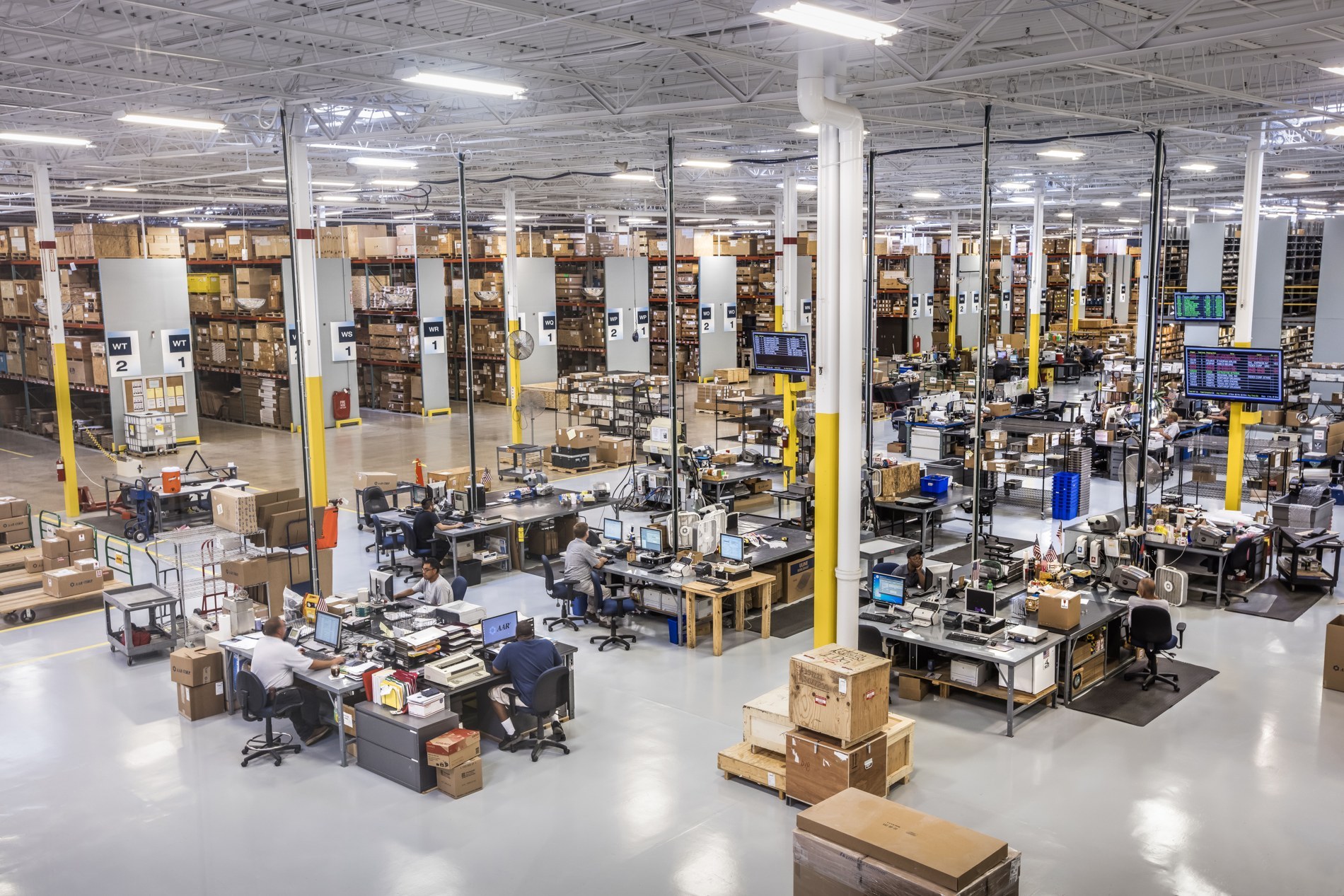
AAR earns money from parts, maintenance and engineering work, software, and government contracts. The government side includes fleet sustainment and deployment equipment such as shelters and pallets. Its commercial opportunity sits between an airline’s own maintenance department, manufacturers’ service businesses and other service providers such as Lufthansa Technik and ST Engineering.
The distinction is the combination. A parts distributor can fill an order. A maintenance provider can discover the need for that order. Software can help organize both. Connecting those activities gives AAR several ways to serve the same operator, though customers can still choose different suppliers for each job.
For an airline procurement team, the choice is consequential. Buying an individual part solves an immediate shortage. Outsourcing a maintenance visit adds labor and scheduling decisions. Adopting maintenance software touches records and working habits across departments. AAR can participate in each conversation, but the breadth of its catalogue does not remove the buyer’s need to judge price, capability and turnaround for the particular fleet.
The software purchase that took a decade
In March 2023, AAR acquired Trax for $120 million upfront, with up to $20 million in contingent consideration. Trax’s applications manage maintenance records, materials, engineering and work orders. AAR was buying a place inside the daily workflow of airlines and repair organizations.
The courtship was unusually patient. Aviation Week reported that AAR had approached Trax roughly ten years earlier, when its owners were not ready to sell. By 2023, Holmes saw a better moment: cloud delivery and mobile applications had advanced. The published account points to product maturity, rather than an invented last-minute conversion.
An illustration of the operating logic, not a claim that every customer buys all four.
The software portfolio now also includes Aerostrat for long-range maintenance planning, Airvoyant for procurement, and Airinmar for repair and warranty management. AAR says its software supports more than 10,000 aircraft. That breadth makes the proposition more interesting than a digital catalogue: it reaches into planning, execution and recovery of maintenance costs.
The arithmetic behind the exit
Expansion has a price. In 2024, AAR completed the acquisition of Triumph’s Product Support business at an initially announced $725 million cash price. It added specialized component repair capabilities and an expanded Asia-Pacific footprint. Financing included a $550 million notes offering and revolving-credit borrowings.
But the revealing decision came in May 2026. AAR announced it would wind down Legacy Commercial Programs, its asset-heavy, flight-hour-based component repair business. Over the preceding twelve months to February 2026, that business generated $252.4 million in sales and $5 million in adjusted operating income. It held approximately $160 million in net assets.
About 2 cents of adjusted operating income per dollar of sales. Net assets: approximately $160 million.
The problem was the return on capital. Holmes said the programs no longer met AAR’s thresholds. The planned exit would take three to four years. Here is something another business can copy: put the assets required to earn revenue beside the revenue itself. A large sales number can conceal an expensive way of making very little.
More hangars, with customers attached
AAR’s 2023 agreement with United Airlines extended maintenance work through 2030 and committed to at least ten maintenance lines across Miami and Rockford. Capacity expansion had a named customer behind it. That is a more useful lesson than a general instruction to grow: establish who needs the capacity and for how long.
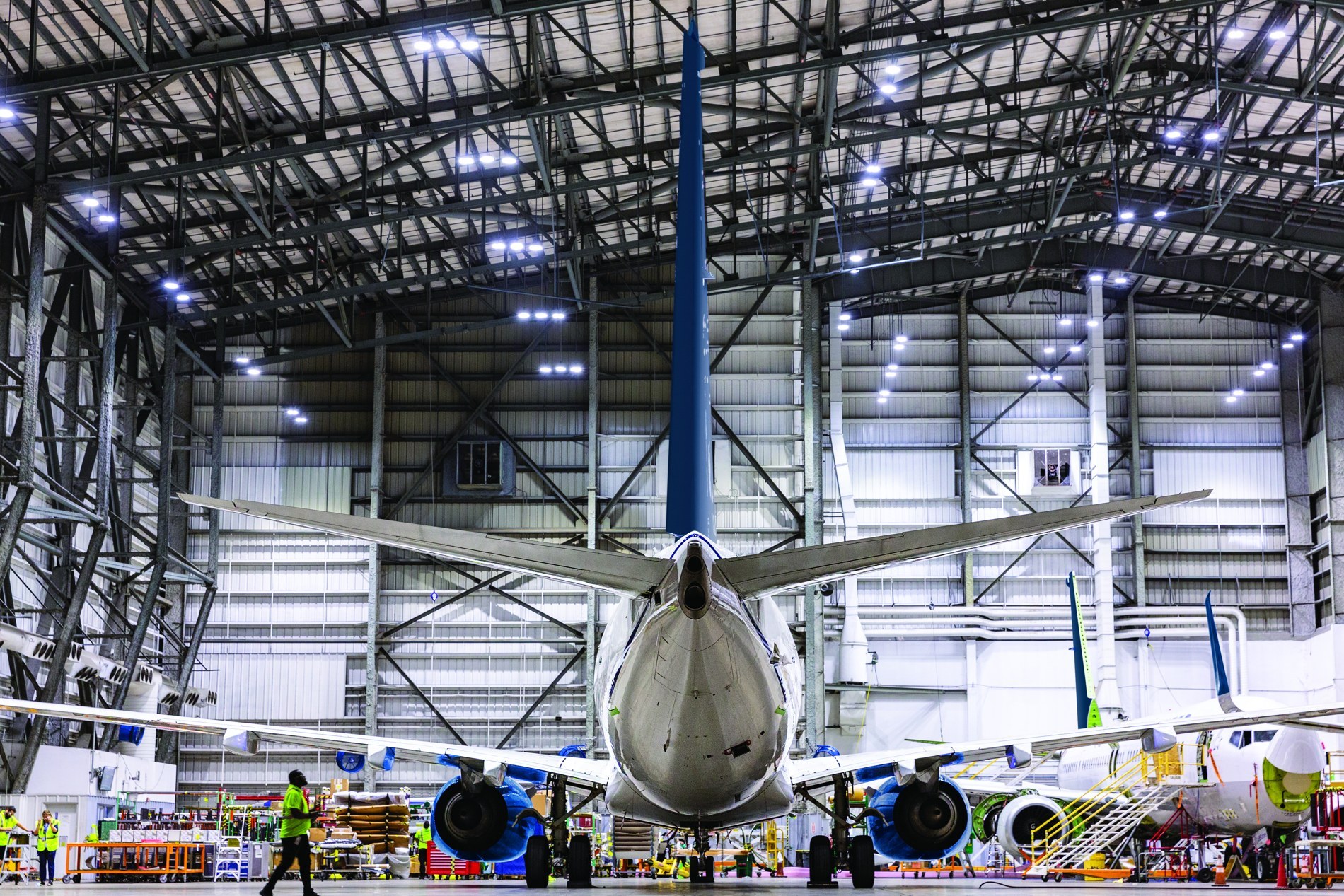
The proposed MRO Holdings transaction extends that logic on a larger scale. AAR agreed to acquire 65% at an implied enterprise value of $4 billion. The announced initial equity consideration was approximately $1.8 billion, alongside repayment of about $1.3 billion in target borrowings. Those figures describe different pieces of the transaction.
“Heavy maintenance is a foundational element of this platform, driving revenue to all other areas of the Company.”John M. Holmes · September 2026
The target brings 115 maintenance lines. AAR expects more component work, distribution opportunities and maintenance data from the combination. Closing was expected in the fiscal quarter ending February 2027, subject to approvals and other conditions. The promised connections still require execution.
The people and controls behind the promise
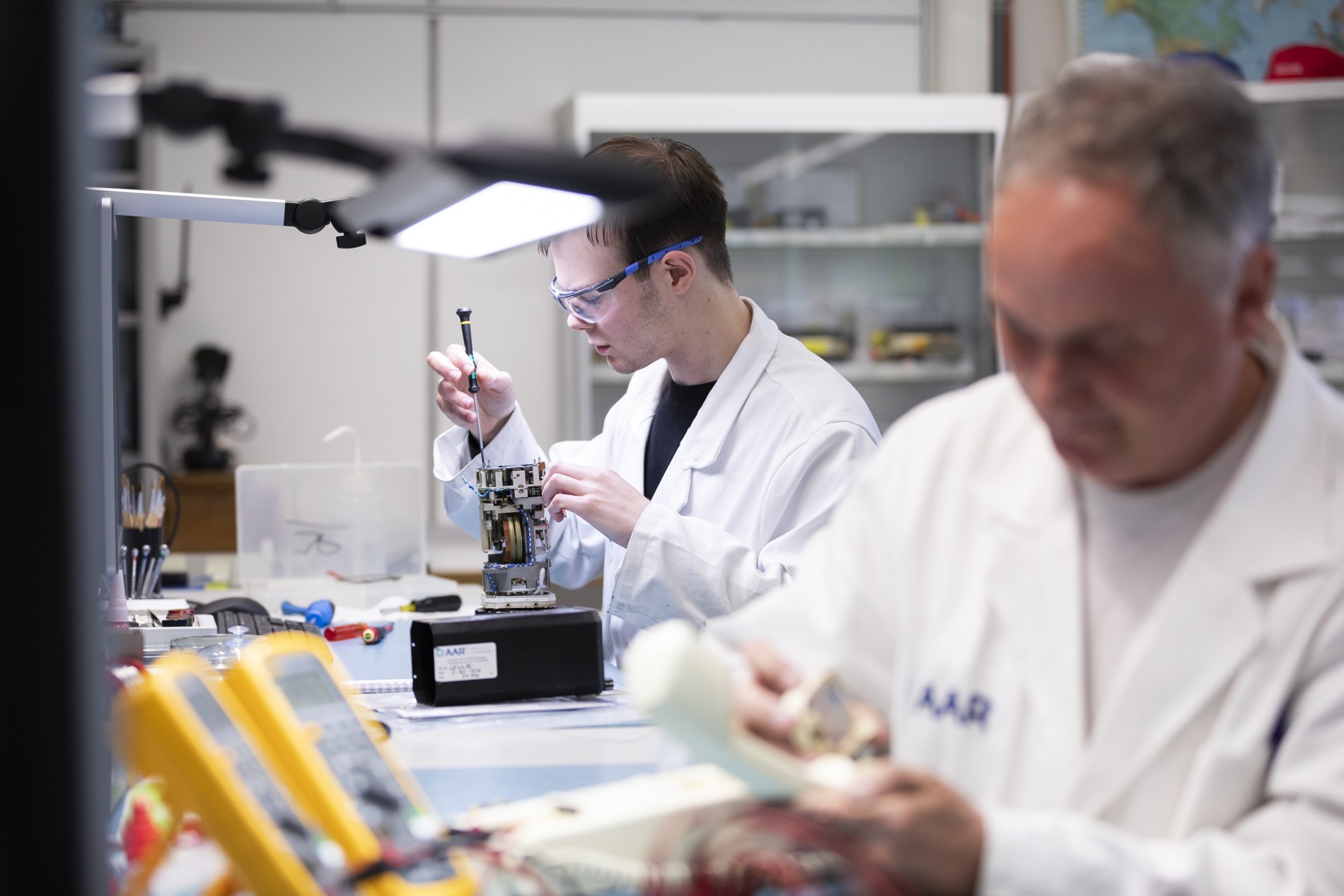
Hangar space needs technicians. AAR’s EAGLE pathways connect education with maintenance careers; its fellowship offering advertises tuition assistance up to $15,000 with a two-year employment commitment. Training belongs inside the capacity calculation.
Controls matter, too. In December 2024, AAR agreed to pay more than $55 million to resolve U.S. foreign-bribery investigations involving Nepal and South Africa. Documented remediation included tighter third-party oversight and compliance investment. The failure concerned business conduct, with consequences beyond the repair shop.
The model depends on airlines continuing to outsource, enough skilled labor, and successful acquisition integration. Those conditions deserve attention alongside growth. AAR’s useful insight is that adjacent customer problems can reinforce one another. Its harder lesson is knowing which connections earn their keep.