Ten suppliers. That was the number Honeywell Aerospace identified in September 2026 as pacing its output growth. For a business with $17.4 billion in annual sales, it is an oddly small number. Imagine a departure board full of destinations, with the same handful of gates holding everything up. The orders exist. The engineering exists. Somewhere upstream, a component still has to arrive.
- It sells the systems inside aircraft, then supports them for years.
- Independence arrived in June 2026; supply constraints remained.
- The useful lesson: count what can ship, alongside what customers want.
Honeywell Aerospace makes equipment that passengers rarely identify: navigation systems, cockpit electronics, engines, auxiliary power units and controls. Its customers include manufacturers, airlines, business-jet operators and governments. It operates between the companies building aircraft and the people depending on those aircraft to work.
01 / Ten suppliers, one large bottleneck
The company became independent on June 29, 2026, trading as HONA. By August, its full-year organic sales growth forecast had fallen from 7-9% to 4-5%. The September explanation was unusually candid. Earlier outsourcing, supplier consolidation and restrained investment had improved efficiency in a slower market. Continued cost-cutting during the pandemic left the business catching up when demand accelerated.
Roughly 2% of suppliers were classified as critically constrained. The company had invested more than $1 billion in its supply chain during 2023-2025 and described a further increase of more than $50 million in 2026 strategic investment. This is an expensive reminder that a purchasing saving and an available part are different achievements.
“The cost of inadequate supply far outweighs the incremental cost of redundancy.”
Honeywell Aerospace · September 2026 investor update
02 / The little engine before the big engines
Consider the auxiliary power unit, or APU. This small turbine supplies onboard power apart from the main propulsion engines. Honeywell’s 131-9 uses a starter/generator with a pleasing double life: electricity starts the unit, then the running unit generates electricity. Aircraft contain plenty of such useful, unglamorous arrangements.
The 131 Series efficiency upgrade combines a redesigned diffuser with software controlling airflow into the compressor. Honeywell advertises a 1-2% improvement in APU fuel efficiency. That percentage belongs to the APU, not the aircraft’s entire fuel bill. For an operator, the calculation includes fuel, maintenance, installation and how long the unit stays in service between shop visits.
The technology sits in a lineage older than the current corporation. Cliff Garrett established Aircraft Tool & Supply in 1936. His work on pressurization and small turbines helped build the predecessor business. Today’s Honeywell Aerospace Inc. was organized in 2026. Its corporate birth certificate and engineering ancestry tell different, equally useful stories.
03 / The sale after the sale
In July, IndiGo selected Honeywell systems for 810 ordered Airbus A320neo-family aircraft: APUs, weather radar, collision avoidance and flight management, alongside aftermarket support. A manufacturer gets equipment it can integrate. An airline gets help keeping that equipment available. Honeywell gets a relationship that extends beyond the delivery ceremony.
That second relationship matters. Aircraft remain useful for years, creating demand for replacement parts, repairs and upgrades. The business combines selling the original system with supporting the installed equipment. Certification and integration make the choice consequential; swapping a supplier is a much larger exercise than changing a software subscription.
Revenue by end market, not profit. Rounded total: $4.522bn.
In the second quarter, commercial aftermarket sales reached $2.026 billion, compared with $679 million in commercial original equipment. Defense and space added $1.817 billion. The mix helps explain why winning an aircraft program can matter well beyond the year the order is announced.
04 / A touchscreen with a long memory
Anthem, Honeywell’s integrated flight deck, presents a more visible proposition: configurable displays, touch controls, connectivity and support for third-party applications. Announced in 2021, it aims to bring information closer to the pilot’s workflow. The design problem is practical. A pilot should spend less effort arranging information and more attention understanding the flight.
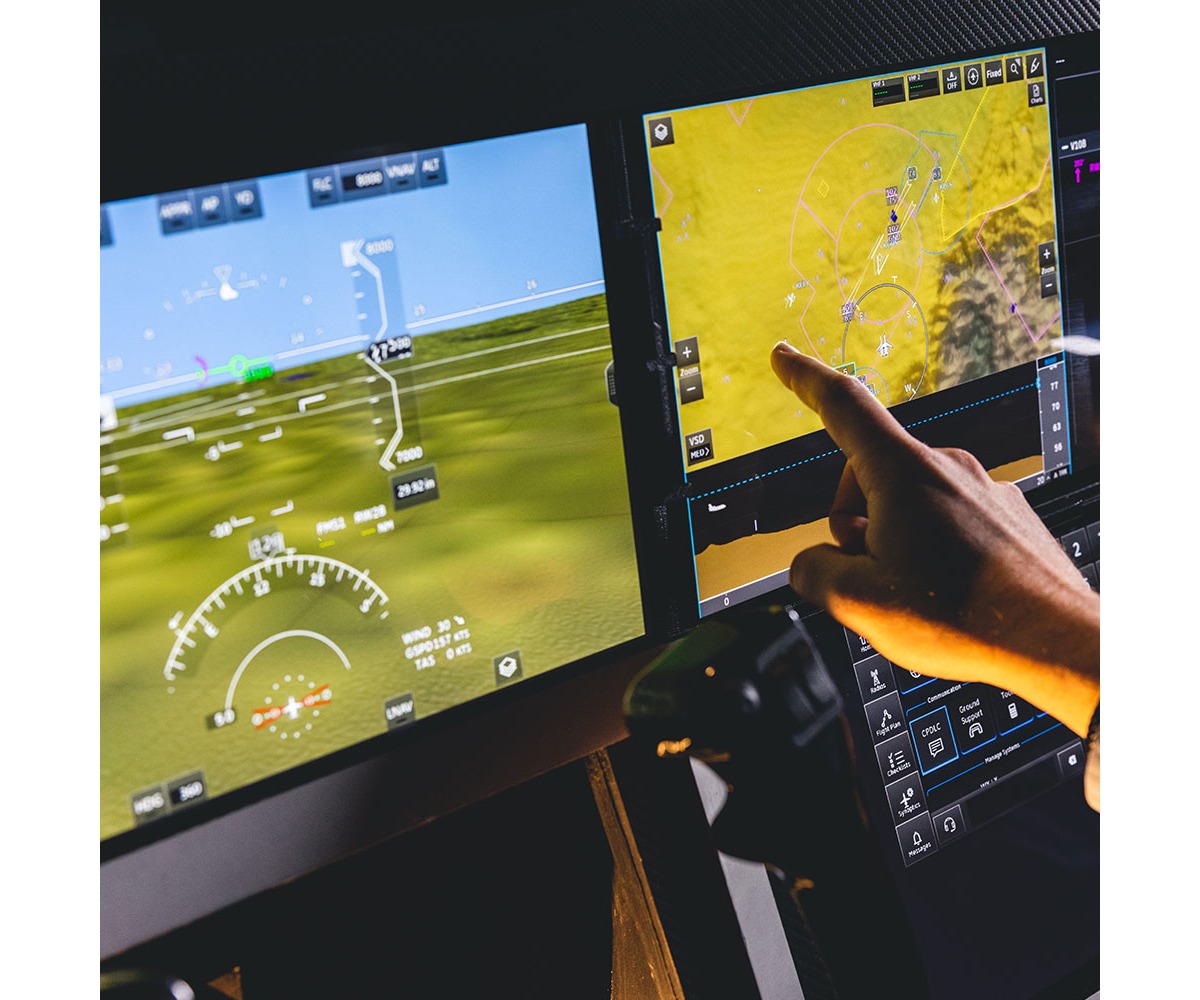
Honeywell competes with different companies in different compartments of the aircraft. Collins Aerospace, Garmin and Thales appear among its electronics rivals; engine alternatives include Pratt & Whitney, GE Aerospace and Rolls-Royce. Its distinction is the breadth of engineering across electronics, propulsion and controls, coupled with equipment already embedded in aircraft designs. That breadth offers manufacturers several systems from one supplier, while concentrating responsibility for making them work together.
Runway safety shows how installed hardware can gain a new job. Aeromexico intends to adopt SURF-A on more than 100 Boeing 737s. The software uses GPS and broadcast aircraft-position data to warn of potential runway collisions. Honeywell described certification activity beginning in late 2026 and continuing into 2027. An announced selection is a step toward deployment; the approvals still matter.
On October 20, Dassault selected EASy IV for the Falcon 2000-EASy platform, extending a longstanding cockpit relationship. The upgrade addresses obsolescence as well as new capabilities. For an aircraft owner, those goals belong together: keeping a useful machine current is part of the reason to buy an upgrade.
05 / The bill for getting bigger
Some expertise arrived through acquisitions. Honeywell paid approximately $1.9 billion for CAES in 2024, adding radio-frequency defense capabilities, and about $200 million for Civitanavi, adding navigation expertise. Neither figure is a product-development budget. They show what extending the portfolio can cost.
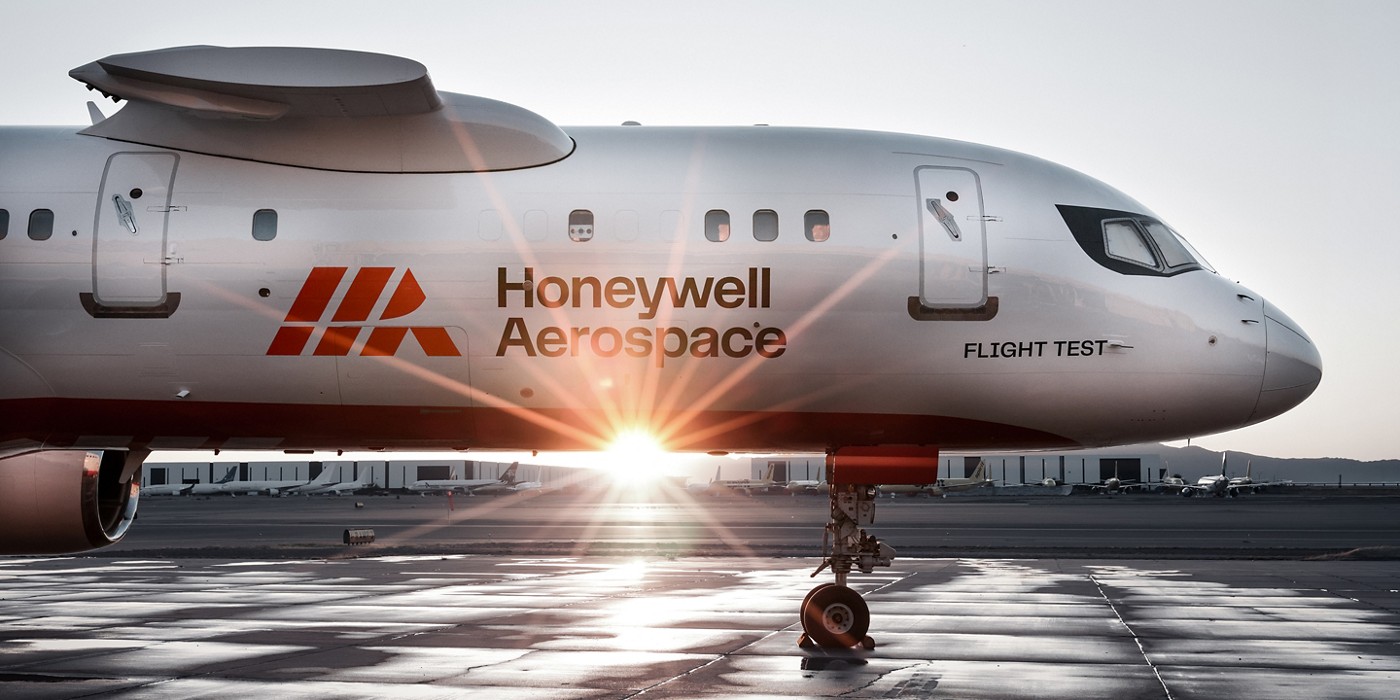
The Bombardier relationship adds another kind of investment. In December 2024, the companies announced a technology agreement and resolved legacy litigation. Honeywell estimated up to $17 billion in lifetime revenue potential. Its annual report recorded an approximately $370 million reduction in 2024 sales and segment profit associated with the agreement. Future opportunity came with a present financial impact.
06 / Build capacity before you promise it
For operators, the useful questions are specific: Is the equipment approved for this aircraft? Can the supplier support it where we fly? Does an upgrade save enough fuel or maintenance to justify installation? A clever product without the right integration and support will struggle to earn its place.
The wider business lesson is an inference from Honeywell’s disclosures: measure the constrained suppliers, finance the tools, qualify alternatives, then make delivery promises against demonstrated output. By October, Honeywell was announcing autonomous flight demonstrations as well. The next generation of flight still depends on the decidedly physical business of getting parts made.
Company website · Newsroom · Investor updates · LinkedIn · X · Instagram · Facebook
Watch the cockpit at work
Pilots’ Perspective: Anthem YouTube / pilot interview Inside the Anthem flight deck YouTube / product demonstration