Ben Jacob’s aircraft maintenance company began life with an education company’s name. On 15 January 2025, the business now called Zymbly was incorporated as Newton Education. By 8 July, the name had changed. It is a small administrative detail with rather more personality than most administrative details possess: before helping technicians find their way through aircraft information, Jacob had been working on how people learn.
He had taught in Britain and Japan. He had studied economics at Oxford. He had worked in airline operations and at Multiverse, the education and technology business where he would lead Applied AI. Put those experiences together and the current job begins to make sense, though it would be too tidy to pretend the route was an itinerary drawn up in advance.
Today he is co-founder and CEO of Zymbly, alongside CTO Azmat Habibullah and fellow co-founder Robbie Bourke. Their chosen problem is the work surrounding aircraft maintenance: the searching, checking, documenting, and finding of parts that can keep a trained person occupied without putting a tool in their hand.
A company with an earlier name
At Newton Maths, Jacob and Habibullah appeared together as co-founders. The ambition was personalised mathematics tuition using AI. Jacob’s biography described classroom experience in two countries and a former role as Head of Operations at Multiverse. Habibullah brought mathematics and software experience. Education was an actual chapter in their working lives, with an actual product attached.
Teaching and maintenance might seem an eccentric pairing. One involves explaining a problem; the other involves resolving one under technical constraints. Both give information a practical test. Can the person who needs it understand it and use it? A beautifully stocked library offers limited comfort when the answer remains somewhere on an unidentified shelf.
That is a way to read the connection between Jacob’s earlier work and his current company, rather than a claim about what he privately intended. His education background matters because it broadens the picture of the founder. The person selling software to aviation maintenance teams has also stood on the other side of the problem of making knowledge useful.
The company-name change supplies a firm date in that transition. It does not tell us what happened in every conversation between January and July. It does show that the business’s present identity arrived after its incorporation. Company histories, like people, sometimes require an amendment.
A friend remembers the weekends
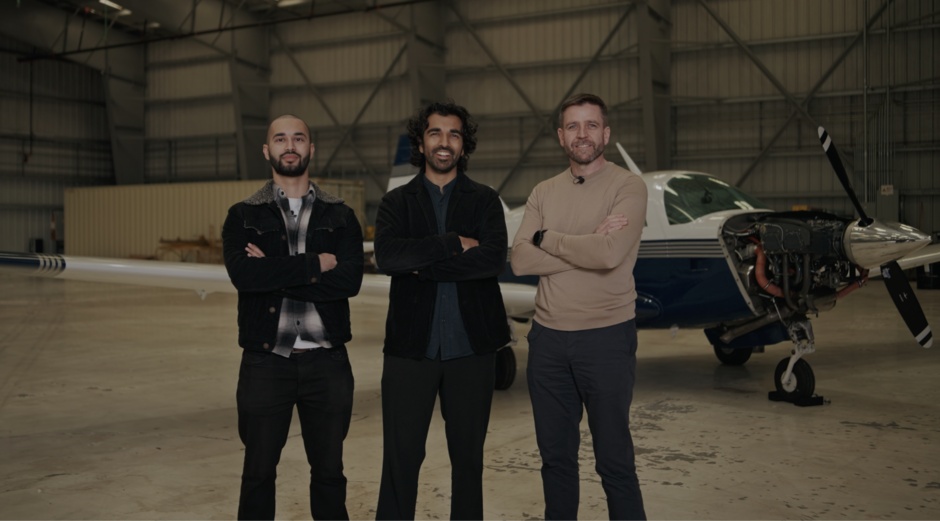
There is another route into Jacob’s story, through a colleague who became an investor. Lorcan Delaney knew him at Selina Finance in 2019, when the business was in its early days and the two were fresh from university. Their connection predates Zymbly, its accelerator batch, and the photograph of its founders standing beside an aircraft.
Delaney later recalled spending weekends working alongside Jacob as he started Zymbly. He described backing the company through firstminute capital and watching his friend pitch at Y Combinator Demo Day. The account has the useful scale of a friendship: earlier jobs, recurring time together, and then the more visible occasion.
A pitch is easy to locate in a startup’s history. It has a date, an audience, a beginning, and a mercifully enforced ending. Weekends are harder to put on a company timeline. Yet Delaney’s recollection adds something a batch designation cannot. Another person was there while the business was becoming a business.
It also places Jacob in a network formed through work, rather than presenting him as an isolated founder having a solitary idea. Selina Finance was one setting. The education venture with Habibullah was another. Zymbly would bring a third collaborator into the picture, with a career already deeply embedded in aviation.
Learning the airline from the inside
Jacob’s aviation experience came through operational improvement. At Oliver Wyman, he worked on operational transformation in aviation. His career also included helping a major global airline recover its operations after a period of disruption. This was experience with how an airline functions, before it became the foundation of a software business serving part of that operation.
Operational work is concerned with what actually happens after the plan encounters a working day. The interesting questions become specific. Where does a task wait? Who has the information? Which step must be completed before another person can proceed? These questions make a useful lens for understanding the maintenance problem Jacob has chosen.
His subsequent leadership of Applied AI at Multiverse adds a different kind of experience. The phrase contains an essential qualification: applied. A system has to enter somebody’s working routine. It must earn its place among existing responsibilities, habits, and tools. A demonstration can end with applause; an operational tool has to be opened again tomorrow.
Jacob’s career puts him near both sides of that bargain. Airline operations supplied the setting. Applied AI supplied experience leading work with the technology. Zymbly brings those chapters together around technicians whose time is already committed to a demanding job.
Three careers, one hangar
Bourke’s background gives the founding team a direct maintenance connection. He was Head of Aircraft Maintenance at Virgin Atlantic and led design teams at Airbus. His experience also includes Oliver Wyman’s aviation practice. Those are different positions along the life of an aircraft, from engineering to airline maintenance to advising operators.
Habibullah brings a master’s degree in mathematics from Imperial College London and experience building enterprise software in regulated industries. Jacob and Habibullah’s earlier collaboration in education is therefore part of a longer working relationship that continued into Zymbly. The three founders arrive at the maintenance problem carrying different professional equipment.
Their public launch described developing the platform through a design partnership with a major global airline. That places an operator inside the development story. It gives the founders a setting in which to confront procedures and information as they are used, rather than as they might appear in a clean diagram.
“Technicians get to spend their time doing the work they actually signed up for; maintaining planes.”
The Zymbly founding team, in its launch announcement
The sentence is a useful expression of the company’s aim. It keeps the technician in the picture. For Jacob, the commercial task is to turn that promise into something an airline or maintenance business can put into use.
An assistant with a person in charge
Zymbly is built around help with troubleshooting, parts lookup, and documentation. Its interface is voice-first, and the product connects information from manuals, local procedures, and maintenance records. The practical idea is to reduce the distance between a person’s question and the information needed to act on it.
There is a consequential boundary in the design: actions require explicit human sign-off, and engineers retain authority. The product also describes an audit trail for interactions and approvals. Those details belong beside the promise of speed. Getting through a task faster has to coexist with knowing who did what and who approved it.
Documentation has a purpose; it records the work. The opportunity for the software lies in reducing the effort of assembling and checking that record. A technician’s skill remains essential to the job. The assistant is being built to make the surrounding information easier to handle.
For a founder whose experience spans operations and applied AI, this is a particularly concrete assignment. The software meets existing systems, working procedures, and people with established responsibilities. Every attractive product promise eventually has to fit into that arrangement.
Where the software gets built
Zymbly joined Y Combinator’s Winter 2026 batch. Its hiring description offers a more tactile view of the business than the accelerator label: engineers are expected to work where users work, including hangars, airport gates, and control centres. The company seeks people who can understand operations on site and connect its product to existing systems.
That hiring choice puts proximity into the job description. A developer may have to earn trust from technicians, translate a working routine into a product change, and explain the value to management. It is a demanding combination of building and listening. The old system still has to run while the new one finds its place.
Jacob has also taken the work into aviation’s public conversation. He was listed on MRO Europe’s 2025 session about implementing AI in aviation, appeared in a sponsored interview at MRO Americas in April 2026, and was listed for a July 2026 Farnborough panel on the intelligent aerospace ecosystem.
Those appearances place him among operators and technology businesses discussing how the industry changes. The underlying assignment remains smaller and more exacting than a conference title: make a piece of somebody’s working day go better.
There is a line running through Jacob’s career that can be drawn without inventing a grand revelation. Teaching, operations, and applied AI all involve helping people put knowledge to work. At Zymbly, the person with the knowledge has an aircraft to maintain. Jacob’s business depends on making the other work less consuming.