Kate Jillings missed the last page of her final Maths A-level. The question she never saw accounted for 20% of the paper. For months, she worried that the mistake might cost her university place. The place survived. The story survived too, eventually becoming something she could tell a room of pupils rather than something she had to endure alone.
It is a useful opening for a career that could otherwise sound rather tidy: Oxford, corporate marketing, a publishing business, an acquisition, a software company. A list makes the turns look planned. A forgotten page restores a little uncertainty. Even a future founder can leave an examination hall with unfinished business.
Years later, Jillings returned to Lady Eleanor Holles, her old school, carrying something more useful than advice about checking the back of a paper. She was helping launch its alumnae community website. Her company, ToucanTech, supplied the technology. The pupil who had once worried about her next destination was helping other pupils keep a connection with the place they were about to leave.
The question on the final page
There is a familiar ceremony at the end of education. People collect certificates, make promises and scatter. Institutions then face a less ceremonial task: keeping track of them. An address changes. A former pupil wants career advice. Someone would like to volunteer. Someone else might support a bursary. The goodwill exists; the arrangements for finding it require work.
Jillings has spent much of her entrepreneurial career on those arrangements. Before the software, she helped people understand business schools through stories. With ToucanTech, she and co-founder Sian Morley-Smith built tools for institutions to manage their communities. The people involved may be students, graduates, members or supporters. The recurring problem is how to keep a relationship usable as lives move on.
Her own route began with PPE at Oxford. She started working as a management trainee at GlaxoSmithKline, then moved into capital markets as head of strategic marketing for equity derivatives at BNP Paribas. Later roles included a board position at consumer-ratings company TruRating. She has also been an investor adviser to Blanc. It is a varied commercial education, spanning established organisations and businesses still being built.
She lives between London and Lisbon. That geography seems appropriate for someone working with institutions whose members are rarely all in one place. Still, the practical questions are often modest. Where is the record? Who sent the invitation? Does anybody know whether this person came last time? A community can have a long history and a surprisingly short institutional memory.
A newsroom before a database
In 2009, Jillings launched BusinessBecause with Maria Ahmed and Morley-Smith. The business connected business-school candidates, schools, students and employers. Its material covered student experience and career choices, giving applicants more to consider than the formal prospectus. Choosing a school also meant trying to imagine the life on the other side of admission.
The early economics were less elegant than the eventual acquisition announcement. Jillings described starting the venture with personal savings and debt. She and Ahmed had felt that business students received too little press coverage. At that point, she said, the founders had yet to take salaries. Sponsorship from 25 schools paid for office space and web development.
That account has the bluntness of somebody explaining how the bills get paid. There is an editorial purpose, and there are development costs. The two must coexist. It also places Jillings close to the audience: defending the work, explaining the model and inviting suggestions. For a business built around a community, those conversations were part of the job.
GMAC completed the acquisition on 10 April 2018. BusinessBecause would remain a separate subsidiary with editorial and creative independence, supported by resources to expand. For Jillings, the transaction gave the original work a larger institutional home. By then, another venture was already underway. The publishing company’s customers had been explaining a different problem, and the founders had decided to build an answer.
The complaint that kept coming back
The ToucanTech software project began in 2014. While running the education news website, Jillings and Morley-Smith heard companies and universities describe the need for central software to administer their communities. A relationship with a customer had become a way to discover what that customer could not easily do.
The early beta came together on hot desks, with a small group including a developer called Dave and early colleagues Amy and Michaella. There was caffeine and there were late nights. Neither detail is unusual in a software origin story; the useful detail is the customer request that gave the work a direction. The founders were trying to join up records and engagement tools that institutions needed together.

The commercial launch followed in October 2016. This timing matters: ToucanTech was already active before BusinessBecause was sold. The ventures overlapped. Their connection is easier to understand as a continuing working partnership than as two sealed chapters, each neatly closed before the next opened.
“I’m a big believer in the power of well-connected communities”Kate Jillings
Jillings’s explanation of the product starts with the burden of disconnected systems. Schools and other established organisations can accumulate tools that do not talk to one another. Administrators end up moving information around when they could be planning campaigns or speaking to members. ToucanTech brings a database, communications and community website into one system, alongside functions such as events and fundraising.
Keep the information together so the next conversation has somewhere to begin.
In June 2020, ToucanTech secured £1 million from Pembroke VCT. At the time, it had more than 170 clients. Its ambitions were international, but the pitch remained rooted in the practical work of education and nonprofit teams. Helping an organisation engage supporters requires the ordinary jobs to function reliably, including the ones that never make a fundraising brochure.
The company now reports more than 350 communities in 25 countries and a team of more than 60. Its working locations include London, Lisbon, Sydney and Washington, DC. Those figures describe the business Jillings has helped build with Morley-Smith. They also suggest how far a repeated customer request can travel once it becomes a product.
An old school becomes a new customer
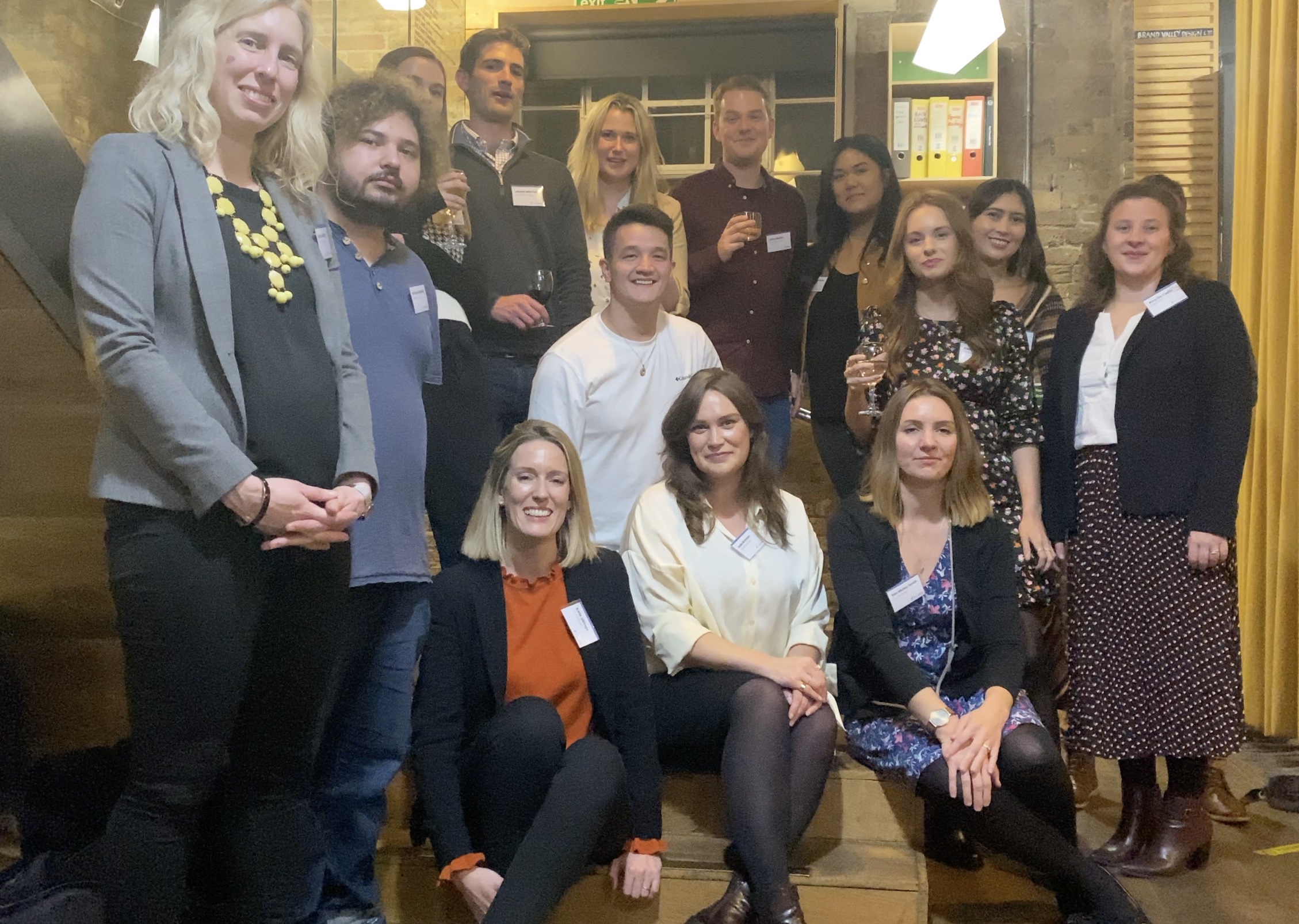
At Lady Eleanor Holles in 2019, the circle became unusually small. Jillings returned for the HollesConnect beta launch as sixth-form pupils created profiles. Their leaving-week outfits reminded her of her own baggy T-shirts and combat trousers. Familiar teachers and corridors supplied the rest of the reunion. Her sister Sophie, also an alumna, had joined the ToucanTech team.
A school community is an abstract market until you know the building and recognise the people. Here, Jillings was helping make the kind of connection she could use herself. The episode puts a face on the product’s premise: a departure can begin a different relationship with the same institution.
Another customer prompted memories from further back. When the Shell Pensioners Association became ToucanTech’s 250th customer, Jillings described childhood visits to Shell petrol stations, watching oil tankers at sea and hearing OPEC pricing discussed over dinner. She thanked people in her Shell circle as well as the association team. A customer announcement briefly turned into a family album.
That is one of the pleasures of her stories. The software appears alongside people she already knows, places she has been and conversations she remembers. A professional network is made from such details. Its members do not experience themselves as a row of fields, however necessary the fields may be.
Fairness, energy and a geek chat
Jillings has described leadership as a self-taught journey, particularly learning how to hire and motivate people who care about the product and its customers. Her stated approach is to lead with fairness and energy. These are understandable ambitions for somebody whose work depends on a continuing partnership and on teams doing quite different jobs well.
In a 2023 International Women’s Day post, she said more than half of ToucanTech’s team were women. She described women leading Product, Marketing, Customers and Sales, as well as working on code, migrations and new features. Her emphasis was on hiring and promoting people because they were good at their jobs. She also called for more attention to technology and gender equality.
The focus on specific work is consistent with a small, revealing detail in a recent event programme. For a Washington, DC gathering scheduled for September 2026, Jillings’s speaker description invited questions about admin workflows and geeky subjects. A Baltimore-area programme called her a workflow geek. Some founders cultivate mystery. Jillings’s invitation makes room for a detailed conversation about how the day actually runs.
The Washington programme paired a product overview with questions, workflow demonstrations and discussion over food and drinks. The Baltimore programme included alumni directories, donor walls, anniversary events and administrative shortcuts. These were scheduled sessions rather than evidence of attendance, but they show the subjects she was being asked to discuss: the working habits that help institutions stay in touch.
Five hundred years, and another invitation
In January 2026, Jillings was listed with Aaron James for a CASE-NAIS session on Christ Church’s 500th anniversary. The programme described reconnection through dinners, scavenger hunts and commemorative merchandise, with engagement information gathered across departments. Five centuries of history had supplied a reason for people to meet again. The administrative work helped make those meetings useful beyond the anniversary itself.
The theme also appears in her conference posts. Writing about Boston in 2026, she described conversations about giving days and anniversaries, and handing out alumni wheels to help plan reunion years. There were bright beanies too. Even a discussion of records and schedules can benefit from something warm to put on your head.
Her advice to younger people is similarly approachable. At a women-in-education event at the House of Commons, she recalled being there as a teenage intern. She encouraged students to get work experience and discover what they liked. Her other instruction was short enough to remember: be interested in stuff. Asking questions, she explained, opens up subjects and opportunities.
“be interested in stuff”Kate Jillings, speaking to LEH Alumnae
Read backwards, that advice fits her career without pretending it predicts every turn. Work in established companies. Help build a publication. Listen when its customers describe another need. Build again with a partner. Return to the school you left and offer something practical. Curiosity can lead to a business, but it also gives you a reason to keep talking.
The missed examination page belongs in that account. It is a reminder that a life can continue beyond the moment that once seemed decisive. Years later, there may be another invitation, another conversation and a familiar corridor. Jillings’s work makes provision for those returns. The final page of one chapter need not be the last time anyone hears from you.