A carbon credit has a peculiar disadvantage as a product: you cannot hold it up to the light and see whether it works. You can inspect a shoe. You can taste a peach. A tonne of carbon dioxide removed from the atmosphere requires a more elaborate receipt. Eamon Jubbawy has built a company around the business of making that receipt mean something.
There is a family resemblance to his first company. At Onfido, which he co-founded in 2012, the question was whether a person on the other side of a screen was who they claimed to be. At Isometric, founded a decade later, it became whether a claimed removal had actually happened. His career keeps returning to the awkward interval between somebody making a promise and somebody else feeling safe enough to pay.
That interval is hardly glamorous. It contains checks, records, calculations and people asking for another document. Yet Jubbawy has repeatedly chosen to work there. His story offers an unusually practical version of entrepreneurship: find the part of a transaction that makes everyone nervous, then build the machinery that lets it proceed.
A university friendship, followed by paperwork
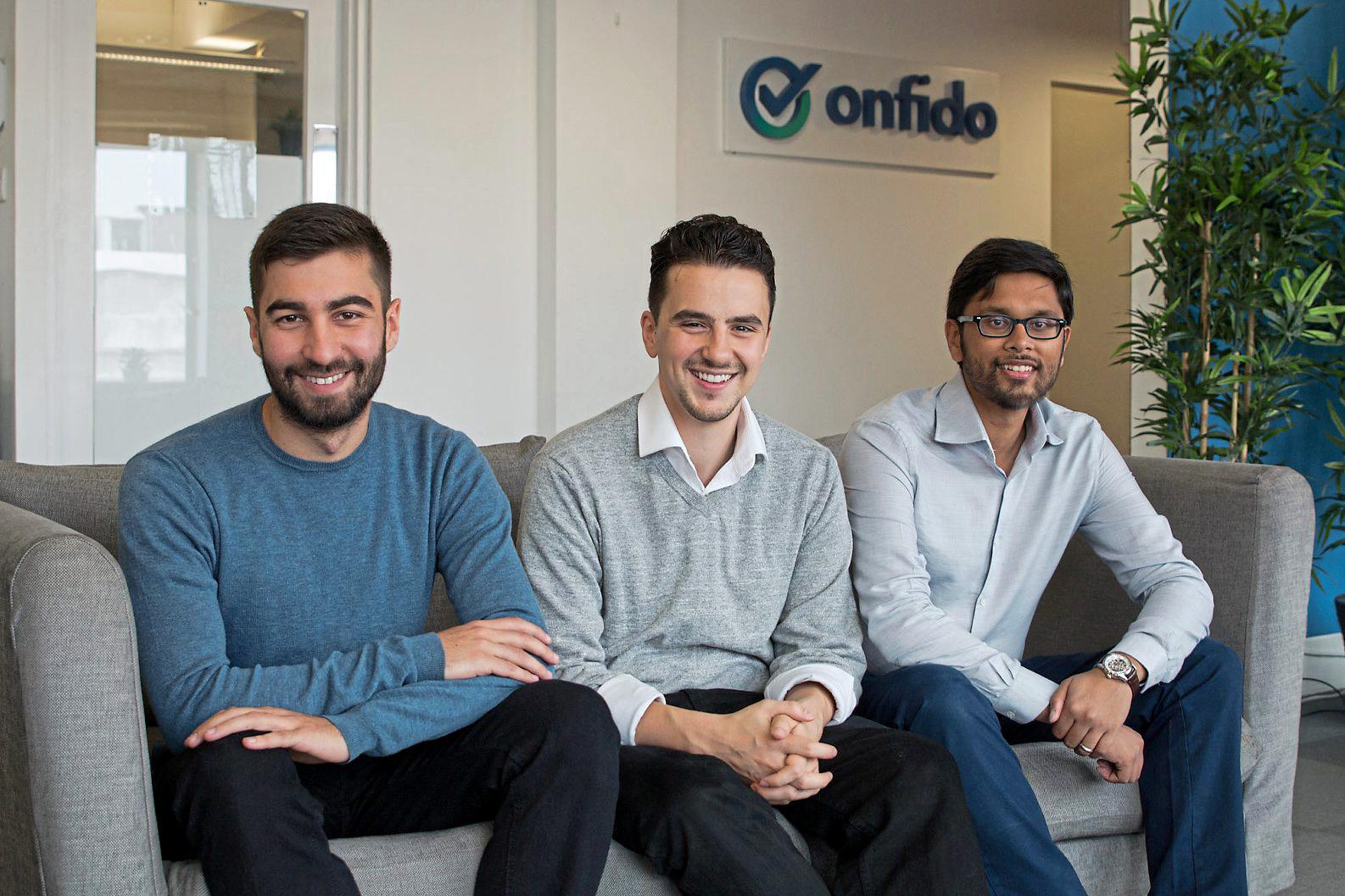
Jubbawy studied Economics and Management at Hertford College, Oxford. He was vice president of Oxford Entrepreneurs; Husayn Kassai was president. Kassai already knew Ruhul Amin, and the three became Onfido’s founders. Their early experience included the slow background checks attached to City jobs. Jubbawy had worked at Credit Suisse. They had encountered the inconvenience as applicants before deciding to sell a remedy.
Oxford supplied more than introductions. The university backed the company, which launched through its incubator in 2012. The proposition began with automated background checking, a market where manual processes could turn an ordinary hiring decision into an exercise in patience. By 2015, its customers included recruitment businesses and younger companies such as Deliveroo. It was already operating across 28 countries.
As chief operating officer, Jubbawy took responsibility for expansion, hiring, operations and company culture. These are the tasks that turn a clever service into an organisation capable of delivering it on Tuesday afternoon, in another country, when three things have gone wrong. The job description is less cinematic than inventing something in a garage. It is also rather harder to put on hold.
In a 2017 funding announcement, he described a 150-person team spanning three continents and more than 1,500 business customers. The new $30 million round brought Microsoft Ventures into the investor group alongside other backers. Jubbawy’s emphasis was on the work that followed: enlarging the engineering team and international business while keeping the service useful as it grew.
The reading list has a deadline
His public writing from this period is a useful counterweight to the financing announcements. In 2018, he argued that startup advice follows a power law: a small amount is valuable, while the rest can absorb an unreasonable amount of a founder’s day. His proposed introductory reading took about 75 minutes. There was a schedule. Get up early, read, then begin building by eight.
It is an amusing recommendation from somebody publishing startup advice. He was effectively telling readers to ration the product. The point was experiential: running a business is something you learn through doing. He compared the would-be founder to a cook who eventually has to pick up a pan. An extensively annotated cookbook does not make dinner.
The follow-up was more candid. He admitted spending too much time on mediocre advice himself. He urged founders to challenge their assumptions and spend time with customers, then offered some wonderfully concrete signs that a product mattered: unsolicited ideas, referrals, thank-you gifts, even customers turning its name into a verb. His attention was on behaviour that is difficult to manufacture with an attractive slide.
He also used his platform to address conduct within his industry. In February 2018, he criticised the use of promotional hostesses at the ICE Totally Gaming exhibition and said Onfido opposed the practice. He argued that quietly declining to participate was insufficient if nobody challenged it. For an executive responsible for culture, it was a public position on what a company should tolerate around itself.
“Be ruthless in identifying your assumptions and challenging them.”
Eamon Jubbawy · on building products, 2018
A six-page route into carbon
In summer 2020, Jubbawy decided he wanted to work on climate. He did not arrive with a scientific specialism. Instead, he explored the sector and helped establish other businesses along the way. By late 2021 and early 2022, carbon markets were occupying his attention. He wanted to understand why a market intended to pay for environmental progress was having such difficulty earning confidence.
In summer 2022, he sent Lowercarbon Capital a six-page thesis proposing a registry devoted to carbon removal. The length is a pleasing detail. A market with an atmosphere-sized assignment began, in this telling, with something short enough to read before lunch. His previous experience gave him a way into the problem: the missing piece looked like infrastructure for trust.
Isometric’s public introduction followed in March 2023. Its original design paired a science platform, where suppliers could share early processes and data, with a registry for verified removal records. Collaboration belonged at the beginning of the process; an inspectable record belonged at the end. That structure recognised that carbon removal technologies were developing while buyers were already trying to decide what deserved funding.
Jubbawy’s other ventures make this move less abrupt than a simple fintech-to-climate story suggests. He co-founded Sequence, which automates financial workflows, and Safi, a marketplace for recyclables. The settings vary, but each involves making a complicated commercial exchange easier to complete. A contract, a shipment of recovered material and a carbon claim all become more useful when the parties can establish what they are getting.
- 2012Onfido
Identity checks - 2022Isometric founded
Carbon removal - 2026Wider remit
Industrial certification
Who pays the person checking the homework?
The difficult question for a registry is partly scientific and partly commercial. Someone has to decide what counts as a tonne removed, what evidence is sufficient and which deductions belong in the calculation. Someone also has to pay for that work. Those two arrangements can tug in different directions.
Isometric built its carbon-removal verification model around fees from buyers, fixed independently of how many credits were ultimately issued. The intention was to reduce the pressure created when a registry’s income depends on the volume of credits supplied by the projects it evaluates. Jubbawy’s earlier training in economics is relevant here: confidence depends on the incentives behind the decision as well as the intelligence of the people making it.
The registry launched in April 2024 with credits associated with Vaulted Deep’s storage of organic waste, delivered to members of the Frontier buyer group. Later that year, Isometric issued 107.21 credits from Charm Industrial to JPMorganChase, Shopify and Stripe. Charm converts waste biomass into a carbon-rich bio-oil for underground storage. The credits related to completed activity, rather than a forecast of what might happen.
The unusually precise number is part of the story. Carbon accounting is full of deductions and measurements that resist a neat marketing figure. Publishing underlying calculations gives an outside reader something to examine. It also makes the registry’s authority more demanding: a claim should survive inspection after the sales conversation has ended.
For Jubbawy, the purpose is commercial as well as environmental. A credible supplier needs a way to demonstrate its quality. A buyer needs enough confidence to make a substantial commitment. The registry sits between them, making a judgement that neither party should have to accept simply because the other sounds persuasive.
The factory gate opens
By June 2026, the ambition had widened. Isometric announced $40 million in Series A financing led by AVP, with existing investors including Plural and Lowercarbon Capital participating. Jubbawy described an approach using AI agents to flag discrepancies and direct cases requiring expert judgement to auditors. The company was taking its certification work into energy, fuels and building materials.
In September, Intercontinental Exchange joined the round, bringing it to $50 million and total funding to $75 million. ICE operates the New York Stock Exchange. Its presence makes the infrastructure theme rather literal: an operator of financial and commodity markets was backing a business intended to certify claims across the industrial economy.
At that announcement, Isometric said it had been contracted to certify more than 16 million tonnes of carbon removal and was working across more than 200 projects. Those are measures of contracted work and project reach. The carbon still has to be removed, measured and checked. The distinction matters especially in a business whose purpose is to make quantities dependable.
There was another development in October. Intuit announced an agreement to acquire Sequence, the revenue-management business Jubbawy co-founded. Riya Grover, its co-founder and CEO, was to join Intuit’s mid-market product organisation with the team. The announcement described a planned acquisition and left financial terms undisclosed. Another back-office problem had become something a much larger company wanted to solve.
The expanded round brought Isometric’s total funding to $75 million.
A career in asking for the receipt
Onfido itself had been acquired by Entrust in April 2024. By then Jubbawy’s next chapter was already under way. Viewed together, the businesses suggest a founder drawn to the machinery beneath transactions: identity, billing, material quality, certification. These are places where a small uncertainty can hold up a large decision.
There is a quieter strand too. Through Founders Pledge, Jubbawy has spoken about wanting to support causes while acknowledging the difficulty of finding time and resources as a startup founder. The appeal was practical help connecting entrepreneurial success with giving. It fits a public record that often moves quickly from intention to arrangements: who does the work, how it is funded, what makes it possible.
The next test at Isometric is whether that instinct travels. An industrial certification business must deal with different evidence, processes and customers as it expands. Jubbawy’s bet is that software and expert review can make the checking faster while preserving the reason anyone wanted a certificate in the first place. The ambition has grown. The basic question remains refreshingly small: can you show your working?