Consider the hotel room. To a holidaymaker, it is somewhere to leave a suitcase. To an airline, it belongs to a much longer sequence: a crew schedule, a landing time, a pickup, a rest period, another departure. Change one item and the reservation may need changing too. The bed has become an operational dependency. This is the territory of TA Connections, a Corpay company that connects airline crew logistics and passenger recovery with the suppliers and systems needed to deliver them.
- Airlines buy the service; crews and disrupted passengers use it.
- Crew Hub connects layovers, suppliers, rules and billing.
- Disruption Hub joins rebooking with rooms, meals and rides.
The interesting part is the space between those jobs. A notification cannot drive anyone to a hotel. A hotel booking cannot move a crew member onto a replacement flight. TA Connections works on joining these actions, so the person receiving the message has somewhere useful to go.
Two lodging specialists, one bigger job
The business traces its accommodation roots to 1997. The name is younger. Hotel Connections and Travelliance came together as TA Connections in 2021, combining hotel networks, purchasing power, technology and travel expertise. Mike Appleton, previously Hotel Connections’ president and CEO, became president of the combined operation.
Then came a wider brief. In March 2022, parent FLEETCOR, now Corpay, acquired Levarti, whose software covered passenger disruptions and digital airline operations. For a lodging specialist, the logic was practical: the disrupted traveler needs a revised journey, and a hotel is one piece of it. The acquisition connected that accommodation business to more of the decisions surrounding it.
The useful work happens between systems
TA Crew Hub handles hotels, transport, meals and positioning flights, the journeys that move crew members to where they are needed. A rules engine applies airline policies and supplier terms. The company says it can automate up to 97% of core workflows and reported compatibility with more than 30 crew management systems in 2023. These are vendor claims about capability, rather than a promise that every airline’s operation will run at that level.
Some of the work is stubbornly physical. TA Connections says it checks hotel amenities through site visits. Other work arrives after checkout: reverse invoicing, electronic billing and vendor payments. Connecting the booking to the bill gives finance teams a record to reconcile while crew teams manage the next change.
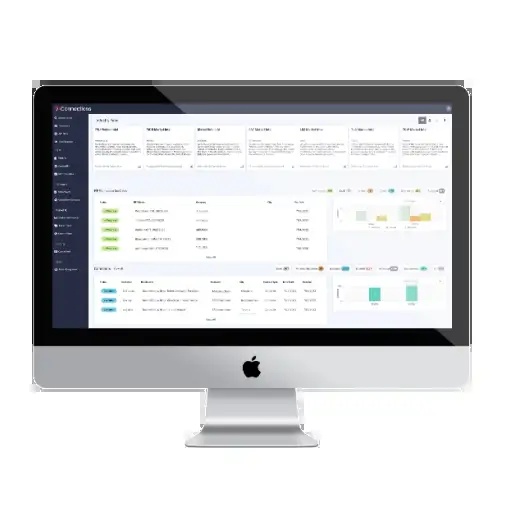
The crew-facing app supplies hotel, transport, meal and schedule information. Operations teams get a dashboard and reporting. Different people need different views, but those views concern the same layover. That shared record is the point of the product.
The receipt was the clue
easyJet provides a revealing example. A TA Connections case study describes its earlier process: passengers arranged replacement travel on other airlines, submitted receipts and waited for reimbursement. Manual work followed the passenger home.
The airline implemented Intelligent Ticketing Switch in February 2023. It connected alternative flight inventory to the recovery workflow. In the vendor’s case study, passenger self-service reached 80%, against an initial 55% target. The document forecast £14 million in 2023 savings. That figure was an expectation, not a verified year-end result.
Passenger self-service during disruption. Figures reported in TA Connections’ case study.
The change illustrates a useful distinction. An apology tells passengers something happened. An integrated recovery tool gives them an action they can complete. The practical advance was making another booking available inside the resolution process.
Recovery includes the ride
TA Disruption Hub monitors itineraries and flight operations, then brings notifications and recovery options into an airline-branded self-service portal. Options include replacement flights, accommodation, transport and vouchers, backed by multilingual support available around the clock. The airline’s rules shape what can be offered.
A December 2024 collaboration with Uber for Business added rides to that toolkit. Airline teams can arrange transport and see trip information and costs; passengers can see pickup and driver details. It addresses an ordinary gap: getting a room is less helpful when the traveler still has to work out how to reach it.
- 01Detect
- 02Rebook
- 03Accommodate
- 04Move
The broader software suite reaches into the airport, cabin and ramp. TA Airport provides mobile departure control; TA Inflight combines cabin information with point of sale; TA Ramp handles digital baggage reconciliation. These products extend the company’s reach beyond accommodation into the surrounding airline operation.
Buying the connected operation
The customer is the airline. Crew schedulers, operations centers, airport agents and finance teams use the tools behind the scenes. The current website reports more than 160 airline customers. Cargo belongs here too: DHL Air UK’s July 2025 agreement covered Crew Hub for lodging and ground transportation, with integration and visibility among its stated priorities.
Commercially, TA Connections combines enterprise software with procurement and managed services. Buyers request demonstrations. A useful evaluation would include integration work, supplier coverage, support and payment handling alongside the software itself. The product’s value depends on how those pieces work together at the airline buying it.
There are established alternatives. Accommodations Plus International offers its own crew platform, hotel sourcing, operational support and billing. TA Connections’ proposition bundles crew logistics and passenger recovery with broader airline tools and Corpay’s payment infrastructure. Buyers should compare the workflows they need rather than assume the longest product list wins.
“You focus on flight. We’ll streamline the rest.”TA Connections’ public promise
Connect the promises first
Other businesses can copy the operational idea: connect the next action to the information that triggers it. Let customers handle choices the system can fulfill, while giving staff visibility into the exceptions. In airline recovery, that means a message, a booking and a payment belonging to the same plan.
There are limits. Accurate feeds, sensible policies and available supplier inventory remain necessary; software cannot create an empty hotel room in a full city. Automation also needs a route to human help. The achievement worth examining is how much less reconstruction the traveler and the airline must do between one promise and the next.