Kevin Czinger once described a Chevrolet Chevelle with its sound-deadening material ripped out and a big-block engine moved back in the chassis. The point was to go faster. Comfort could submit a complaint later. He and his older brothers built and raced cars around Cleveland, where a mechanical problem was something you could put your hands on. Decades later, his work still has that recognisable impulse: look closely at what is there, work out what gets in the way, and consider taking it apart.
The object of his attention has grown. Czinger is the founder and executive chairman of Divergent, which combines design software, metal printing, and automated assembly. He also co-founded Czinger Vehicles with his son Lukas. Their cars carry the family name. Their larger ambition concerns the equipment that makes them, and whether a factory can become less captive to yesterday’s decisions.
A Barracuda education
The early cars were quite specific. There was a 1967 Plymouth Barracuda, with a 440 wedge engine and an automatic transmission, raced at Ohio’s Dragway 42. There was the Chevelle, which belonged to a world of weekend gatherings and wagers. These were machines to repair and alter, with two older brothers supplying the instruction. Czinger remembers drawing vehicles as a child, extending his imaginary fleet across land, sea, air, and space. A modestly ambitious transport policy.
Affection did not make him sentimental about every old solution. By 2010, while running electric-car company Coda Automotive, he was arguing that the combustion engine’s cultural appeal could obstruct change. We have to lose the nostalgia.
At the time, the car enthusiast said his usual commute was a bicycle ride of roughly seven miles. His interest in vehicles has always allowed room for a practical contradiction.
That distinction matters to his later work. You can love making cars while becoming dissatisfied with the machinery, economics, and habits surrounding them. Cleveland gave him an attachment to industrial work. The decline of its manufacturing base gave that attachment an unresolved question. How could communities keep the ability to make things when the economics of making them changed?
An undersized player takes the long route
Football opened another door. Czinger became the first member of his family to attend college, arriving at Yale as a recruited player. He was a middle guard and linebacker, positions for which his own recollection of standing about five feet ten and weighing 185 pounds was hardly an advertisement for conventional sizing. In 1980, he won the Bushnell Cup as the Ivy League’s football Player of the Year.
He also received National Football Foundation scholar-athlete recognition. The combination of academic work and football is useful context for a career that would resist a neat occupational label. There would be law, finance, and eventually industrial technology. A college football honor did not prescribe any of those destinations; it established that the person choosing them had already learned to compete in circumstances that did not look especially well proportioned.
At law school, his plans included the possibility of returning to Cleveland and entering public service. Meeting Katrin, a visiting scholar from Berlin who became his wife, helped broaden his outlook. So did a summer at Goldman Sachs. He went on to work as a federal prosecutor in New York and as an executive at Goldman, then moved through technology entrepreneurship and venture capital.
Later, he studied electrical engineering at Arizona State. His career reads like a sustained refusal to let the first qualification settle the question of what he could learn next. The lawyer did not stay behind a lawyer’s desk. The banker eventually returned to a problem involving actual metal.
The factory becomes the question
Coda placed him inside an earlier effort to bring electric cars to market. He worked on the vehicle and battery businesses, including manufacturing partnerships in China, and left the chief executive position in November 2010. It was a different proposition from the exotic cars that would later bear his surname: a sedan intended for ordinary daily use.
His later manufacturing argument widened the frame around the car. A vehicle consumes resources before anyone turns a wheel. Materials have to be produced, transported, formed, and joined. An electric drivetrain does not settle all those questions. For Czinger, the structure of the production system deserved the same scrutiny as the powertrain.
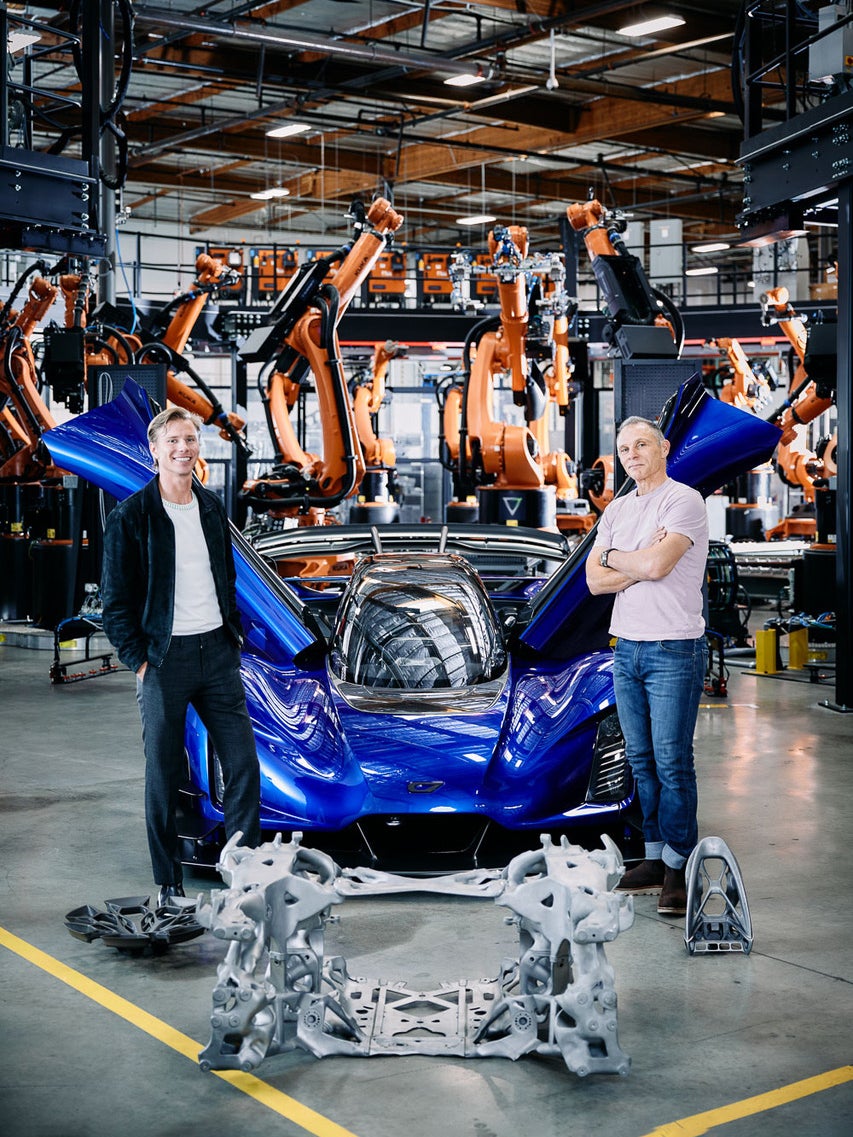
Divergent, founded in 2014, became his attempt to build an alternative. Its Adaptive Production System, usually shortened to DAPS, connects computational design with additive manufacturing and robotic assembly. Engineers establish requirements. Software helps generate structures that meet them. Metal printing produces parts, and an automated assembly process brings the structures together. The integration is central to the proposition.
- 01 / DesignSet requirements.
Compute a structure. - 02 / PrintBuild metal parts
layer by layer. - 03 / AssembleJoin the parts
with robotic systems.
The economic question sits underneath the technical one. Dedicated tools tie a factory to particular designs. Changing the product can mean changing equipment, with the associated time and cost. Divergent’s system aims to make those transitions more flexible. A better part is useful. A production system that can accommodate the next part gives the customer a different kind of option.
In a 2018 conversation, Czinger framed the human question this way: How do you give smaller and smaller teams more and more power?
He wanted the creative freedom associated with software to reach people making physical objects. That ambition reaches beyond the buying habits of hypercar collectors. It asks who gets access to the tools of production in the first place.
A family business, by invitation
Lukas’s arrival was his own decision. He had studied electrical engineering at Yale and entered investment banking before asking to work with his father. Kevin has said he had not set out to create a father-son business. He was concerned about Lukas leaving an established path for a venture where the initial job would be junior engineer.
The apprenticeship became consequential. Lukas helped develop the automated assembly capability, taking on engineering and operational responsibilities before moving into leadership. Their partnership produced two closely connected businesses: Divergent’s manufacturing platform and Czinger Vehicles, established in 2019. By 2025, Kevin was executive chairman and Lukas was running Divergent as chief executive.
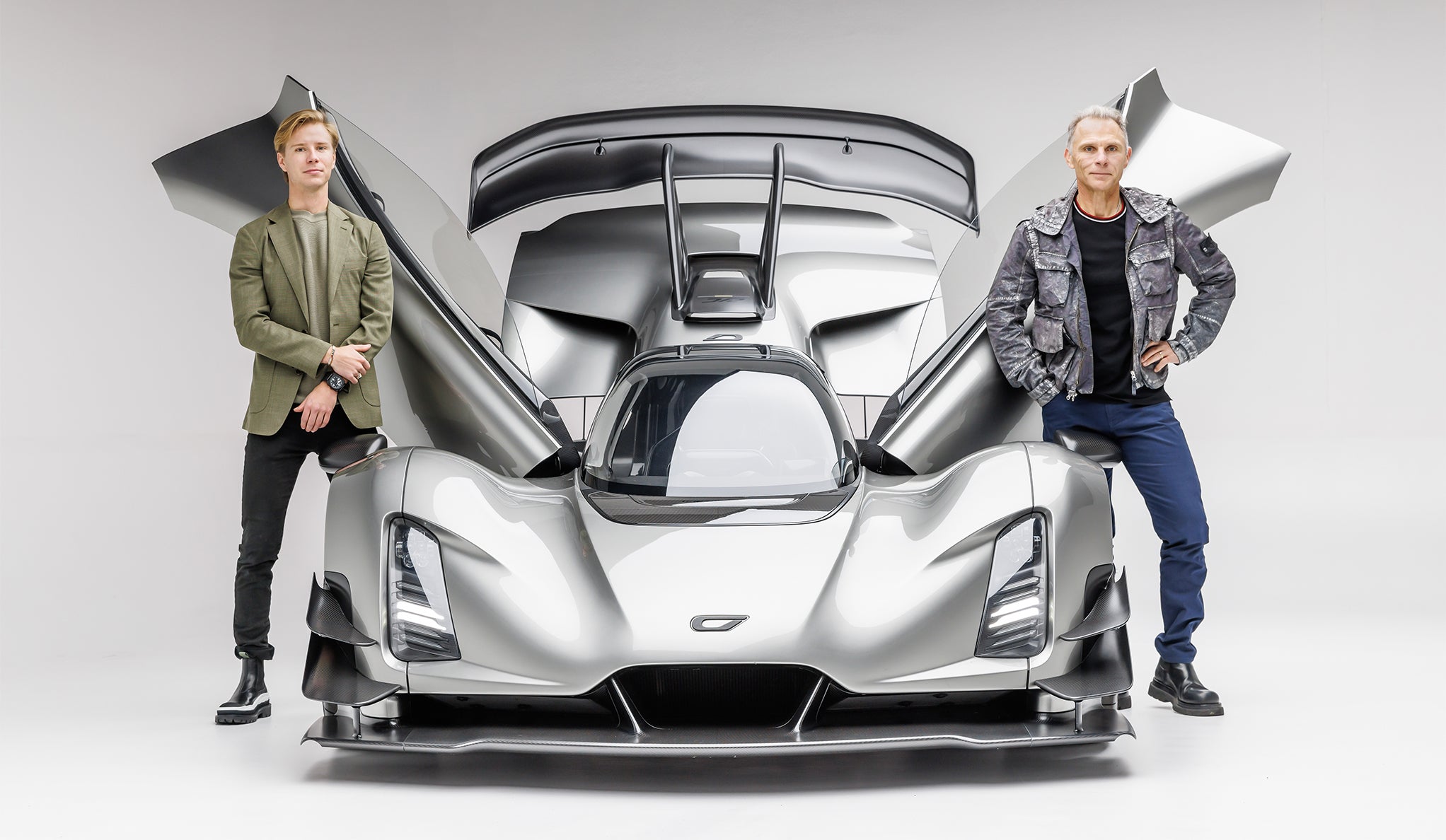
There is a tempting shortcut in any family-company story: treat the surname as the explanation. Here, the sequence deserves attention. A son joined to work on engineering; the partnership developed through the work. Kevin’s current role also makes the succession visible. The founder remains involved while the next generation carries responsibility for operating the business.
The car with an aircraft in its family tree
The 21C gives the factory argument a physical form. Its driver sits in the center, with the passenger behind, an arrangement influenced by the SR-71 Blackbird. Kevin has explained the layout in terms of aerodynamic performance and room to shape the body around the cockpit. The passenger gets a somewhat different interpretation of sitting beside a friend.
Printed structures are part of the car’s engineering, rather than a decorative theme. The vehicle creates a demanding application for the manufacturing system and a way for potential customers to inspect its results. A working car can hold an industrial conversation that a slide presentation struggles to begin. Open a body panel and the discussion becomes concrete.
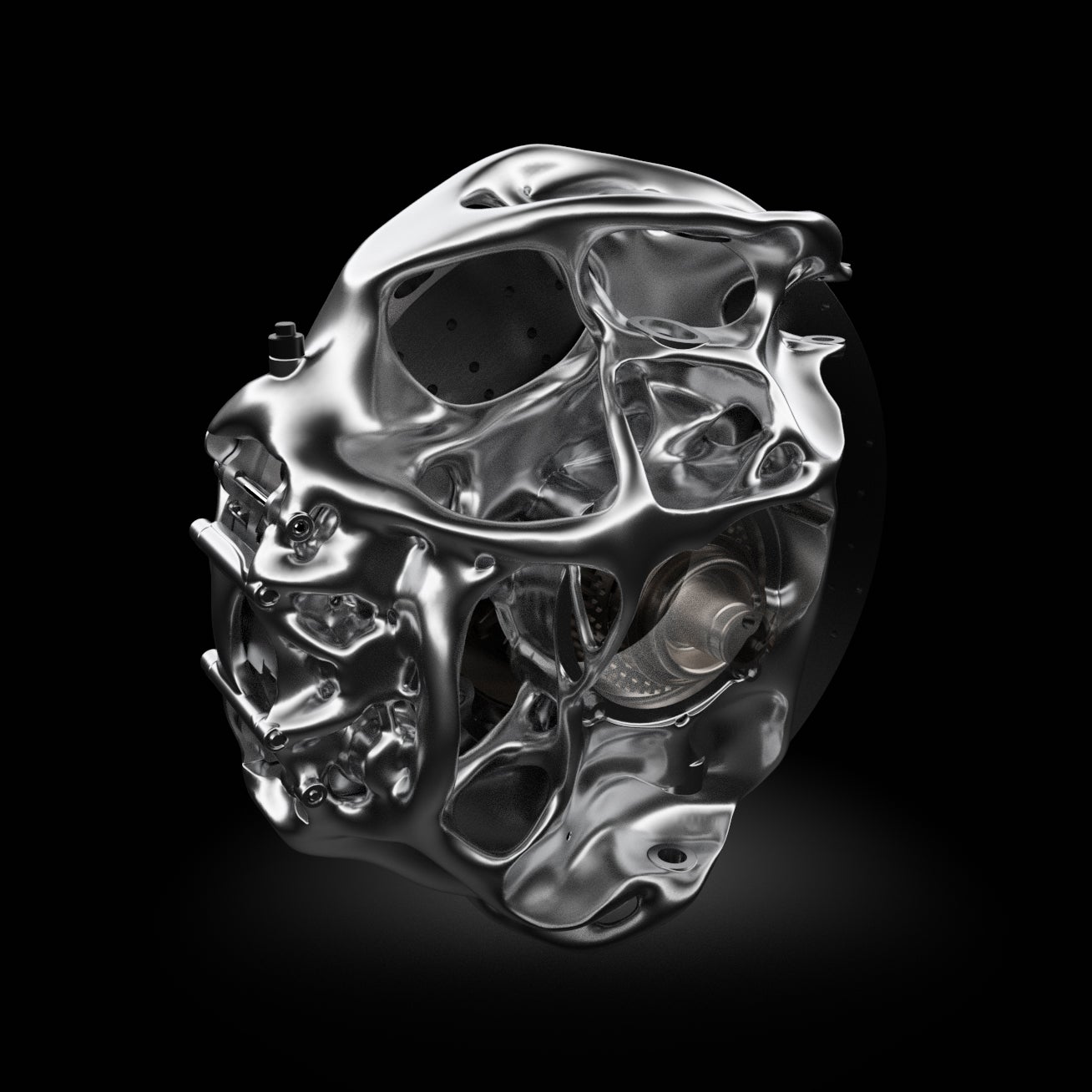
The public milestones have followed. In September 2024, Kevin and Lukas attended the opening of Area 21, the vehicle production facility in Torrance. In August 2026, Czinger Vehicles introduced the 21C Spyder, a planned run of 30 open-top cars. Its BrakeNode combines the brake caliper, suspension upright, and hydraulic pathways into one printed structure. The consolidation makes a useful illustration of the underlying method: reconsider the assembly before deciding how many separate pieces it needs.
A factory is a long commitment. Czinger wants it to leave room for a change of plan.
The industrial wager
From a car factory to an industrial argument
Divergent’s customer work extends into aerospace and defense. In September 2025, it announced $290 million in financing, comprising $250 million in equity and $40 million in debt, at a $2.3 billion valuation. The purpose was to expand manufacturing capacity and develop capabilities for further product families. That figure describes the company’s financing, rather than the personal wealth of its founder.
Czinger has also taken the argument into public policy. In April 2025, he appeared before a congressional subcommittee to advocate rebuilding American industrial capacity. On October 13, 2026, he published an essay proposing a distributed manufacturing network with a government-owned standard, allowing qualified production capacity to be shared across suppliers. He explicitly acknowledged his commercial interest and argued that the network should have multiple providers.
That proposal remains an aspiration, with institutional decisions required alongside technical ones. Its continuity with the earlier work is striking: avoid making the entire production system depend on a single fixed path. The childhood garage, the adaptable factory, and the network proposal all leave room for someone to try another approach.
Czinger’s story now has two generations and several industries in it. The question underneath remains approachable. If a group of people has a better idea for a physical object, how much machinery must stand between the idea and the object? He has spent years trying to shorten that distance. The cars make an excellent noise while the argument continues.
Keep the conversation going
The companies, Kevin’s writing, and a closer look at the machinery.
- Divergent Manufacturing platform ↗
- Czinger Vehicles The cars ↗
- Kevin on LinkedIn Posts & essays ↗
- Building an Arsenal That Survives the Tenth Salvo Kevin’s October 2026 essay ↗
- A conversation with Yale Law Cars, career & learning ↗
- Cleveland cars and the Coda years The 2010 interview ↗
- Two generations at the factory Yale’s 2023 feature ↗
- How the partnership began The 2022 conversation ↗
- How to Recapture the Soul of American Manufacturing Kevin’s 2018 conversation ↗
- April 2025 congressional testimony Read the statement · PDF ↗
- The 21C Spyder announcement August 2026 ↗
- Divergent’s September 2025 financing Company announcement ↗
- The aircraft influence on the 21C Goodwood interview ↗
- The 1980 scholar-athlete Football honors ↗
- Inside Area 21’s opening The Torrance factory ↗
- Watch: Jay Leno’s Garage meets the 21C YouTube ↗
- Czinger Vehicles on YouTube Films & demonstrations ↗