3d-printing
(50)
Womp wants your next design to leave the screen
An artist’s frustration became a browser-based 3D tool. Now Womp is following its users into the less forgiving business of making things you can hold.

DGDA and the expensive art of making things people want
Dave Getchel can turn an idea into a website, a prototype or a tool for his own workbench. His more revealing design lessons come from the things he made before finding anyone to buy them.
MotionLab.Berlin gives hardware startups room to make a mess
A €1,500 double-decker bus helped give this Berlin workshop its personality. Shared machinery, paid memberships and publicly backed programs explain how it helps hardware founders get to work.

DMM Quit Robots. Now It’s Putting ¥5 Billion Into a Return.
Anime, currency trading, English lessons and an aquarium already share the DMM name. Its return to robotics reveals how this Japanese conglomerate decides which failures deserve another chance.
Fictiv Built a $350 Million Business Out of the Wait for Parts
Two brothers started with a 3D printer in a San Francisco kitchen. Now part of MISUMI, Fictiv is taking on the expensive stretch between a finished design and a finished product.

Xometry put the machine shop in a shopping cart
A custom part used to begin with a hunt for someone who could make it. Xometry turned that hunt into software - and built a manufacturing marketplace with $687 million in annual revenue.
Ali Tamijani Wants 3D Printing to Learn From the Toolpath
The aerospace professor turned founder is building software that remembers a printed part is made in layers - and that the path from a phone photo to a trustworthy component should not take weeks.

Novineer Is Teaching 3D Printing to Stop Guessing - Before the Plastic Gets Expensive
A seven-person Florida startup wants to replace the print-break-redesign loop with a photograph, a toolpath and a useful prediction. Its bet is simple: the next advance in industrial 3D printing may come from software that understands how the machine actually lays down material.
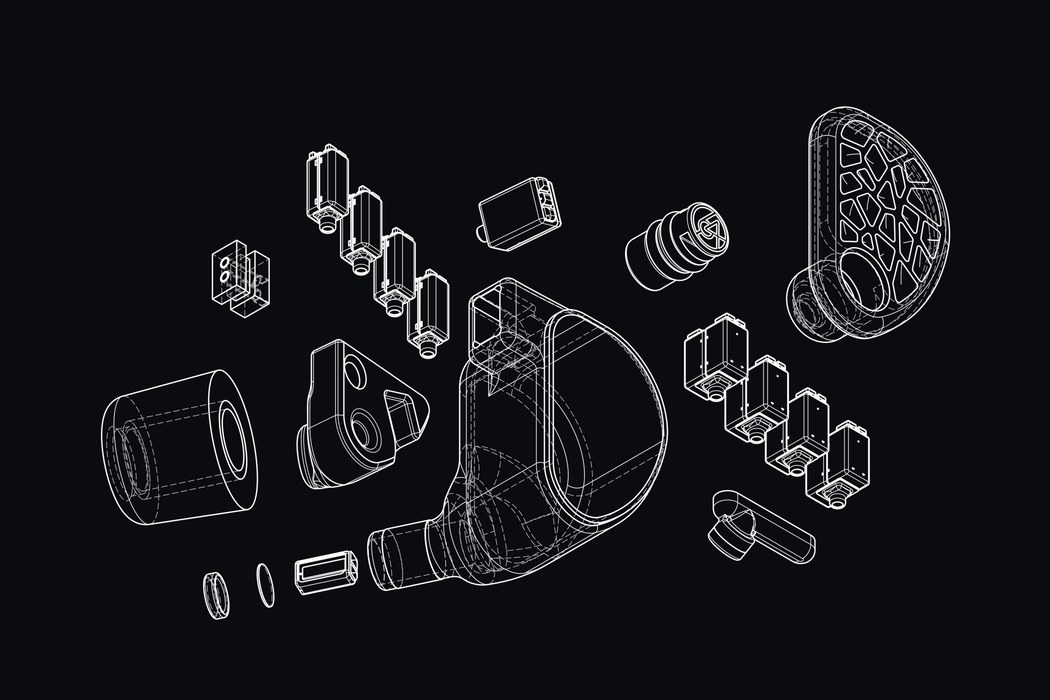
The Family That Took Its Earphones Apart So Beyonce Could Hear Herself
How a Portland sound engineer's spare-bedroom experiment - taking a pair of earphones apart to build a custom set for his wife - became the in-ear monitor brand touring artists and studio producers trust in more than 90 countries.
The Accelerator That Bets on Atoms, Not Apps
Everyone wanted to fund the next app. N15 built a workshop for the people who make things you can hold - and turned Korea's biggest electronics market into a startup factory.

The Store That Sells CPUs at a Loss - and Wins Anyway
While rival electronics chains shrank or died, this Ohio-based retailer kept opening 35,000-square-foot stores - and turned DIY PC builders into one of retail's most loyal fan bases.

HP Is Turning the Office Supply Closet Into an AI Business
The company that put calculators in pockets and printers beside desks now wants to manage the whole workplace - PCs, rooms, security, support and AI included. Its advantage is not novelty. It is the unglamorous power of being everywhere work already happens.
Prototyping.io
Prototyping.io is a San Francisco startup (YC Spring 2026) building an AI-native manufacturing platform that turns CAD designs into finished mechanical parts in as little as one day. It automates the traditionally manual path from design to production - DFM analysis, sourcing, process planning, machine programming and setups - so hardware teams can iterate in days instead of weeks. The company serves customers from early-stage startups to multi-billion-dollar enterprises across robotics, AI infrastructure, energy, automotive and defense.

YC Corporation
YC Corporation is a Seoul-based digital transformation company that helps small and mid-sized Korean manufacturers go digital. As an official Autodesk partner, it supplies and consults on CAD/CAM/PLM software (Fusion 360, AutoCAD, Inventor, PowerMill), builds its own YC Smart Line MES, and sells the hardware - CNC routers, laser markers, 3D printers and IoT sensors - to run it. Founded in 2022 and bootstrapped, the company reached roughly 7 billion won in revenue by mid-2024 by focusing on shops that earlier smart-factory programs overlooked.
Cédric Kovacs-Johnson
Cédric Kovacs-Johnson is the founder and CEO of Flume Health, a New York-based software company that connects the fragmented healthcare data ecosystem so payers and employers can build and run health plans more efficiently. A chemical engineer by training, he first made his name as co-inventor of Spectrom, a full-color 3D printing technology that won the 2014 Collegiate Inventors Competition and was acquired by MakerBot. He founded Flume Health in 2017 and has raised more than $40 million in venture funding, including a $30 million Series A in 2022.
CairnSurgical, Inc.
CairnSurgical is a clinical-stage medical device company in Lebanon, New Hampshire, building patient-specific surgical guidance for breast cancer lumpectomy. Its Breast Cancer Locator (BCL) System pairs a 3D-printed, bra-like form molded to each patient's anatomy with an interactive 3D Visualizer derived from supine MRI, giving surgeons a precise blueprint of a tumor's size, shape, depth and edges. The goal is to cut the 20 to 25 percent re-excision rate in breast-conserving surgery toward zero. Spun out of Dartmouth College and Dartmouth-Hitchcock Medical Center in 2015, the company reported 94 percent margin-negative resections in a European study and filed for FDA De Novo clearance in 2026.
Shapeways
Shapeways is an Eindhoven-based 3D printing and digital manufacturing company that lets individuals and businesses upload 3D files and receive custom parts made through additive manufacturing, CNC machining and injection molding. Founded in 2007 inside Royal Philips, it pioneered a public 3D printing service and marketplace, went public via SPAC in 2021, filed for bankruptcy in 2024, and was relaunched in December 2024 by its original founders and the profitable Eindhoven factory team with a renewed focus on B2B customers, sustainability and operational stability.

PIX Moving
PIX Moving is a city-robotics company that builds modular, drive-by-wire electric 'skateboard' chassis and autonomous 'mobile spaces' such as its RoboBus and RoboShop. Founded in 2014 and rooted in both Silicon Valley and China, PIX combines metal 3D printing, generative design, and self-driving software to turn vehicles into reconfigurable rooms on wheels - a shuttle that can become a cafe, gym, retail pop-up, or library. It sells its chassis and full vehicles to developers, cities, and mobility operators, and runs a Robot-as-a-Service model aimed at deploying fleets across dozens of countries.

Marleen Vogelaar
Marleen Vogelaar is a Dutch entrepreneur who co-founded Shapeways in 2007, helped build it into the world's largest 3D printing marketplace, left in 2014 to start the on-demand apparel company Ziel, and then returned to Shapeways as CEO in December 2024 after the company went bankrupt - buying back the brand and rebuilding it around a leaner, B2B, profit-first model. A former competitive heptathlete and industrial engineer, she is known for pairing operational discipline with an insistence that a company's mission should not be hostage to its investors, an idea she put into practice by converting Ziel to steward-ownership.

Factorem
Factorem is an AI-driven on-demand manufacturing platform based in Singapore. Founded in 2020 by Alexandra Zhang and Hardik Dobariya, it lets engineering and hardware teams upload a CAD file, get an instant quote, and order custom parts - CNC machining, 3D printing, sheet metal fabrication, injection molding and surface treatment - from a vetted network of Southeast Asian factories, with no minimum order quantity. The platform uses AI to scan designs, match them to the best-suited manufacturer, and manage end-to-end fulfilment, compressing prototyping timelines from months to days.

MacLean-Fogg
MacLean-Fogg is a fourth-generation, family-owned American manufacturer founded in 1925 that grew from a single railroad lock nut into a global maker of fasteners, engineered components, plastics, and additive-manufacturing tooling. Headquartered in Mundelein, Illinois, the roughly $1.2 billion-a-year enterprise supplies the automotive, heavy-truck, electric utility, telecom, and industrial markets from dozens of plants across North America, Europe, and Asia. In 2025 it marked its 100th anniversary still owned and led by the MacLean family.
Verustruct
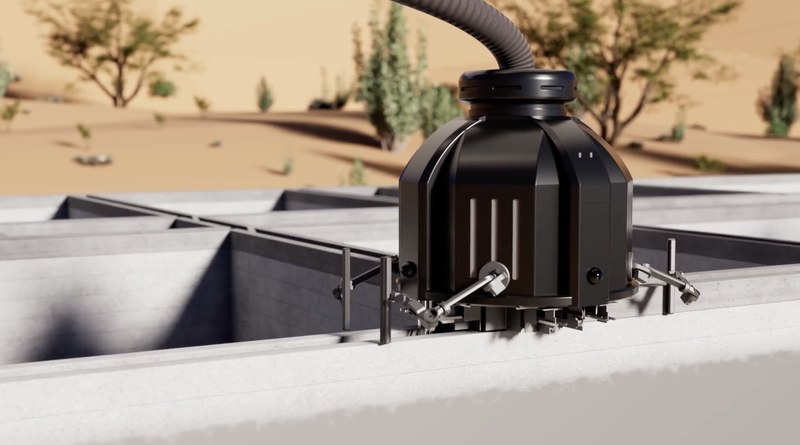
Verustruct is a New Haven-based construction-technology company building a gantry-less 3D printing system to make affordable, sustainable housing at scale. Founded by former SpaceX engineer Nick Callegari, its patent-pending translational slipform printer extrudes load-bearing walls with embedded mechanical, electrical, and plumbing systems, then scales itself up layer by layer, sidestepping the bulky gantry frames that cap the size of most additive-construction projects. Organized as a public benefit corporation, Verustruct aims to cut home construction cost by roughly half and emissions by around 40 percent.

Z-Polymers
Z-Polymers is a Lowell, Massachusetts materials science company that emerged from the UMass Lowell Innovation Hub to build Tullomer, a PFAS-free liquid crystal super-polymer spun into ultra-fine fibers and 3D-printing filament. Founded in 2021 by materials scientist Dr. Michael Zimmerman, the company claims strength up to four times that of PEEK - and up to six times stronger than steel at a sixth of the weight - while printing on desktop machines without annealing. Its materials target aerospace, defense, medical devices, energy, and functional fabrics, and in 2026 it secured a strategic seed investment and joint development agreement with Japan's Kureha Corporation.
Caralynn Nowinski Collens
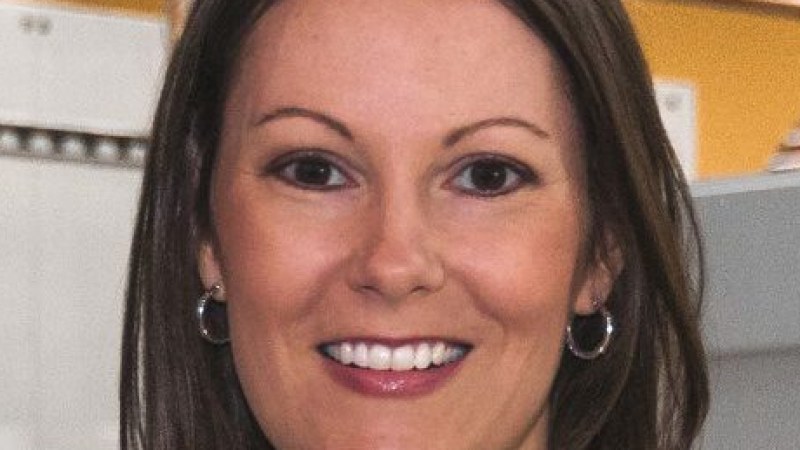
Caralynn Nowinski Collens is a physician-turned-entrepreneur and the co-founder and CEO of Dimension Bio (formerly Dimension Inx), a Chicago biotechnology company building regenerative therapeutics that give the body a blueprint to heal itself. Its BioNidum platform fuses materials science, 3D-printing, and digital manufacturing to turn cells into implantable, tissue-like therapies. Before biotech, she spent eight years co-founding and running UI LABS, the innovation collaborative that launched MxD, the U.S. national hub for digital manufacturing. She trained as an M.D./MBA at the University of Illinois at Chicago and has been recognized on Crain's Forty Under Forty, Tech 50, and Notable Women in STEM lists.
Gregory Mark
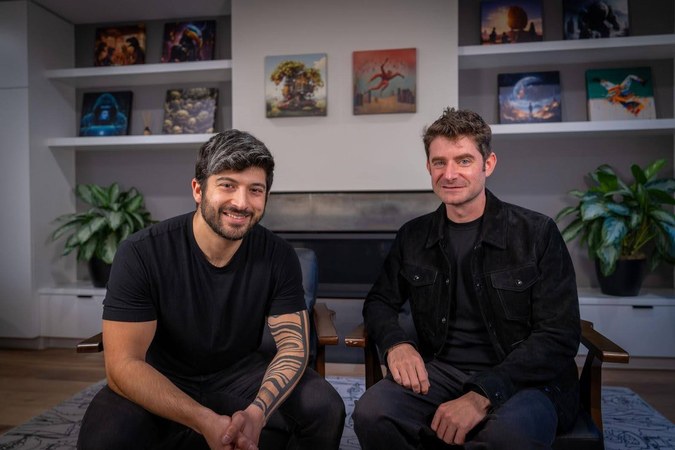
Gregory Mark is a three-time founder and MIT-trained aerospace engineer who is rebuilding how physical things get made. After inventing continuous carbon fiber 3D printing and taking Markforged from a garage idea to a $2.1B public company, he launched Backflip AI in 2024, a generative AI tool that turns text, sketches, and scans into 3D-printable, manufacturable models. Backflip raised a $30M Series A co-led by NEA and Andreessen Horowitz, with angels including Microsoft CTO Kevin Scott and 'Attention Is All You Need' co-author Ashish Vaswani.

James Hedrick
James Hedrick is the co-founder and CEO of Azul 3D, a Skokie, Illinois deep-tech company commercializing HARP (High Area Rapid Printing), a resin 3D-printing technology he helped invent during his PhD at Northwestern University in Chad Mirkin's lab. HARP uses a flowing, non-stick liquid interface to carry away heat, letting large parts print continuously up to 100 times faster than layer-by-layer machines - fast enough and strong enough to challenge injection molding. Hedrick started his first company at 16 to pay his way through MIT, where he was an NCAA athlete, and was named to the Forbes 30 Under 30 Manufacturing & Industry list in 2020.

Jifei Ou
Jifei Ou is the founder and CEO of OPT Industries, a Medford, Massachusetts company that turned a decade of MIT Media Lab research into a new kind of factory. After nearly seven years spent learning to 3D-print fur, hair, and micro-textures no mold could produce, Ou built RAMP, described as the world's first roll-to-roll 3D printing system, which prints intricate microstructures by the mile. Rather than sell machines, OPT sells the products it makes on them - false eyelashes, beauty applicators, and diagnostic swabs that outperformed the gold standard during COVID. Ou raised $15M in Series A funding and is betting that reconnecting design and production can bring precision manufacturing back onshore.

LuxCreo
LuxCreo is a digital manufacturing company turning dental clinics and labs into same-day production floors. Its patented LEAP (Light Enabled Additive Production) printers, ActiveMemory polymers, and LuxFlow software combine to deliver FDA-cleared, directly 3D-printed clear aligners, night guards, dentures and crowns - cutting weeks of traditional workflow down to hours.
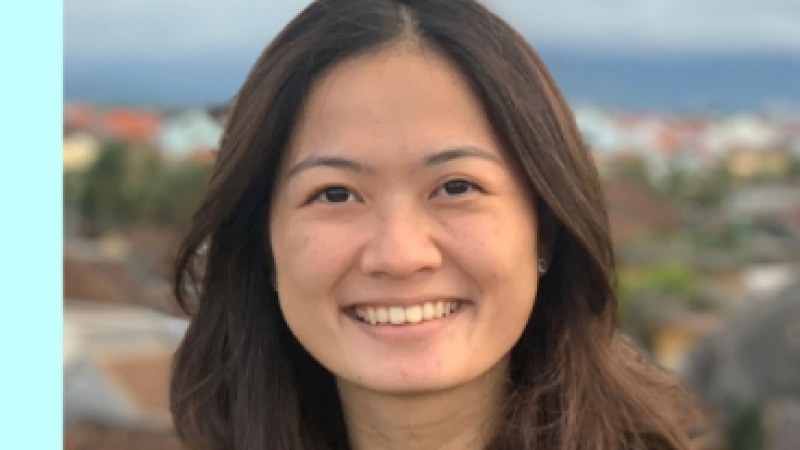
Alexandra Zhang
Alexandra Zhang is the co-founder and CEO of Factorem, an AI-native, on-demand manufacturing platform born in Singapore that connects hardware and photonics teams with a vetted network of factories across Southeast Asia. After hitting sourcing walls as an engineer building EV transmissions in Toronto, she built the platform she wished she'd had: instant quotes, no minimum order quantities, and lead times cut from months to days. A Forbes 30 Under 30 honoree, she relocated from Singapore to Colorado to open the U.S. market, which now drives nearly half of company sales.

Mike Zimmerman
Mike Zimmerman is the founder and CEO of Z-Polymers, the Lowell, Massachusetts company behind Tullomer, a melt-spun super polymer marketed as stronger than PEEK and stainless steel yet light enough to print on a desktop 3D machine. A career materials scientist with a PhD in mechanical engineering, he spent nearly 15 years at Bell Labs and Saint-Gobain before founding a string of deep-tech ventures including Quantum Leap Packaging and the solid-state battery company Ionic Materials. He has also taught materials science at Tufts University for more than three decades.