Physna raises $86M+ to index the physical worldThangs passes 20M monthly active usersSequoia, Tiger Global & GV back geometric deep learningThe "Google of 3D" is built in Columbus, OhioSearch by shape, not by file nameFortune 500s and the DoD on the customer listPhysna raises $86M+ to index the physical worldThangs passes 20M monthly active usersSequoia, Tiger Global & GV back geometric deep learningThe "Google of 3D" is built in Columbus, OhioSearch by shape, not by file nameFortune 500s and the DoD on the customer list
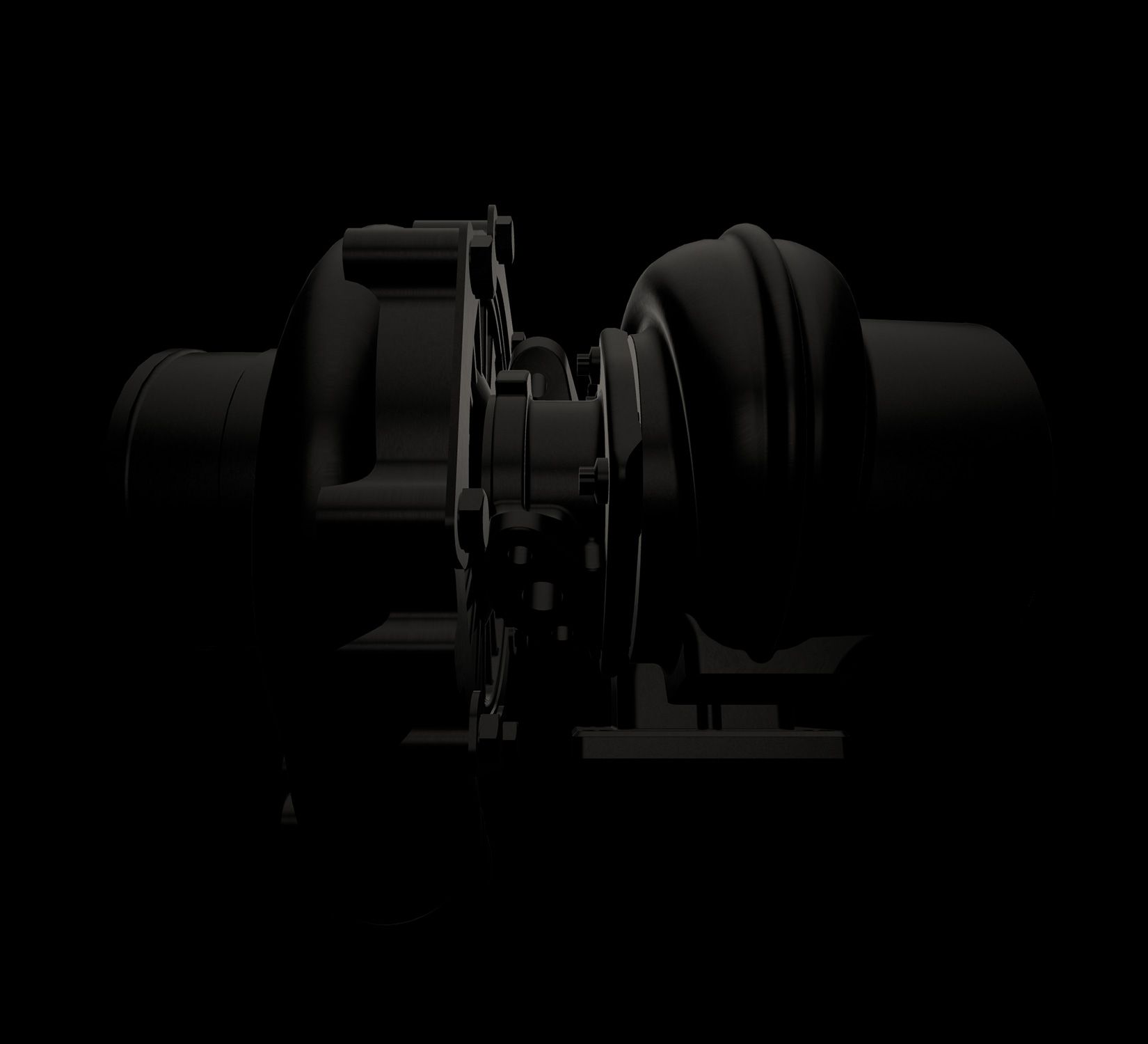
EXHIBIT A: A turbocharger, rendered in the dark. To you it's a part. To Physna it's a fingerprint - every curve a searchable coordinate.
Company Profile / Geometric Search
Physna
Teaching software to understand the shape of things.
Founded 2015Columbus, Ohio$86M+ RaisedMaker of Thangs
Who they are now
A search box for the physical world
Drop a 3D model into Physna and something strange happens. The software does not read the file name. It does not skim the tags. It looks at the geometry - the actual curves, angles and volumes of the object - and then goes and finds every part on earth that shares that shape. A bolt. A bracket. A turbine housing someone mislabeled three companies ago. Physna finds it anyway.
That is the whole pitch, and it is a bigger one than it sounds. For thirty years, computers have been excellent at searching words and, more recently, images. Physical objects stayed stubbornly opaque - a CAD file was just a blob with a name attached. Physna's claim is that shape itself is now searchable data. The company calls it geometric deep learning. The press, predictably, calls it "the Google of 3D."
Physna allows software to truly understand physical 3D data. By merging the physical with the digital, we unlocked everything from geometric search to 3D machine learning.Paul Powers, Co-Founder & CEO
Today that idea runs in two places at once. There is Physna, the enterprise platform quietly used by Fortune 500 manufacturers and the U.S. Department of Defense. And there is Thangs, a free public version that became one of the largest 3D communities on the internet. Both are doing the same trick. One just happens to be free.
The problem they saw
Every factory is drowning in shapes it can't find
Consider the unglamorous reality of a large manufacturer. It may have millions of part designs scattered across decades of servers, named by whoever happened to save them. "Bracket_final_v2_REALfinal." Engineers routinely redesign components that already exist somewhere in the archive, because finding the old one is harder than starting over. Suppliers quote duplicate parts. Designs leak, get renamed, and resurface with no paper trail.
The common thread: software could not tell whether two objects were the same thing. Match-by-filename is a guessing game. Match-by-shape did not exist at scale. Physna was, in its first life, an answer to the narrowest version of this problem - protecting product designs from intellectual-property theft. The founders quickly realized the IP problem was just one symptom of a much larger blind spot.
The dirty secret of CAD: A 3D file's name tells you almost nothing about what's inside it. Physna ignores the label entirely and reads the geometry - which is the one thing a thief can't quietly rename away.
The founders' bet
An astrophysics mind and a co-founder's unfinished work
Physna was founded in 2015 by Paul Powers and Glenn Warner Jr. Powers, the CEO, arrived from a world closer to astrophysics than to enterprise software - a background that nudged the company toward treating objects as math first and files second. Warner, the CTO, brought the engineering muscle to make the math run.
Their bet was almost absurdly ambitious: that you could give every physical object a kind of searchable DNA, a geometric signature precise enough that a computer could match, compare and reason about it. Investors were not exactly lining up at first. This was hard, foundational technology, being built in Ohio, years before "AI" became a magic word on a pitch deck.
The next great search engine won't read words. It will read shapes.The thesis, in one line
Warner died in October 2019, only months after the company closed its first institutional round. The company he helped start kept building. By the time the money did show up, it showed up loudly: Drive Capital, then Sequoia, then Tiger Global and Google's own venture arm.
The paper trail
Physna, by milestone
2015
Founded in Ohio
Paul Powers and Glenn Warner Jr. start Physna, originally to protect 3D designs from IP theft.
JUL 2019
$6.9M Series A
Drive Capital leads the first institutional round to build the "Google for 3D."
OCT 2019
A founder lost
Co-founder and CTO Glenn Warner Jr. passes away at 59. The mission continues.
2020
Thangs goes public
Physna launches Thangs, a free geometric search engine and 3D creator community.
JAN 2021
$20M Series B
Sequoia Capital leads; partner Shaun Maguire joins the board.
JUL 2021
$56M & Instant AR
Tiger Global leads with GV and Sequoia; total funding tops $86M. Thangs adds augmented reality.
2024
20M monthly users
Thangs reports surpassing 20 million monthly active users.
The product
Two front doors, one engine
Under the hood, everything is the same geometric deep-learning engine, indexing 3D models by the polygons that make up their volumes. What changes is who walks through the door.
Enterprise
Physna
The platform for engineering, manufacturing, supply chain and IP protection. Codifies models into searchable, comparable data. Used by Fortune 500s and the DoD.
Free / Community
Thangs
A public geometric search engine and creator hub. Search by shape, collaborate, protect your IP, and monetize designs - free to use.
Feature
Instant AR
Turns any model on Thangs into an augmented-reality object you can place in the real world through a phone camera.
Type a shape. Find its twin. Even if someone renamed the file and swapped the picture.What geometric search actually does
The proof
The numbers that earned the headlines
Big claims are cheap. Physna's case rests on two things that are harder to fake: who pays for the enterprise product, and how many people use the free one. On the funding side, the company stacked rounds quickly, ending north of $86 million from some of the most selective investors in technology.
Then there is Thangs. A year after launch it had roughly a million users. By 2024 it reported more than twenty million monthly - a twentyfold jump - with Fortune 500 companies in the mix alongside hobbyist 3D printers. The free product became the proof of concept the enterprise sales team could point to.
A year ago Thangs had about a million users. Now there are tens of millions - and a bunch of Fortune 500 companies in there too.On Thangs' growth, 2024
The mission
A source of truth for everything with a shape
Strip away the funding headlines and Physna's mission is simple to state and hard to pull off: make the physical world as searchable, understandable and analyzable as text and images already are. For engineers, that means a bankable source of truth for every 3D model - the same part findable whether it was saved correctly or buried under a nonsense file name a decade ago.
For creators on Thangs, it means something more personal. The platform automatically protects a maker's intellectual property, scanning the web for unauthorized copies of their designs - and catching them even when the name and the preview image have been completely changed. That is a genuinely new capability, and a slightly unsettling one if you have ever quietly borrowed a model.
Powers' background ties to astrophysics, which shaped the geometry-first worldview.
Physna began life as IP-theft protection before becoming a search engine.
The company frames its core idea as giving objects a searchable "DNA."
While AI darlings cluster in California, Physna built its engine in Columbus, Ohio.
Why it matters tomorrow
The world is full of objects nobody can find
As manufacturing, robotics and AI all reach deeper into the physical world, the ability to search and reason about 3D geometry stops being a niche convenience. It becomes infrastructure. A robot that can match what it sees to a known part. A supply chain that can instantly find a replacement by shape. A design tool that warns you the thing you are drawing already exists. All of it depends on software that can do what Physna set out to do in 2015 - actually understand shape.
Google indexed the web. Physna is trying to index everything the web left out: the physical world.The stakes
So go back to that turbocharger in the dark. To a human eye it is just a heavy lump of metal with a name nobody trusts. Feed it to Physna and the lump becomes legible - a fingerprint the software can read, match, protect and find again anywhere on earth. That is the change. Not a flashier file name. A world where shape, finally, is something a computer can search.
Bottom line. If they're right, the next search bar you use won't ask what you're looking for. It'll ask what it looks like.