Consider an aircraft maintenance manual after it leaves its manufacturer. An airline adds its own instructions. A repair organization needs a particular procedure. An engineer revises a passage. Somewhere, a technician must establish which version applies before touching the aircraft. The words have acquired a second job: proving that they are the right words.
Flatirons Solutions makes software for that journey. Its subject is technical content, an expression with all the glamour of a filing cabinet. Yet the practical question is fascinating: how do you keep information attached to the work it governs, even as both keep changing? Aviation gives that question a particularly unforgiving setting.
- Connects manuals to maintenance tasks.
- Serves aviation and defense organizations.
- Combines software and publishing expertise.
01Twenty years of familiarity, then a fresh start
In June 2023, Delta Air Lines supplied a revealing answer. James Griffie, its manager of Technical Instruction and Communications, described working with Flatirons to modernize and consolidate a platform that had been in place for 20 years. The resulting system used a refreshed technology stack and cloud infrastructure. This was a long relationship being renovated.
“modernize and consolidate the platform we have had in place for the past 20 years”
JAMES GRIFFIE / DELTA AIR LINES / 2023
The announcement describes product consolidation and collaboration with Delta. That distinction matters. A publications platform accumulates habits, integrations and institutional knowledge. Modernization must carry those relationships forward while improving the tools. Delta’s example shows why an established supplier can remain useful: it knows the peculiarities of the customer’s information, as well as the information itself.
02The manual is only the beginning
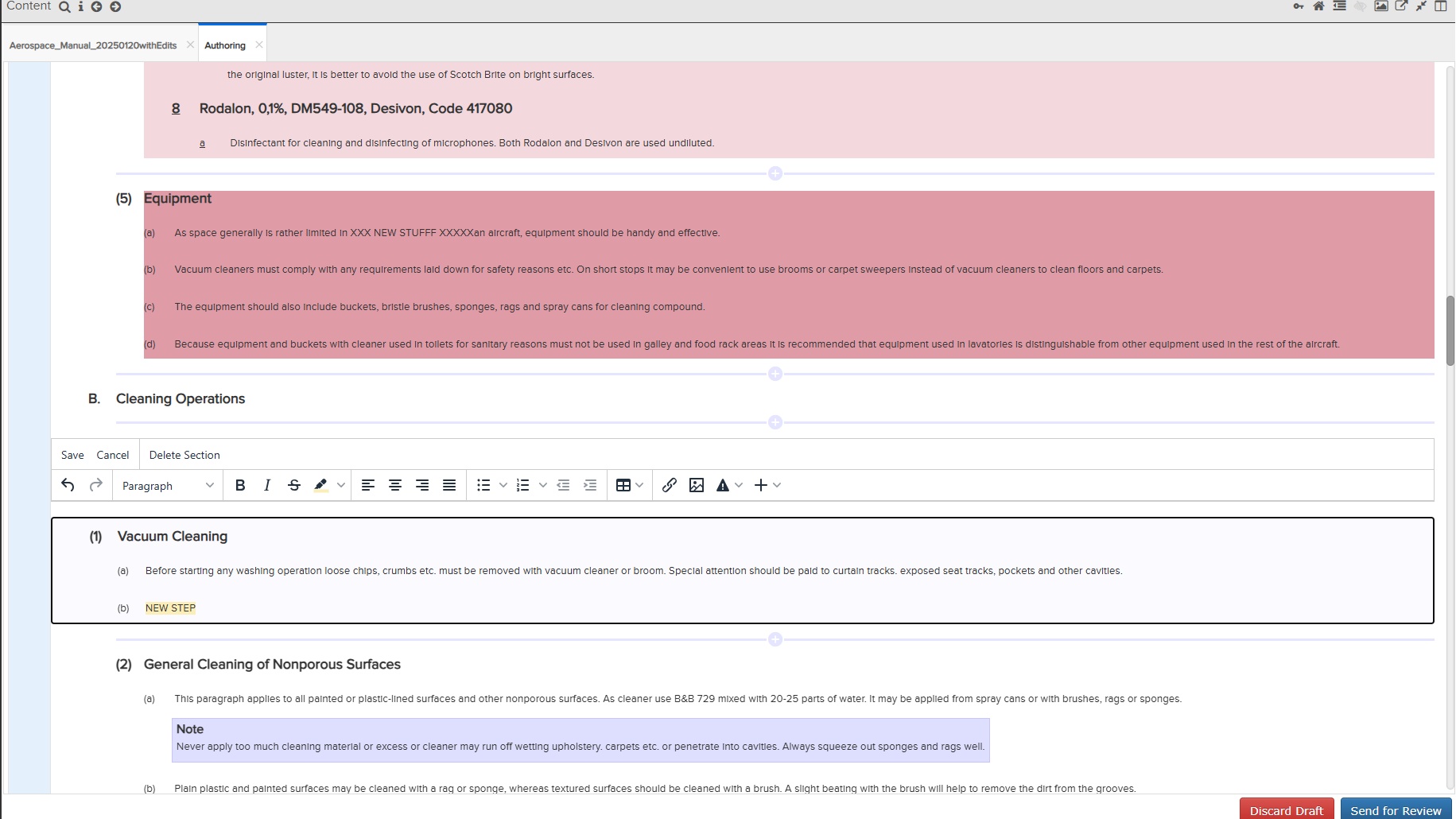
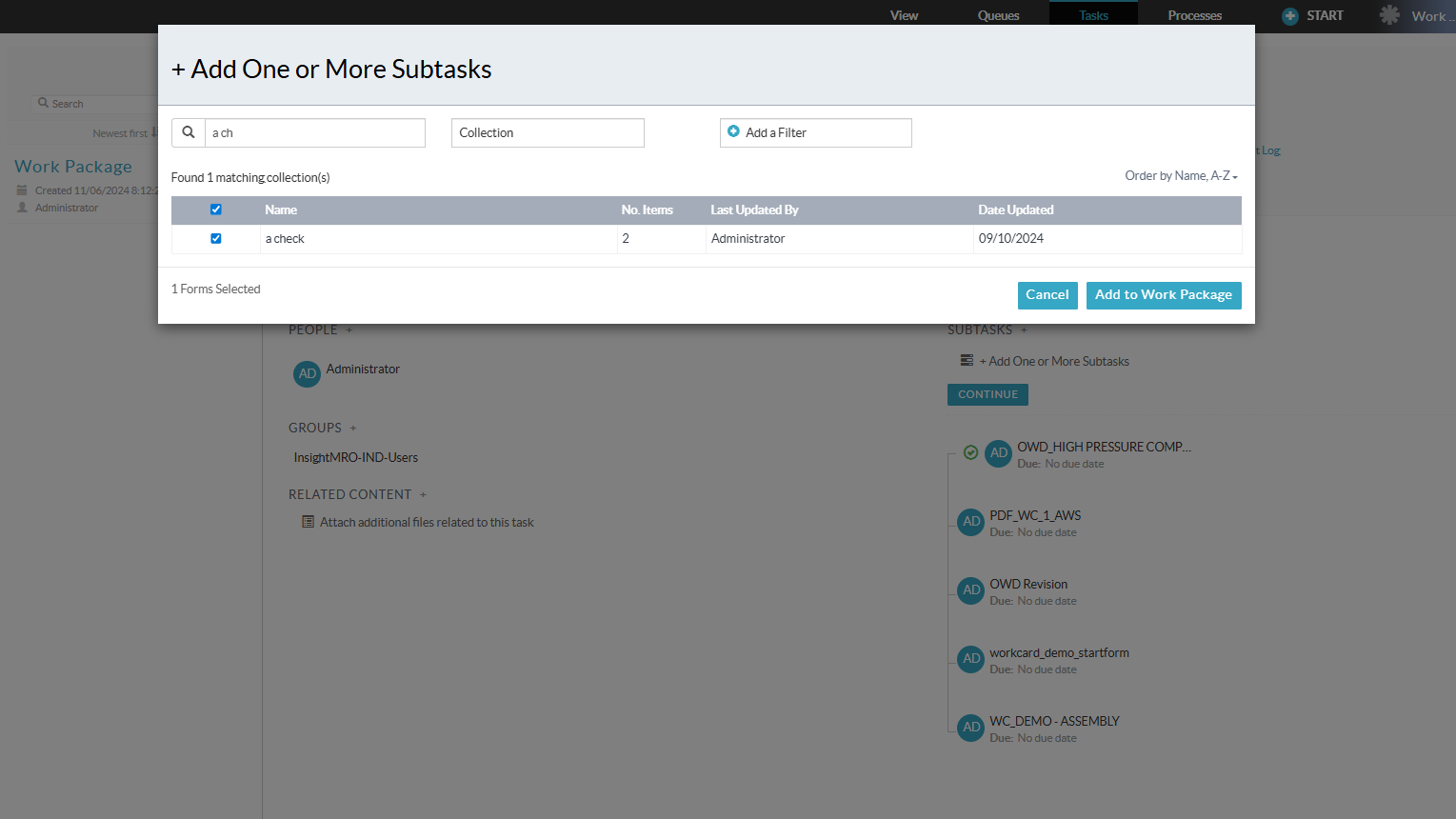
The products divide the journey into recognizable jobs. Knowledge Center manages structured content and revisions. Pinpoint lets users find and view technical publications. eTaskcard handles maintenance work cards. Insight coordinates workflows and records their progress. Flatirons packages these capabilities into editions for fleets, maintenance, repair and overhaul organizations, and manufacturers.
- 01CreateKnowledge Center
- 02FindPinpoint
- 03PerformeTaskcard
- 04TrackInsight
Conceptual workflow; implementation varies.
Its technical vocabulary includes XML, S1000D and ATA iSpec 2200. Think of these as ways of giving documentation a structure that software can recognize. A procedure can become reusable content with identifiable relationships, rather than a passage someone must repeatedly copy. Manufacturers can manage information centrally; operators can bring material from different equipment suppliers into a common working environment.
The revealing complication is the local edit. Airlines have company-specific changes that must be reconciled with new manufacturer revisions. Fleet Edition addresses that reconciliation. Merely collecting manuals would leave the difficult part untouched: deciding how an incoming update affects what your organization has already added. A tidy library can still contain an untidy argument about versions.
03A business built around the handoff
Flatirons occupies the space between engineering documentation and maintenance execution. Its business combines enterprise software, including SaaS delivery, with professional and managed content services. A 2019 Rolls-Royce agreement covered authoring, illustration and Integrated Logistics Support alongside the then-branded CORENA software suite. Customers could buy publishing expertise and the machinery that distributes the result from the same provider.
The alternatives include RWS Contenta, with its common source databases and interactive publications, and PTC Arbortext, which connects XML authoring and publishing with engineering content. Flatirons’ pitch emphasizes multi-manufacturer information, local revisions and task-card execution in one connected workflow. Those capabilities make a sensible shortlist criterion; they do not establish that every competing system lacks them.
Flatirons says its platform serves three of the top four global airlines and four of the top five engine manufacturers. Those are company-reported adoption figures, rather than a market-share calculation. The named Delta and Rolls-Royce relationships offer something more concrete: examples of the operational environments in which its software and services have been used.
04The minutes hiding inside the paperwork
On its MRO page, Flatirons reports average daily productivity savings of 34 minutes per technician with eTaskcard. Treat that figure as a vendor-reported benchmark. Its significance is the unit of measurement. The opportunity resides in minutes spent locating information, handling work cards and recording completion, repeated across a workforce.
Average daily productivity savings per technician with eTaskcard, reported by Flatirons. Results depend on the deployment.
For illustration, 34 minutes multiplied by 100 technicians equals roughly 57 staff-hours in a day. That arithmetic is not a promised customer outcome, and recovered time is not automatically cash saved. A useful evaluation would measure the buyer’s own search delays, revision workload and sign-off process, then test whether improvements actually change throughput. Software earns its keep when the operational bottleneck moves.
The work also starts before the viewer. In February 2026, Flatirons announced a partnership with Data Conversion Laboratory to turn legacy documentation into compatible structured content. The implication is plain: installation alone does not organize old information. Conversion, validation, integration and training belong in the buyer’s budget and implementation plan.
05Show the technician - preserve the procedure
Flatirons’ December 2025 user-conference account introduced Pinpoint 8.8’s semantic search and expanded 3D capabilities. It also described a customer preference for assistive AI that finds answers without changing manufacturer-approved content. That is a useful constraint. Better retrieval can help a technician locate an instruction; the instruction’s authority must survive the assistance.
Security has a similarly precise boundary. In May 2026, Flatirons announced CMMC Level 2 certification for a customer-specific hosted environment. The distinction is essential: the assessment covered that environment, rather than every possible installation. For defense customers, where information lives and how it is controlled are part of the product decision. Buyers need to match the assessed setup to their own program, rather than treat a certification headline as a universal guarantee.
Then came the June 2026 acquisition of Scope AR, backed by owner TELEO Capital. Scope brought 3D work instructions, augmented reality and remote expert support. The announced ambition is to connect approved procedures with visual guidance and execution data. It extends Flatirons’ existing logic: keeping a procedure current becomes more valuable when the visual explanation stays connected to it.
The people behind the software span countries and disciplines. Flatirons’ culture page describes flexible schedules and remote, office or hybrid work. Its public employee celebrations include Arockia Selvi Arockiam’s five-year milestone. Such details give the business a human scale: maintaining continuity takes people who remember why yesterday’s decisions were made.

There is a transferable lesson here for any organization whose instructions govern complicated work. Give content an owner, preserve its revision history, connect it to the task and collect feedback at completion. The approach depends on disciplined approvals and dependable data; a better interface cannot repair an unreliable procedure. Flatirons has built a business around making those connections visible.