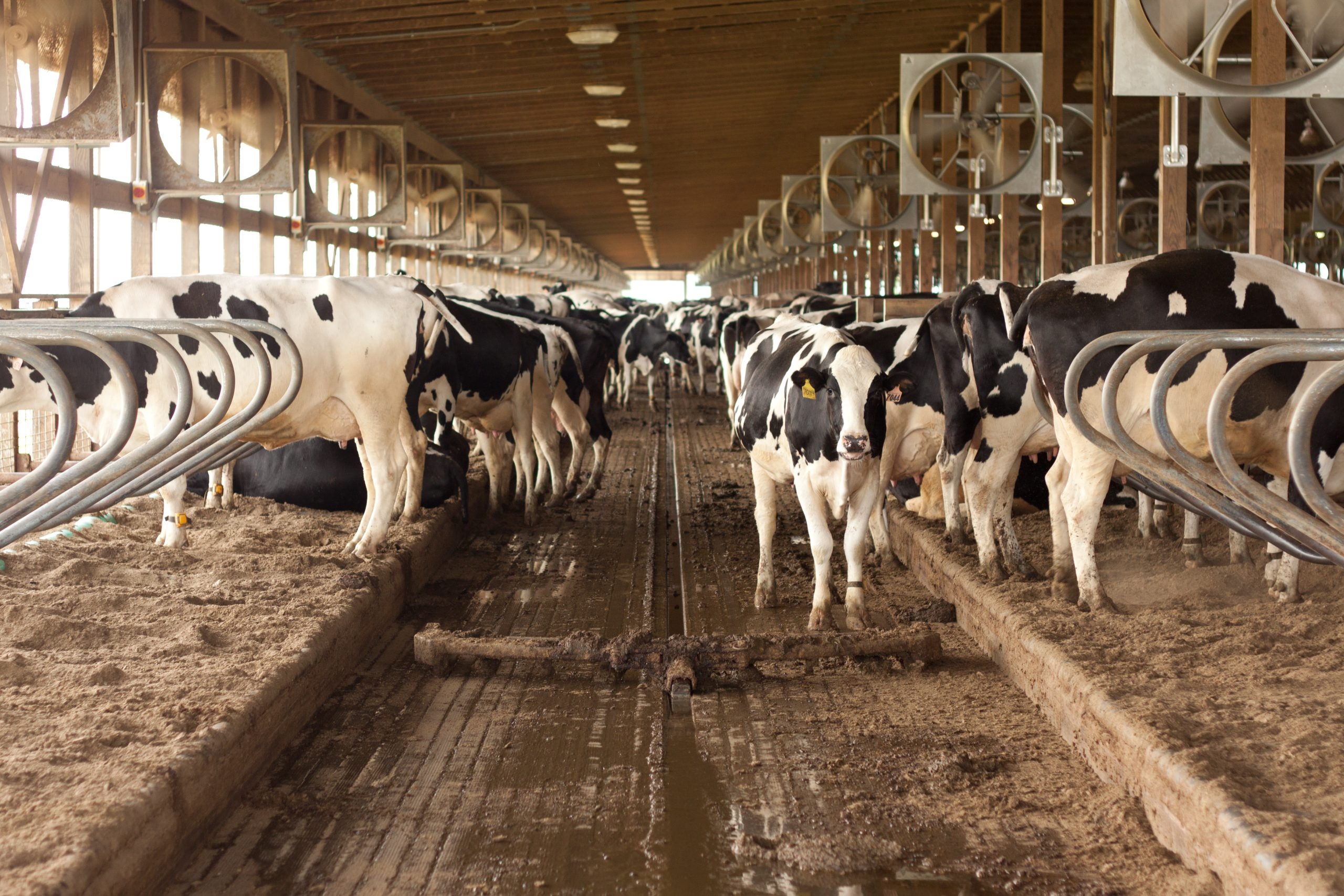
A cow does not know it is producing a feedstock. It produces milk, eats again, and leaves the accounting to somebody else. In a dairy barn, nitrogen is part of the manure problem. In an organic grower’s field, nitrogen can be the thing in short supply. Bion Environmental Technologies has spent decades working on the distance between those two places.
- Bion recovers ammonia from digester effluent and turns it into soluble fertilizer.
- Its earlier nutrient-credit model failed financially; the new pitch puts a saleable product first.
- Engineering progress and prospective buyers are real. Financing and commercial delivery remain the test.
The company’s current proposition begins after an anaerobic digester has made biogas. Useful fuel has been recovered, but the remaining liquid still contains nitrogen. Ammonia can escape into air or contribute to water pollution. Bion wants to intercept it, combine it with recovered carbon dioxide, and sell the resulting fertilizer. The waste stream gets a second destination.
The first customer was supposed to be a market
Bion’s founder, Jere Northrop, brought a background in biophysics and municipal wastewater treatment. Early technology generations reached farms and food-processing facilities. At Kreider Farms in Pennsylvania, Bion pursued a particularly tempting proposition: remove nutrients from livestock waste, then collect revenue for the verified reductions.
The company’s account of Kreider contains the uncomfortable distinction. The engineering succeeded. The finances failed. The anticipated nutrient-credit demand did not materialize. Cleaning water had measurable value; turning that value into dependable payment proved harder. A business model had been built around a market that did not arrive as expected.
That experience explains the attraction of fertilizer. A grower already buys nutrients. Bion could seek payment for something a customer uses, while still pursuing the environmental benefit. For anyone building industrial climate technology, the copyable lesson is quite practical: identify the buyer’s existing budget before depending on a future incentive.
Keep the chemistry. Shrink the project.
Bion’s Ammonia Recovery System, or ARS, uses evaporation to separate ammonia from digestate and suspended solids. Condensation produces a cleaner liquid. Distillation concentrates it. Carbon dioxide helps stabilize the recovered nitrogen into fertilizer. Keeping solids out of the distillation column matters because fouling would complicate operation.
- 01 / SEPARATEEvaporateIsolate ammonia from solids
- 02 / CONCENTRATEDistillConcentrate the clean solution
- 03 / RECOVERStabilizeAdd CO₂ to make fertilizer
Input: digester effluent. Output: recovered nitrogen with a new destination.
Buflovak, a specialist in evaporation and separation equipment, began supporting development in 2019. The Fair Oaks, Indiana, demonstration started operating in summer 2023. In its June 2025 optimization summary, Bion reported steady-state operation and one-third less required water evaporation than its model anticipated. Less evaporation should improve energy economics; the result does not supply a universal price for a commercial installation.
The commercial ambition also narrowed. Large integrated beef developments had required capital, partners and long timelines. Bion’s newer leadership focused on adding ARS to other companies’ biogas facilities. An existing digester supplies an existing waste stream. That reduces the number of things Bion must build before it can sell anything.
The buyer is on the other side of the fence
Its flagship Liquid AB10 contains approximately 10 percent nitrogen by weight. The product is OMRI Listed for organic use. For organic growers, a soluble nitrogen source offers control over when nutrients become available. The pitch is especially relevant to distributors serving specialty crops and growers who need predictable nutrition.
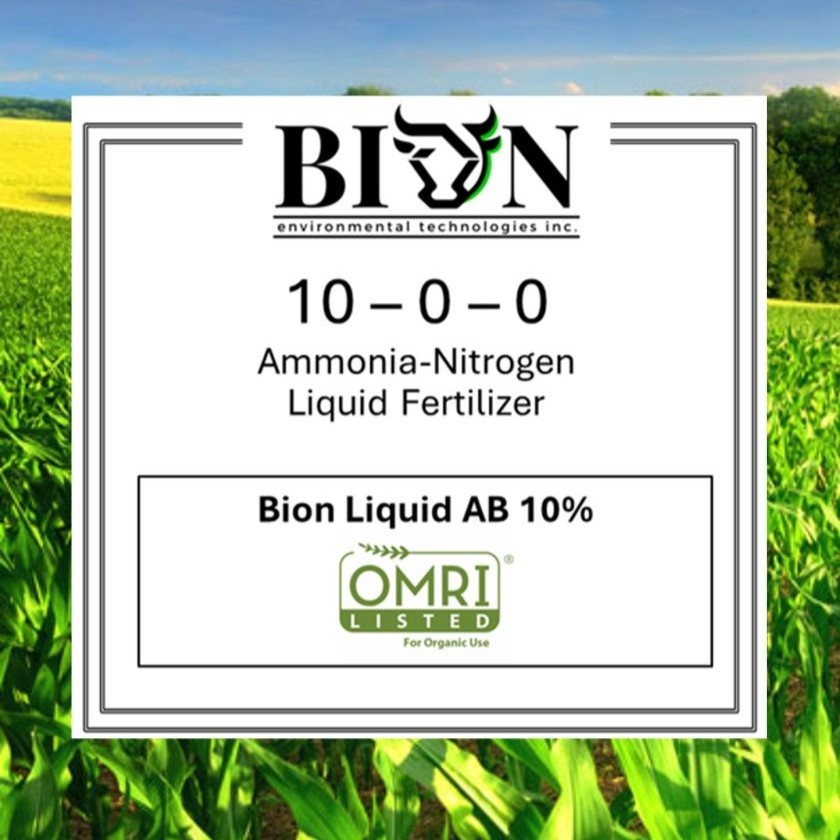
In May 2025, Perfect Blend expressed interest in 50,000 gallons and Yield RMG in 100,000. A third prospective buyer added another 100,000 gallons in July. Bion reported pricing of $7 per pound of nitrogen, FOB, in those announcements. That is a historical indication for nitrogen content, rather than a current price per gallon delivered to a farm.
Those letters were explicitly non-binding until supply projects were identified and development began. The distinction is consequential. They suggest that distributors see a market; they do not establish shipments or revenue. Bion’s product page now describes spot pricing as location-specific.
“Soluble nitrogen is soluble nitrogen.”
Craig Scott, Bion CEO / August 2025
Scott’s point was about fertilizer performance. Bion reported encouraging early trials involving cannabis, tomatoes and sorghum. The sorghum treatment combined its fertilizer with another company’s biostimulant, so that result cannot isolate AB10’s contribution. Early crop trials help define the proposition. Field performance, repeat purchases and manufacturing costs will define the business.
The expensive part of learning
Fair Oaks produced operating knowledge and a painful accounting result. Bion wrote down approximately $9.46 million of capitalized project value in fiscal 2024. The facility had become largely a research installation on a short lease, and relocating it was judged uneconomic. That charge was non-cash; it was neither the selling price of an ARS nor a quotation for the next plant.
The latest annual filing reports no revenue in fiscal 2026 and approximately $3,700 in cash at June 30. Financing remains essential. In July 2026, Bion announced a settlement of Fair Oaks construction litigation involving a convertible note to contractor Hamstra. Resolving a dispute helps clear a path, but building the next facility still requires money.
The next test is a delivery
A December 2025 memorandum with Kimmeridge set out shared evaluation work and exploration of a potential joint venture at an affiliate’s RNG facility. The agreement was extended in June 2026. It represents a route toward a project, with engineering and validation still part of the work.
Bion sits between biogas operators and fertilizer buyers. It competes with other nutrient-recovery systems, conventional digestate management and existing organic fertilizers. Its approach depends on suitable feedstock, manageable energy costs, organic eligibility and customers close enough to serve economically. Recovery without those conditions could leave an expensive product looking for a buyer. The next useful milestone is wonderfully ordinary: fertilizer leaving a financed plant for a paying customer.