A power plant can have a turbine, a customer and a perfectly sensible business plan. It still needs gas to arrive. Somewhere between the gas field and the generator sits a less glamorous business: reserving a route. Kinder Morgan has built much of its company around that gap between having energy and being able to use it.
- The scale: approximately 78,000 miles of pipelines owned in part or operated.
- The service: move, store and handle commodities for commercial customers.
- The discipline: obtain customer commitments before committing capital.
Its pipelines carry roughly 40% of natural gas produced in the United States. That is an arresting statistic for a company whose work often happens underground. But mileage alone misses the point. A pipe earns its place by connecting a particular supply to a particular buyer. The destination matters as much as the distance.
The product is a connection
For a utility, the problem is dependable supply. For a producer, it is access to a market. For an LNG operator, it is getting gas to a coastal facility where it can be liquefied and exported. Kinder Morgan sells the transportation, storage and handling that make those transactions possible. Its customers also include refiners, industrial businesses and commodity traders.
The company occupies the middle of the energy supply chain. Natural gas pipelines are its central business, alongside products pipelines, terminals and CO2 operations. Gasoline, diesel and jet fuel need routes too. Terminals provide storage, blending and transfers between transport modes. The inventory can include chemicals and vegetable oils. A tank farm has a more varied pantry than its silhouette suggests.
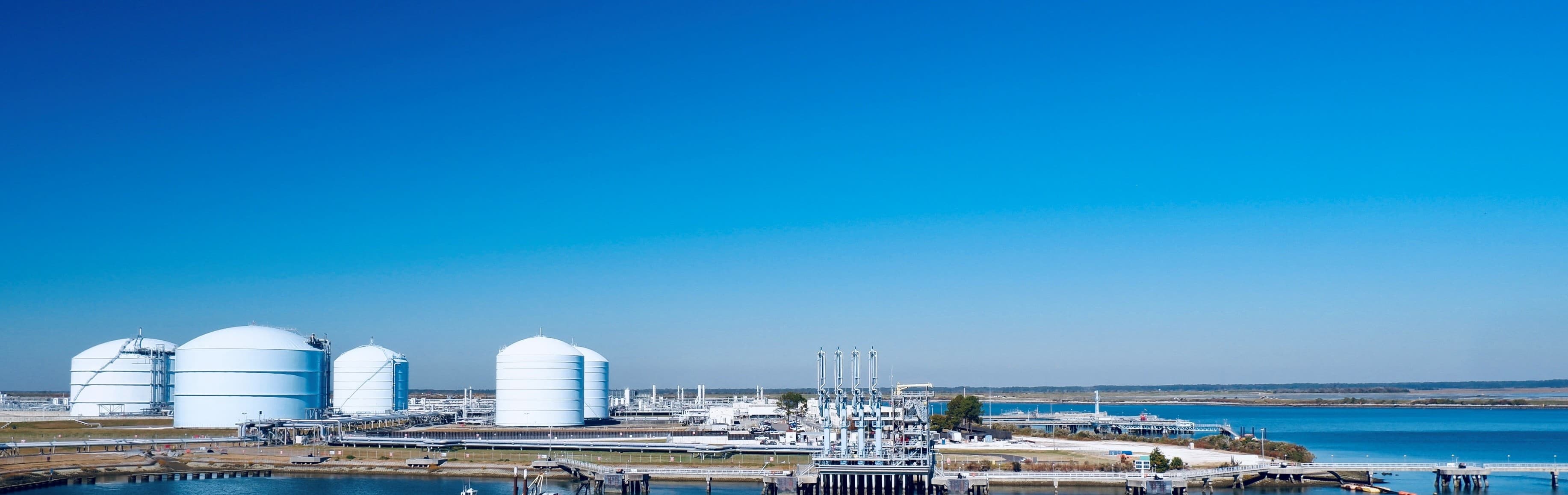
A customer can use Kinder Morgan’s tariffs and commercial teams to arrange service, or its pipeline websites to manage shipping requirements. This is industrial infrastructure sold through commercial agreements. The relevant questions are capacity, delivery points, specifications and timing. A competitive price on an unhelpful route solves very little.
Getting paid to stand ready
Consider a reservation. Under a firm take-or-pay arrangement, a customer generally owes a minimum payment for available service even if it does not use it. Kinder Morgan also has minimum volume commitments and per-unit fee arrangements. These structures give a costly asset a more predictable stream of receipts than an unsupported bet on tomorrow’s traffic.
Commitment→02
Investment→03
Capacity→04
Service fees
The protection has limits. Commodity sales and oil production expose parts of the company to prices. Customers can weaken financially. Contracts expire. A reservation fee makes an investment easier to underwrite; it does not suspend economics. Kinder Morgan reported $16.937 billion in revenue for 2025, a figure that includes more than transportation tolls.
Its advantage is geographic and operational: connected systems, storage, rights of way and experience running the assets. Its annual report describes competition in terms of location, rates, flexibility and reliability. Depending on the shipment, alternatives include other pipelines, oil-company terminals, trucks and marine transport. Being large helps only where the connections help the customer.
The dividend met the funding problem
Richard Kinder and William Morgan began in 1997 with 175 employees. Acquisitions enlarged the map: KN Energy in 1999, then the approximately $38 billion El Paso transaction in 2012. The partnership structure helped finance growth. In 2014, the group consolidated its listed entities into one public company.
Then came a revealing interruption. In December 2015, Kinder Morgan announced that its quarterly dividend would fall from $0.51 to $0.125, roughly a 75% cut. The stated purpose was to retain cash for expansion, avoid issuing equity and maintain investment grade credit. The operating business could generate cash while the financing arrangement still demanded a painful change.
Cash retained for investment came at shareholders’ immediate expense.
What gave way was the expectation that growth investment and a generous payout could comfortably coexist with external financing. The company reported $4.7 billion in distributable cash flow for 2015, a company-defined measure, yet its stock fell 65% that year. Management explicitly connected the dividend decision to the disconnect between business performance and share performance. A working pipeline could not repair the capital market.
The route that became too uncertain
Trans Mountain supplied another boundary. In April 2018, Kinder Morgan Canada suspended non-essential expansion spending, citing uncertainty, including British Columbia’s opposition. It wanted clarity on construction and protection for shareholders before committing more money. Canada subsequently bought the pipeline system and expansion project for C$4.5 billion.
Here, the construction path became uncertain before the asset could deliver its planned expansion. Demand and engineering were insufficient to settle the dispute between governments. The useful lesson is specific: obtain a credible path to permission alongside the commercial commitment. A customer contract cannot grant access to land or resolve every regulatory challenge.
Tomorrow’s electricity needs a route today
Kim Dang, CEO since 2023, now oversees another investment cycle. On October 21, 2026, Kinder Morgan reported a $14.4 billion expansion backlog, including $13.2 billion in natural gas projects. More than 75% of the overall backlog supported power generation and local distribution demand. These are development commitments, not completed assets.
Expansion also involves partners. Phillips 66, Kinder Morgan and HF Sinclair sanctioned Western Gateway in August 2026, targeting a new refined-products route into western markets. Kinder Morgan’s stake is 35.1%. The partners target service in 2029, subject to permits and regulatory approvals. Even this enormous network still has connections it cannot offer today.
Energy transition investments follow adjacent skills. Kinder Morgan entered landfill-derived renewable natural gas through Kinetrex in 2021. Its existing CO2 business supplies enhanced oil recovery; that activity should not be confused with a dedicated carbon removal service. Pipeline and injection expertise can support carbon capture projects, but each project still needs its own commercial case.
“We are investing in the transition where we can do so profitably and will turn this ship slowly over time.”Kimberly Dang · Kinder Morgan website
The principle readers can borrow is modest: match expensive capacity to durable commitments, and keep enough financial room to deliver. It becomes less reliable when customers cannot pay, approvals stall or demand moves elsewhere. Kinder Morgan’s history makes those conditions tangible. The route is valuable. Making it financeable, buildable and useful is the actual work.
Follow the connections
Company website ↗ · Pipeline services ↗ · Energy Delivered blog ↗ · October 2026 news ↗