In November 2018, EQT sent its pipeline business out into the world as a separate company. Six years later, it brought that business back. For a producer selling something as interchangeable as natural gas, this was a revealing reversal. The question was where an advantage could live: in the rock, in the drilling, or in the journey between a well and the person willing to pay for its output.
- Produce it. Appalachian shale supplies the gas.
- Move it. The Equitrans reunion puts more infrastructure under one roof.
- Sell it closer to demand. Power contracts and LNG agreements reach beyond the wellhead.
EQT Corporation now combines production, gathering and transmission. It develops wells, collects their output, moves gas through infrastructure and sells into wholesale markets. Utilities, industrial buyers, marketers and power generators need that supply; other producers need its midstream services. A homeowner encounters the result through a utility bill, usually without encountering the EQT name.
The six-year round trip
The company began in 1888 as Equitable Gas, supplying Pittsburgh’s industrial economy. Its modern history contains a persistent argument over which pieces belong together. It sold its distribution utility in 2013. In 2018, it separated Equitrans, whose businesses included gathering, transmission and storage. In July 2024, those businesses returned through an acquisition.
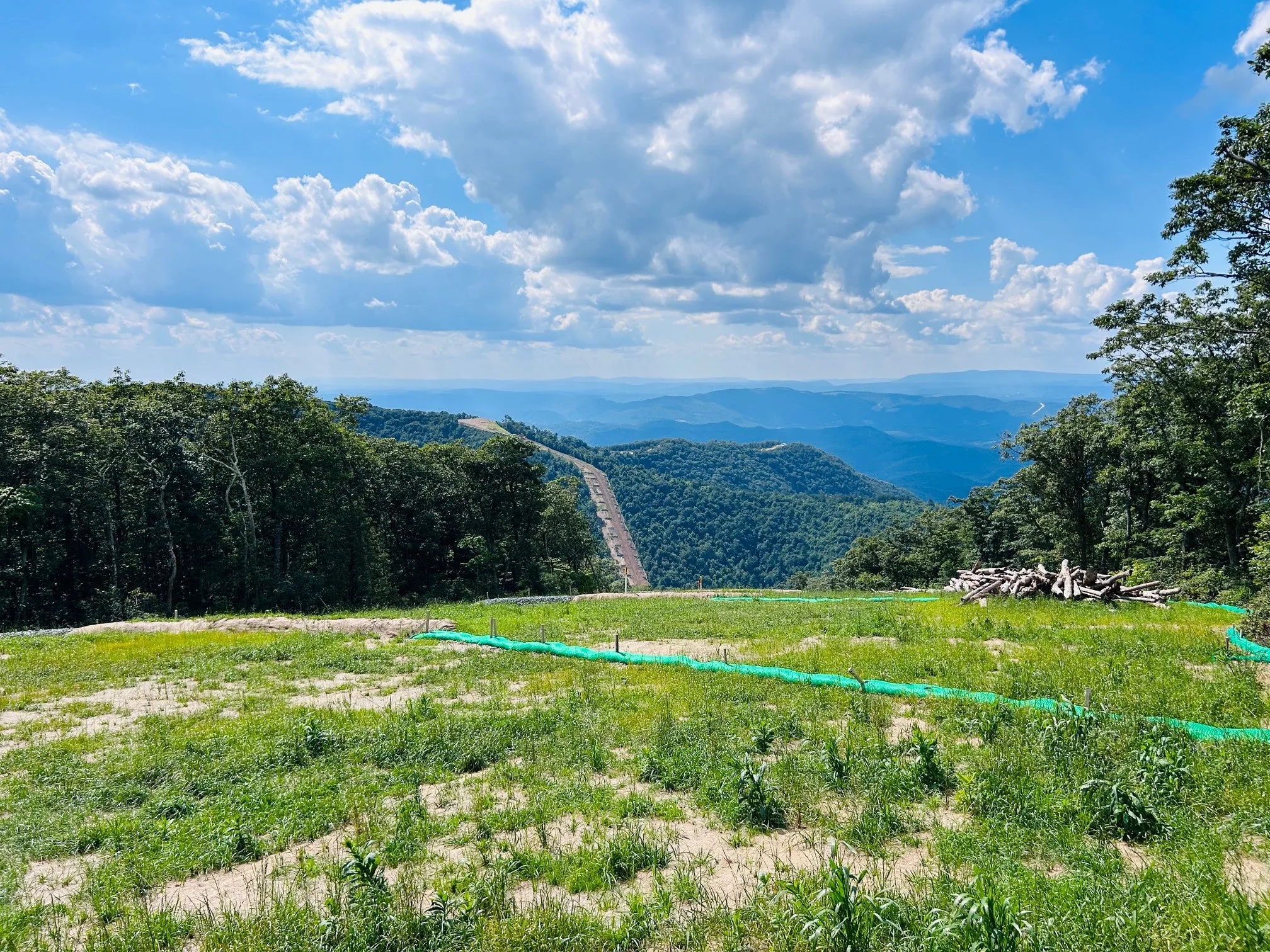
The rationale was physical. EQT’s wells and Equitrans’ networks overlapped. Combining them could let a single operator coordinate drilling schedules, compression and maintenance. At announcement, EQT projected roughly 90% of operated production would flow through company-owned midstream assets. A bottleneck previously negotiated between businesses could become an internal operating decision.
The price of this control was substantial. The announced Equitrans transaction implied about $5.5 billion of equity value and involved assuming debt. EQT subsequently arranged a $3.5 billion investment from Blackstone-managed funds into a midstream joint venture. Keeping operational control while selling a minority economic interest helped finance the larger system. Ownership had a capital bill attached.
The merger that needed another merger
An earlier acquisition explains the attention to coordination. EQT bought Rice Energy in 2017. In their 2019 proxy campaign, the Rice Team argued that the combined business had missed the operating efficiencies promised by the deal. They pointed to spending overruns and production disappointments in 2018. Incumbent management disputed their diagnosis and defended its progress.
That disagreement became a contest for control. Toby Rice, formerly Rice Energy’s president and chief operating officer, became EQT’s chief executive in July 2019. Buying assets, the episode suggested, did not automatically transfer the habits that made those assets productive. An acquisition could give a company neighboring acreage without giving its teams a shared plan.
EQT’s subsequent “combo-development” approach coordinated wells over longer planning horizons. Its Digital Work Environment centralizes information across teams, and its careers materials describe a remote-first office model. The interesting connection is between information and machinery: a schedule shared early enough can change when crews arrive, when equipment moves and how long expensive assets wait.
A bottleneck previously negotiated between businesses could become an internal operating decision.
This is how EQT tries to distinguish itself from gas-producing peers such as Expand Energy, Antero and Range Resources. The gas remains a commodity. The competitive argument concerns development costs, delivery options and coordination. Its upstream business earns money selling production; gathering, transmission and storage add reservation and volume-based fees. Integration changes the economics around the molecule.
Nine thousand small fixes
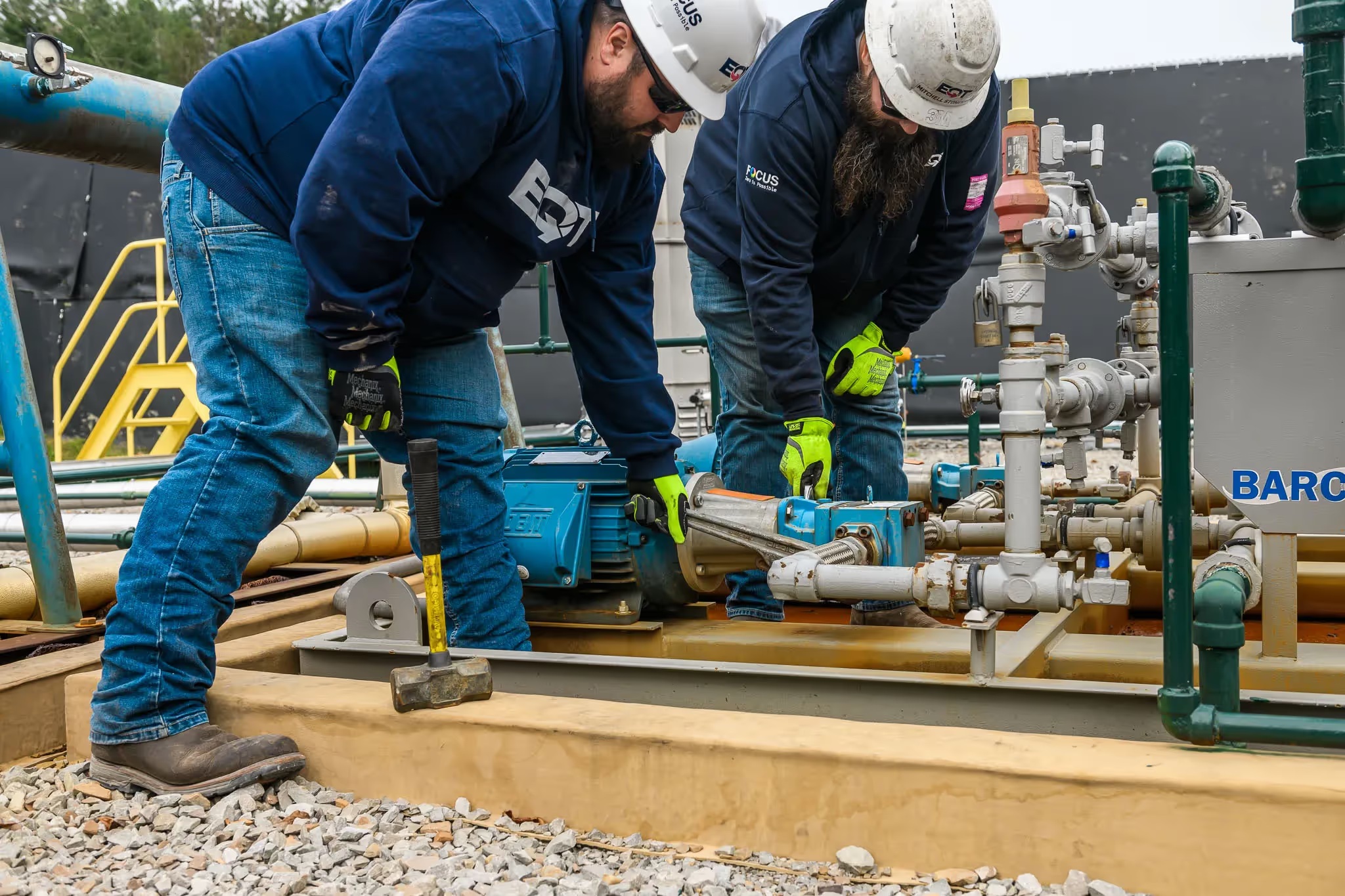
Some of EQT’s most useful work happened at a smaller scale. Gas-driven pneumatic controllers use pressurized natural gas to operate equipment, releasing methane in the process. EQT’s replacement program substituted alternatives including compressed air and electric actuation. This was a collection of engineering decisions repeated across thousands of devices.
The initial plan described more than 8,000 devices and approximately $20 million of projected spending. The completed program cost approximately $28 million and covered roughly 9,000 devices. Those are different scopes, so the increase alone cannot establish a like-for-like overrun. EQT’s published timeline also records supply-chain challenges before replacements accelerated.
Its presentation estimated an abatement cost near $6 per tonne of carbon-dioxide equivalent, calculated using annual avoided emissions over a 15-year life. That is an assumed lifetime calculation. A reader can copy the method: inventory devices, trial replacements, resolve supply constraints, then repeat. Remote sites still need dependable power and maintenance. A successful pilot does not remove those requirements.
The emissions claim needs equal precision. EQT’s October 2024 net-zero announcement covered specified legacy Scope 1 and Scope 2 emissions, combining reductions with company-generated offsets. It excluded customer combustion, classified as Scope 3, and the newly acquired Equitrans assets. The achievement describes a defined operating boundary, rather than the complete climate footprint of selling gas.
A customer at the end of the pipe
The next move is toward identifiable buyers. A ten-year agreement will supply the planned CPV Shay Energy Center in West Virginia when it enters commercial operation. Pricing linked to PJM electricity markets gives EQT exposure to the value of power generation. The customer’s location and contract can alter the economics of the gas feeding it.
Internationally, a 2025 Commonwealth LNG agreement secured one million tonnes a year over twenty years at a Louisiana facility under development. EQT plans to buy LNG indexed to Henry Hub and market cargos internationally. These arrangements depend on infrastructure actually reaching operation. Permits, construction, financing and market prices remain part of the equation.
In October 2026, EQT raised its quarterly base dividend to $0.17 a share. The broader operating experiment continues: connect the resource, the network and the buyer closely enough to retain more value. For anyone running a less geological business, there is a practical question here. Which recurring handoff costs you the most, and what would it take to fix it?