On December 18, 2025, Energy Transfer made two announcements ten minutes apart. First, it suspended development of Lake Charles LNG, a proposed Louisiana export facility. Then it announced a bigger pipeline for the Southwest. One project stopped. Another grew. For a company associated with relentless expansion, this was a revealing pair of decisions: even an empire of pipes has to choose its connections.
- Connect energy production to processing, storage and buyers.
- Collect fees at several stages of the journey.
- Build or buy additions that feed the existing network.
A customer for the next pipe
Kelcy Warren and Ray Davis started Energy Transfer in 1996 with about 200 miles of natural gas pipeline in East Texas and 20 employees. Today, the company describes a network of approximately 140,000 miles across 44 states. The arithmetic is striking. The more useful question is what all those miles connect.
A producer needs an exit for its gas. A utility needs dependable deliveries. A petrochemical manufacturer wants particular ingredients. Somewhere between them sit processing plants, storage tanks, compressors and scheduling systems. Energy Transfer operates much of that middle territory, known as midstream. Its product is a usable route between people who have energy and people who need it.
That puts it alongside Enterprise Products Partners, Kinder Morgan, Williams and ONEOK. Each competes in overlapping parts of the market. Energy Transfer’s proposition rests on the combination of gas, natural gas liquids, crude oil and refined products infrastructure. A customer comparing routes must consider connections and capacity, as well as the price of transportation.
The expertise lies in making those services fit together: separating products, managing pressure, arranging storage and coordinating deliveries. A refinery cannot use a promise stuck upstream. For the customer, the network has value when a scheduled shipment can actually reach the place where it is needed.
Buy the missing junction
Consider the WTG Midstream acquisition, completed in July 2024. Energy Transfer paid $2.275 billion in cash and issued approximately 50.8 million common units. It acquired around 6,000 miles of gathering pipelines and eight processing plants, with two more plants under construction. These assets collected and processed gas in the Midland Basin.
The acquisition announcement explained the attraction: more natural gas and natural gas liquids flowing into the wider system. Gathering and processing could earn revenue, followed by downstream transportation and fractionation. Fractionation separates mixed natural gas liquids into individual products such as ethane and propane. One purchase could supply several existing businesses with more work.
- 01GatherCollect production
- 02ProcessSeparate & treat
- 03TransportConnect markets
- 04Store / exportReach the buyer
Illustrative service chain; individual products take different routes.
Most of Energy Transfer’s segment margins are fee-based, according to its reporting, limiting direct sensitivity to commodity prices. There is still exposure through commodity activities, customer health and throughput. The partnership also owns interests in fuel distributor Sunoco and compression provider USA Compression, widening the business beyond long-distance transportation.
Revenue alone can obscure these economics because reported sales include the value of commodities bought and sold. Consolidated revenue reached $85.536 billion in 2025. That figure describes the scale of transactions; it does not tell a reader what each pipeline earned or what its maintenance cost.
The cloud has a gas bill
The customer list includes producers, refiners, utilities, marketers and petrochemical companies. A particularly revealing agreement arrived in November 2025: Entergy Louisiana signed for 20 years of firm natural gas transportation. Initial service of 250,000 MMBtu per day was scheduled from February 2028 through January 2048.
The gas would help fuel Entergy’s planned generating facilities serving customers and supporting projects including Meta’s Richland Parish data center. Energy Transfer’s contribution involved expanding Tiger Pipeline and constructing a 12-mile lateral. This is the physical chain beneath an apparently weightless industry: computing requires electricity, generation requires fuel, and fuel needs a delivery route.
For commercial customers, the practical benefit is access to supply and destinations without building every link themselves. For Energy Transfer, a long commitment helps connect an expensive construction decision to a specific buyer. A prediction about future demand becomes more useful when someone signs for capacity.
The project it chose to stop
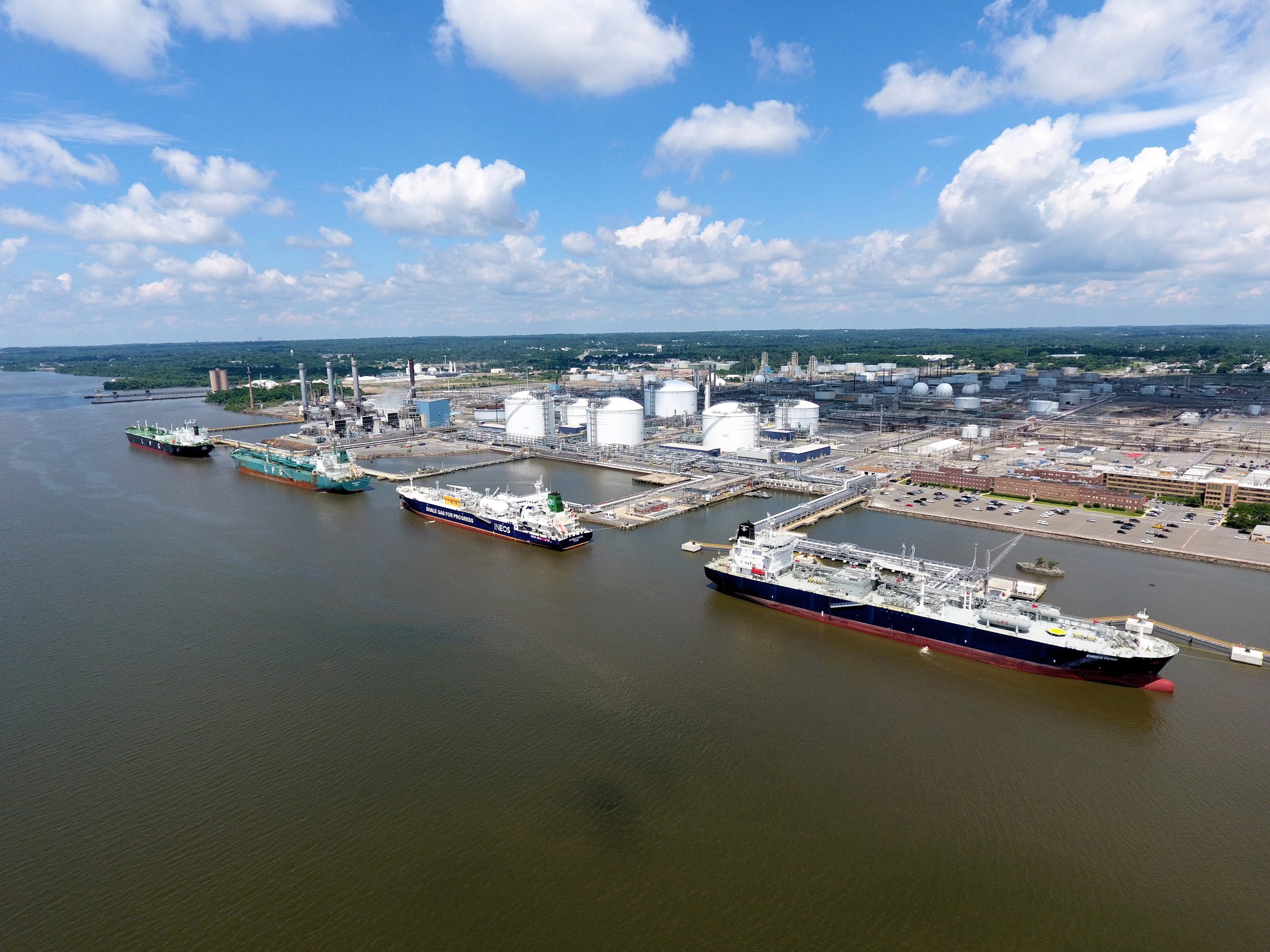
Lake Charles would have converted existing LNG import infrastructure into a liquefaction and export facility. In December 2025, management decided continued development was unwarranted, while remaining open to interested third parties. It said its pipeline backlog offered better risk and return.
“superior risk/return profiles”
Energy Transfer’s description of its pipeline backlog, December 2025
The neighboring announcement supplied the contrast. Customer demand identified through an open season prompted an increase in the planned Desert Southwest mainline diameter from 42 to 48 inches. The proposed capacity rose to as much as 2.3 billion cubic feet daily, depending on compression configuration. The estimated cost reached approximately $5.6 billion, excluding the allowance for funds used during construction.
Project estimate: December 2025, excluding AFUDC. Annual guidance: August 2026. Different scopes and time periods; figures are not additive.
The distinction matters. An export terminal and a pipeline can both move energy toward demand, yet impose different development and financing burdens. Management’s public explanation identifies the preferred allocation. It does not establish that every pipeline project will succeed.
The ground gets a vote
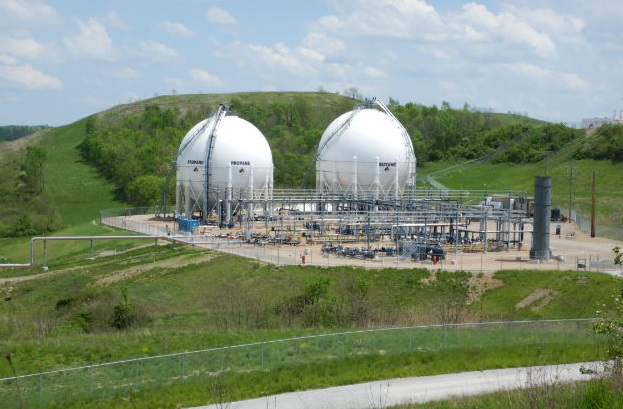
Infrastructure can fail before a customer ever receives dependable service. On September 10, 2018, a release and fire occurred on Energy Transfer’s Revolution pipeline in Pennsylvania. The state environmental regulator investigated and ordered construction-related earth disturbance to stop, apart from necessary erosion-control work.
A 2020 agreement included a $28.6 million civil penalty and a $2 million community environmental project. A separate 2022 resolution covering Mariner East and Revolution required water evaluations and remediation, plus $10 million for water-quality improvements. Construction discipline and environmental protection have direct consequences for neighbors, operating schedules and cash.
The next connection must earn its place
In October 2026, Energy Transfer agreed to acquire Vaquero Midstream for approximately $2.625 billion, subject to approvals and closing conditions. Its roughly 300-mile system was already connected to Energy Transfer’s downstream infrastructure. The proposed purchase follows a familiar logic: bring more supply into assets already owned.
Other businesses can copy that question: will the next acquisition make what we already own more useful? The answer depends on actual demand, sound construction, workable permits and financing. Empty capacity cannot collect a fee from an absent customer. Energy Transfer’s story is a long experiment in making the next connection worth paying for.