At Marcus Hook, the refinery had stopped refining. That was an ending for one business and an awkward question for another: what, exactly, was still worth buying? In April 2013, Sunoco Logistics paid $60 million for the facility. The attraction was easy to overlook if you concentrated on the idle refinery. There were docks, rail connections, pipelines and five underground caverns for storing natural gas liquids. The location still had work to do.
- The business: moving, storing and marketing crude oil, NGLs and refined fuels.
- The opportunity: connect Appalachian shale liquids to buyers across the Atlantic.
- The complication: building the route brought water impacts, criminal cases and remediation obligations.
The refinery stopped. The location kept working.
Sunoco had formed the partnership in October 2001; its public offering followed in February 2002. This was an industrial inheritance: pipelines, terminals and an oil acquisition business. Its expertise lay in handling physical products across several kinds of infrastructure, with customers needing reliable access to the next stage of their supply chain.
Then shale production changed the problem. The Marcellus and Utica regions had natural gas liquids to sell. Ethane could become feedstock for plastics manufacturing; propane and butane had their own markets. Production was only half the transaction. A producer also needed a route to someone who could use the material.
Marcus Hook offered an Atlantic outlet. Sunoco Logistics developed Mariner East to bring liquids across Pennsylvania into storage and export facilities. The old refinery's usefulness had changed with the surrounding market. Its waterfront, connections and caverns made a different business possible. That is the interesting move: start with the assets a new customer needs, then reconsider what the old site is worth.
“Marcus Hook has the deep water berths, rail access, truck capability and pipeline infrastructure”
Michael J. Hennigan, then president and CEO · May 2013
A buyer at the other end
The customer chain makes the strategy concrete. Range Resources disclosed a 15-year agreement to sell ethane to INEOS at Marcus Hook. INEOS needed feedstock for European chemical plants. Producers, processors, pipeline operators and a shipping fleet all had to connect. A dock without those commitments would have been an expensive place to wait.
- 01Appalachian productionEthane and other NGLs
- 02Mariner EastPipeline transportation
- 03Marcus HookStorage, chilling, loading
- 04Overseas plantsIndustrial feedstock
On March 9, 2016, the INEOS Intrepid departed Marcus Hook carrying ethane for Norway. The U.S. Energy Information Administration identifies Marcus Hook as the first U.S. ethane export terminal, with shipments beginning that March. By September, INEOS Insight was bringing American shale ethane into Grangemouth, Scotland. The pipeline had become one part of an international manufacturing supply line.
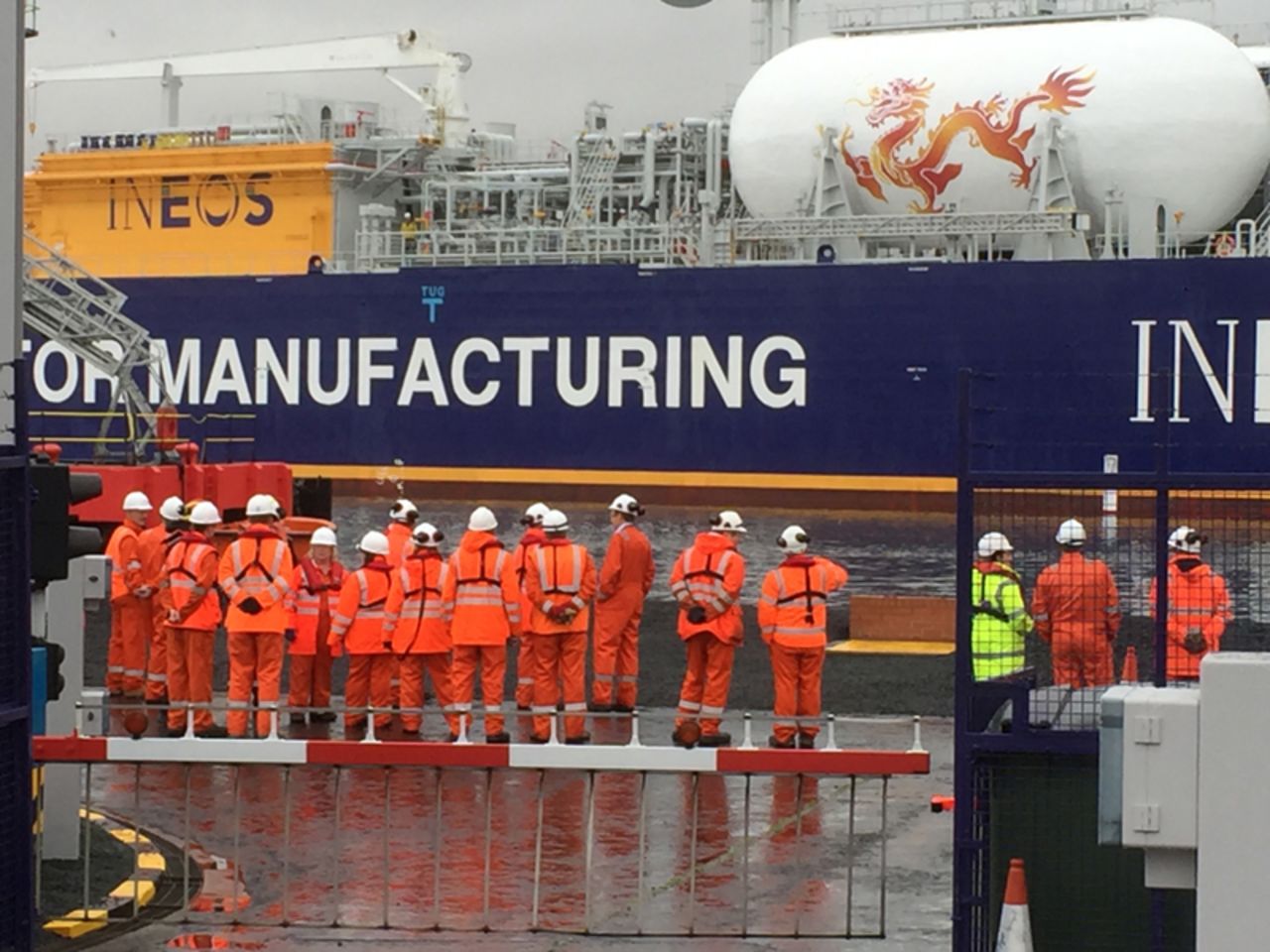
The competitive argument was geographical: an East Coast port near Appalachian production offered an alternative to hauling liquids toward the Gulf Coast. But customers had choices. Enterprise Products Partners opened its Morgan's Point ethane export terminal in Texas in 2016. Distance mattered alongside available capacity, storage, reliability and commercial terms. Owning a route did not guarantee owning the customer.
The business inside the barrel
Sunoco Logistics served producers, refiners, resellers and petrochemical businesses. Pipelines earned transportation charges. Terminals earned fees for storage, throughput and related services. Its acquisition and marketing operations also purchased and resold commodities. For a shipper, the practical purchase was access: a way to get material from where it existed to where it could be sold.
That mix makes its financial statements worth reading carefully. In 2016, sales and other operating revenue fell to $9.151 billion from $10.486 billion. Adjusted EBITDA rose to $1.233 billion from $1.153 billion. Commodity sales made the revenue number large; revenue alone could not explain operating performance. Adjusted EBITDA is a non-GAAP measure, and it is not cash left over after every obligation.
Expansion required capital. The partnership used public units and debt, rather than venture funding. In November 2016, it bought Vitol's integrated Permian crude business for $760 million plus working capital, adding a Midland terminal, gathering infrastructure and a connection into Permian Express 2. The logic was familiar: make existing connections more useful by adding complementary assets.
The map met the ground
The $60 million Marcus Hook purchase was an entry price, not the cost of the finished export system. Pipelines, refrigeration, storage and marine facilities required further spending. Nor did commercial demand settle the construction question. Mariner East's later development encountered drilling-fluid releases, water complaints and sinkholes. Those failures belong in the same account as the first cargo.
In August 2022, after the corporate mergers, Sunoco Pipeline and ETC Northeast Pipeline entered no-contest pleas resolving Pennsylvania environmental criminal cases involving Mariner East and the separate Revolution pipeline. The combined resolution included $10 million for water-quality projects and arrangements for independent water evaluation and remediation. The successor company's filing records the proceedings.
The transferable lesson has conditions. Reusing industrial infrastructure can work when production, committed buyers and viable connections align. It becomes a poor bargain when insufficient demand leaves capacity idle, or geology, water protection and construction obligations overwhelm the plan. A short line on a commercial map still crosses real ground.
The familiar name also needs care. Sunoco Logistics was the SXL partnership, distinct from Sunoco LP, the fuel-distribution partnership associated with the SUN ticker. A retail driver and an industrial shipper could encounter the same brand family while buying very different things.
The name changed. The route remains.
On April 28, 2017, Sunoco Logistics completed its merger with Energy Transfer Partners and adopted that name. Another combination followed in 2018. In March 2026, Energy Transfer's anniversary account described further ethane storage and chilling expansion at Marcus Hook. The enduring story is an industrial site's changing job - and the continuing obligations attached to keeping that job going.