In 1985, Williams found a second use for an old pipeline: threading fiber-optic cable through it. The WilTel venture made a pleasingly literal connection between heavy industry and the information age. Four decades later, Williams is approaching computing from another direction. This time the pipe carries gas. At the other end is a power plant, serving the sort of customer whose business depends on keeping computers running.
- Williams earns money moving, processing and storing natural gas.
- Its network handles roughly one third of U.S. gas, by its estimate.
- Dedicated power generation extends that business into data centers.
- Contracts support the investment. Permits still govern the timetable.
The interesting thing about Williams is how easily its work disappears from view. A household sees a heating bill. A factory sees a fuel expense. A technology company sees an electricity requirement. Williams sees the connections between them: gathering lines, processing plants, storage, transmission and, increasingly, generation. Its expertise lies in making those pieces function as a service someone will pay for.
A map is the product
The business started with Miller and David Williams in Arkansas in 1908 and moved to Tulsa in 1918. Building pipelines eventually gave way to owning and operating them. The 1995 purchase of Transco gave Williams an extensive East Coast transportation business. Today, Transco lists about 10,000 miles of transmission pipeline.
That geography explains more than a generic claim about scale. Natural gas needs a usable route from its source to its buyer. A producer needs gathering and processing. A utility needs delivery capacity. A generator needs fuel when electricity demand rises. Storage helps reconcile the calendar of production with the calendar of consumption.
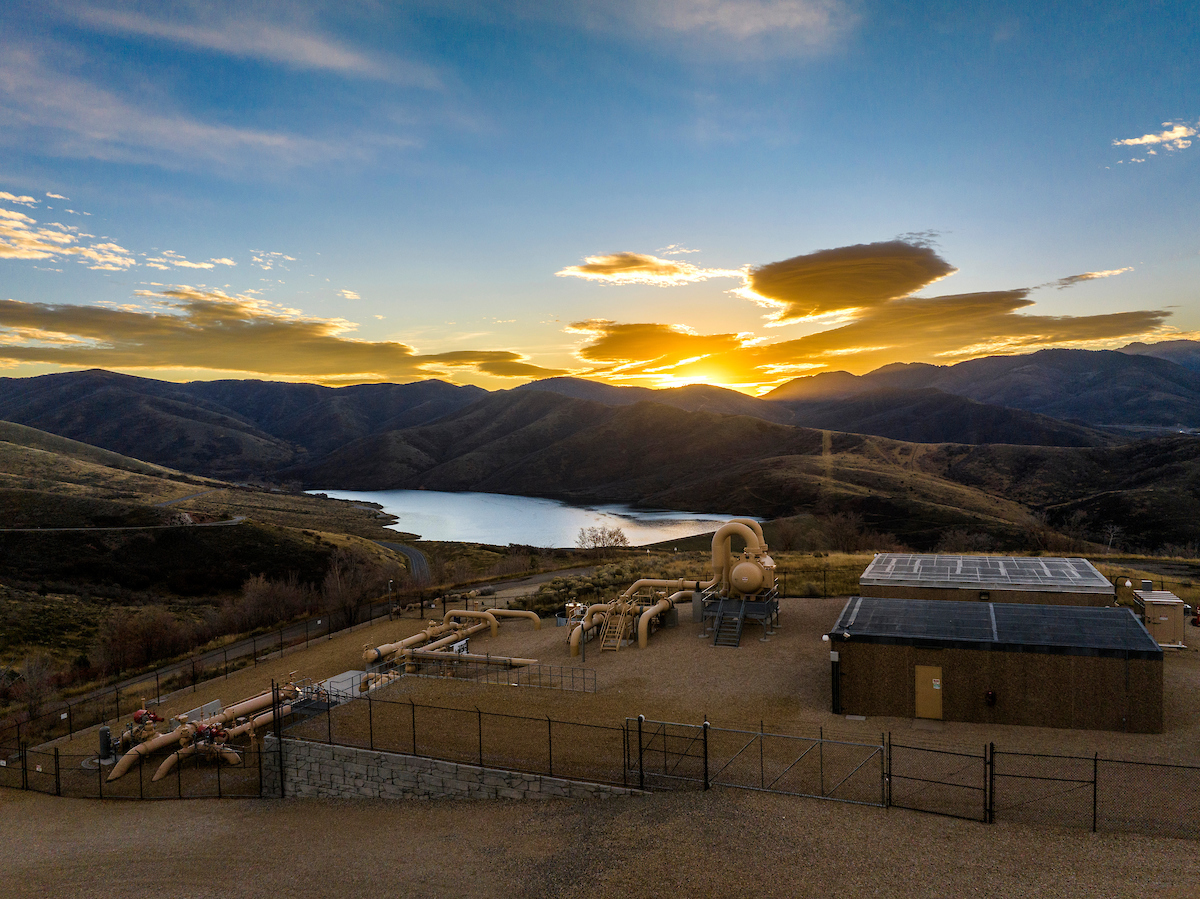
Williams occupies the middle of this market. Kinder Morgan, Energy Transfer and Enbridge offer competing infrastructure, but a buyer’s alternatives depend on the route and available connections. Steel in the wrong place is of limited comfort. A connected network can make an existing customer’s next expansion easier to serve.
Getting paid for the journey
Think of transmission capacity as a reservation. Under firm transportation arrangements, customers pay to secure access; usage can generate additional charges. Gathering, processing and storage bring their own contracts. Such commitments help support expensive assets with long operating lives. They also mean Williams’s economics differ from a producer’s bet on the selling price of gas.
There is still exposure to volumes, commodities and customer health. The contract matters. So does the customer’s ability to honor it. Williams reported $11.95 billion in 2025 revenue, but revenue alone cannot describe the quality or durability of those different cash flows.
Sequent, acquired in 2021, adds the coordination business. It markets gas and natural gas liquids, schedules deliveries and optimizes transportation and storage. It works through agreements on more than 150 pipelines. A utility or industrial customer can buy help managing fuel logistics without assembling that trading and scheduling capability itself.
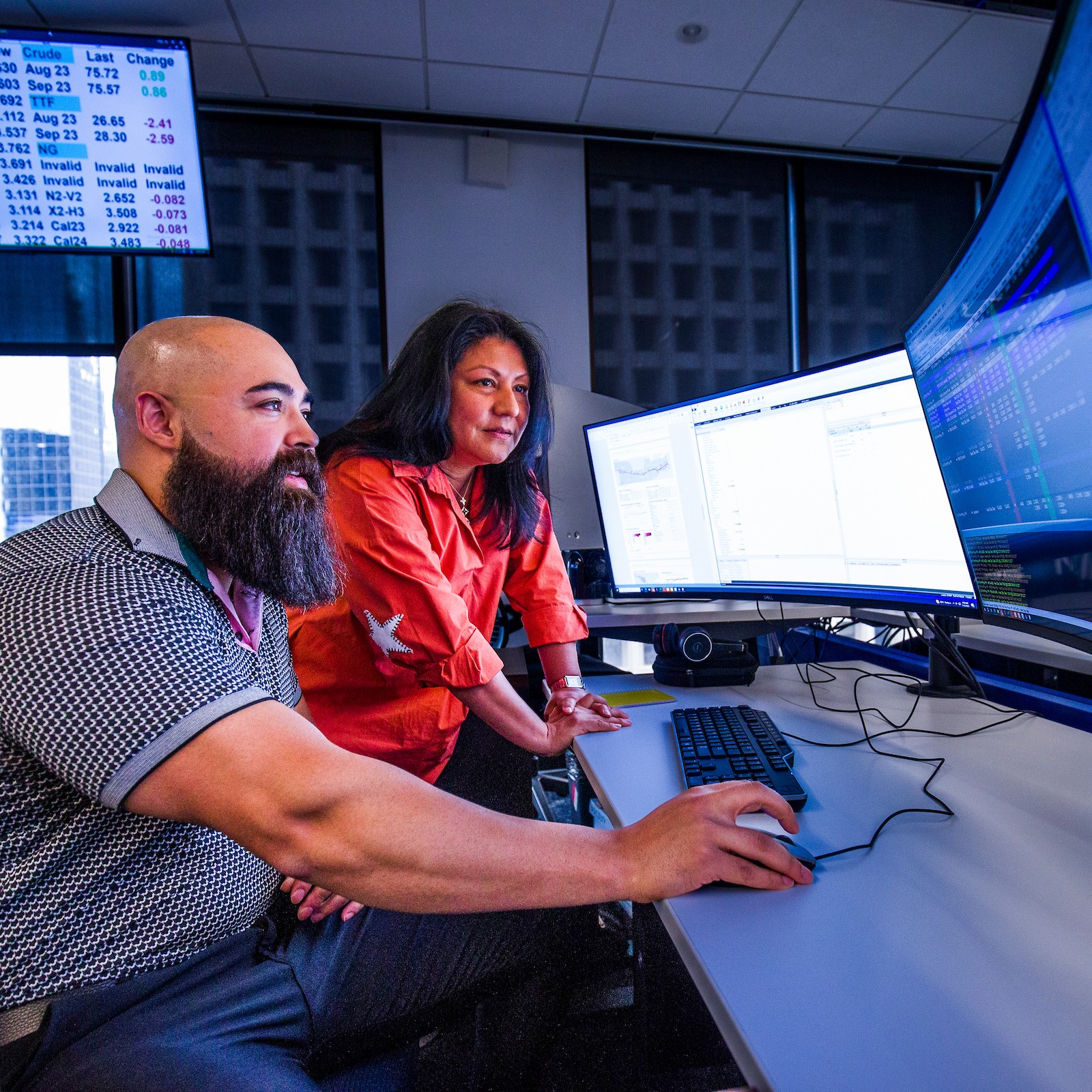
The service also depends on work that rarely makes an acquisition announcement. Williams reported inspecting 4,216 miles of pipeline through its integrity program in 2025. Its stated culture puts safety alongside collaboration and competition. For a customer reserving capacity years ahead, that operating discipline is part of the purchase: the right to use a route has value only if the equipment keeps working. The network needs maintenance long after the construction crew leaves.
The customer wants megawatts
A data center presents a slightly different request. Fuel is useful; electricity is the deliverable. Williams’s Power Innovation business combines gas supply and delivery with behind-the-meter generation, meaning power produced for the customer on its side of the utility meter. The pitch is an accountable supplier for a complicated chain.
The company identifies conventional utility timelines and transmission constraints as obstacles for large loads. That customer problem explains the expansion into power. In April 2026, CEO Chad Zamarin told a University of Tulsa audience:
“We are not going to win the race for AI if it takes six to eight years to scale up our AI infrastructure.”
Chad Zamarin / April 2026
- 01GatherGas supply
- 02MovePipe + storage
- 03GenerateOn-site power
- 04ComputeCustomer load
A simplified service chain, not a map of a particular installation.
Socrates, in New Albany, Ohio, was originally described as two 200-megawatt facilities and associated pipeline infrastructure, with approximately $1.6 billion of investment backed by a ten-year, primarily fixed-price power purchase agreement. Those are the original terms, rather than a final construction bill. In August 2026, Williams reported phase one complete and phase two on track for the fourth quarter.
The price of moving closer
Following customers requires money. In July 2026, a Blackstone-led partnership, including Apollo and KKR-managed vehicles, committed $5.34 billion for a 49% noncontrolling interest in five power projects. Williams retained 51% and commercial and operational control. Sharing project ownership reduced the capital Williams had to supply while preserving its role as operator.
$5.34bn partner commitment. Project equity, not a valuation of Williams.
Then came another investment in the map. Williams closed its approximately $5.5 billion Momentum Midstream acquisition in September 2026. It added Haynesville gathering and transportation infrastructure serving Gulf Coast LNG, power and industrial demand. The connecting idea is consistent: own more of the route between growing supply and customers prepared to commit.
Demand cannot issue a permit
Constitution supplies the necessary complication. New York denied the proposed pipeline a water-quality certificate in 2016, citing environmental concerns, including stream impacts. The project was canceled in 2020 and revived in 2025. Whatever the commercial argument, customers and financing had not supplied the permission required to build.
There are operating conditions, too. A generation project needs dependable gas delivery, enforceable customer commitments and manageable construction costs. Gas combustion produces carbon dioxide; methane leakage adds another problem upstream. Williams describes equipment modernization and expanded leak detection as part of its response. Its reported reduction in carbon intensity should be read as an intensity measure, not proof of zero emissions.
The useful lesson travels beyond pipelines: identify the customer’s constraint, secure a commitment, then add the capability that removes it. Copying that sequence does not require buying a compressor station. Copying Williams’s economics does require access, capital, operating discipline and permission. The cloud may be intangible. Its delivery conditions are decidedly physical.