Imagine judging an energy company by the least interesting minute of your day. You touch a switch. The kitchen lights come on. Nothing interrupts breakfast. For WEC Energy Group, that unremarkable moment is the assignment. The machinery behind it is becoming considerably more interesting: a planned $37.5 billion of investment between 2026 and 2030, while the company changes its generating fleet and prepares for more electricity demand.
- About 4.8 million customers rely on WEC’s utility companies across four Midwest states.
- The construction plan pairs renewable energy and batteries with gas generation and storage.
- Regulators decide which costs belong on customer bills. Expansion comes with conditions.
A local bill, a much larger machine
Most customers encounter an operating company: We Energies, Wisconsin Public Service, Peoples Gas, or another regional name. WEC is the holding company above them. Its subsidiaries deliver electricity and natural gas to households, shops and industrial customers in Wisconsin, Illinois, Michigan and Minnesota. The practical purchase is service at an address, with the network, maintenance and response capability that makes delivery possible.
That structure matters when comparing WEC with other utilities. Alliant Energy, Xcel Energy, DTE Energy and CMS Energy are useful peers, but switching utilities rarely resembles switching mobile plans. Regulated service territories make geography central. WEC’s particular combination spans electric generation, gas delivery, storage and an approximately 60% interest in American Transmission Company. Its expertise is coordinating physical assets, financing and regulatory obligations across that collection.

There is some pleasing historical symmetry here. A predecessor, the Milwaukee Electric Railway and Light Co., formed in 1896 to provide electric, steam and interurban rail service. Wisconsin Energy acquired Integrys in 2015, creating today’s WEC Energy Group. The company has repeatedly changed what sits behind the customer relationship. Even the corporate timeline makes room for a first cookie book, published in 1928. A utility has always needed ways to make electricity feel useful.
The billion-dollar revision
In February 2026, WEC added $1 billion to its five-year investment plan after updating its forecast for electricity demand. That took the total from $36.5 billion to $37.5 billion. This is projected capital spending, spread across years and projects. It is neither a venture funding round nor money already spent. The distinction is essential: a plan is a set of decisions still being executed.
- Renewables + batteries
- $12.6bn
- Gas generation + LNG
- $7.4bn
- Other investment*
- $17.5bn
The priorities reveal the problem WEC is trying to solve. It anticipates $12.6 billion for solar, wind and battery storage, alongside $7.4 billion for natural gas generation and liquefied natural gas storage. The Midwest must accommodate weather that can make electricity production and heating demand awkward companions. WEC’s position is that gas remains necessary when renewable output cannot meet customers’ needs.
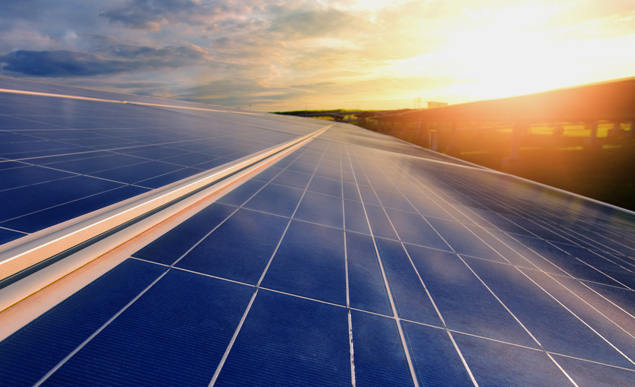
The company expects coal to serve only as a backup fuel by the end of 2030 and disappear as an energy source by the end of 2032. Its longer-term goal is net carbon neutrality for the electric generation fleet by 2050. Those are expectations and a goal, rather than completed achievements. The operational challenge is arranging replacements before existing resources leave service.
The bill has a referee
A regulated utility earns revenue through approved service rates. Investment can support future earnings when regulators allow the associated costs and return into rates. That makes permission an economic input, alongside steel and labor. WEC also owns power plants leased to We Energies through W.E. Power, while WEC Infrastructure holds renewable interests backed by long-term energy offtake agreements.
Illinois supplies a concrete warning against assuming that expenditure guarantees recovery. In May 2026, regulators approved settlements requiring Peoples Gas and North Shore Gas to provide a combined $125 million in customer bill credits over three years. Peoples Gas also agreed to remove $130 million of infrastructure investment from its rate base. The pipeline settlement included documentation and bidding procedures for ongoing high-risk pipe retirement.
“Financial discipline, even in small matters, helps us meet the expectations of our customers and shareholders.”
WEC Energy Group · Our Values
The setback exposes a limit in the expansion model: spending must survive scrutiny. Replacing aging infrastructure can be necessary while particular costs remain disputed. Customers need safe service and defensible bills; shareholders need investments that can earn their allowed return. The tension lives inside the same pipe. WEC reported $9.8 billion in 2025 revenue, but its reported earnings also reflected the Illinois settlement charge.
The operating culture reflects that bargain. WEC’s published values include safety, reliability, customer focus and personal responsibility for results, alongside financial discipline. Its careers material describes approximately 7,000 employees. For a business maintaining physical networks, execution happens through people who inspect equipment, plan outages and restore service. A capital budget can authorize assets; it cannot substitute for the work of operating them.
Try one engine first
The more portable lesson comes from a smaller project. In 2022, WEC and EPRI tested hydrogen blended with natural gas at the A.J. Mihm Generating Station in Michigan. Wärtsilä supplied technical support. The demonstration used one operating reciprocating engine and reached blends of up to 25% hydrogen by volume. The team measured electrical output, efficiency and emissions across operating conditions.
That is a useful method to copy: bound the experiment, measure what changes, and leave room for the results to constrain the next decision. A successful blend test does not establish the economics of a hydrogen-powered fleet. Fuel supply, equipment suitability and cost still matter. Likewise, a utility construction strategy depends on financing, approvals and demand that materializes. A promising forecast cannot operate a generator.
The latest reported quarter gives the expansion story a financial checkpoint. WEC recorded second-quarter 2026 net income of $299.2 million, compared with $245.4 million a year earlier. First-half revenue reached approximately $5.5 billion. These results describe the business operating today. They do not settle whether every project in the five-year plan will earn its intended return or arrive when customers need it.
For customers, WEC’s usefulness remains concrete: get service through the local subsidiary, keep a business supplied, heat a home. For anyone studying infrastructure, its current plan offers a more demanding question. Can the company replace old capacity, accommodate new demand and justify the bill at the same time? Breakfast will provide one answer. The rate case will provide another.
Follow the current
Explore WEC Energy Group, its newsroom, and earnings webcasts.