On March 14, 2025, tornadoes crossed Ameren Missouri’s territory. Crews had damaged equipment to repair. But another part of the response was already happening along the wires: automated switches were isolating trouble and redirecting electricity. Ameren says those investments prevented 59,000 customer outages during that outbreak. For some customers, the evidence that something had worked was barely an event at all: a flicker.
That is an awkward product to sell. A functioning utility disappears into breakfast, refrigeration and the opening shift. Ameren’s challenge is to make that disappearance dependable, then persuade regulators and customers that the equipment behind it deserves to be paid for.
- The product: electricity and gas that arrive reliably.
- The mechanism: smarter switches, stronger networks and dependable generation.
- The tension: billions in upgrades must earn their place on the bill.
01The useful thing about a boring business
Ameren is a publicly traded utility holding company serving Missouri and Illinois. Its September 2026 description puts the customer base at 2.5 million electric accounts and more than 900,000 natural gas accounts. Households, shops, factories and public institutions depend on the same underlying promise: energy arrives when needed.
The corporate name dates to the December 1997 merger of Union Electric and CIPSCO. The combination assembled established utilities; later acquisitions expanded the Illinois business. Even the name compresses the proposition: American energy.
The state line matters. Ameren Missouri generates electricity and operates transmission and distribution networks, alongside gas distribution. Ameren Illinois delivers electricity and gas; customers can choose an alternative electricity supplier while Ameren maintains delivery. Switching the seller does not replace the poles. Its position rests on regulated infrastructure, engineering and territory.
02A detour beats a repair
A smart switch cannot stop a tree falling. It can stop one damaged section from taking as many customers down with it. Detect the fault, isolate the affected section, feed other customers through an available route: that is the basic sequence. Crews still have to fix the damage. The improvement comes from separating who must wait from who can be supplied another way.
By February 2026, Ameren Missouri reported more than 2,000 smart switches installed and more than 330,000 customer outages prevented over five years. Its 2025 total during major storms was 160,000. These are company-reported avoided interruptions, not a claim that every customer stayed connected.
The less glamorous work matters too. The company reported 850 composite poles added in 2025 and nearly 150 substations modernized through its Smart Energy Plan. Sensors need a network worth switching onto. An alternate route needs available capacity. If a storm disables multiple routes, automation cannot conjure an intact wire. The transferable lesson is specific: build the detour before the failure.
customer outages avoided during major storms in 2025, according to Ameren Missouri.
03The bill is part of the engineering
In February 2026, Ameren outlined $31.8 billion of infrastructure investment for 2026 through 2030. That is a forward capital plan, not money already spent and not a price tag solely for smart switches. It spans businesses and infrastructure. The company reported $8.799 billion in 2025 operating revenue, which gives the investment ambition some scale.
The business model explains the appetite. Regulators establish frameworks for recovering costs and earning a return on qualifying investment. Ameren finances construction with operating cash and capital markets, including debt and equity. Customers ultimately encounter approved costs through rates. Investors want earnings; customers want affordable reliability; regulators decide what expenditure earns its place.
That arrangement rewards building useful assets, but the word useful carries weight. Ameren’s second-quarter 2026 results attributed earnings gains partly to infrastructure investment, while noting higher maintenance and tree-trimming expenses. Owning the network does not make upkeep optional.
A dollar spent is easy to count. A future interruption avoided is harder to prove.
THE UTILITY’S ACCOUNTING PROBLEM
04Illinois sent the plan back
In December 2023, the Illinois Commerce Commission rejected Ameren Illinois’ proposed grid plan, finding it did not meet statutory requirements. The first thing to fail in this modernization story was a proposal. Reliability ambitions did not exempt the company from demonstrating how the plan satisfied the rules.
Ameren then held three months of workshops with consumer advocates and energy stakeholders. Its March 2024 revision deferred $400 million in infrastructure spending. The commission approved a revised plan with modifications in December 2024. Deferral is not the same as permanent savings. Still, the sequence shows what changed the proposal: regulatory rejection, outside scrutiny and a different spending schedule. For anyone managing infrastructure, consultation belongs in the budget, not merely in the presentation.
- RejectedOriginal Illinois grid plan sent back.
- Revised$400 million in spending deferred.
- ApprovedRefiled plan approved with modifications.
05Tomorrow needs more than another switch
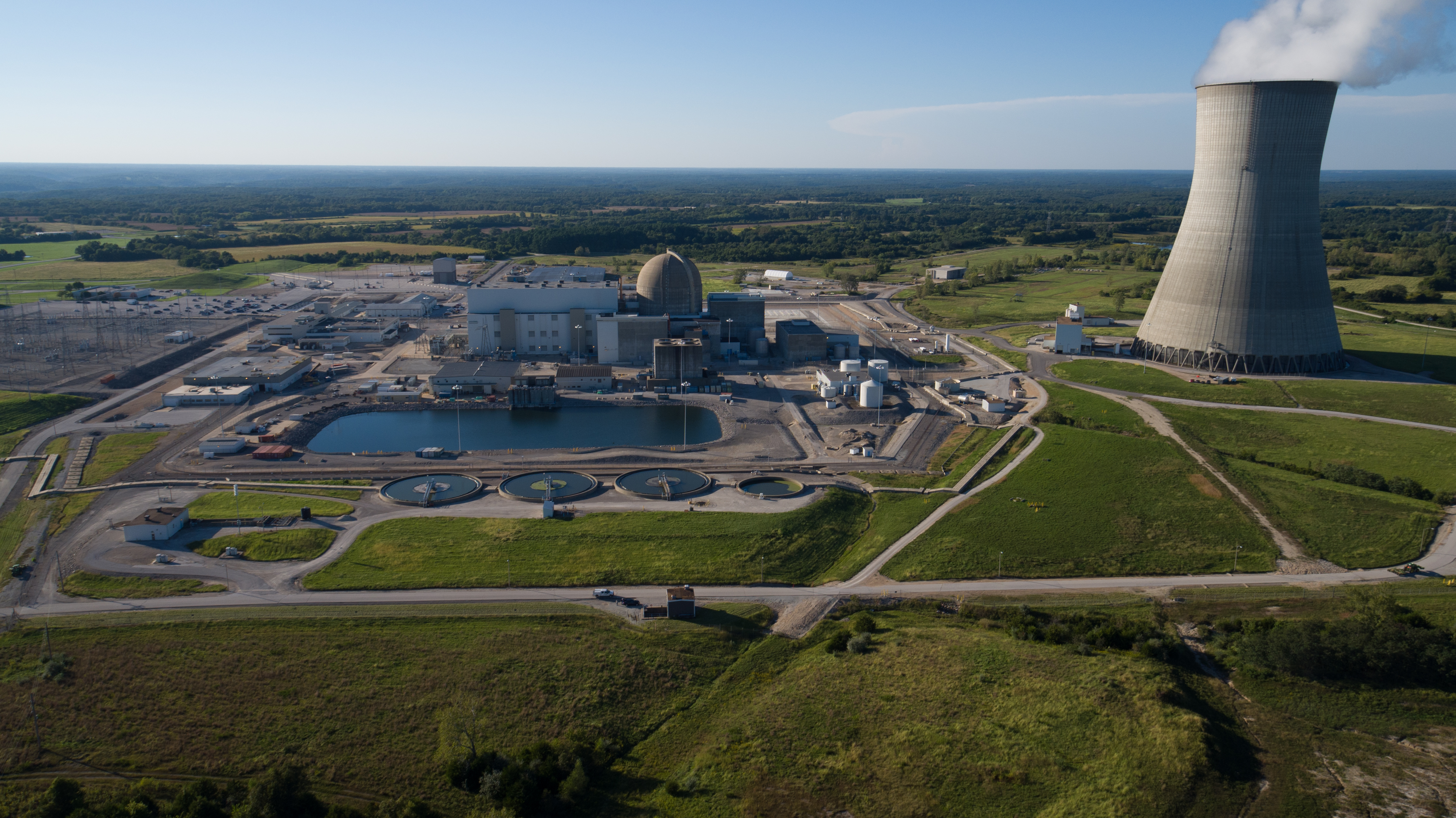
A reliable wire also needs electricity at the other end. Callaway Energy Center has operated since 1984, putting nuclear generation inside a business often discussed through poles and bills. In September 2026, Ameren Missouri published a 20-year resource roadmap that combines gas, solar, batteries, wind and nuclear options. It also reported signed agreements to serve 2.8 gigawatts of aggregate large-load demand by 2030.
Those commitments sharpen the stakes. The roadmap plans 2,400 megawatts of battery storage by 2030 and 1,200 megawatts of new nuclear generation by 2040. These are plans, with approvals and execution ahead. The company says neither a nuclear location nor technology has been selected. Forecasts, financing and construction schedules have to hold together for the proposed mix to become dependable service.
Customers have nearer-term tools. Online accounts expose usage; efficiency programs support improvements; demand response can reduce consumption at busy times. In September 2026, Ameren Missouri sought approval to extend efficiency offerings through 2028 and demand response into 2029. Eligibility and program terms matter more than a blanket promise of savings.
The work also needs people. A five-year, $1 million partnership announced with Junior Achievement in 2025 introduces students to skilled trades. Switches, turbines and trained workers all belong in the same picture. Ameren’s proposition becomes convincing when a household can afford its bill, a factory can plan its shift, and a storm produces fewer hours of waiting. Nobody has to admire the equipment. They have other things to do.
Follow the current
Manage service, explore efficiency programs, or look closer at the plans behind the grid.