On April 29, 2024, a new nuclear reactor in eastern Georgia crossed an unromantic threshold: commercial operation. Vogtle Unit 4 could now earn its keep. Beside it stood Unit 3, which had started the previous July. For Southern Company, the parent of Georgia Power, this was the end of an extraordinary construction story. For customers paying for the expansion, it was another chapter in a much longer relationship.
- Southern’s utilities turn big infrastructure into everyday electricity and gas service.
- Vogtle delivers nuclear power, after a punishing construction bill.
- The next test is serving new demand without loading the costs onto everyone else.
Two reactors, two finish lines
The original plan put the two new reactors at roughly $14 billion. At completion, Associated Press calculations put the owners’ cost near $31 billion, or nearly $35 billion including the $3.7 billion Westinghouse settlement. Those are project-wide figures across four owners. Georgia Power owns 45.7 percent. The distinction matters: this was a shared undertaking, with a bill too easily reduced to one alarming number.
The schedule slipped long before the ribbon-cutting. Westinghouse, the original contractor, filed for bankruptcy in 2017; Southern Nuclear took over project management. Unit 3 had originally been expected in 2016, Unit 4 in 2017. They arrived in 2023 and 2024. Nuclear power’s promise of long service had collided with the difficulty of getting a complicated construction project into service at all.
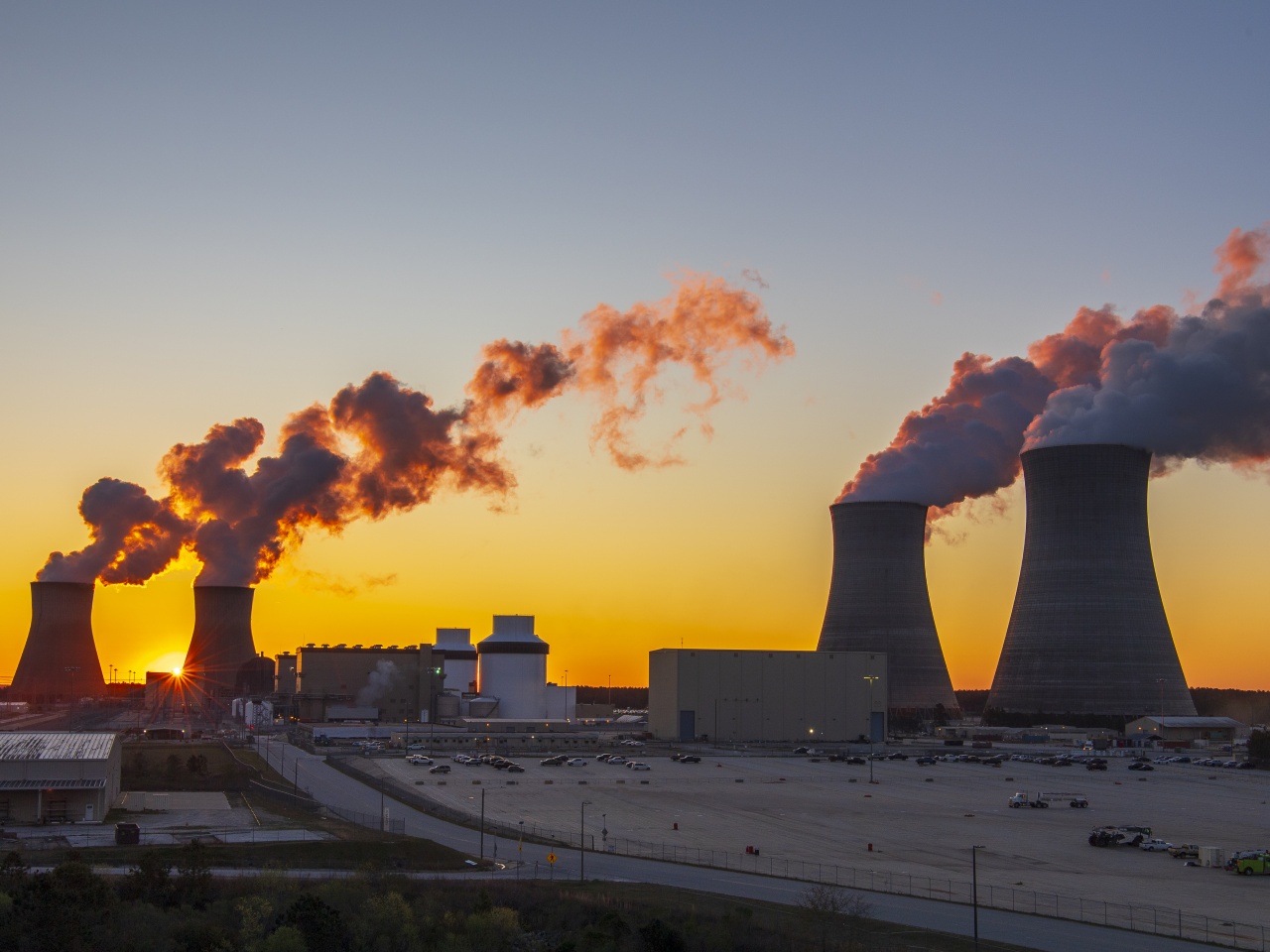
Yet the finished machines do something valuable. The new units together have approximately 2,234 megawatts of generating capacity. They produce electricity without carbon emissions during generation and without waiting for sunshine or wind. Georgia Power expects decades of service. That makes the economic argument unusually slippery: customers encounter the costs now, while much of the intended value sits in a future nobody can inspect.
*Includes the Westinghouse settlement. Approximate project totals, not Georgia Power’s share. Different stages, very different bills.
A utility is a promise with wires
Southern’s real product is continuity. Alabama Power, Georgia Power and Mississippi Power serve electric customers in their territories. Southern Company Gas operates distribution businesses in four states. Across the family, the company reports about nine million customers. Households need light and heat; factories need machinery running. A customer experiences the business when a switch works, and more acutely when it does not.
The regional logic is older than the corporate name. Southern was incorporated in 1945, bringing together a history of predecessor utilities and holding companies. The Georgia Historical Society describes how the system helped spread electricity across the Southeast and attract industry after World War II. Serving tomorrow’s factory has been part of the proposition for generations.
The parent is an energy holding company listed as SO on the New York Stock Exchange. Its regulated utilities build assets, recover approved costs and earn authorized returns, subject to regulators. Southern Power sells wholesale electricity to customers including municipalities, cooperatives and other utilities. PowerSecure builds distributed energy systems and microgrids. These are distinct ways of getting paid for keeping energy available.
For a household, the practical entry point is the local operating company for billing, service and efficiency programs. A business considering backup power can explore PowerSecure; a wholesale buyer deals with generation contracts. The parent’s familiar name covers several different customer relationships, each with its own economics.
Duke Energy, Entergy and NextEra are useful peers, but households generally cannot shop among them as if comparing streaming subscriptions. Service territories matter. Southern’s position rests on the networks it operates, its relationships with regulators and its ability to plan, finance and run equipment over long periods. Its technical expertise spans nuclear operations, conventional generation, grid engineering and fuel procurement.
“We know what it takes to power the future - an all-of-the-above approach that delivers for everyone.”
Chris Womack · Chairman, president and CEO
The coal experiment that stopped
Southern’s history supplies a useful antidote to the idea that every ambitious project should simply be finished. At Kemper, Mississippi Power tried to turn lignite into gas for electricity generation. Costs climbed, startup slipped and the economics became harder to defend. By suspension in June 2017, the estimated project cost was approximately $7.38 billion, according to Southern’s annual filing.
The company stopped the gasification work. Its announcement pointed to project economics and the Mississippi commission’s direction. The combined-cycle plant continued burning natural gas, as it had already been doing for almost three years. The ambitious technology was abandoned while useful generating equipment remained. Here was an expensive distinction between saving a project’s original idea and preserving something customers could actually use.
More power, fewer new reactors
Today the demand story includes data centers. Southern reported $29.6 billion in operating revenue for 2025, but revenue alone says little about the next construction cycle. New demand requires capital before it produces dependable income. In February 2026, Georgia Power and Alabama Power received a Department of Energy financing package of up to $26.54 billion for generation and grid investment.
The projected customer savings are about $7 billion over roughly 30 years. That is a financing forecast, not cash already returned. In September, Georgia Power announced another route to more nuclear output: a Google agreement supporting upgrades at existing Vogtle and Hatch units. Subject to regulatory approval, it anticipates approximately 96 additional megawatts on Georgia Power’s owned portion and roughly $900 million in lifetime customer benefits.
- 2009Expansion construction begins
- 2017Westinghouse bankruptcy
- 2023Unit 3 enters service
- 2024Unit 4 enters service
There are smaller clocks in this system, too. Georgia Power’s Robins battery facility, announced commercially operational in September 2026, can deliver 128 megawatts for up to four hours. That makes it useful for shifting stored energy into busy periods. Four hours does not replace decades of generation. It solves a different problem, which is precisely why a utility keeps several kinds of equipment around.

The part worth copying
For other builders, the practical lesson is to define two finish lines: the thing works, and the economics work. Kemper suggests the value of a usable fallback. Vogtle shows the importance of contractor risk and schedule discipline. The Google proposal offers a contract-based attempt to make a large customer’s demand benefit others. None of those lessons requires buying a reactor.
The stated culture starts with safety, inclusion, integrity and performance. In infrastructure, those commitments face a concrete test: employees must be able to surface problems before schedules turn them into bigger ones.
There are limits. Regulators must approve recovery; customers must afford service; projected demand must materialize. A company without that financing framework cannot copy Southern’s capital commitments. Even Southern cannot make a four-hour battery last all week by wishing. The long game ultimately depends on matching equipment, contracts and costs to the promises people will still need kept after today’s excitement has passed.