Chris Womack once had a choice between a mayor’s office and a power company. Politics had the clearer claim on him. He had worked in Washington, studied government and imagined a life in public service. In 1988, he chose Alabama Power. A different line on the résumé seemed worth a try.
Thirty-eight years is a generous interpretation of a change of scene. Womack is now chairman, president and chief executive of Southern Company, the Atlanta energy business whose subsidiaries serve about nine million customers. His route there offers a useful complication to the familiar executive biography: staying with one company can involve a great deal of movement.
The job he holds today brings his earlier interests back into view. Electricity is an engineering undertaking with public consequences. Someone has to decide what to build, explain why it is needed and account for what it costs. Womack has spent much of his working life moving among people who approach those questions from different directions.
A fishing rod before a business card
His memories of Greenville, Alabama, begin at a more manageable scale. After school, he would collect his fishing rod and join his grandmother by the creek. They brought their catch home and cooked it. In a childhood surrounded by relatives, those outings remained among the moments he recalled most fondly.
There was work in the garden, too: vegetables, chickens in the backyard, the practical business of a household producing some of what it needed. His grandmother prepared communion at church. The children enjoyed the extra bread and grape juice afterward, a small childhood bonus attached to a solemn grown-up responsibility.
The setting was also the segregated South of the 1960s. Womack has described the limits discrimination placed on Black families. His grandmother’s insistence that he could accomplish things through effort existed alongside those restrictions. Both belong in the account. Encouragement mattered because the barriers were real.
His mother taught school, and education carried weight in the family. Years later, the degrees on his biography would make that commitment visible. The more personal inheritance was a habit: prepare yourself, learn what the work requires and take other people seriously. It is advice with little appetite for shortcuts.
“Being just drop-dead curious about a lot of things.”
Chris Womack, on career advice
The education of a congressional aide
At Western Michigan University, Womack studied political science, earning his bachelor’s degree in 1979. He went on to receive a master’s in public administration from American University in 1985. These were qualifications for someone interested in how institutions worked, how decisions were made and how people might change them.
Washington gave those interests a workplace. Between 1979 and 1987, his career included serving as a legislative aide to Leon Panetta and as staff director for a House Administration subcommittee concerned with personnel and police. The subjects were different from electricity, but the work required attention to people, procedure and competing priorities.
Getting into Panetta’s office involved an introduction from a friend, interviews and writing samples. Womack later described a friendship with Panetta that outlasted their working arrangement. That detail makes the connection more useful than a famous name on a résumé. A person who helped test his readiness also remained part of his life.
There is a practical education in having to make a complicated matter understandable to someone else. Writing forces a choice about what matters. A committee has to arrive at a decision. Neither task is improved much by assuming everyone already agrees. For a future utility leader, that is relevant preparation, even before the first discussion of a turbine.
A change of scene that lasted
Womack joined Alabama Power as a governmental affairs representative. The company offered a place to use his Washington experience while learning a different business. Over time, the assignments widened considerably. Public relations and corporate services led into a career that also included personnel, power generation and external affairs.
Those functions put different kinds of responsibility on the desk. In human resources, the organization’s plans meet the lives and capabilities of its employees. In generation, plans have to survive contact with equipment and operating requirements. In external affairs, the company has to explain itself to people with the power to question its decisions.
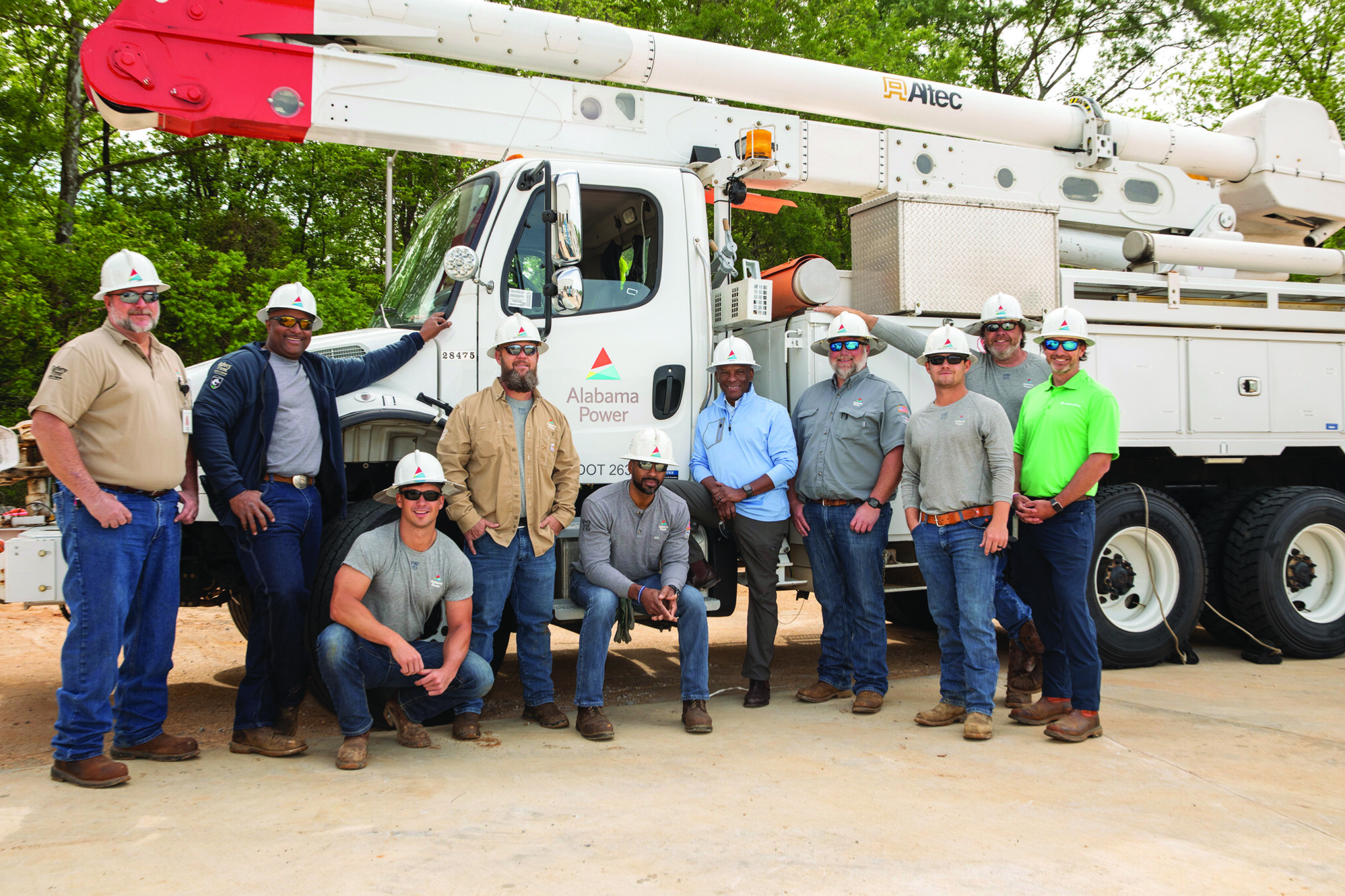
That movement gives his long tenure some texture. It would be easy to read the dates and imagine one uninterrupted climb through similar offices. His responsibilities instead crossed the boundaries inside a large utility. The business remained familiar while the work kept changing.
He became Georgia Power’s president in November 2020, then added the chairman and CEO roles on June 1, 2021. The progression matters: he had responsibility for a major operating company before taking charge of the parent. In March 2023, he became Southern Company president. On May 24, he succeeded Tom Fanning as CEO.
Womack became the company’s first Black chief executive. That fact carries a public significance beyond the succession chart. It also sits within a specific professional history, assembled over decades of assignments. By December 31, 2023, he had added the chairmanship. A career that began outside the industry had reached its most accountable seat.
Two reactors, and a bill that matters
He arrived at a consequential moment. Vogtle Unit 3 entered commercial service on July 31, 2023. Unit 4 followed on April 29, 2024. Bringing the two reactors into operation completed a nuclear expansion that had absorbed years of work, delays and argument. Womack led the parent company through the final commissioning period; the project’s history reached back well before his tenure as CEO.
The engineering outcome and the customer experience have to be considered together. The reactors provide electricity without carbon emissions during generation. Their construction also cost far more and took far longer than originally planned. The original expectation had been roughly $14 billion and completion by 2017. By the finish, the total including contractor payments was about $35 billion.
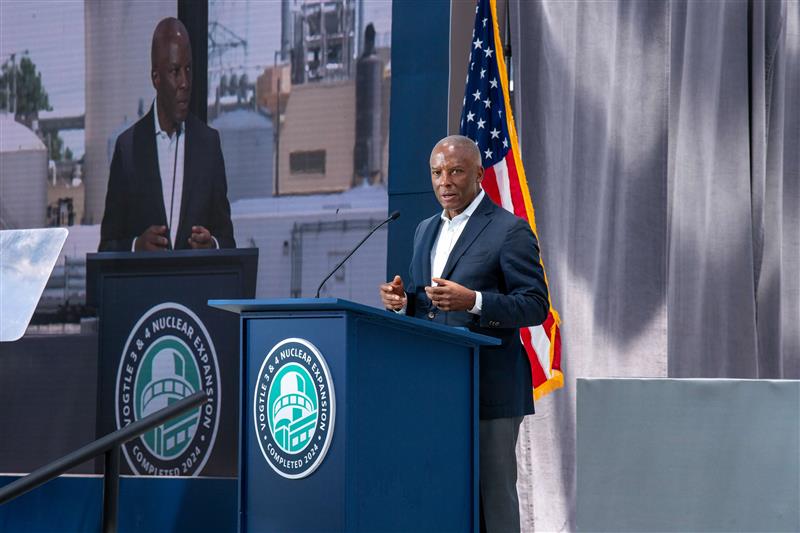
For customers, the consequences became tangible in rates. Georgia Power’s 2024 annual reporting records an approximately five percent net adjustment to average retail base rates effective May 1, following Unit 4’s entry into service. That figure concerns base rates, rather than a promise that every household’s total bill changed by the same amount.
Vogtle makes the central difficulty of utility leadership unusually visible. A plant can operate for decades; a household must manage this month. The time horizons coexist. A leader has to make a case for the long investment while remaining answerable for its immediate consequences. The completed reactor does not retire that obligation.
The new customer at the end of the wire
Now the conversation has shifted toward rising demand, including data centers. Their appetite for electricity creates opportunities to invest and a difficult question about who should bear the expense. Womack has publicly argued that serving those customers should protect the people already connected to the system.
His company’s second-quarter 2026 announcement returned to reliability, rate stability and long-term planning. Southern reported $1.2 billion in quarterly earnings under generally accepted accounting principles, compared with $0.9 billion a year earlier. Financial results describe one part of performance. The public promise concerns how the company grows and what that growth means for customers.
More electricity needed↓New infrastructure
Generation + transmission↓Cost allocation
Who pays, and on what terms?
An explanatory diagram of the investment question, not a demand forecast.
It is tempting to discuss the digital economy as if it happens somewhere above the ordinary world. The utility has a less ethereal assignment. Electricity has to arrive through physical infrastructure, and somebody has to finance it. The cloud, inconveniently for the metaphor, comes with construction invoices.
This is where Womack’s experience across company functions becomes relevant again. Engineering, personnel, finance and public policy meet in the same decision. The measure of that experience will be what the company delivers: dependable service, workable investment plans and terms that existing customers can understand.
What the title lets you do
Womack’s civic commitments extend beyond the energy business. He has chaired the East Lake Foundation and Communities in Schools of Georgia, and his board responsibilities include Invesco and the Georgia Ports Authority. These positions put him in contact with education, investment, trade and community development as well as electricity.
On April 18, 2026, he was inducted as a Georgia Trustee in Savannah alongside former Senator Saxby Chambliss. The honor recognizes accomplishment and service. It places a corporate career in a wider frame: what someone contributes to the state and the people around them.
He returned to that subject at the University of Georgia’s Mason Leadership Lecture on October 14. Speaking to students, he discussed the responsibility institutions have toward the communities where their people live and work. He also described team building and adaptability as skills that had traveled with him from Washington into the utility business.
There is continuity here, despite the change in employer and occupation. The congressional aide and the company leader both have to work through institutions to get something done. Womack’s account keeps returning to the people who make that possible: family, teachers, mentors, colleagues and the communities with a stake in the result.
The mayor’s office remained a road he did not take. The questions that interested him there have proved quite portable. Who gets heard? What needs fixing? Who will carry the cost? After thirty-eight years in the power business, those are still questions worth bringing to work.
Continue the conversation
Profiles, reporting & a round of golf
- Southern Company: Womack’s official biography
- Chris Womack on LinkedIn
- Watch: Big Swings with Alexis Belton and Chris Womack ↗
- A conversation about curiosity, work and leadership
- Womack’s October 2026 University of Georgia lecture
- The 2026 Georgia Trustee induction
- Associated Press: Vogtle’s completion and cost
- Southern Company’s second-quarter 2026 results