Calvin Butler’s training for the executive suite included a second shift at a bindery plant in Pontiac, Illinois. He had been a lawyer and a government affairs executive. Then a senior leader at R.R. Donnelley suggested that he learn how the business actually worked. Butler accepted. A career that might have remained comfortably close to policy and persuasion took a turn toward manufacturing, hourly workers and the practical business of getting things done together.
He recalls meeting employees in small groups across all three shifts, asking what worked and what needed fixing. Their concerns were concrete: supporting families and keeping the plant open. His authority would have to become useful to them. “You take care of the little things and allow them to do the big things,” he says.
Today, Butler leads Exelon, whose six utilities serve almost 11 million electric and gas customers. The scale has changed considerably. The question underneath the job is familiar: how do you get people with different interests to trust a common plan?
A campus election with something at stake
Before there were utility regulators, there was Bradley University. In the spring of 1990, a white supremacist organizing effort threw the campus into turmoil. Butler became a spokesperson for the Bradley Minority Coalition. The students had classes and homework, and suddenly a much larger obligation: deciding how to respond to an effort that threatened their place in the university.
As the semester unfolded, the coalition broadened its identity to become the Multicultural Awareness Coalition. The change reflected a recognition that the problem reached beyond one group. Students who had largely coexisted were working together. That is a different sort of education from sitting beside one another in a lecture hall.
The share of the vote Butler won in the student body presidential election.
In April, Butler won the student body presidency with 79 percent of the vote. Work on race and multiculturalism moved from the coalition into student government. Protest had produced a constituency, and the constituency had handed him a job. The election also meant that the work would continue after the immediate confrontation passed.
Butler has described that period as a catalyst for law school. He graduated from Bradley in 1991 and earned his law degree at Washington University in St. Louis in 1994. A useful pattern was already visible: when a room became difficult, he moved toward responsibility.
The limits of a child’s map
During a law school summer, Butler joined colleagues taking children from a local Boys & Girls Club to Chuck E. Cheese. He asked a seven-year-old what he wanted to do when he grew up. The answer was to hang out. The men the child saw on his neighborhood corner seemed to have money and standing. They supplied the available picture of adulthood.
Butler remembered the encounter because it made his own visibility feel consequential. A child cannot choose from possibilities he has never seen. For someone moving into professional life, showing up could expand that picture. Mentoring would become a recurring part of his public work, rather than an activity reserved for a quieter year.
The setting gives the memory its force. A career lesson arrived during a children’s outing, amid the ordinary business of keeping a group entertained. No board appointment was required to ask the question. The harder obligation came afterward: continuing to make time to be an alternative answer.
His early career took him through legal, government affairs and strategy work at Central Illinois Light Company. At R.R. Donnelley, his responsibilities eventually included manufacturing and external affairs. The combination gave him experience with both the decisions made outside an operating business and the work required to carry them out inside one.
Saturday mornings, a napkin and a neighborhood
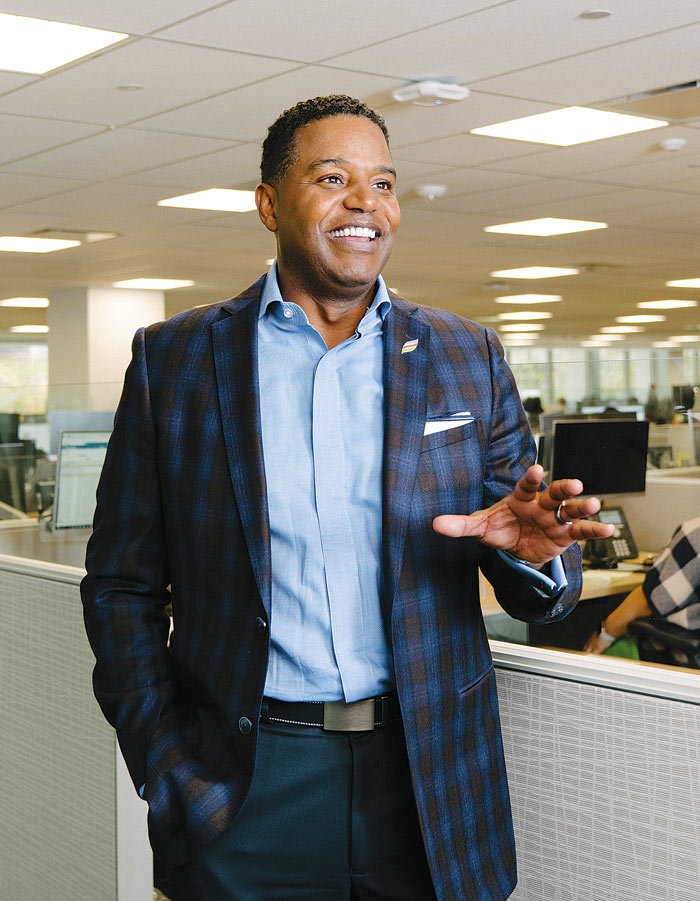
Butler joined Exelon in 2008 and became chief executive of Baltimore Gas and Electric in 2014. The following year, Baltimore’s unrest forced a reckoning with the city’s economic divisions. For a utility executive, those divisions were close to home: the people in the neighborhoods were also customers, potential employees and neighbors of the business.
He and Tim Regan, the chief executive of construction company Whiting-Turner, began meeting on Saturday mornings. At Atwater’s off York Road, they sketched an idea on a napkin. Corporate planning occasionally acquires an impressive vocabulary; this version began with breakfast and a surface too small for a slide deck.
The idea became TouchPoint Baltimore in Mondawmin. Its approach brought existing organizations together: Thread, Baltimore Corps and the Center for Urban Families. BGE and Whiting-Turner worked with neighborhood leaders and the Greater Mondawmin Coordinating Council. There were already people doing the work. The opportunity was to connect them more effectively.
A place for existing work to meet
Urban Families
Community relationships + nonprofit partners + corporate participation
That choice matters. A company can announce a new initiative and still leave a resident navigating the same disconnected institutions. TouchPoint’s model puts emphasis on personal connections and collaboration. Its stated hope is that other committed corporate partners can replicate the approach elsewhere in Baltimore.
Butler’s Baltimore work also extended to BLocal, the business coalition he co-founded with Johns Hopkins president Ronald Daniels in 2016. Hiring and purchasing became ways for major institutions to support the economy around them. A procurement budget, usually a backstage document, could become a civic instrument.
The work beyond the ceremonial check
There is an unglamorous dimension to this version of corporate citizenship. Students need to meet employers. Employees need time and encouragement to volunteer. A scholarship has to reach an actual person. The interval between announcing a commitment and making it usable is where much of the work sits.
Butler has singled out volunteering with his family at Paul’s Place in southwest Baltimore as especially meaningful to him. He has also highlighted Exelon’s efforts to introduce young women to STEM careers, including opportunities to meet company executives and learn about internships and scholarships. Such encounters put faces and job descriptions on an industry often represented by a bill.
In 2021, Exelon launched its HBCU Corporate Scholars program with 24 scholarships of $100,000 each for students entering historically Black colleges and universities. The size of the award makes the offer concrete. It also places education alongside workforce development as part of the company’s relationship with its communities.
His civic commitments extend into sport and education. He chairs the Cal Ripken, Sr. Foundation and is vice chair of the Institute of International Education. The former connects naturally with the youth and neighborhood work visible in Baltimore; the latter broadens the educational setting. They are different institutions, joined by his interest in what access makes possible.
Six utilities, one very public promise
Butler took over as Exelon’s president and chief executive on December 31, 2022, succeeding Chris Crane. He had already served as chief executive of Exelon Utilities and then as chief operating officer. His promotion followed the separation of Exelon’s utility business from Constellation’s generation and competitive energy business earlier that year.
The distinction is important to understanding his job. Exelon’s business centers on regulated transmission and distribution. Its familiar local names include ComEd, PECO, BGE, Pepco, Delmarva Power and Atlantic City Electric. Customers encounter those companies in specific places, with specific expectations about service, outages and bills.
- 2008Joins Exelon
- 2014Becomes BGE CEO
- 2019Leads Exelon Utilities
- 2022Becomes Exelon CEO on December 31
A utility has an unusually intimate relationship with daily life. Customers can ignore the name of a distant supplier. They have difficulty ignoring an outage. That makes reliability a recurring examination with no graduation ceremony. Every storm and every service interaction supplies another result.
In July 2026, Exelon reported that all its utilities were projecting reliability performance in the top quarter of their peers. The same update described a BGE request for higher electric distribution rates. These two facts belong together. Maintaining infrastructure takes money; customers have every reason to examine the bill. Butler’s public emphasis on affordability sits inside that tension.
The cloud comes with a power bill
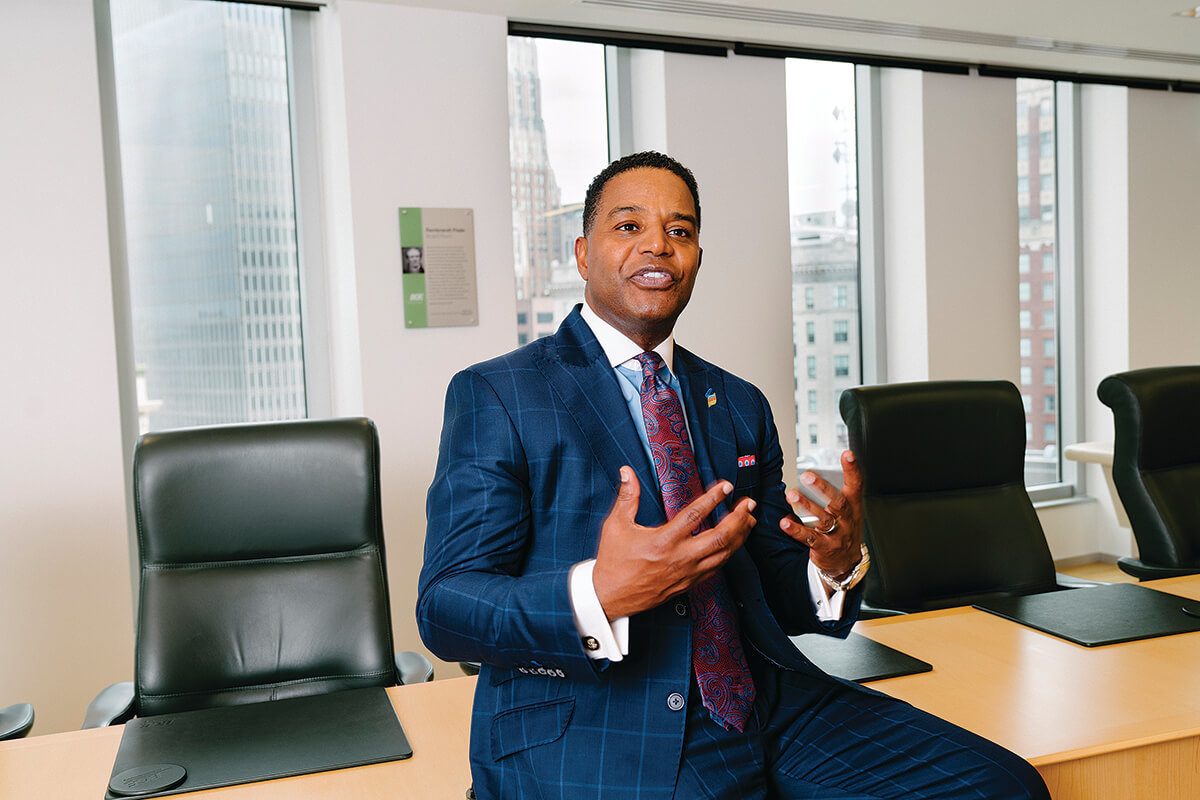
The next set of demands is arriving from data centers, electrification and new industrial activity. Butler has welcomed growth while questioning how utilities should plan for it. A proposed data center is a forecast, and forecasts are not electricity customers. Building for projects that never arrive leaves an uncomfortable question about who pays.
By 2024, he was raising concerns about duplicate development proposals and the possibility that arrangements serving large data centers could shift costs onto other customers. His agenda also included better use of existing transmission lines and additional generation. The practical details complicate the easy promise that more demand automatically benefits everyone.
In a 2025 industry interview, Butler described affordability as the issue increasingly leading customer conversations. He also pointed to the years required to site transmission lines and the need for cooperation among regulators and jurisdictions. A digital business can move quickly. The infrastructure beneath it has permits, physical routes and neighbors.
“Our customers are feeling that pain and they no longer lead with clean, they lead with affordability.”
Calvin Butler · 2025
At a September 2026 discussion in New York, he returned to community participation in data center development. Residents need a conversation about what is coming and what it means. The grid itself is changing too: rooftop solar, batteries and electric vehicles complicate the old model of one-way delivery. Technical planning and public consent now have to advance together.
Making the position useful
Butler’s account of his ambitions remains tied to other people’s prospects. In a public television conversation, he described a shared desire for a better future for children as a basis for agreement, even among people who disagree about the route. His task, as he sees it, includes getting them to stay at the table long enough to work through the differences.
In January 2026, TIME included him among its Closers, recognizing Black leaders working toward greater equality. His mentoring visits to Leo High School in Chicago offer a smaller, more personal expression of the same commitment. The executive title gets him through the door. What matters next is the encounter.
The second shift remains a useful place to begin understanding him. People need to know what a leader intends to do, what it will cost and how it will affect their lives. At a bindery, in a neighborhood collaboration center or across a utility network, the explanation has to survive contact with the people doing the work.
Keep the conversation going
- Exelon · official biography
- Calvin Butler · LinkedIn
- TouchPoint Baltimore · the partnership
- The second-shift conversation · leadership interview
- Bradley’s spring of 1990 · campus history
- Calvin’s Calling · Baltimore feature
- The Chavis Chronicles · watch the interview
- Powering the AI future · YouTube conversation
- Affordability and the grid · industry podcast
- The Closers · 2026 profile
- Exelon · July 2026 results