Kim Greene nearly abandoned engineering over a dynamics class. She had arrived at college with the reassuring academic record of someone accustomed to getting things right. Then she failed. Her father, John Scheibe, suggested taking the class again with a different professor. She did, and passed. A career that would eventually reach the top of Georgia Power survived a fairly ordinary intervention: someone treated a setback as a problem with a possible solution.
The episode is useful because Greene now works in a business where problems have a habit of arriving together. An electricity company must think about tomorrow’s weather, next year’s demand and equipment that may still be operating when today’s graduates retire. A dynamics examination, at least, has the courtesy to end.
Since March 2023, she has been Georgia Power’s chairman, president and chief executive officer. The company serves 2.8 million customers. Her route there has included designing equipment, managing money, overseeing generation and running a natural-gas business. Taken together, those assignments suggest a particular preparation for the job: learning how one decision travels through an entire system.
A career with several control rooms
A Knoxville native, Greene graduated from the University of Tennessee in 1988 with a degree in engineering science and mechanics. She completed a master’s at the University of Alabama at Birmingham in 1990, then joined Southern Company Services as a mechanical engineer in 1991. Her early work involved equipment for fossil-fuel and nuclear generating stations.
Engineering gave her one view of the business. Finance supplied another. She earned an MBA in finance from Samford University in 1996 and worked in structuring, trading and asset management. Electricity might look effortless from the wall socket; the career underneath it involved both machinery and markets. Greene learned to work with each.
In 2007, she left Southern for the Tennessee Valley Authority. The move was difficult, she later recalled: her professional identity had been built inside Southern. At TVA she served as chief financial officer and chief risk officer, then took on strategy and external relations and, later, generation. The latter responsibility included more than 30,000 megawatts of generating capacity.
There is a revealing breadth to that sequence. A finance executive asks what a project costs. An operations executive asks whether it works. Someone dealing with external relations must explain why it should exist. Greene had occupied all three positions before she arrived at Georgia Power. The questions would follow her.
- 1991Southern Company
Engineering - 2007TVA
Finance, strategy, generation - 2014Southern Company
Chief operating officer - 2023Georgia Power
Chairman, president & CEO
She returned to Southern in 2013 as president and CEO of Southern Company Services. That meant responsibility for functions including information technology, human resources and supply chains. In March 2014 she became Southern Company’s executive vice president and chief operating officer, overseeing system operations, generation, transmission, engineering and construction, among other responsibilities.
From 2018 until her Georgia Power appointment, she led Southern Company Gas. That business served millions of utility customers across four states. Gas brought its own infrastructure and operating demands, extending a career already unusually mobile within a single industry. Her résumé reads less like a climb up one ladder than a tour of the building.
The attraction of an inconvenient conversation
Greene’s public advice often concerns how people behave before a decision becomes visible. She has described making time to meet colleagues in other roles and departments, and learning about their interests beyond the immediate job. The practice sounds modest. In a large organization, finding out who knows something can be half the work of finding out what is wrong.
Her father’s response to that failed class belongs here. He offered an adjustment, leaving her room to try again. Years later, she gave business students a management principle with a similar concern for what happens after someone reports a problem: “How you receive bad news determines the amount of bad news you’ll receive.”
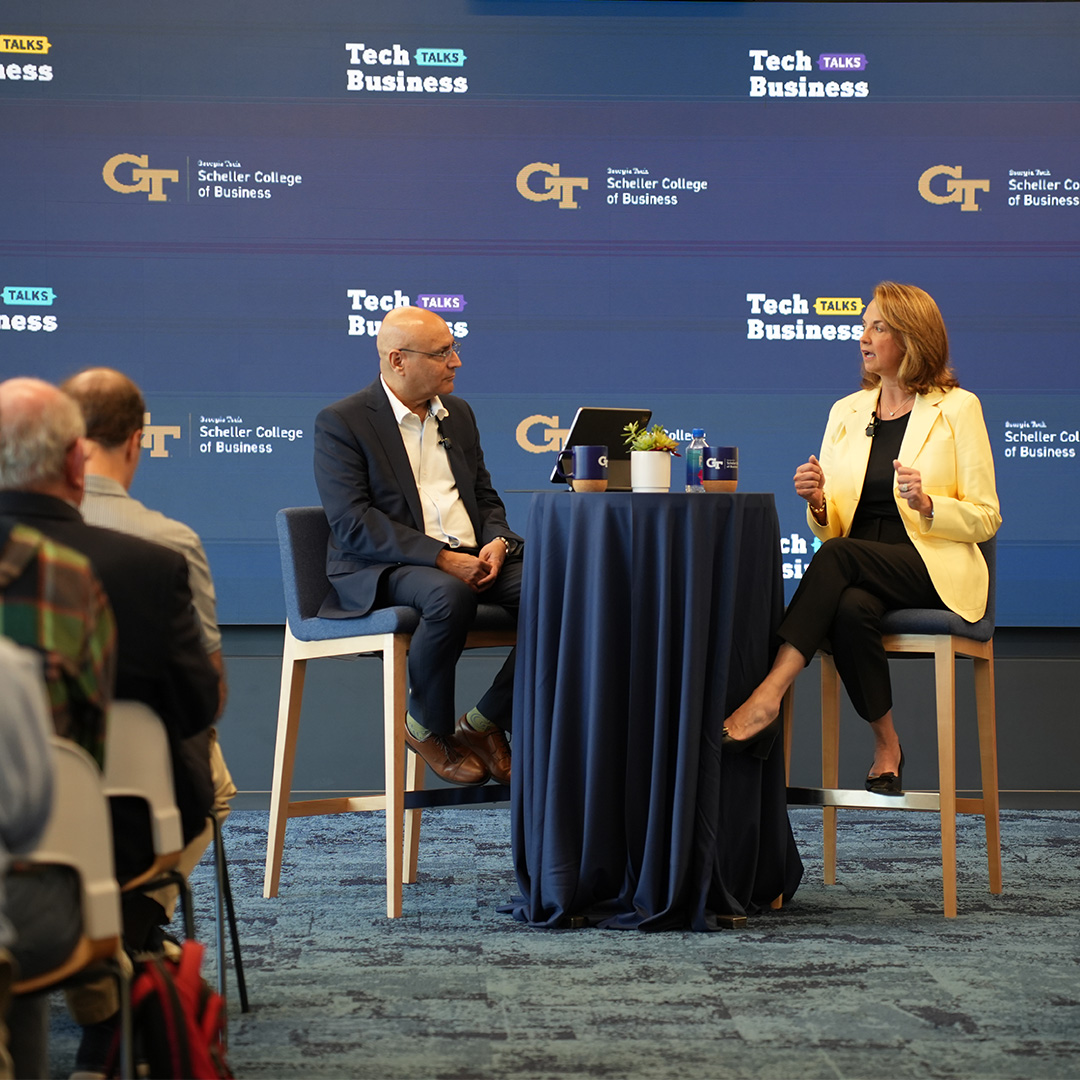
“How you receive bad news determines the amount of bad news you’ll receive.”
Kim Greene, Tech Talks Business, 2025
The warning is particularly apt for utilities. A reassuring report is only useful if it is accurate. A leader who makes an uncomfortable conversation harder can end up with a very agreeable meeting and an increasingly disagreeable problem. Greene’s formulation puts responsibility on the person hearing the news.
Her interest in workforce safety has also extended beyond her own company. In January 2022, the Edison Electric Institute gave her its inaugural Thomas F. Farrell, II Safety Leadership and Innovation Award in the member-company executive category. She was the first chair of its CEO Task Force on Safety. The recognition placed an operational concern squarely on the executive agenda.
When the system comes down to a household
Hurricane Helene brought a more immediate test in September 2024. By the morning after landfall, Georgia Power was dealing with widespread destruction: damaged poles, fallen trees and nearly 1,000 miles of downed power lines. More than a million people in Georgia were without electricity. It was the most destructive hurricane in the company’s history.
Greene went into the field. There she heard about employees who were restoring service while their own families were living with damaged homes and outages. She called a contact at Home Depot about generators, then asked human-resources leader Lindsay Hill to organize wider assistance. Within hours, a team was gathering employees’ needs. The effort became a substantial Family Services Unit.
Her account of her role is almost pointedly unglamorous. She needed to understand the scale of the damage, remove obstacles, support teams and communicate with public officials. She acknowledged the appeal of joining the physical work herself, while recognizing that coordinating help across the state was the responsibility that belonged to her.
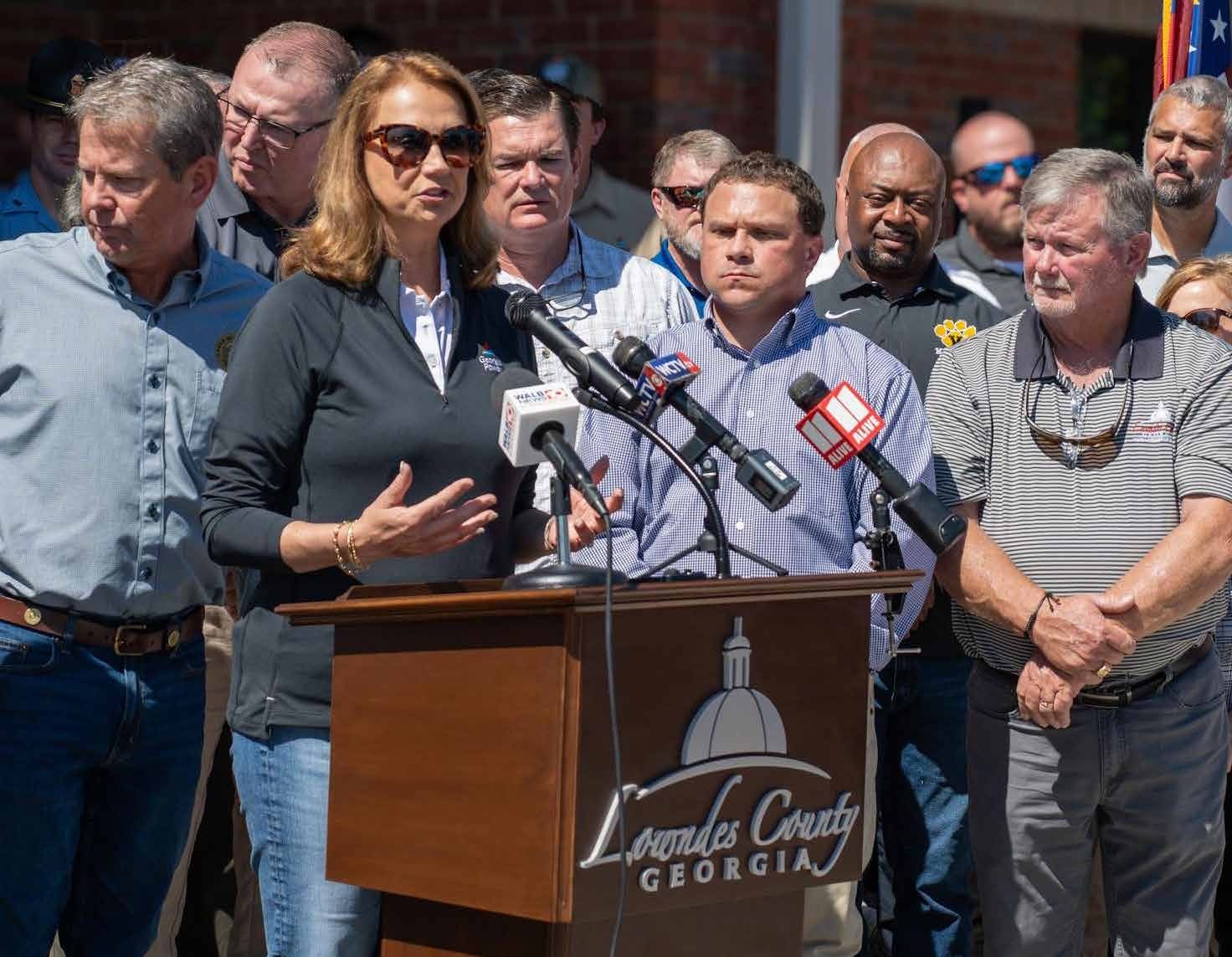
For a chief executive, the small scale of the generator problem is what makes it instructive. A restoration operation can be measured in crews and equipment. It also depends on whether the people doing the work have enough support at home to concentrate. Greene’s intervention connected the household to the organization chart.
Two reactors, a much longer clock
Another test had been unfolding at Plant Vogtle near Waynesboro. Unit 3 entered service in July 2023. Unit 4 followed on April 29, 2024. The expansion delivered the first newly constructed nuclear units in the United States in more than three decades. Greene was leading Georgia Power when both began commercial operation, inheriting a project with a long history rather than starting it herself.
The company expects the two units to supply enough electricity for an estimated million homes and businesses, with an anticipated operating life of 60 to 80 years. Those are planning expectations. They also explain the timescale on which Greene must make her case: the customers paying today and the customers using the equipment decades from now belong in the same argument.
The new reactors brought costs as well as generating capacity. Customers experienced a succession of bill increases tied to fuel costs and construction projects, including Vogtle. That record complicates any tidy celebration of the expansion. An engineering achievement and a household budget can describe the same project in very different terms.
The growth forecast meets the kitchen table
That tension has become central to Greene’s current job. Data centers and other large users are asking for more electricity. In December 2025, Georgia regulators approved a major generation expansion. The construction estimate was $16.3 billion; commission staff put the costs customers would pay over coming decades considerably higher, including financing and profit. The company’s case is that large users will cover their costs and help spread existing expenses.
The energy mix has attracted criticism, too. Georgia Power’s 2025 planning proposal sought to extend coal generation while adding supply to meet demand. Environmental advocates questioned the costs and emissions implications. Greene must defend choices across nuclear, gas, coal and renewables while making the arithmetic credible to people who chiefly encounter her company as a monthly bill.
In July 2025, regulators approved a freeze on base rates through at least 2028. Base rates exclude fuel costs, so the agreement does not promise that every component of a bill will stand still. The distinction matters. Customers pay the total, regardless of which regulatory proceeding determines each part.
By August 2026, Georgia Power announced approval of a contract for OpenAI’s Effingham County project. It said its portfolio of large-load agreements and projected growth was expected to produce $180 in annual savings for a typical residential customer using 1,000 kilowatt-hours a month, beginning in 2029. That is a company projection with a future delivery date, and a clear measure against which its argument can eventually be judged.
Still taking questions
Greene’s commitments extend into education and civic life. She has advised engineering programs and FIRST, the youth robotics organization, and serves on boards including Valero Energy, the Georgia Research Alliance and the Woodruff Arts Center. For someone whose own education nearly changed direction after one class, the connection to future engineers has a pleasing continuity.
Her story offers no exemption from the scrutiny that comes with running an essential service. The stakes keep expanding: another large customer, another investment decision, another storm. What began with learning to try a class again has become a career spent returning to difficult questions. Across a classroom, a control room and a damaged neighborhood, the practical task remains recognizable: hear what has gone wrong, work out what can change, and take responsibility for the next decision.
Continue the conversation
- Georgia Power leadership biography
- Kim Greene on LinkedIn
- Watch: Tech Talks Business on YouTube
- Watch: conversation with NEI’s Maria Korsnick
- Listen: Energy Thinks with Tisha Schuller
- Her early career and college story
- Read: Georgia Power’s Helene retrospective
- Read: the approved expansion and its costs
- Read: base rates and customer concerns
- Read: August 2026 large-load agreement update