Before there was More or Less, there was a commissioner trying to collect the money. Adam Wexler's early fantasy-sports idea tackled league dues. Its successor, SidePrize, let friends add side challenges to leagues they already played. That sounded convenient. It also meant the little company needed other companies' systems to cooperate. In fantasy sports, even the shortcut could require a detour.
PrizePicks eventually found a shorter route: show an athlete, show a number, ask a question. Will the player finish above or below it? A fan could have an opinion without first assembling an entire fantasy roster. The company had made the entrance smaller.
- The product: athlete-stat predictions, peer competitions and event contracts.
- The appeal: less roster-building, more immediate participation.
- The tension: a simple screen conceals complicated economics and rules.
The first product needed somebody else's league
In his account of SidePrize's early days, designer and early co-founder Sam Solomon remembers an awkward dependency. Yahoo offered an API for retrieving league scores. ESPN did not. The team had signed up hundreds of ESPN leagues without an automated way to settle their challenges. Manual work threatened to swallow the product.
Then the wider fantasy industry hit regulatory trouble in 2015. Solomon recalls salaries stopping and engineers being let go. His account describes a company running short of options, well before the familiar PrizePicks interface appeared.
Wexler's own retrospective supplies the subsequent turn. In 2017, he and technical co-founder Jay Deuskar committed to More or Less. Initially pitched as an addition to fantasy football leagues, the product found stronger fit in fantasy basketball, he says. The lesson is specific: follow the sport where the format fills a gap, even when it differs from the original pitch.
“From day one, we set out to create a more accessible style of fantasy sports that could appeal to casual players.”
Adam Wexler / September 2025
A smaller decision, a real-money consequence
The customer is an eligible adult fan who wants a stake in tonight's action without a season of roster maintenance. PrizePicks' expertise lies in packaging projections, scoring, payments and contest rules into a few decisions. The problem it solves is the effort required to participate.
In standard Player Picks, users select two to six athletes and choose More or Less on projected statistics. Power Plays require every selection to hit. Flex Plays allow some misses with reduced payouts. Unlike salary-cap fantasy contests, the central task is judging the posted numbers.
Paid entries fund the fantasy business; prize obligations and promotions shape what the operator retains. For the customer, the payout table deserves more attention than the button. A return below 1x gives back only part of the stake. Receiving money can still mean losing money.
Underdog and Sleeper offer alternative pick'em experiences. DraftKings and FanDuel compete for fantasy and wagering budgets. PrizePicks' particular attraction is its short path from an opinion about a player to a submitted lineup.
New York asks a different question
In February 2024, a New York settlement required PrizePicks to stop the contests it characterized as interactive fantasy sports and pay $14,969,688. The commission said it had operated without authorization. Growth had encountered a boundary that a cleaner interface could not remove.
Arena, launched in January 2024, changed the competitive structure to peer-to-peer play. By April, PrizePicks reported more than two million Arena lineups from over 100,000 players. Users could still make familiar predictions, while the competition underneath worked differently.
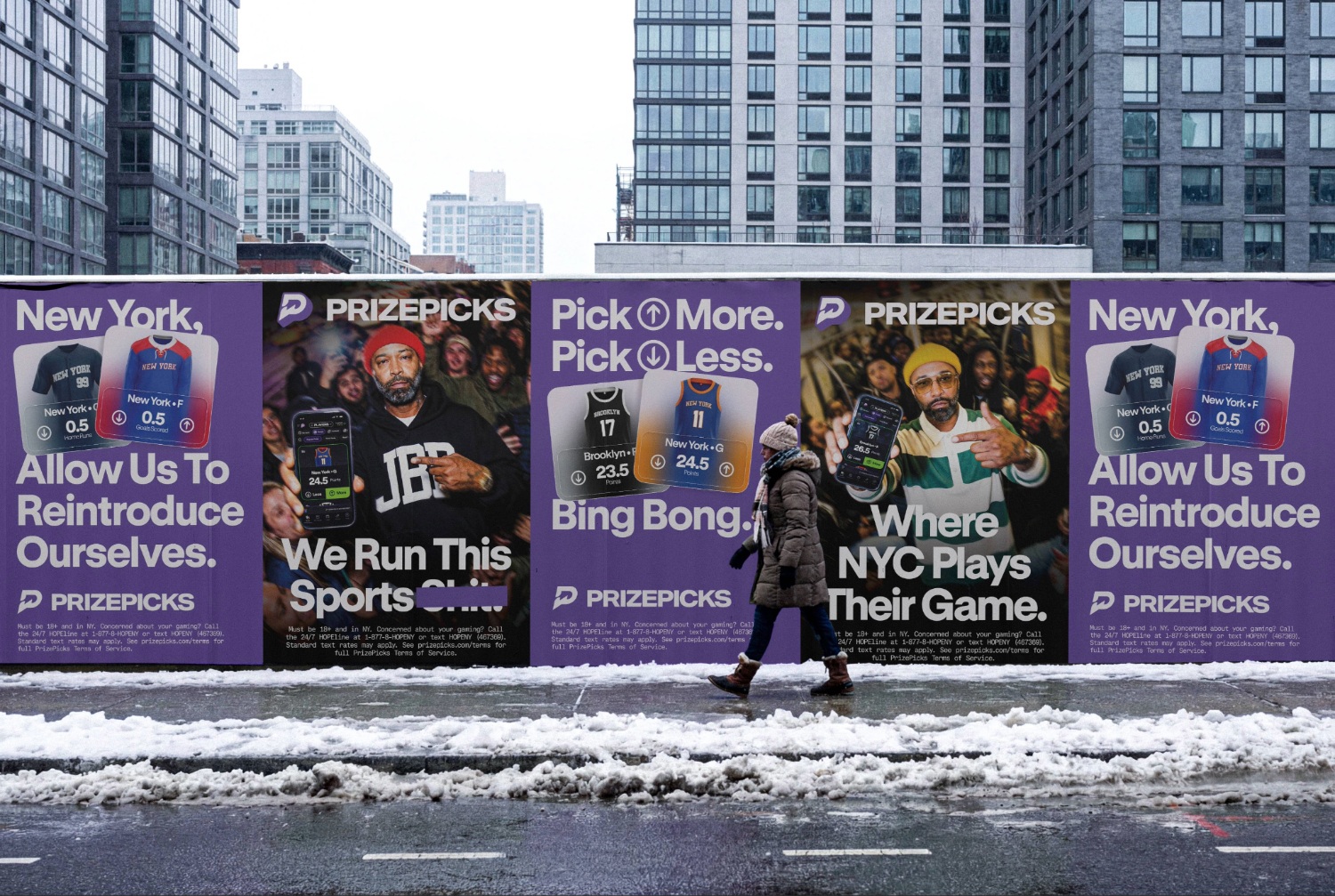
PrizePicks returned to New York in February 2026 after receiving a fantasy license the previous October. That sequence explains a constraint on copying its approach: contest design and permission to operate must fit together. Demand alone cannot establish eligibility.
The price of two words
The commercial result attracted a buyer. Allwyn completed its purchase of 62.3% in January 2026 for $1.533 billion at closing, excluding performance-based earnouts and subject to adjustments. This was consideration for ownership, rather than a fresh funding round deposited into PrizePicks' operating account.
Closing consideration for a 62.3% stake
The earlier agreement implied $2.5 billion in upfront enterprise value. Its financial disclosure included $339 million in adjusted EBITDA for the twelve months through June 2025. Adjusted EBITDA is not net income, but it shows why the story goes beyond app downloads. The buyer was acquiring an established earnings engine.
Basketball, comedy and the next click
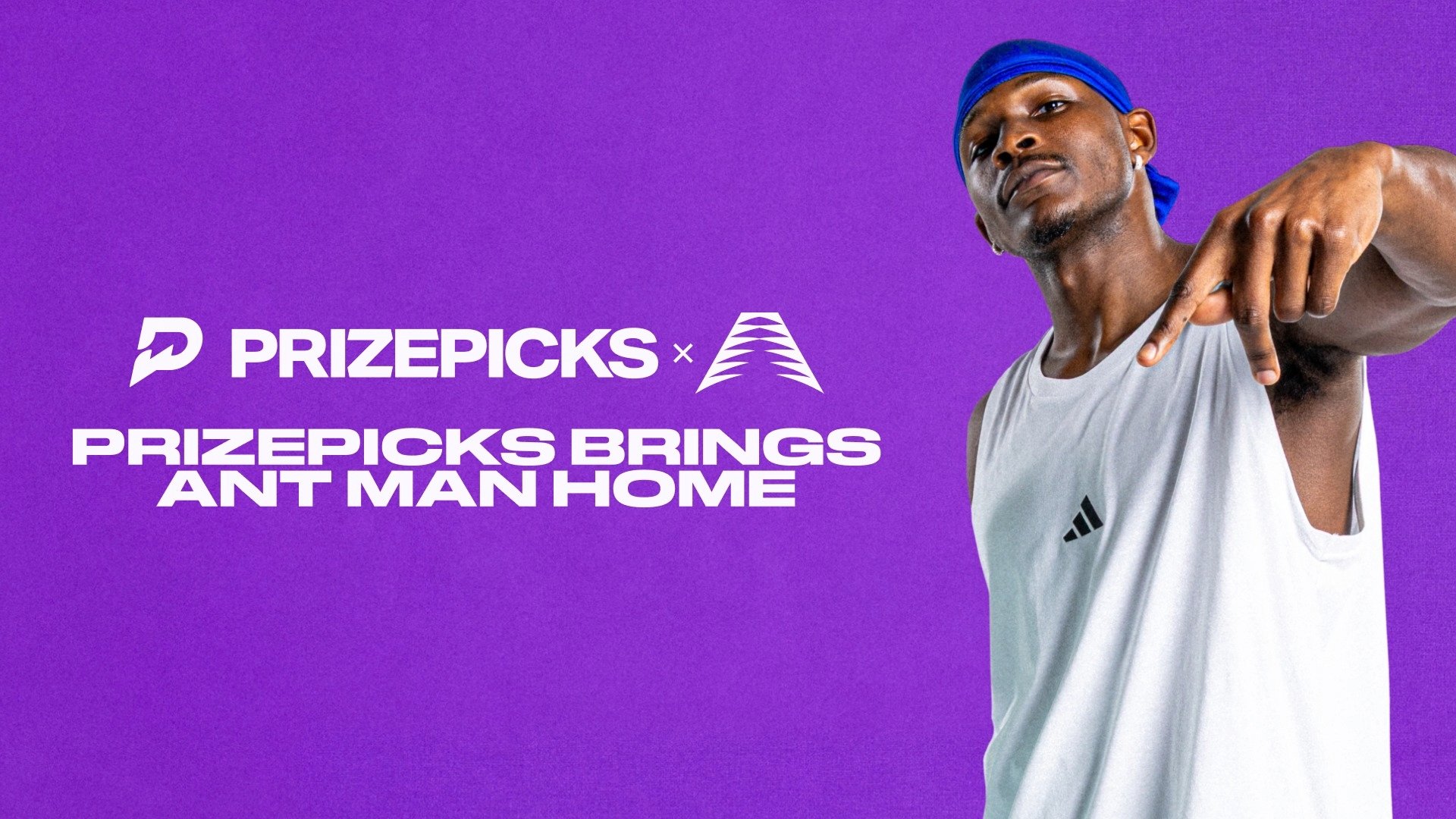
Distribution increasingly looks like entertainment. PrizePicks announced NBA and WNBA daily fantasy partnerships in 2026. October brought a multi-year Anthony Edwards ambassador deal, including advertising and social content. Comedian Druski also features in its campaigns. These relationships place the app inside the sports conversation it wants customers to continue.
Expansion has had a physical cost too. In April 2024, PrizePicks announced a $25 million headquarters investment and plans for 1,000 additional Atlanta jobs over seven years. A hiring commitment is a future target, not a headcount already achieved. It does, however, make the machinery behind the quick decision visible: engineers, analysts and marketers all have to keep the experience working. Removing effort for the customer can create considerable work for the company.
Inside the company, the careers page lists more than 700 employees and a mix of Atlanta and remote work. One published value is “Accept Audibles.” Given the product's history, the football metaphor earns its place.

The menu keeps expanding. Streak arrived as a free-to-play game in 2024. Kalshi-backed event contracts followed in November 2025 through PrizePicks Predict. September 2026 updates added combinations of team outcomes and player projections, plus live game data.
The transferable idea is to reduce the work before the first useful decision. Its limits are equally concrete: location restricts products, paid play carries loss risk, and more choices can recreate the complexity the app originally removed. PrizePicks offers limits, timeouts and self-exclusion tools. Its next design challenge is keeping the customer's decision understandable as the business behind it grows.