The first Jackpocket prototype was not really an app. It was an argument with an errand. Peter Sullivan had spent years watching his father, Pete, stop for lottery tickets with the devotion other people reserve for morning coffee. A license plate could suggest a number. So could a hotel room or a street address. The habit was so reliable that young Peter sometimes arrived late to sports practice and paid for the delay in pushups. Long before there was a company, there was a son wondering why paper had such a stubborn grip on the ritual.
The answer arrived in December 2012, on the way to a family Christmas party. His father, known as Big Pete, stopped at a bodega, returned with a two-liter bottle of Coca-Cola and a lottery ticket, then used his new iPhone 5 to text that the family would be late. Sullivan saw the contradiction. A man who was famously uncomfortable with computers was already carrying a capable little machine. Why could he not use it to order the ticket?
This was less a lightning bolt than a household irritation finally given an interface. Sullivan had already founded Tripl, a social travel application built around Facebook Connect. He had worked in product, interaction design and mobile user experience. Tripl did not become the lasting business he wanted, but it left him with a network, a scar or two, and the useful ability to see where an offline behavior might fit inside a phone.
His route into technology was pleasantly indirect. Sullivan studied economics at Rutgers University, then finance and banking at Stockholm University. He lived abroad, built Tripl in Sweden and took the startup through Dreamit Ventures in 2012. Back in New York, he worked as a design consultant and created a General Assembly course. The resume reads like a conversation between a spreadsheet and a sketchbook. Finance taught him to follow incentives. Interaction design taught him to notice when those incentives produced a bad afternoon for an ordinary user.
That pairing mattered in lottery. The customer sees a game, a drawing and the deliciously remote chance of a transformed life. The state sees revenue, public beneficiaries, licensed retailers and a duty to keep play controlled. A useful product had to serve both views at once. Sullivan could not merely make a checkout screen feel friendly. He needed a system that showed where a player stood, proved how old the player was, preserved an official ticket and respected the authority behind it.
A user before a market
Big Pete was an unusually vivid customer persona because he was not a persona at all. He was a blue-collar New Yorker who worked for the transit authority, following his father and grandfather into the system. Lottery enthusiasm ran one generation further back, too. Sullivan’s grandmother was known around Greenpoint, Brooklyn, as the Lotto Queen. She visited bingo halls, bought scratchers and played a rotating cast of numbers. By the time the tradition reached her grandson, it came with a designer’s eye and a smartphone.
Sullivan called the idea an Uber or Instacart for the lottery. The comparison was legible to investors, but the mechanics were less glamorous. Jackpocket would act as a courier. A customer placed an order in the app. The company bought an official physical ticket from a retailer, scanned it and showed the image in the customer’s account. Age, identity and location had to be verified. Large winning tickets still belonged to the tangible world and were delivered to the player for claiming.
The business model was similarly visible once explained. Jackpocket charged a fee when a customer funded an account, not a slice of the prize. Winnings could be withdrawn without that fee or used to play again. Behind the tidy flow sat ticket machines, retailers, scanning operations and support staff. Mobile convenience did not erase the physical chain. It choreographed it. Every tap at the front of the app created a small, accountable job somewhere behind the glass.
There was also the small matter of a domain. After an early investor introduced Sullivan to the chief executive of Scientific Games, the meeting gave him enough confidence to commit to the name. He borrowed money from his mother and bought Jackpocket.com. The company launched in spring 2013. The jackpot-in-your-pocket pun had become a payroll problem.
The unfashionable moat
The software was only one layer. Each state lottery lived inside its own legal and political arrangement, and the permissions could not be copied from one border to the next. Silicon Valley had spent the previous decade admiring companies that entered first and apologized later. Sullivan chose the less cinematic route. Jackpocket met lottery officials, testified before lawmakers and argued that a courier could grow sales while keeping the ticket itself official and the controls strict.
That choice shaped the product. The app used geolocation and identity checks. It let customers set spending limits and operated with a company-wide daily cap. Sullivan repeatedly framed compliance and consumer protection as design requirements, not decorative promises. In public testimony, he argued for regulated couriers rather than outright bans. Permission became part of the distribution system.
It also made fundraising awkward. Real-money gaming was considered taboo by many investors when he started knocking on doors. A consumer app normally celebrates friction disappearing; Jackpocket needed investors to understand why some friction was the business. The difficult years accumulated quietly. Sullivan later supplied a line that neatly describes them: nine years into the company, he joked, Jackpocket was halfway to becoming an overnight success.
Patience eventually became measurable. In February 2021, Jackpocket raised a $50 million Series C. Nine months later came a $120 million Series D led by Left Lane Capital, with participants including Kevin Hart, Mark Cuban, Whitney Cummings and Manny Machado. By then the app reported 2.5 million active users across 10 states, up 300 percent in eight months. The old taboo had acquired a cap table.
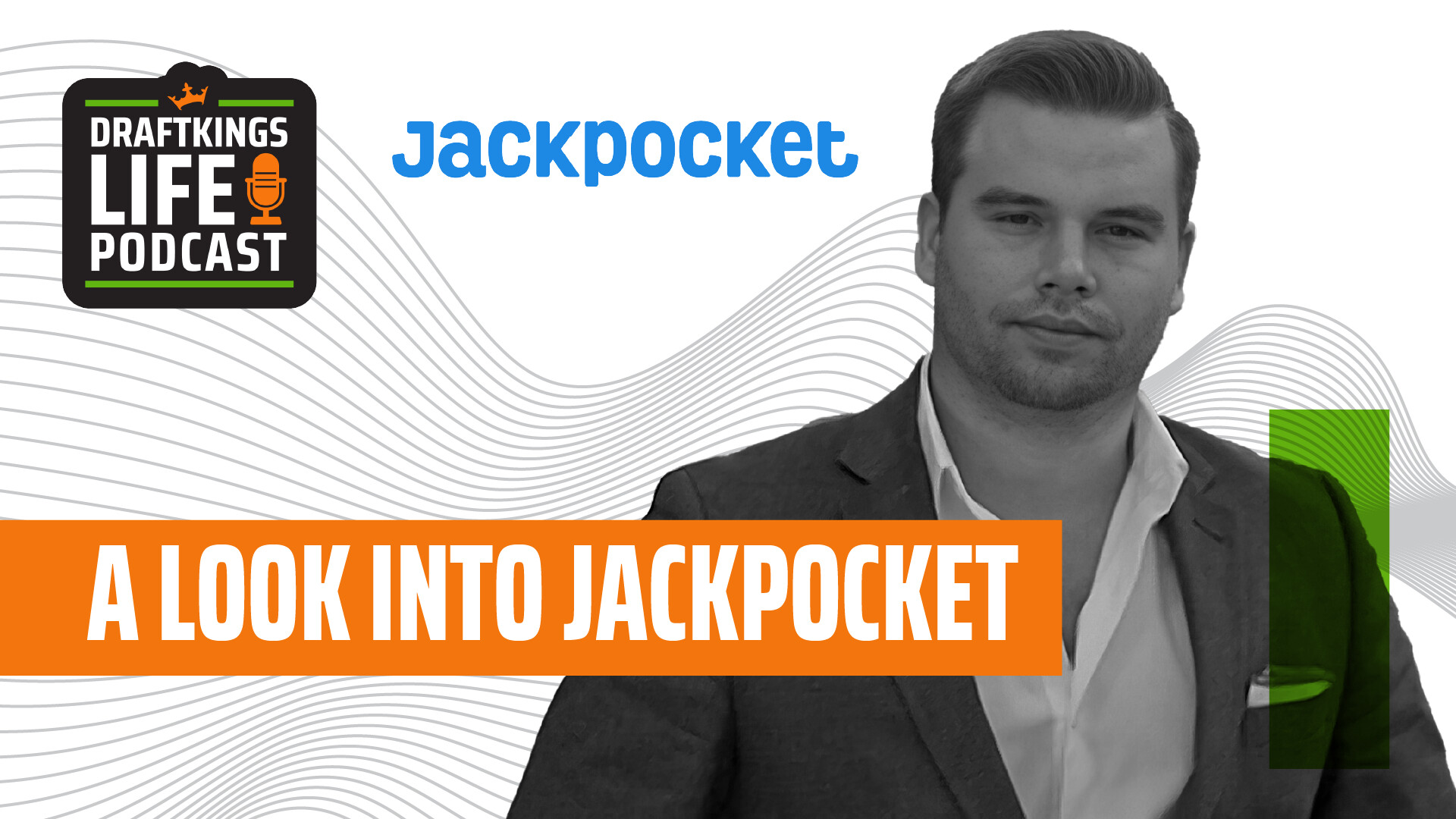
A company of good people
Sullivan’s public descriptions of company building often return to participation. He said anyone could contribute an idea for the app, the office or the company, and that he sought opinions from people outside the immediate decision. The approach was not pure democracy. It was a signal: good ideas did not need the right title before entering the room.
His earlier hustle had been more mischievous. With his first CD burner, he assembled a song catalog and sold custom mixes to friends. He sold glow sticks outside concerts. In college he designed websites for local bars. While trying to draw attention to Tripl, he handed out fake parking tickets outside Y Combinator Demo Day. Jackpocket required the same instinct for attention, but paired with an adult respect for the people allowed to say no.
That combination helps explain the founder’s post-acquisition note. When DraftKings completed the purchase in May 2024, Sullivan resisted the polished myth of the frictionless entrepreneurial journey. He wrote about anxiety, solitude and years of obstacles. His conclusion was disarmingly plain: creativity and persistence mattered, and genuinely good colleagues were central. A founder who built around lottery numbers had learned to count character.
The clean handoff
DraftKings announced its agreement to buy Jackpocket for $750 million in February 2024 and completed the transaction on May 23. The rationale joined two forms of customer habit: lottery could bring new players into DraftKings, while DraftKings’ technology and reach could push Jackpocket further. Sullivan became Senior Vice President, Lottery, and the app continued its integration into a much larger gaming company.
He remained a public advocate for the courier model. In February 2025, he testified in Connecticut that Jackpocket operated in 19 jurisdictions and that age checks, geolocation, reporting, audits and internal controls offered a path to regulated access. The details sounded almost aggressively unromantic. That was the point. The company survived because the ticket had to remain boringly real even when the ordering became invisible.
Then, in July 2026, Sullivan announced a different kind of transition. After 13 years, he would step away from day-to-day operating work and move into an advisory capacity. He thanked employees, partners, investors, regulators, retailers and customers. He lingered on teammates who had dedicated years to the company. He remained optimistic about lottery at DraftKings, while making room for family, new ventures and other opportunities.
There is a tidy symmetry here. Jackpocket began because Sullivan noticed that his father’s life contained an unnecessary stop. His next chapter begins by removing himself from a daily route he followed for 13 years. In both cases, the important move was not speed. It was seeing that a familiar ritual could change without losing what made it matter.
A lottery ticket is a tiny contract with possibility, printed on paper and governed by rules. A startup is not so different, though the paper is thicker and the odds are discussed over coffee. Sullivan’s lasting trick was to treat both seriously enough to make the experience feel light. Big Pete could tap a screen. The physical ticket could still exist. Regulators could see the controls. Investors could eventually see the scale.
Now the app belongs to a larger system, the founder has an advisory seat, and the family that supplied the first user story gets more of his time. For once, Sullivan does not need to hurry. He already knows the value of taking the long way.