There is a small indignity built into a game of Ludo: you can sit there, perfectly ready to play, and still have nothing to do. The dice must produce a six before your token enters the contest. Zupee removed that wait. In its Ludo formats, the tokens are ready from the start. An old game acquired a new tempo.
- The product: familiar board games, shortened and scored for a phone.
- The scale: 150 million-plus registered users, according to Zupee.
- The turn: paid games ended in August 2025; free games continued.
That little alteration helps explain the company more clearly than a list of technologies. Zupee sells an accessible encounter with competition. You recognize the board, understand the basic stakes, and get to make decisions quickly. Its ambition rests on something already sitting in the customer’s memory.
A quiz company finds a board
Dilsher Singh Malhi and Siddhant Saurabh, both IIT Kanpur graduates, founded Zupee in 2018. The early product was live trivia. By April 2020, it offered more than 2,000 daily quiz tournaments across subjects ranging from Bollywood to mathematics. Participants competed for prizes. The company had raised an $8 million Series A that month, following a $1 million seed investment from Smile Group.
Ludo Supreme arrived in May 2020. In a later public tribute, Zupee credited designer Aarti Luthra with designing it and described rapid organic popularity in its first three months. The available record does not establish that trivia had failed. It does show an important expansion: from testing what people knew to reshaping something they already knew how to play.

The clock becomes a game mechanic
Traditional Ludo asks players to bring their tokens home. Ludo Supreme asks them to accumulate points within a fixed time. Finishing the entire journey becomes less important than making the next useful move. A capture can remove the points accumulated on an opponent’s token. Safe spaces protect progress. The board remains recognizable; the calculation changes.
Ludo Turbo tightens the rhythm further. Its published rules give each move ten seconds, with a thirty-second time bank. Players receive equal dice values in different orders. Ludo Supreme League takes another route: players make a solo attempt with 36 moves, then compete through a leaderboard. There is no live opponent cutting their tokens in that format.
Score against live opponents.
Decide each move quickly.
Build a leaderboard score.
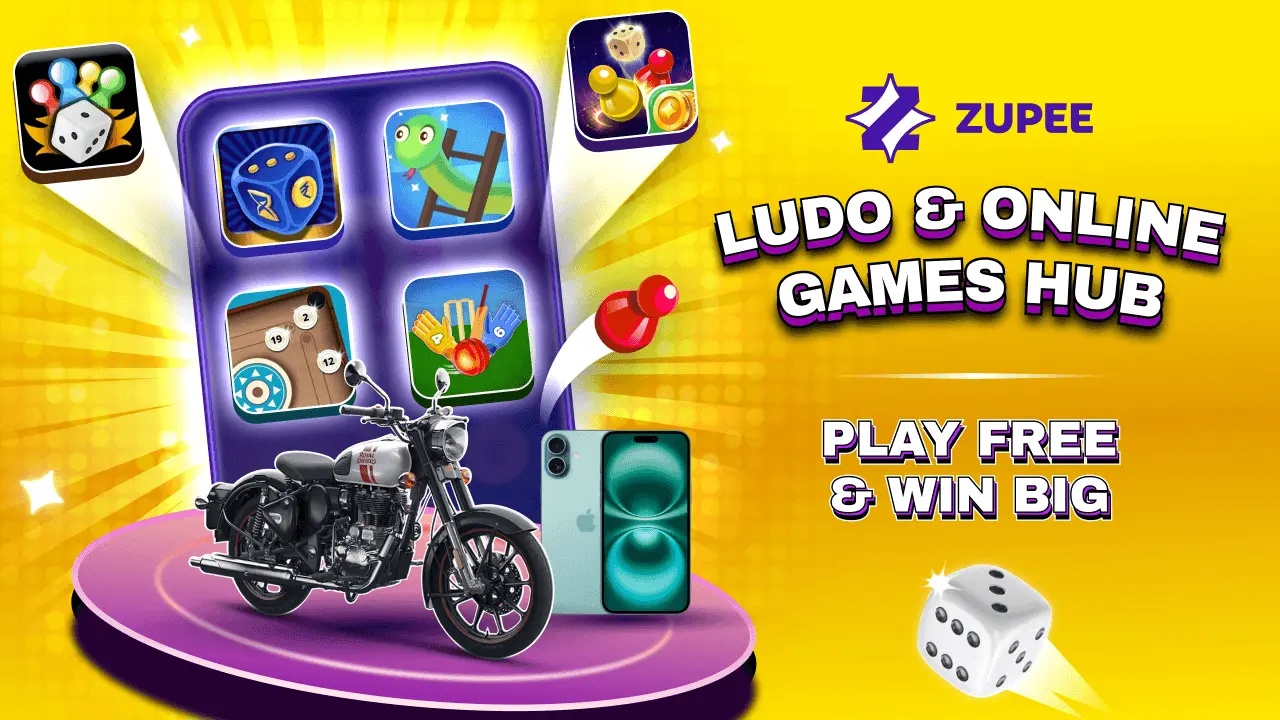
This is where Zupee sits in the market: consumer entertainment built around short sessions and culturally familiar games. Ludo King is an obvious alternative for someone seeking mobile Ludo. Zupee’s distinction lies in its particular timers, scoring systems and formats. Its catalogue also reaches into Snakes and Ladders, carrom and cricket-based play.
For a player, the practical benefit is modest and clear. There is a game to start without assembling a physical board or committing a long afternoon. Download the official app, choose a format, read its rules and play. Internet access is required. A player seeking leisurely, uninterrupted traditional Ludo may find the timers less appealing.
Buying reach, earning money
Recognition solves only part of a gaming company’s problem. Players still have to find the product. In January 2022, Zupee announced a Jio Platforms partnership covering product integration and distribution. Malhi described it as a revenue-sharing arrangement without equity investment. Jio’s vast user base offered potential reach; it was never a count of customers actually acquired by Zupee.
The announcement came with financing. A $72 million closing tranche completed a $102 million Series B, including $30 million raised earlier. Zupee put its total funding at $121 million and its valuation at $600 million. Those are historical financing figures. The money was intended for products, design, marketing, research, expansion and hiring.
Its former revenue mechanism was straightforward: charge platform fees for access to real-money contests. In FY24, Zupee reported revenue of ₹1,123 crore, up from ₹823 crore, and its first full-year profit of ₹146 crore. That profitable year explains why the next turn matters. This was an operating business with paying customers, rather than an experiment waiting to discover a price.
The payment rules change first
On August 21, 2025, Zupee said it was discontinuing paid games after Parliament passed the new online gaming bill. Free titles remained available. New deposits stopped, while existing balances could still be withdrawn. On August 27, the company said it would not challenge the new law.
“We fully respect the legislative process”Dilsher Singh Malhi, August 2025
The first part to break was the paid contest model. The board, scoring and app could continue, but their existence no longer established a business with the same economics. Zupee announced 170 job cuts in September, roughly 30 percent of its workforce. It offered assistance including up to six months of severance and extended health insurance. About 200 further cuts were reported in January 2026.
The company also tried another short format: microdramas. Zupee Studio offered mini-episodes across entertainment genres. The resemblance to quick games was suggestive - both fit small gaps in the day - but the experiment did not last. Its website states that the application was permanently discontinued on July 15, 2026, with eligible unused subscription periods refunded.
Keep the familiarity. Test the reward.
The useful thing to copy is the design experiment. Start with a familiar activity. Find its waiting, repetition or awkward duration. Change one constraint, then see whether the experience improves. Zupee’s move-ready tokens, timed rounds and visible scores make that lesson concrete.
The conditions matter. Familiarity must actually exist among the intended users. Faster play must suit their available time. And the reason they return must survive the way the business earns money. Zupee now offers free games, but cumulative registrations do not prove current retention or replacement revenue. Its published values emphasize craft, ownership, curiosity and collaboration; the next test is whether those habits produce an enduring free-game business. The opening wait is gone. The harder question is what keeps people coming back.
Play, watch, explore
Official games · Format rules · Zupee blog
LinkedIn · X · Instagram · Facebook
Dilsher Malhi on The Neon Show (2024)
Zupee product video · Official YouTube channel