A kingdom is a peculiar place to conduct an experiment in customer acquisition. There are dice, raids, treasure and an octopus with royal ambitions. Yet inside Prize Kingdoms, INK Holdings is asking a fairly adult question: if you persuade a friend to join a game, and that friend helps the business make money, why should your contribution end with a thank-you?
- Prize Kingdoms supplies the entertainment: boards, battles, cards and clubs.
- INK’s technology aims to reward the people who bring others into the network.
- A shift toward smaller prizes reveals the delicate business of keeping rewards attractive.
The Austin company puts gaming and payments under the same roof. INK Games supplies the worlds; INKPAY extends the ambition into money movement. The connection between them is a belief that an invitation has economic value. A castle may be pretend. The person who persuaded you to download it is doing actual work.
The friend who became a distribution channel
Robert Towles, CEO and co-founder, and Josh Gause, creative chief and co-founder, framed the problem sharply in their 2022 funding announcement. Gause argued that mobile gaming’s acquisition model excluded the user from the value it created. INK’s proposed answer was a Payment and Tracking Engine that could map connections, measure engagement and distribute a share of resulting revenue.
“The current user acquisition model in mobile gaming is broken, and leaves the user out completely.”
Josh Gause · Co-founder · 2022
Think about what an ordinary referral accomplishes. One player supplies a recommendation, another supplies attention, and perhaps a purchase follows. INK wants to keep account of that chain, including its wider reach. The attraction for creators and enthusiastic players is continuing participation in the activity they helped generate. Its success would depend on those invitations producing customers who stay.
First, give them somewhere to play
Prize Kingdoms provides the practical test. Players roll dice through themed boards, improve kingdoms, collect cards and enter bonus games. Friendship has two settings: raid someone’s territory, or cooperate in a club. It is a pleasingly economical view of human nature. Your nearest ally can also be tomorrow’s target.
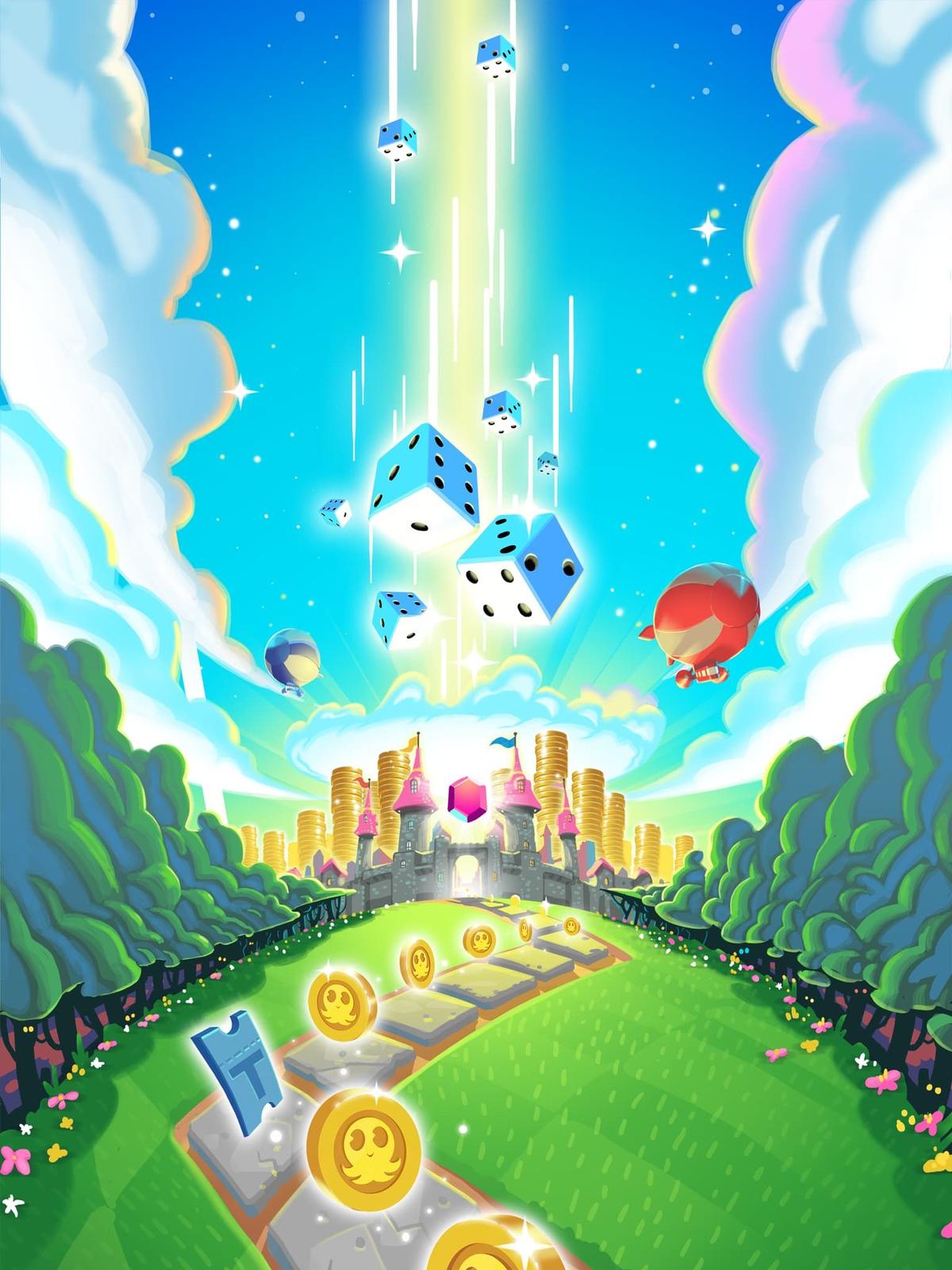
The game competes for the same spare moments as casual board-game titles such as Coin Master and Monopoly GO! Its advertised distinction is the reward system surrounding the familiar play. Google Play’s accessible listing shows more than 100,000 Android downloads and discloses advertising and in-app purchases. That is a cumulative download threshold; it tells us little about how many people are playing this afternoon.
Three rewards, three different promises
A sweepstakes prize, a quest payment and referral-linked revenue should not be mistaken for one another. The Prize Vault offers chances to win real-world prizes. Cash Quests, announced in July 2024, offer money for specified game actions. The tracking engine connects earnings to network activity and engagement. A lucky draw and a productive referral have quite different explanations.
Sweepstakes entries and prizes
Rewards for specified tasks
Revenue participation
INK describes a dashboard for checking balances and referrals, with cash-out access through Stripe. For a player, that accounting matters as much as the castle graphics. A reward becomes credible when someone can understand what produced it and how to receive it. None of these mechanisms makes every dice roll a dependable wage.
The jackpot got smaller. The argument got interesting.
The revealing product decision arrived in 2024. INK announced that its sweepstakes logic would favor more frequent, smaller wins over a few large jackpots. It reported more than 5,000 winners to date. The stated aim was to spread rewards more broadly. There is a sensible hypothesis here: a player who experiences a win may have more reason to return.
There is also a competing desire. In a December 2023 Google Play review, player Cindy Rogers objected to reduced prize amounts and changes to rolls and prices. In February 2024, INK replied that prizes changed regularly and that its slightly dearer season pass offered twice as many levels. Another reviewer, Angela Jaquith, reported receiving a prize but complained about bugs and changing mechanics.
These are individual experiences, rather than a verdict on the whole game. They expose a design tension nevertheless: broader distribution can feel less generous to someone who remembers larger prizes. The announcement states INK’s rationale for the change; it does not establish that complaints caused it. Reward arithmetic and the feeling of being rewarded can diverge.
A game and its plumbing need capital
INK announced a $9.5 million Series A in September 2021, followed by an $18.75 million Series B in August 2022. The latter announcement placed total funding at $28.25 million at that date. Those are financing figures, rather than an itemized development bill. The stated priorities included content, intellectual property, hiring and platform deployment.
The studio brings experience from businesses including Bingo Blitz, Zynga and Electronic Arts. Its own presentation emphasizes designers, developers and storytellers. A 2023 advisor update described testing purchasing patterns and adjusting the payout algorithm. That is the less glamorous task behind the proposition: make sharing worthwhile while keeping enough revenue to support the product.

The kingdom opens a payments door
In May 2025, PayOS announced a partnership with INKPAY covering checkout, account funding, card payouts, transfers and refunds. These were announced capabilities, rather than proof of universal availability. They fit Towles’ broader interest in monetizing connections beyond games. Meanwhile, the accessible Google Play listing dates a Prize Kingdoms update to February 2026, with new boards and daily offers.

For another founder, the useful lesson is concrete: connect the reward to a valuable action, show the account clearly, and test whether the incentive pays for itself. This approach needs an experience people want to revisit and revenue sufficient to support rewards. Invitations to a dull product merely distribute disappointment faster. INK’s real test is whether its players can enjoy the kingdom while understanding the business their friendships help build.