Before there were phones full of Ludo boards, Dilsher Malhi organised pen-fighting tournaments at school. He charged for participation. The equipment was reassuringly modest: a game that could be played with something already in a pencil case. The interesting part was the arrangement around it. Someone had to turn an informal pastime into a competition people wanted to join.
It is a good beginning for a gaming founder’s story, though it would be unfair to make a classroom tournament carry eight years of corporate history. Malhi went on to co-found Zupee in 2018. There were engineering studies, a research stint in Switzerland, a co-founder and investors along the way. A pen can only do so much heavy lifting.
Today, the story comes with a complication that makes the beginning more interesting. Malhi built a business around digital competition, watched it reach profitability, then had to change its direction after India’s real-money gaming rules changed in 2025. The question of why people play remains. The question of how a company earns from that play has become harder.
An engineer follows the player
Malhi grew up in small cities in Rajasthan. His father served in the police. In conversation, he has described reading philosophy and psychology early, including the large, inconvenient questions about meaning that adults tend to postpone until the weekend. At IIT Kanpur, he studied chemical engineering while pursuing psychology through courses, projects and his own reading.
“I graduated in chemical engineering, but I had a love for psychology,” he said in a 2024 interview. That coexistence is more revealing than a tidy tale about abandoning one subject for another. Technical training and curiosity about people were both present. Later, a gaming company gave those interests a place to meet.
His LinkedIn records his IIT Kanpur education from 2013 to 2017 and a project on particle segregation and inertial focusing in microfluidics. The work included modelling how particles behave in flowing liquid and checking results against existing literature. It is a substantial distance from a Ludo tournament, but it supplies a concrete glimpse of his education: models, variables, results to be tested.
He also led the institute’s Simutech Club and worked as a research associate at EPFL in Switzerland. His research there involved microfluidic platforms for sorting and culturing at very small scales. These are rather more precise credentials than the loose description “tech founder”. Before managing a consumer business, he had spent time on problems whose dimensions were measured in a laboratory.
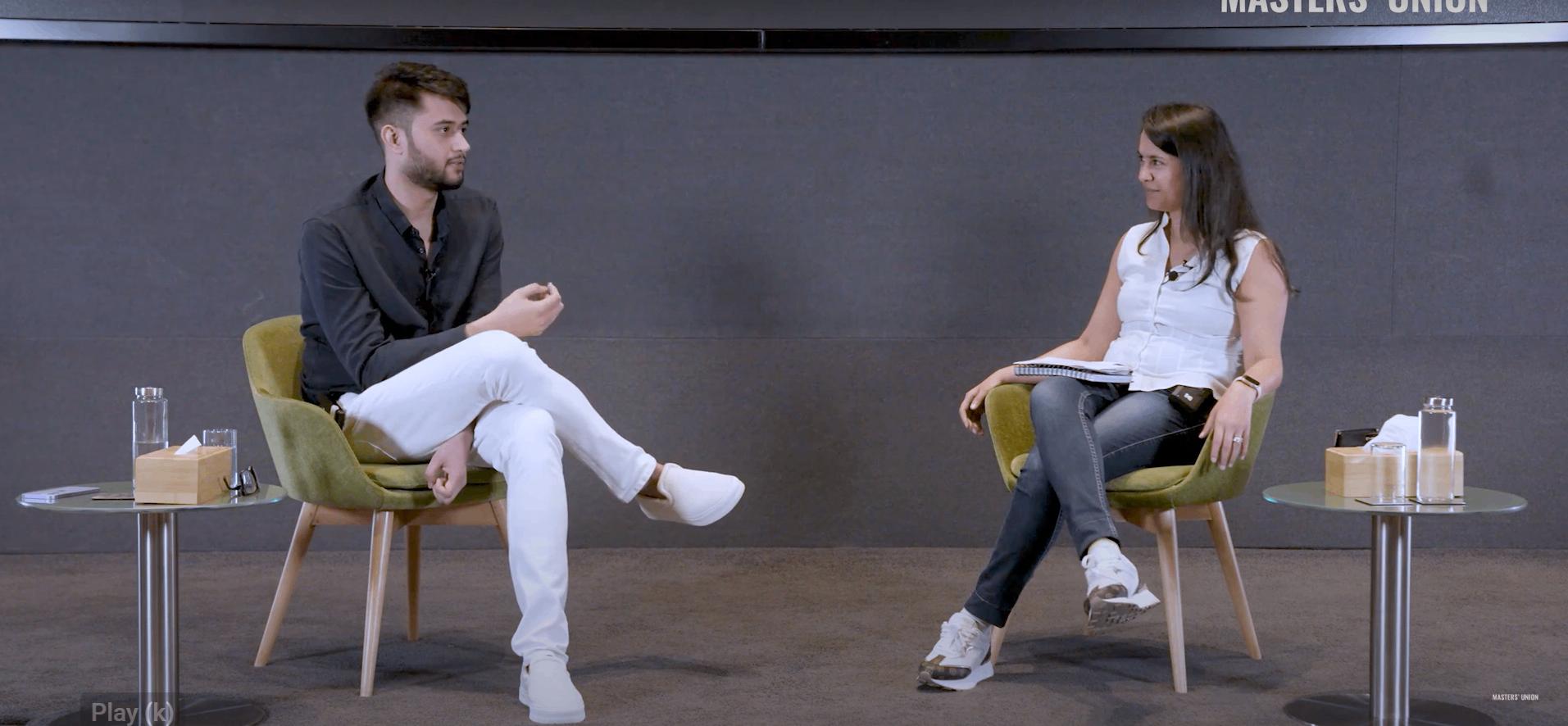
The person outside those credentials also matters. An earlier profile described him as a keen reader with a love of nature and the outdoors. These details give him an existence beyond the app screen. Reading and getting outside require no elaborate founder mythology; they are ordinary pleasures, and a welcome interruption to a biography full of funding rounds.
Within Zupee, he discussed a programme in which employees worked across teams to learn from other disciplines. The idea fits a career that already crosses several subjects. It also offers a less theatrical picture of company building: people learning how someone else’s work fits into their own.
A familiar game changes its setting
Malhi founded Zupee with Siddhant Saurabh, another IIT Kanpur alumnus. Their early product was a live trivia app. By April 2021, it had more than 10 million users and quizzes covering subjects such as mathematics, movies and sport. Players competed with other people for cash prizes. The founders appeared in Forbes Asia’s 30 Under 30 Consumer Technology list that year.
That early trivia chapter is useful because Zupee is now so closely associated with Ludo. The company’s history includes a change in what it asked people to play. A quiz depends on what a participant knows. A board game brings an existing set of habits and expectations. Moving between those formats meant working with different reasons for joining a contest.
Malhi has also argued for games as a way to make learning and training more engaging. In 2021, he described a wider purpose for gamified applications, including learning and skill development. Those statements belong to his ambitions. They help explain why he discusses the organisation of play, rather than treating entertainment as something that happens only after serious work is finished.
The current Zupee catalogue makes the product choices visible. Ludo Supreme uses a clock. Ludo Turbo gives players a limited number of moves. Ludo Supreme League organises competition around scores and a leaderboard. The familiar board supplies the starting point; the format decides what a player must do within a short session.
A family board game is an awkward fit for a hurried phone break if every match requires everyone to settle in for the afternoon. Shorter rounds change that arrangement. They also change the feel of competition. A clock or a move limit makes the end visible from the beginning. There is less room for the immortal household promise: just one more game.
The audience beyond the metro
Distribution became part of Malhi’s work as the company expanded. In January 2022, Zupee announced a partnership with Jio Platforms to bring its games into Jio’s ecosystem, including Jio phones. The stated ambition included reaching customers outside India’s metropolitan markets. A familiar game still needs a practical route to the person who might enjoy it.
The company also completed a $102 million Series B round, including a newly announced $72 million investment, at a reported valuation of $600 million. Those figures describe the company at that moment. They are useful milestones in its financing history, with a date attached, rather than a permanent price tag for the founder.
Another route appeared in September 2024, when Zupee announced an agreement with ONDC, the government-backed Open Network for Digital Commerce. It registered as a seller application and offered Ludo through the network. Malhi presented the partnership as a way to bring culturally relevant games to a larger audience and test the opportunity for both organisations.
The growth eventually produced a different kind of milestone. In April 2025, Malhi announced Zupee’s first full year of profitability. FY24 revenue was ₹1,123 crore, up from ₹823 crore in FY23. Profit after tax was ₹146 crore, compared with a ₹36 crore loss the previous year. The company had converted expansion into an annual profit.
Recognition continued that year. The Avendus Wealth-Hurun India U30 report included Malhi and Saurabh among its honourees. By then, the school tournament had become a distant opening scene. The work involved a company, a sizeable audience and decisions whose consequences extended well beyond the people playing a match.
August changes the rules
In August 2025, Zupee discontinued its real-money gaming offerings following the passage of India’s new online gaming legislation. It subsequently said it would not challenge the law in court. Malhi publicly committed the company to operating and innovating within the legal framework. Free games continued while the company pursued other entertainment products.
For a founder, that kind of change reaches into the organisation. In September, Zupee announced that approximately 170 employees would leave, around 30 percent of its workforce. Malhi acknowledged their contribution and described the decision as necessary to adapt. The company said it would provide financial assistance beyond notice-period payments and help with career transitions.
Further cuts followed in January 2026. Malhi confirmed the reduction; reporting put the number at about 200 employees. The company was aligning its organisation with its longer-term priorities and narrowing its focus. These decisions give the founder’s story a weight that a user count cannot supply. The adjustment involved people’s working lives.
Earlier profit and later restructuring can sit in the same account without either being made to explain away the other. They happened under different conditions. A company can demonstrate that one business works and still face the task of finding another. Malhi’s responsibility continued through that change, after the attractive growth figures had already been recorded.
The next episode had an ending
Zupee Studio launched in September 2025 with short episodes spanning romance, drama, thrillers and comedy. It extended the company’s entertainment offering into stories watched rather than games played. For Malhi, whose public discussion of business often returns to human motivation, it was another attempt to find a place in people’s discretionary time.
In November, Zupee acquired Nucanon, a Sydney-based interactive storytelling company. Its narrative technology offered a way to connect stories with user choices. Malhi described the attraction succinctly: “For decades, we’ve been caught between the emotional pull of films and the agency of games.” The acquisition was attached to an ambition to bring those experiences closer together.
“For decades, we’ve been caught between the emotional pull of films and the agency of games.”
Dilsher Malhi / November 2025
In February 2026, Zupee’s expansion into content took another reported turn: the acquisition of microdrama startup Vertical TV. The company declined to comment on that report. The proposed business logic was straightforward enough: a short-video platform needs a continuing supply of productions, as well as somewhere to show them.
The dates did not stop at the announcements. Zupee Studio’s own website now says its application was permanently discontinued on July 15, 2026. That notice belongs beside the launch. It closes a particular experiment, even as the larger questions about games and interactive entertainment remain open.
Malhi began by organising an activity his schoolmates already knew. Years later, his work still involves choices about format, participation and attention, with much greater obligations attached. The familiar game helped him build a company. What follows depends on the decisions made after the familiar business changed.