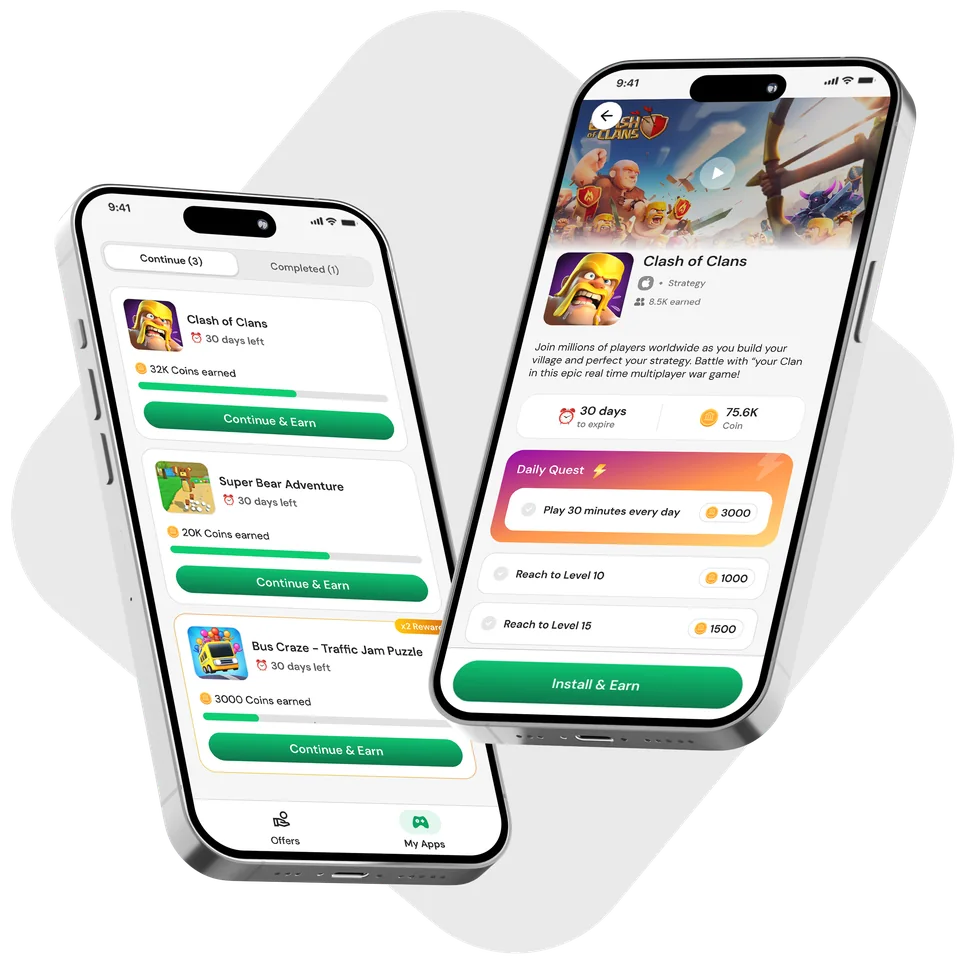
Rollic had a problem that a download counter could politely conceal. Its mobile games needed players who would stay long enough to produce advertising revenue. A new install was useful, but an install followed by silence was a rather expensive introduction. AppSamurai’s answer was to make the invitation last longer: reward people for playing, and give them reasons to return.
- AppSamurai buys mobile audiences through rewarded gaming, programmatic ads, and Android discovery.
- Its game campaigns tie rewards to time and milestones, extending the incentive beyond installation.
- The useful test is retained activity and revenue against cost. Downloads alone leave the question unanswered.
The company’s Rollic case study reports more than $180,000 in ad revenue, 16 million ad impressions from acquired users, and 285,000 sessions. Those are campaign outcomes reported by the seller, rather than an independent experiment. Still, the mechanism is interesting. Rollic combined playtime incentives with rewarded offers. The behavior being purchased was repeated participation, which gave the publisher more opportunities to earn.
Pay for the next minute
Consider the incentive hidden inside an ordinary acquisition campaign. If the reward arrives when someone installs a game, the transaction can end before the game begins. Rewarded Playtime moves that finish line. Users earn rewards for minutes played and milestones completed. AppSamurai uses first-party signals, demographic information, and machine learning to match offers with prospective players.
That sounds like a small adjustment. It changes what the advertiser is asking the player to do. There is now a sequence of reasons to continue. The sensible question becomes whether that sequence introduces someone to a game they will enjoy, or simply rents their attention until the incentives run out.
For Gram Games’ Merge Dragons!, AppSamurai reports more than 63,000 new players and 40% day-one retention. It also reports performance four times its ROAS target. The distinction matters: four times a target tells us about success against a brief; it does not disclose the absolute return on advertising spend. The campaign pursued players likely to make in-app purchases, combining rewards with optimization toward longer-term value.
Reported D1 retention in the Merge Dragons! campaign. One campaign’s result, not a promise for every game.
Three doors into the same phone
Games are only part of the business. AppSamurai’s demand-side platform buys mobile advertising in real time. Advertisers feed it their own user events and goals; its bidding models work toward installs or actions. Retargeting segments people by events, recency, and frequency, with deep links bringing them back to relevant products. Its customers include apps and agencies that want programmatic buying under one roof.
For a payments app, the meaningful action might be a transaction. AppSamurai’s Paycell case study describes audience segmentation, varied creative propositions, acquisition, and retargeting designed to attract people who actually use Turkcell’s wallet. A reward, a registration, and a payment express different intentions. The campaign structure has to recognize the difference.
The OEM discovery business reaches people through Android manufacturers, carriers, and alternative stores. Placements include native recommendations, display ads, and Play-Auto-Install during device setup. Here the advantage is the location of the invitation: an app can appear while someone is arranging a new phone, before a conventional store search. This channel’s usefulness depends on which devices and markets a business needs.
AppsPrize addresses the publisher’s side of the bargain. An app can host offers for promoted games; users earn rewards for participating, and the host earns advertising revenue. AppSamurai presents it as an additional revenue stream alongside existing monetization. Its public examples extend beyond game studios to rewards-oriented apps such as WinWalk and WeWard.
Rewarding playtime is a competitive category. adjoe also offers time- and event-based game campaigns, while Mistplay operates in rewarded gaming and offerwall monetization. AppSamurai’s distinctive pitch is the combination: rewarded acquisition, publisher monetization, programmatic buying, and device discovery. Buyers should compare the audience and operating arrangement behind each channel as carefully as the reward format.
An agency problem becomes software
There is a practical apprenticeship behind that breadth. Before AppSamurai’s 2016 launch, CEO Emre Fadıllıoğlu co-founded digital marketing agency Netvent in 2013 and mobile marketing agency Growth Tower in 2015. He described Growth Tower as leading to AppSamurai. Agency work put him close to the awkward business of planning, running, and measuring campaigns; the product offered a way to manage that work through software.
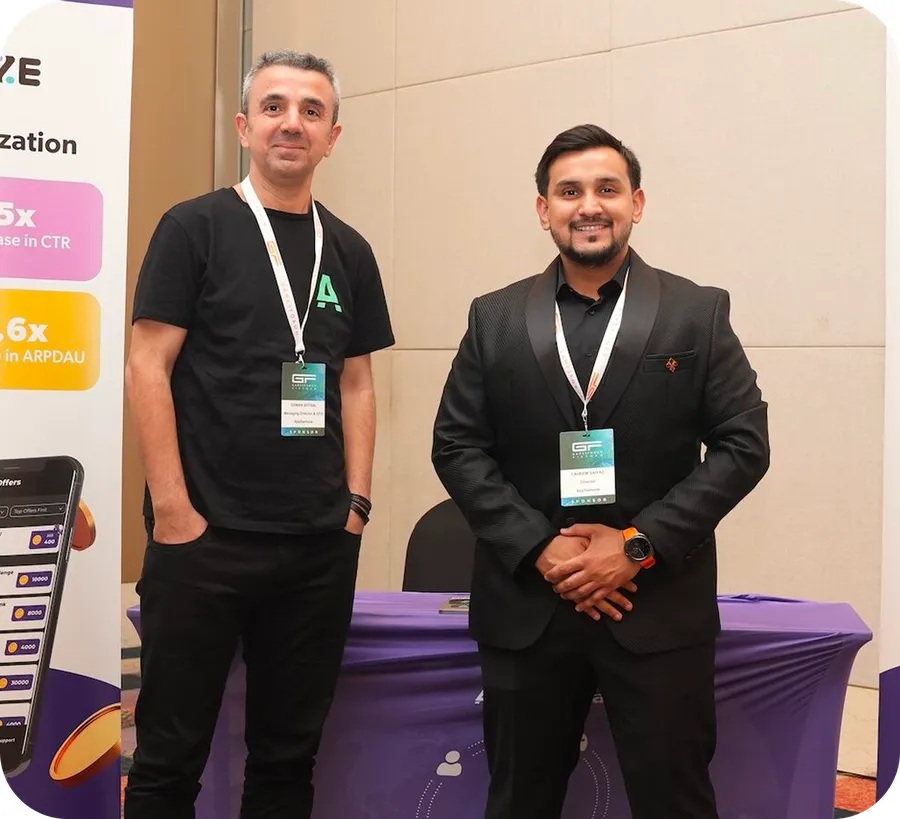
In 2020, the group raised a $2.4 million Series A led by 212 Ventures. Fadıllıoğlu later said fundraising meant meeting more than 100 investors while managing the business. His retrospective lesson was time management, and he treated fundraising like a sales process, keeping a CRM and notes. Software can organize a campaign; it cannot make a founder’s calendar elastic.
“I always keep reminding myself that I am in a marathon, not in a sprint.”Emre Fadıllıoğlu, in a 2020 interview
The arithmetic has the last word
AppSamurai’s public terms describe cost-per-install billing, with clicks or actions available by arrangement. A buyer therefore needs to connect the billable event to the business outcome. Revenue is not profit, and a large install count cannot settle that calculation. The practical discipline is to define the valuable action before buying volume.
Its August 2026 market-testing guide makes a useful distinction between testing a concept’s appeal and soft-launching a playable game. A prototype can test attention; a live product can reveal retention and monetization. Readers can borrow that sequence: isolate the uncertainty, choose a suitable channel, then follow the acquired cohort beyond the first session. If rewards attract activity that never pays its way, scaling merely buys more of the problem.