Look at the photograph of Susquehanna and the cloud becomes easier to understand. There are trees, a river, two cooling towers. Somewhere beyond this familiar industrial landscape is the appetite of a very different business: computing. Talen Energy’s opportunity begins with that juxtaposition. A company operating machinery from the twentieth century has something the twenty-first century’s data centers need: an existing source of electricity.
- Amazon bought Talen’s neighboring data-center campus for $650 million in 2024.
- A regulatory rejection interrupted the plan to expand direct power delivery.
- The revised agreement uses the grid and reaches 1,920 MW at full contract volume.
The cloud needs a neighbor
Talen generates electricity and sells it into competitive markets. Its customers include wholesale buyers and large businesses; its output also serves ordinary homes through the grid. The attraction for a data-center operator is specific. Nuclear generation can supply large amounts of power around the clock without carbon emissions from generation. A campus beside an operating station puts that supply within reach, although proximity alone cannot settle the engineering or the rules.
In March 2024, Talen sold its Cumulus campus to Amazon Web Services. The $650 million transaction transferred the data-center property, not Talen’s stake in Susquehanna. Keeping that distinction straight explains the business. Selling a building site produces a payment. Selling the electricity its new owner needs can produce a relationship lasting years.
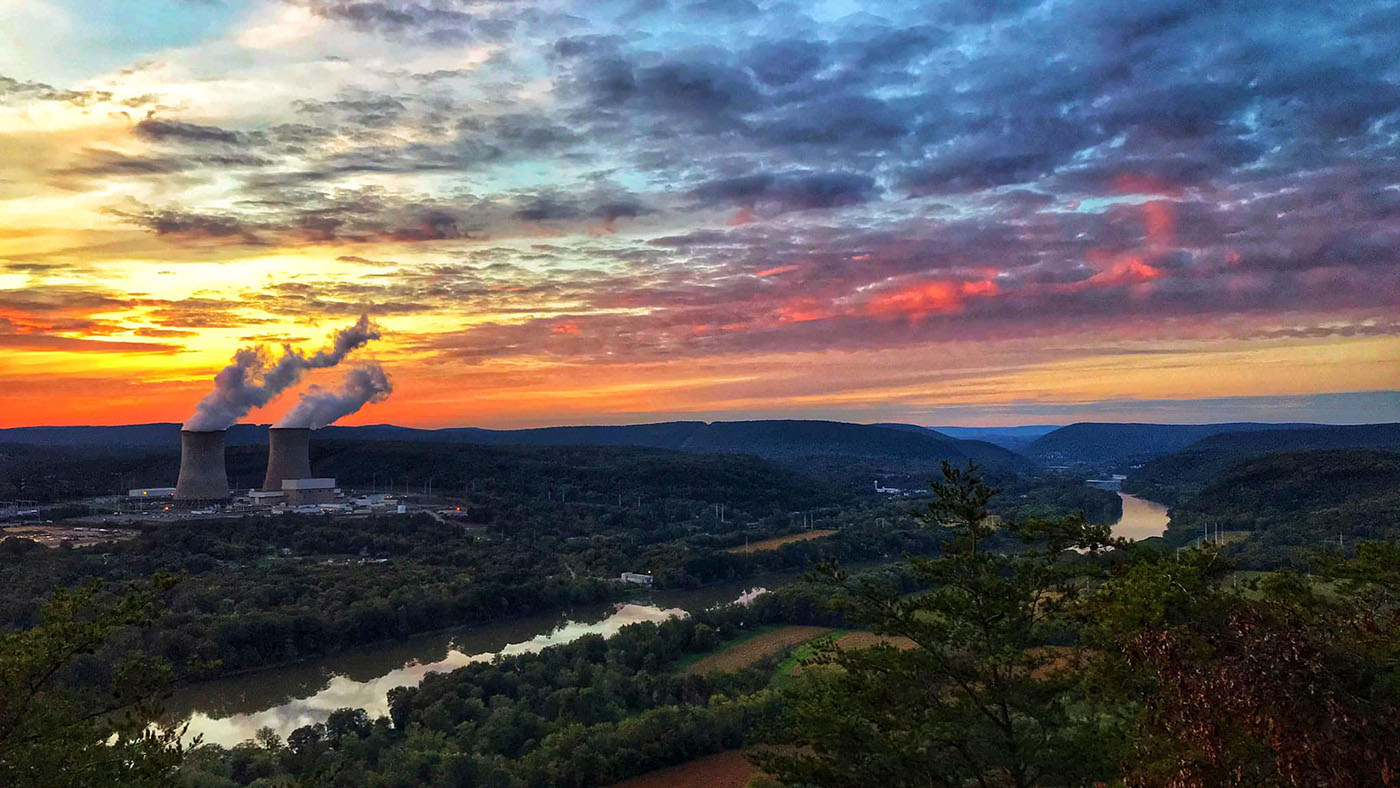
Susquehanna’s two units entered commercial operation in 1983 and 1985. Talen owns 90% of the station. Its value in this story comes partly from being there already. A buyer evaluating electricity supply must consider when it can arrive, how reliably it can be delivered, and who takes responsibility when circumstances change. An operating plant starts that conversation with a tangible asset.
The cash ran ahead of the power
Talen itself dates to 2015, when PPL’s competitive power business combined with generation businesses owned by Riverstone. This was a company assembled from existing assets. Its subsequent trouble illustrates a peculiar feature of electricity: owning productive equipment does not guarantee having enough cash at the right moment.
As wholesale gas and power prices rose in 2021, counterparties required more collateral against Talen’s hedging positions. The cash had to be posted before the electricity associated with future deliveries brought in payment. Liquidity tightened. In May 2022, Talen Energy Supply and 71 subsidiaries entered Chapter 11. What gave way was financing flexibility while the company still had plants to operate.
The May 2023 restructuring provided those two repairs. They are substantial costs and concessions behind a turnaround sometimes told as an AI success story. The operating assets mattered, but so did rebuilding the balance sheet around them. For another infrastructure business, the useful question is whether its financing can survive the interval between a market shock and the cash its assets eventually earn.
A regulator changes the route
The Amazon arrangement encountered another timing problem. In November 2024, the Federal Energy Regulatory Commission rejected an amended interconnection agreement that would have increased co-located load from 300 to 480 MW. The existing 300 MW arrangement was unaffected. Still, the rejection obstructed an intended expansion. A short physical distance between supplier and customer did not remove the shared grid from the discussion.
In June 2025, Talen and Amazon announced a different structure. Susquehanna would supply the PJM grid. Talen would act as Amazon’s retail generation supplier, while PPL Electric Utilities would handle transmission and delivery. The shift to this arrangement was planned around transmission reconfiguration. The public sequence shows an adaptation to regulatory difficulty; it does not require guessing anyone’s private change of heart.
Talen contracts the generation supply. The grid carries the power.
The expanded contract runs through 2042, with extension options, and reaches 1,920 MW at full quantity. Deliveries ramp over time, with full volume expected no later than 2032. That last detail matters: a future contractual commitment is different from electricity being delivered today. For a merchant generator exposed to changing market prices, duration has its own appeal.
The other product is availability
Talen also earns capacity revenue, payment associated with having generating resources available to meet system needs, alongside energy and ancillary services. In 2025, it reported $485 million of capacity revenue and $2.581 billion of total operating revenue. Think of the distinction as paying for what a machine produces and paying for its readiness to produce when needed. Both support the economics of keeping plants available.
The nuclear story also sits inside a mixed fleet. Talen completed the Freedom and Guernsey gas-plant purchases in November 2025, then the approximately $3.5 billion Cornerstone acquisition in June 2026. Gas, coal and oil remain part of its portfolio. Calling the whole company carbon-free would confuse one attractive product with the business supplying it.
Running this portfolio requires nuclear operations, maintenance planning, fuel procurement, trading and risk management. Talen’s annual report describes apprenticeships and leadership training, alongside a responsibility for employees and contractors to stop work over safety concerns. Those routines help explain the expertise behind the offer: a long electricity contract rests on many short, repeated decisions about equipment and people.
“a long-term, steady source of revenue”
Mac McFarland, on the Amazon agreement · June 2025
The lesson sits beside the plant
Against alternatives such as Constellation, Vistra and NRG, Talen’s pitch combines operating generation, land and long-term contracting. The copyable move is to identify a new customer’s constraint, then organize existing assets around it. The limits are equally concrete: unsuitable land, unavailable transmission, plant outages, expensive financing or slower customer construction can undermine the economics. Owning acreage near a plant is only a starting point.
There are further possibilities. An Eos collaboration explores zinc-based storage at Pennsylvania sites; Amazon and Talen also agreed to explore nuclear uprates and small modular reactors. These are development ambitions. Meanwhile, September 2026 brought a planned January 2027 CEO handoff to Terry Nutt. The next chapter still depends on the unglamorous work visible in that photograph: keeping machines running, arranging delivery, and getting paid.