Yesterday’s trash has a surprisingly long working life. At a landfill, the truck can finish its rounds, the gate can close, and the organic material underneath can keep producing gas. Kevin Orchard works on the next arrangement: collecting that gas, upgrading it, and finding a customer who will pay for the fuel. It is an energy business with an unusually literal back catalogue.
Orchard is chief executive officer of Pine Creek RNG, based in St. Petersburg, Florida. His company develops, owns, and operates renewable natural gas facilities. Its projects put him in a world of landfill owners, utility buyers, industrial waste streams, pipeline connections, and financing agreements. A successful project needs those parties to agree on more than the environmental appeal of an idea.
His career began in solar development. That background gives his current work a useful continuity: energy has to travel from a promising resource to a functioning project. Along the way, somebody must sort out the land, the money, the equipment, and the customer. The fuel has changed. The need to make the arrangements holds.
A solar developer meets the zoning board
Orchard studied at Western New England University, earning a Bachelor of Business Administration in Finance in 2012. His early professional roles included associate at Brightridge Solar from 2011 to 2013, followed by vice president at Sunpin Solar in 2013 and 2014. From January 2015 to November 2017, he managed solar development at Citizens Energy Corporation.
One small episode from those years puts a physical address beneath the job title. In July 2016, a Chenango, New York, zoning-board record named him on an application for Citizens Chenango Solar to develop a solar farm. The ordinance officer considered the application incomplete and recommended deferring it for further information. The town was also revising its solar requirements.
There is something refreshingly ordinary about that moment. The proposed energy project arrived as an application that needed more work. The board had its own responsibilities and the town its own evolving rules. The episode shows the kind of practical encounter that a development title can conceal: a project must be explained to people who have reasons to examine it closely.
In November 2017, Orchard founded Novera Energy. A New Jersey Board of Public Utilities letter addressed to him in July 2018 recorded approval of the company’s registrations as an energy agent and energy consultant. Solar development and energy-market work were already parts of his professional life before he joined Pine Creek in 2021.
The buyer arrives before the ribbon
By 2023, Orchard was speaking publicly as Pine Creek’s vice president of development. The subject was a growing relationship with Avista, a utility purchasing renewable natural gas. An offtake agreement is a commitment to buy production. For a developer, it helps answer a basic commercial question before a facility has finished being built: where will the output go?
The relationship expanded across projects. In July 2023, Avista announced a further agreement involving Pine Creek’s Bayview Landfill project in Utah. It also had contracted for production from Black Hawk County in Iowa. Orchard’s remarks emphasized the continuation of a cooperative relationship and the possibility of more work together.
In August that year, Fiera Infrastructure Private Debt announced a senior secured credit facility supporting construction and operation of three Pine Creek RNG projects. Foundation Credit participated alongside Fiera. The projects, at two landfills and an anaerobic digester in the western United States, had all secured offtake contracts. The buyer and the financing belonged in the same story.
Then, in January 2024, Avista announced its fourth Pine Creek agreement, this time for the Quad Cities Landfill in Milan, Illinois. The expected combined annual output of the contracted projects reached 9.7 million therms. That was a forecast attached to the agreement, rather than a measurement of gas already delivered.
The January 2024 agreement attached a specific expectation to the Illinois project: 3 million therms of annual RNG production. Avista compared the combined expected output of its Pine Creek contracts with the natural gas used by approximately 17,500 homes. That comparison explained the forecast in household terms; it did not mean those particular homes had been assigned gas from the facilities.
Orchard’s comments described a strategy extending into gas utility distribution systems and transportation fuel at Pine Creek fueling stations. The practical destination mattered. Capturing gas supplies one end of the business; a workable route to customers supplies the other. His public role placed him where those ends had to meet.
Potatoes, pipelines, and the long afternoon
To understand Orchard’s business, it helps to leave the announcement behind and look at what Pine Creek operates. Its project list includes four landfills and a digester: Horn Rapids and Lamb Weston in Richland, Washington; Bayview in Elberta, Utah; Black Hawk County in Waterloo, Iowa; and Quad Cities in Milan, Illinois.
The Lamb Weston project adds an unexpected ingredient: potato processing. Biogas from an industrial digester is upgraded to pipeline quality and injected into Cascade Natural Gas’s local distribution system. Pine Creek is responsible for the upgrading facility’s construction, operations, maintenance, financing, pipelines, and interconnections. Even a potato’s second act requires a fairly substantial supporting cast.
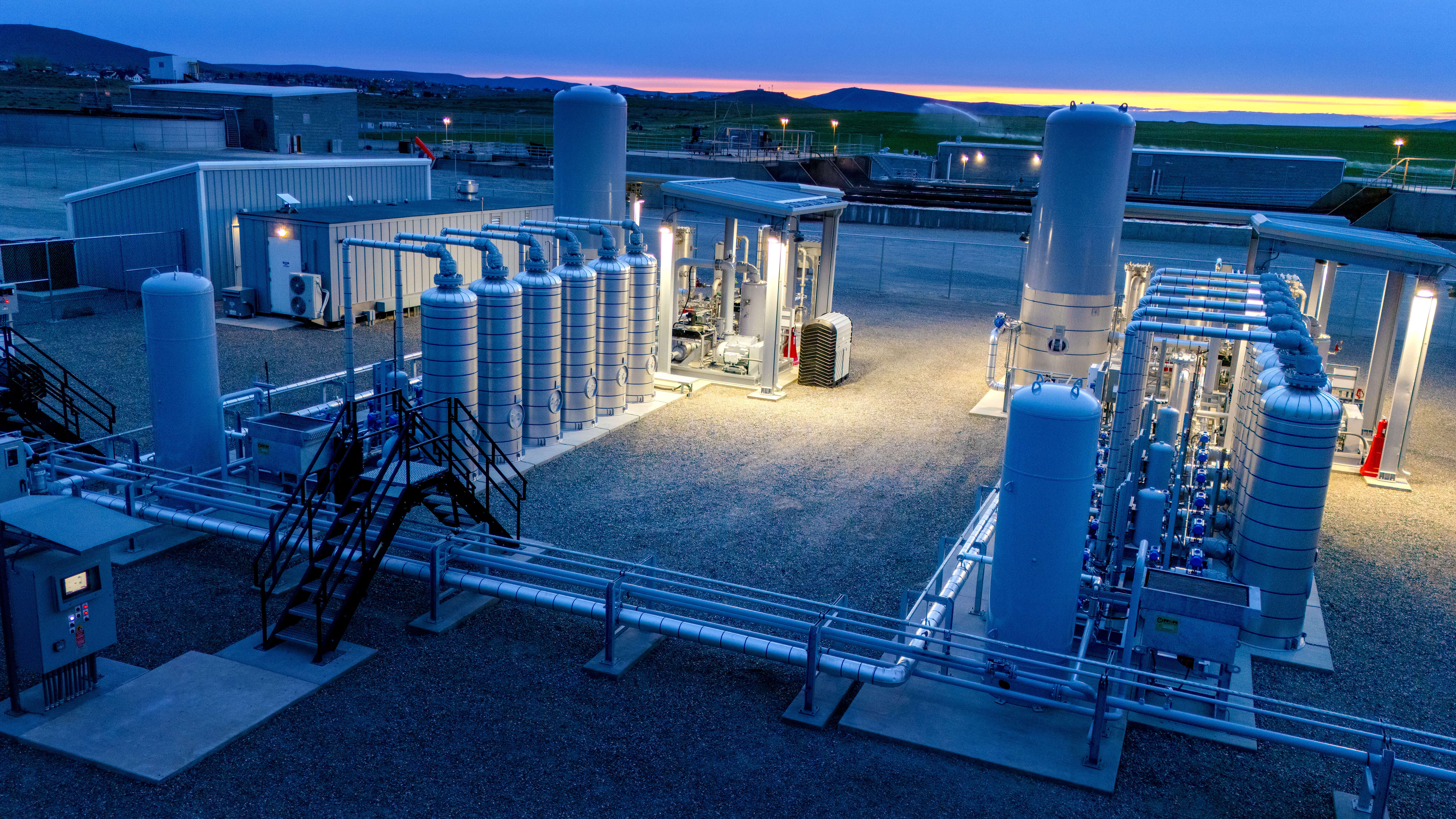
At Horn Rapids, also in Richland, landfill gas goes into Cascade’s local distribution. At Bayview, the connection is to Kern River Gas Transmission. The Quad Cities project injects into a Kinder Morgan interstate transmission pipeline. These are distinct physical routes, attached to particular facilities. A map of the portfolio is also a map of the connections that make its production useful.
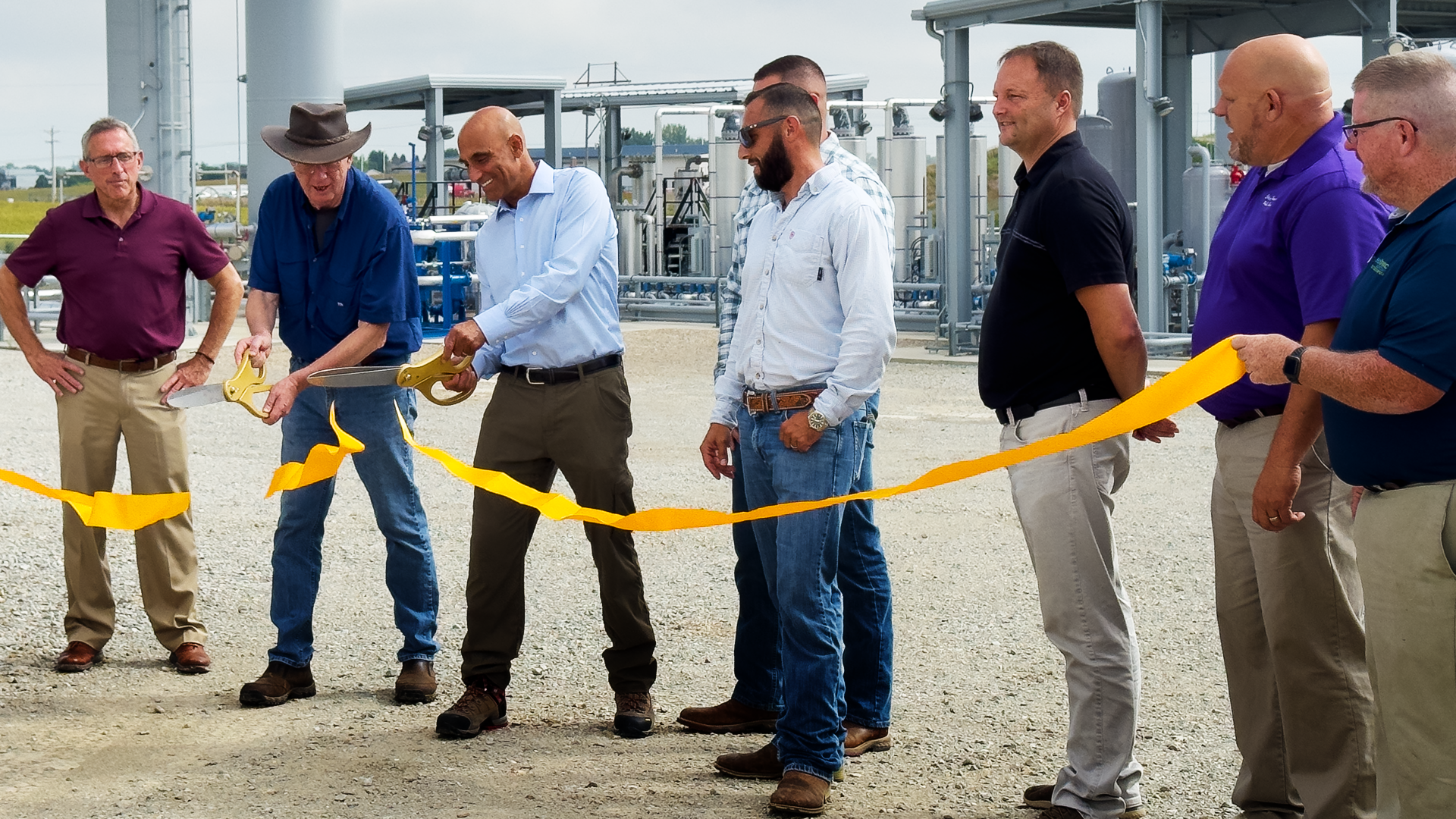
Black Hawk County makes the ownership arrangements especially clear. Pine Creek financed, designed, and constructed the gas collection and upgrading project and operates the facility. The landfill remains a local waste operation. The RNG system began operating in summer 2024, turning a planned project Orchard had discussed into a working piece of infrastructure.
When speaking about the Iowa project before its completion, Orchard acknowledged the uncertainty: “There’s certainly risk in this project.” His accompanying explanation described returns for investors and the landfill, alongside community and fuel benefits. It was a commercial account of why the parties would participate, with risk included in the same conversation.
“There’s certainly risk in this project.”
Kevin Orchard, discussing the Black Hawk County development in 2023
The operating approach uses common gas-upgrading, compression, and combustion equipment, shared controls, and remote monitoring connected to a central network operations center. Pine Creek describes standardization and continuing wellfield tuning as ways to lower production costs. The emphasis suggests a business interested in repetition: learning to operate several facilities with an approach that can be used again.
The gas itself needs work. Landfill biogas contains methane alongside carbon dioxide, nitrogen, and trace components. Upgrading prepares it for pipeline use, where it can blend with conventional gas. The sequence is physical and specific. Waste becomes a gas stream; the gas stream becomes a usable fuel; the fuel needs delivery and a buyer.
- 01CollectBiogas from landfill wells or an industrial digester
- 02UpgradeProcessing prepares the gas for pipeline quality
- 03ConnectLocal distribution or interstate transmission
- 04DeliverContracted fuel reaches an energy market
Five plants and a larger table
In May 2026, Orchard appeared in a different role: CEO. Pine Creek and Constellation announced a long-term agreement including Constellation’s purchase of a minority equity interest in five operating RNG production facilities. The portfolio spanned Washington, Utah, Iowa, and Illinois.
“Our partnership with Constellation is a defining milestone for Pine Creek,” Orchard said. He credited the company’s team and industry relationships and described the partnership as support for further execution and growth. The statement put a commercial partner beside an operating portfolio built across several places.
The agreement contained two numbers that deserve separate treatment. The operating facilities were producing approximately 1.5 million MMBtu of RNG annually. The framework for future development contemplated approximately 3 million MMBtu annually of additional production. The second figure represents work ahead. Keeping the labels attached makes the scale easier to understand.
Constellation’s commercial role also matters. The partnership links facility ownership with the ability to market RNG production and its environmental attributes to customers. For Orchard, whose earlier Pine Creek remarks focused on utility buyers and fuel destinations, that is a recognizable continuation of the commercial thread.
In June, the law firm Husch Blackwell described its representation of Pine Creek in the transaction. Orchard thanked the team for its legal and commercial understanding of the RNG industry. Even at this stage, his public comments returned to collaboration and the work required to complete an agreement.
The useful afterlife
The thread through Orchard’s career is visible in the work: finance education, solar development, an energy company of his own, utility relationships, and responsibility for an RNG business. His stated strategy has concerned integrating production with distribution and transportation uses. Those remarks suggest a focus on making the whole route function, from waste stream to paying customer.
The company’s model carries responsibility across several stages of a project. It helps arrange construction, owns the production asset, and remains involved in operating it. That continuity gives Orchard’s CEO role a concrete setting: the business has customers and partners to serve after development has finished, along with equipment to maintain and production to manage.
A landfill can keep producing gas while the people around it debate budgets, equipment, and schedules. That mismatch is the opportunity and the obligation. Orchard’s company takes on facilities designed to operate beyond the development phase. The next chapter depends on maintaining what runs today while bringing more projects through the same demanding sequence.
Yesterday’s trash supplies the raw material. Orchard’s work is in the arrangements that let it do another job.