The smell arrives before the business case. Hydrogen sulfide smells like rotten eggs at very low concentrations. At higher ones, the nose can stop noticing it. That is not reassurance. H2S is toxic, corrosive and capable of turning a saleable stream of gas into a liability. It appears in oil fields, sewage works, landfills and dairy digesters - places that otherwise have little reason to share a conference room.
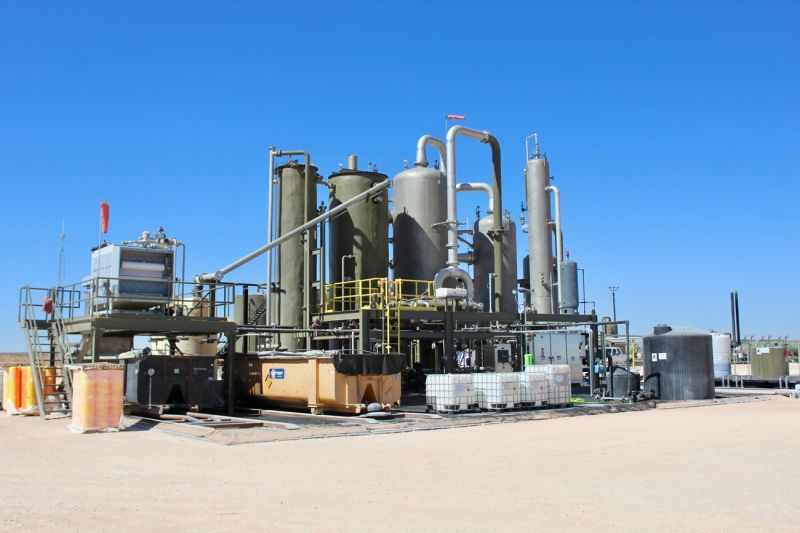
Streamline Innovations has made that unwanted common denominator its market. Founded in San Antonio in 2016, the company builds treatment plants that bring sour gas or water into contact with its TALON liquid-redox chemistry. The reaction converts H2S into water and elemental sulfur. Air or another oxidizer regenerates the chemistry so it can circle back and work again. Filters remove the sulfur. Cleaned gas leaves the other end.
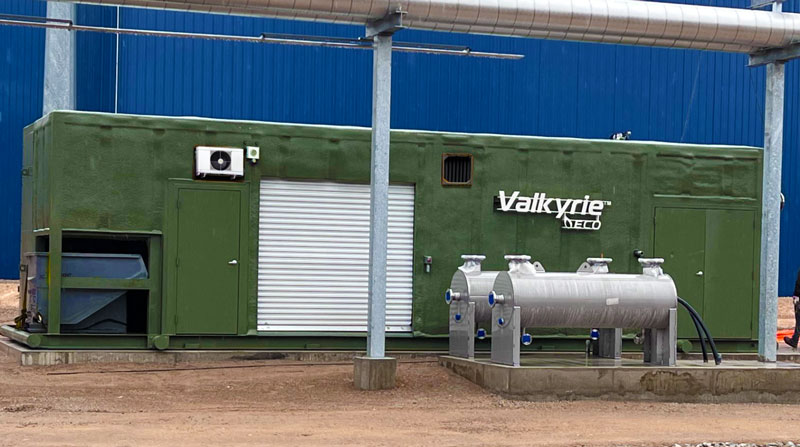
The result is part chemistry set, part industrial appliance and part remote software service. The machine is called VALKYRIE. The control and analytics layer is VIP. The water-treatment versions have gone by TALON Sulfide Elimination System and, more recently, ThunderOx. The names sound as if they share a cinematic universe. Their job is uncinematic: run continuously, tolerate changing conditions and avoid giving an operator another emergency.
The old answer worked - until the bill arrived
There are many ways to remove H2S. Operators can inject scavenger chemicals such as triazine, pass gas through iron media, use biological systems, separate acid gas with amines, flare it or send it underground. Each answer has its own sweet spot. Disposable chemistry is wonderfully simple at small scale. At a steady, heavy contaminant load, that simplicity can become a procession of chemical deliveries and waste.
A Streamline produced-water case from Lea County, New Mexico, makes the trade-off unusually visible. The operator was treating roughly 5,500 barrels a day. Dissolved H2S approached 200 parts per million, and vapor in the headspace exceeded 20,000 ppm. The incumbent hemiformal-based program reportedly cost about $1 million each month. Even then, it struggled to keep water below the transfer specification of 10 ppm. The first failure was not a dramatic broken pipe. It was a treatment bill climbing while performance remained unreliable.
ThunderOx changed the logic by targeting sulfides instead of reacting indiscriminately with whatever else happened to be in the water. Streamline reports an average treated level of 1.7 ppm, below 1 ppm at custody transfer, and a reaction time under five minutes. The equipment addition was modest: pumps, a storage tank and SCADA integration. One field operator spent about an hour a day sampling and inspecting. Company case studies put the savings above $1 million per month.
Those are vendor-reported results from one demanding installation, not a law of chemistry that guarantees the same spreadsheet everywhere. But they explain what changes an operator's mind. Environmental virtue is pleasant. A safer process that also stops an operating expense from behaving like a runaway taxi meter is much easier to approve.
“Our technology transforms industrial operations by providing sustainable, cost-effective solutions to environmental challenges.”David Sisk, co-founder and CEO
A loop is more valuable than a sponge
The underlying liquid-redox idea is established. Streamline's differentiation is in making it more selective, compact and operationally legible. TALON reacts with sulfide; oxidation regenerates the reagent; the system recirculates it. Sensors watch H2S, pH, oxidation-reduction potential and flow. Controls adjust dosing as the feed changes. Remote specialists can see the same plant data through VIP.
This is the useful lesson to copy. Streamline did not rely on a clever reagent alone. It standardized the vessel around it, instrumented the reaction, connected the controls and put field operations behind the machine. By late 2024, Sisk said the company had about 70 VALKYRIE plants operating and ten variants for different applications. A larger 1.5-long-ton-per-day model entered service at a Devon Energy site in early 2025, with capacity for up to 60 million standard cubic feet of gas a day.
The company also chose a model that can look more like infrastructure service than a one-time equipment sale. Its 2022 financing was earmarked partly for expanding a lease fleet, while proprietary chemistry, engineering, monitoring and field service can create recurring revenue. Customers buy an outcome: gas inside specification, fewer hazardous chemicals on site, less downtime and a contaminant converted into something manageable.
One bad molecule, several good markets
Oil and gas supplied the opening. Franklin Mountain Energy installed its first VALKYRIE in August 2021, then expanded to four units and ordered five more. Sweetening its own gas meant it could use that gas for lift rather than buying sweet gas back. Tap Rock Resources followed a similar logic. The environmental product became production equipment.
Then the same reaction traveled. Agricultural digesters need H2S removed before methane can become renewable natural gas. Landfills face a larger-volume version of the problem. Wastewater utilities fight odor, worker exposure and corrosion. Refineries, pulp mills, food plants, geothermal facilities and carbon-capture projects all encounter sulfur compounds in different plumbing.
The market position is therefore broader than “oil-field equipment” and narrower than “climate technology.” Streamline sits in industrial pollution control, where the competition is usually a treatment train the customer already understands. Its best argument is not that incumbents never work. It is that regenerative chemistry can beat disposable chemistry when contaminant loads are persistent enough, and that standardized automation can make a chemical process easier to operate.
The boundary conditions matter
A compact redox plant is not automatically the right answer. A tiny, temporary or highly intermittent gas stream may be cheaper to treat with disposable media. A site without reliable utilities, maintenance access or a sensible plan for sulfur solids can erase the operating advantage. Feed composition matters too: flow, pressure, temperature, H2S concentration and competing contaminants determine the design. The Lea County savings should not be carried into a new proposal without new sampling.
A practical buying test
- Measure the contaminant load over time, not from one convenient sample.
- Compare total cost per pound of sulfur removed, including deliveries, disposal, labor and downtime.
- Confirm where recovered solids will go and how filtration will be maintained.
- Demand a control plan for feed swings, alarms, remote access and manual fallback.
- Pilot the chemistry with the actual stream when unusual contaminants are present.
Streamline itself changed by following these boundary conditions. Instead of insisting that one plant fit every pipe, it created variants: skid units for oil fields, ECO models for farms, larger ECO FLEX systems for landfills, tail-gas units and integrated amine-redox configurations for CO2 removal. In 2025, a recapitalization brought in Eldon Pass and Select Milk Producers, a particularly telling strategic investor for the move into dairy biogas.
There is a temptation to describe any machine attached to a methane stream as climate technology. Streamline earns the label in a more old-fashioned way. It tackles a specific toxic pollutant, reduces the material consumed to remove it and produces recoverable sulfur. TIME and Statista ranked it sixth on their 2024 list of America's top green-technology companies. The more persuasive achievement may be simpler: customers kept ordering more boxes.
The rotten-egg smell is still the beginning of the story. It is no longer the ending.
Follow the molecule
Performance figures in this profile are reported field results and vary with site conditions, stream composition and system design.