A factory is an argument between the plan and the day. The plan says a machine will be free at ten. The day answers with a breakdown at 8:07, an urgent order before lunch and a roll of temperature-sensitive material aging in a freezer. Somewhere, a spreadsheet begins to look less like management and more like historical fiction.
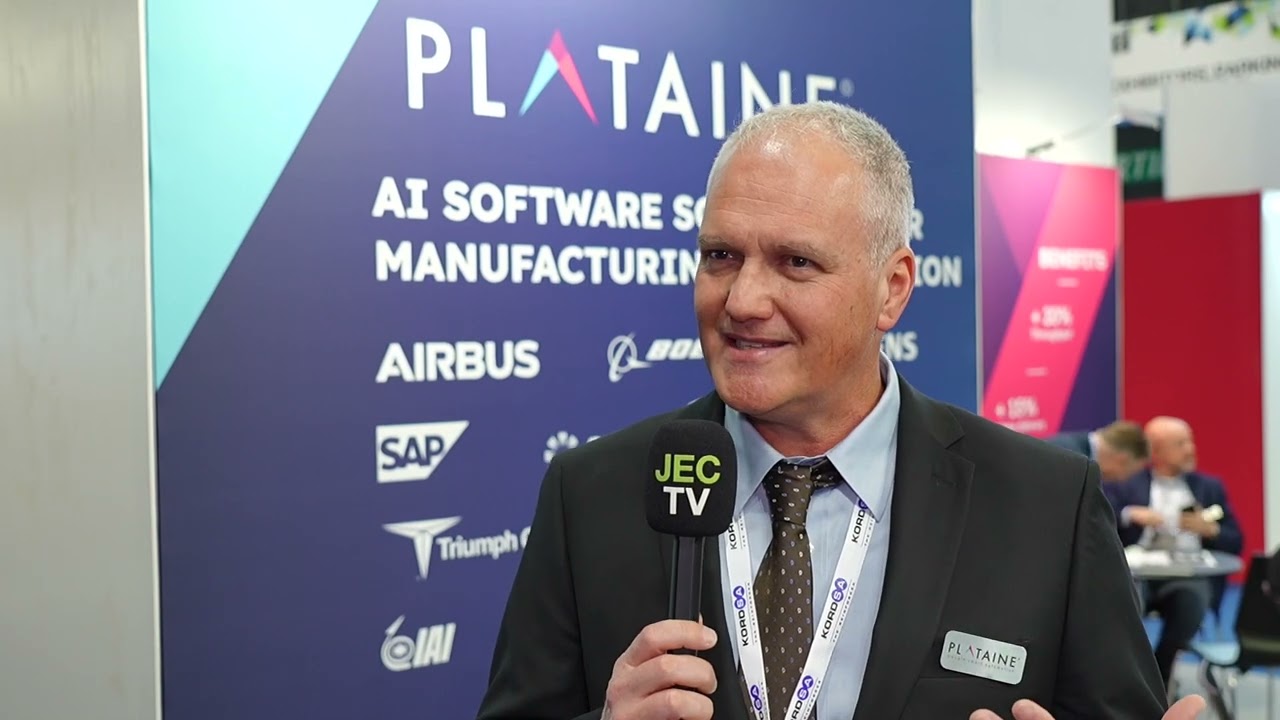
Amir Ben-Assa has spent his working life inside that argument. He trained as a mechanical engineer, entered industrial technology in 1995 and moved through 3D systems, product lifecycle software, Wi-Fi location systems and retail inventory before joining Plataine in 2015. Today he is the company's Chief Revenue Officer, responsible for sales, marketing and business development. The title is commercial. The material he reaches for is still physical: carts, tags, tools, rolls, parts, ovens, hours.
That is the useful tension in his career. Ben-Assa speaks for software, but his examples are stubbornly made of matter. He is interested in what happens when information meets an object that is late, expensive, perishable or simply lost. Three decades of changing acronyms have not altered the question beneath them: what must a factory know now to make a better decision next?
Chapter one
The floor refuses abstraction
In 2008, AeroScout helped a glass fabricator track metal carriers across a one-million-square-foot Minnesota campus. The carriers held work in progress, which meant a missing cart was not a minor inconvenience. It was production made invisible. Wi-Fi tags transmitted more frequently when the carts moved; software placed them on a map. Ben-Assa, then leading industry marketing, explained the deployment as it expanded from a pilot to three buildings.
A year later, the setting was 21 levels of underground tunnels at a Nevada gold mine. Five hundred tags covered 450 employees and 50 pieces of equipment. A trip from one underground location to another could consume 30 to 60 minutes. The elegant detail was also the practical one: a tag was built into each miner's cap-lamp battery pack, making it difficult to enter the tunnels without carrying the system's point of visibility.
“Mines are under tremendous pressure to improve efficiency.”Amir Ben-Assa, 2009
The quotation is plain enough to survive fifteen years of technology fashion. A mine does not need a stirring metaphor from its location system. It needs the right worker or machine found before time and safety margins disappear. At TNT Express, the scale widened again: 16,000 roll cages spread through roughly 200 European depots and hubs. The live count mattered because a depot without enough cages could not move tomorrow's freight, while excess and shrinkage tied up capital.
These were early lessons in the economics of visibility. A tag does not manufacture glass, mine ore or deliver a parcel. It removes uncertainty around the things that do. Ben-Assa's later work would add more ambitious verbs - predict, optimize, simulate, recommend - but first came the map.
Chapter two
Selling the invisible
Ben-Assa's education offers a clue to his position between the factory and the boardroom. He earned a mechanical engineering degree at the Technion from 1991 to 1995, then completed Tel Aviv University's Executive MBA program in 2001. The combination is tidy without being decorative. Industrial software must satisfy two skeptical audiences. Operators ask whether it respects the floor. Executives ask whether it changes the economics.
His career repeatedly placed him at that translation point. At Tecnomatix, later acquired by Siemens, he worked in product-line management. At AeroScout he converted deployments into intelligible industrial cases. At RFKeeper he led marketing and business development. A former colleague there remembered him publicly as well prepared, thorough and fair, and as a mentor even after the colleague succeeded him. An AeroScout partner recalled strong business acumen and a positive attitude. Neither endorsement describes a carnival barker. Both suggest the temperament required when the product is technical and the buying committee has a long table.
At Plataine, Ben-Assa initially led global marketing and business development. His remit grew across product strategy and eventually the whole revenue operation. Meanwhile, his public vocabulary widened from traceability and the industrial internet of things to digital twins and AI agents. The progression can sound inevitable in retrospect. It was not. Factories carry old machines, specialized processes and software installed during several different eras. Every bright new layer must cooperate with a decidedly mixed inheritance.
In a 2021 discussion about Plataine's work with SAP, Ben-Assa described digital assistants that use sensor and system data to guide factory decisions. The examples were gloriously specific: which time-sensitive material to consume, on which machine, and when to cut it. The point of the digital thread was not to admire the thread. It was to prevent a costly roll from expiring, preserve traceability and keep production moving.
Chapter three
When the schedule becomes fiction
Planning is where the modern version of Ben-Assa's old visibility problem becomes almost comic in scale. An aerospace schedule may contain thousands of parts, each with multiple operations, material rules, machine requirements, qualified workers, inspections and promised dates. Then an urgent order arrives. The puzzle changes while somebody is solving it.
His writing returns often to the spreadsheet because it is both familiar and fragile. A spreadsheet can express a plan. It cannot comfortably watch the floor, absorb every constraint and rebuild the sequence whenever reality objects. The answer Ben-Assa promotes is an optimization layer that connects to existing ERP and manufacturing systems, senses a disruption and proposes a workable recovery.
One case he shared makes the argument with two numbers. An aerostructure producer had been curing parts in an autoclave at 65 percent capacity. The shortfall was not caused by idle workers or defective equipment. Compatible parts simply became ready at different times. Coordinated planning aligned the work so that parts sharing a recipe reached the oven together. Utilization rose to 87 percent with the same equipment and people. Better sequence, fuller oven, fewer runs.
“Intuition is good. Data-backed intuition is better.”Amir Ben-Assa, 2025
This is Ben-Assa's favored unit of persuasion: the operational before and after. He has written about reducing composite waste, protecting material shelf life, simulating capacity choices and exposing bottlenecks that people can feel but cannot prove. Sustainability appears in the same practical register. Composite parts can reduce weight in aircraft and cars, while their own production consumes costly material and energy. Use the roll before it expires. Nest cuts more efficiently. Fill the autoclave. Grand environmental language meets a very ordinary instruction: waste less.
The practical optimum
Ben-Assa recently used an ungainly but revealing phrase for large-scale scheduling: the “Practimum Optimum.” The pun makes a serious concession. A mathematically perfect schedule that takes too long, ignores a shop-floor preference or collapses after the first disruption is perfect only in the private kingdom of the model. A useful schedule must be good enough, fast enough and legible enough to earn human trust.
That emphasis separates his public case for AI from the chatbot fever that has spread across software. Conversation is not the factory's central difficulty. Coordination is. The hard task is reasoning across live constraints and then deciding whether to reschedule, reroute, consume a different material or ask a person to intervene. Fluency is pleasant. A recovered delivery date pays the invoice.
He also resists the fantasy of an empty factory. His writing on automation assigns people a changing role rather than an exit. Software handles repetitive monitoring, calculation and routine replanning. Experienced workers supervise, interpret, set priorities and step into exceptions. Training and clear explanations matter because a recommendation nobody understands will be ignored, however fine its mathematics.
There is a personal consistency here. Colleagues described Ben-Assa as a mentor and partner, while his recent work argues that industrial knowledge should be captured instead of stranded in one planner's head. In both cases, expertise gains value by becoming available to somebody else. The factory is a social system with machines in it, which is less dramatic than the robot uprising and much closer to Tuesday morning.
The current brief
Revenue is another system of constraints
Plataine now lists Ben-Assa as Chief Revenue Officer, leading global sales, marketing and business development. The change from CMO is more than a larger title. It joins the promise, the sale and the continuing customer result. In enterprise manufacturing software, those stages cannot safely live as separate stories. A product marketed as intelligence must survive procurement, integration, adoption and the hard arithmetic of renewal.
His latest themes follow that accountability. Test before investing. Simulate the effect of a new machine before buying it. Distinguish operational agents from conversational decoration. Make cybersecurity and workforce capability part of the same manufacturing plan as automation. Measure what changed. His 2026 outlook is noticeably short on magic, even when discussing autonomous systems.
The arc of Ben-Assa's career is therefore less about one technology replacing another than about successive layers of awareness. The 3D model described an object. Factory software described its process. RFID reported its location. Sensors added its condition. A digital thread joined its history. Optimization considered its next move. The AI agent, if it deserves the name, coordinates the consequences.
Thirty years after his first listed role, the factory in his work can see considerably more. It can also generate considerably more noise. The commercial engineer's job is to preserve the useful difference: a warning before material expires, a cart found without a search party, an oven filled before the cycle starts, a schedule repaired before the late order becomes an apology. Visibility was never the destination. It was the first honest step toward judgment.