The hospital had three chillers, cooling towers and a remarkably expensive habit: it treated changing water conditions with a timer. In Haber’s account of the installation, water was being discharged and replaced on a schedule. The clock kept good time. The chemistry kept changing. Freshwater consumption reached about 1,150 kilolitres a month.
- Haber connects factory measurements to process decisions.
- Paper, pulp, packaging and tissue are its core market.
- Its opportunity: less waste without surrendering quality.
The expensive habit of finding out late
Haber connected live water measurements and equipment information through Mt. Fuji, its industrial intelligence platform. Blowdown, the discharge used to control concentrated impurities, could respond to conditions. Chemical dosing could follow the water chemistry. The company reports a 36% reduction in freshwater use and a 25% reduction in chemical consumption at the unnamed Indian hospital.
The revealing detail is the original timer. A perfectly functioning control can still make a poor decision when it knows too little. Haber sells into that gap between an operating plant and an operation that keeps adjusting to what is actually happening.
Index: baseline = 100. Company-reported result, published March 2026.
Its factory customers face versions of the same problem: delayed laboratory results, variable raw materials, too many signals and too little time. Paper mills provide particularly good examples. A mill must keep strength, brightness and production steady while its inputs change. Waiting for certainty has a cost.
Consider another Haber account, this time in pulp bleaching. Delayed laboratory measurements had left operators making adjustments after conditions had moved on. Mt. Fuji used live process information to predict brightness and recommend peroxide and caustic dosing. Haber reports brightness deviation narrowing from ±5 ISO points to ±1, with bleach chemical costs 10% lower. The target was consistency: staying close to the desired brightness while spending less to get there.
A sensor is only the beginning
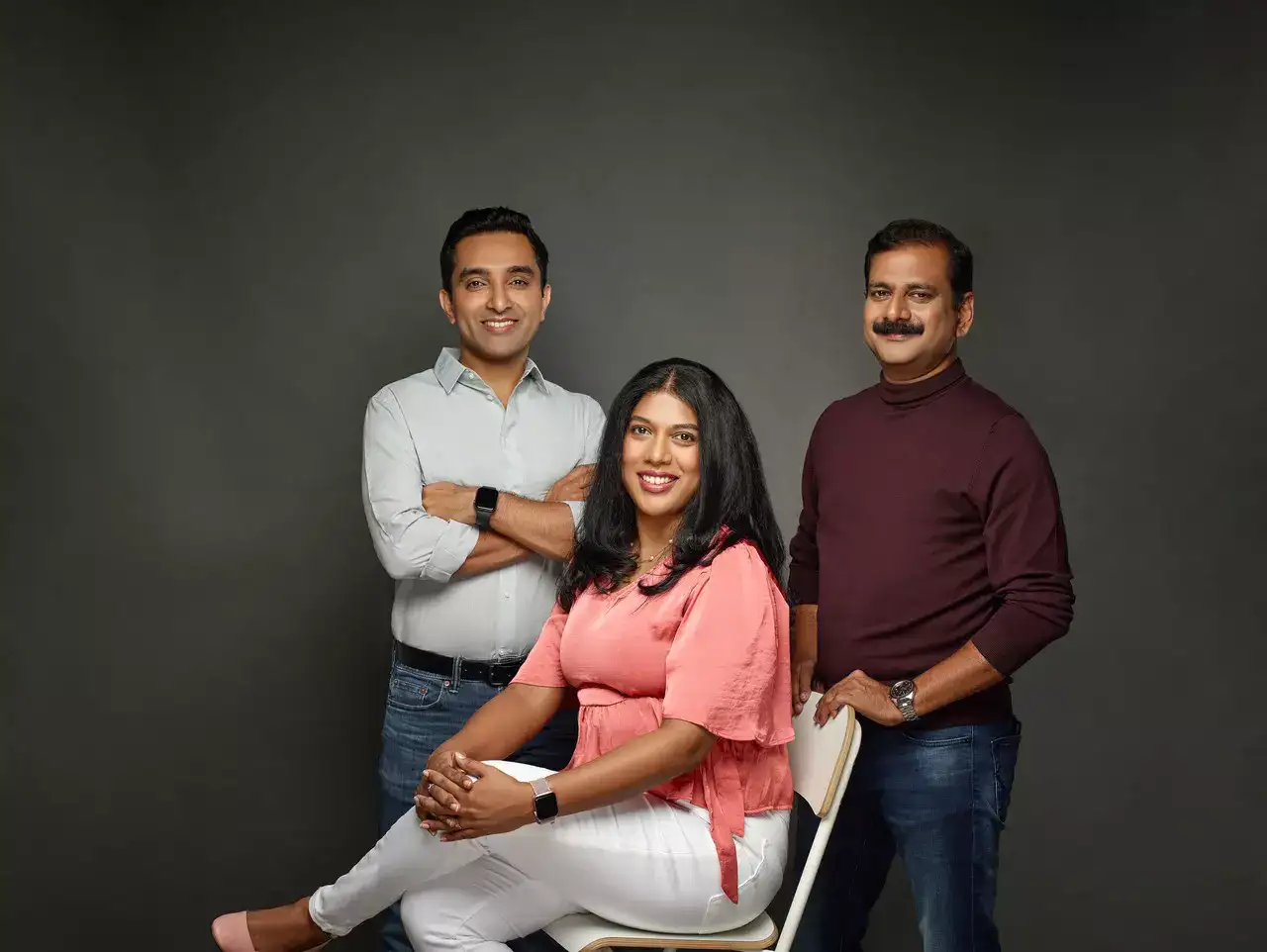
Haber’s founding team is Vipin Raghavan, Priya Venkat and Arjunan P N. Its official timeline begins in Pune in 2017 with eLIXA, a system built around automated sampling, measurement, analysis and intervention. In a 2021 interview, Raghavan described the practical improvement:
“Testing and taking corrective actions, which earlier used to take hours, has now been reduced to few minutes”Vipin Raghavan / YourStory, 2021
eLIXA remains the process-facing product: smart sensors, sampling and real-time adjustments. Mt. Fuji connects plant data with operational context, including maintenance information, procedures and shift logs. Its Lumen interface lets people investigate plant information in ordinary language. Experiment Hub lets teams explore predicted effects before applying a change.
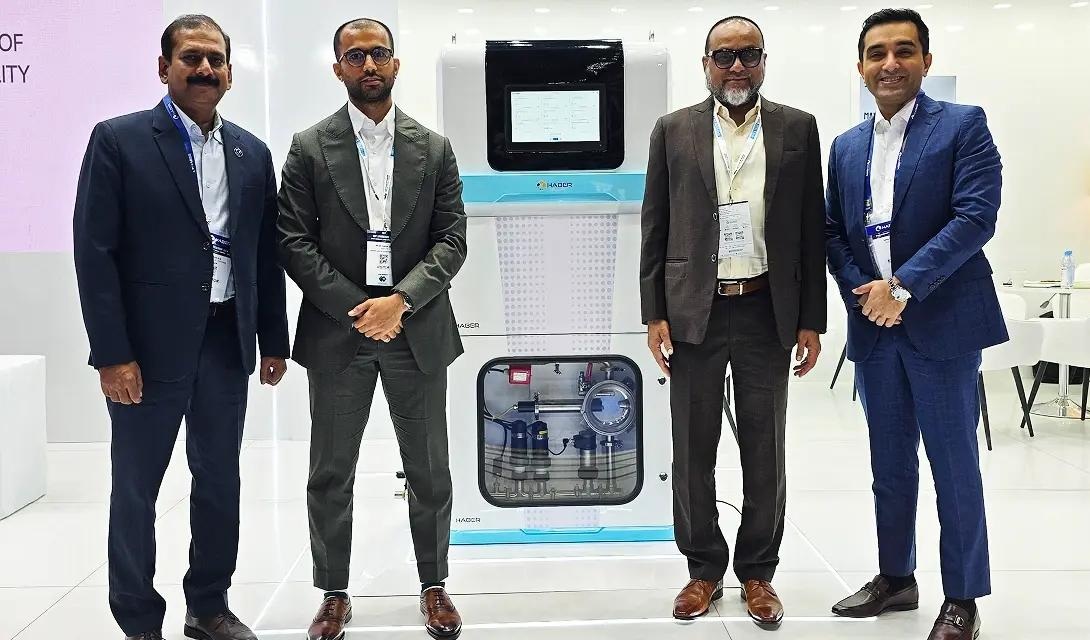
The portfolio extends to Kensei, which uses imaging to detect surface defects, and FiMorph, which measures fiber characteristics relevant to paper performance. That combination matters: Haber can work on the measurement itself, the interpretation and the response. Its proposition brings process expertise and instrumentation into the software sale.
- 01MeasureSensors + samples
- 02InterpretData + plant context
- 03AdjustAdvice + control
The spreadsheet meets the paper machine
Then there is Kaiznn, Haber’s planning software. Paper machines produce wide sheets; customers order particular widths and grades. Fitting those orders together while respecting delivery dates, inventory and machine constraints creates a persistent cutting puzzle. Every awkward combination leaves something at the edge.
In a May 2025 case study, Haber describes a mill that planned with spreadsheets. Kaiznn brought orders, stock and production constraints into one system, evaluated combinations and recalculated as orders changed. Planning fell to under 30 minutes. Average trim loss moved from 3.26% to 2.86%; order fulfillment rose from 69.92% to 75.32%.
Average trim loss in one Haber case study.
0.40 percentage points lower · about 12.3% relative reduction
Read those denominators carefully. The trim improvement is 0.40 percentage points, roughly 12.3% relative to the original loss rate. The modest-looking decimal is the point. At production scale, small recurring losses deserve serious attention. These are vendor-reported results for one customer, rather than a forecast for every mill.
A chemistry business with software instincts
Haber’s business is B2B industrial software and automation. The customer buys a route to better production, supported by software, instrumentation, integration and process knowledge. Public sales begin with a demo. eLIXA’s page advertises six-week deployment and six-month payback; a buyer should treat those as claims to test against the proposed installation.
The competitive field includes established controls, water-treatment providers, analytics platforms and specialist planning tools. Fero Labs, for example, also offers manufacturing diagnostics and process optimization. Haber’s distinctive combination is its chemistry and sampling background alongside plant intelligence and production planning. Which combination wins depends on the customer’s problem.
That physical expertise has a home. In October 2025, Haber inaugurated an expanded Green Chemistry Lab in Pune with an integrated pilot plant. Scientists can test formulations in a controlled approximation of production before deployment. The company announced plans for more than $10 million in research and development. Its careers page stresses speed, integrity, respect and teamwork; the lab gives multidisciplinary work a concrete setting.
Capital has followed the expansion. A $20 million Series B arrived in 2021. In December 2024, Haber announced a $44 million Series C package: $38 million equity and $6 million debt, backed by Creaegis, BEENEXT and Accel. It reported more than 100 clients across India, the Middle East and Africa. Its timeline records US and Canada office launches in 2025.
A case study published in August 2026 puts the same logic into refining, the energy-intensive work of preparing fibers. Haber reports specific refining energy falling from 190 to 181 kilowatt-hours per tonne. Its models used fiber properties, flow, consistency and operating pressures to recommend refining conditions. This is where the product range starts to make sense: knowing what the fibers look like can inform how hard to work them.
Copy the question, then measure the answer
A useful starting question is narrow: can this process hold the same quality target with less water, energy or chemistry? Record a baseline. Connect the relevant measurements. Let operators compare recommendations with their own judgment. Mt. Fuji explicitly offers a progression from recommendations toward greater autonomy when the team is ready.
That approach implies limits. Unreliable measurements, missing context or controls that cannot execute an adjustment weaken the case. A plant already operating near its practical optimum has less waste to recover. Treat those as engineering questions before treating them as software questions. Haber’s most persuasive idea is wonderfully concrete: find the recurring loss, then shorten the distance between noticing and doing something about it.