At Lake Cable, the machines were stopping less often than you might imagine. That sounded reassuring. Then the manufacturer looked at the other half of the question: how long did each stop last? Oden’s account of the deployment says downtime duration across the lines was ten times greater than the company had realized. A factory can lose an astonishing amount of time while keeping a perfectly respectable count of interruptions.
- The job: turn manufacturing data into recommendations people can use during production.
- The buyers: industrial companies making cable, paper, chemicals, inks and coatings.
- The lesson: measure the loss, give someone a useful action, then check whether they take it.
Oden Technologies lives in that gap between a comforting number and a useful one. Founded by Willem Sundblad and Peter Brand in 2014, the company builds software for people close enough to production to change it. Its proposition has a pleasing lack of glamour: help a factory get more out of the equipment and knowledge it already possesses.
The minutes nobody counted
Lake Cable was missing production targets without understanding why. Once the duration problem became visible, teams could classify stops, investigate causes and agree on improvements. Oden reports an 8% increase in monthly capacity. The machines had not acquired extra hours in the day. The organization had acquired a better account of where those hours went.
Quality investigations offered another revealing contrast. Engineers had spent three to five days working through individual problems. The case study describes one engineer using Oden to investigate extrusion anomalies and production impact in 20 minutes. It also reports a 25% improvement in first-pass yield. These are customer-case results, rather than a timetable every buyer should expect.
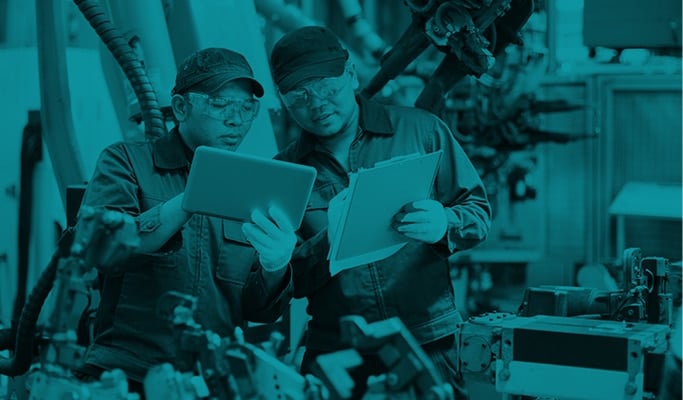
A dashboard cannot turn a dial
Oden’s products divide the work sensibly. Data Engine gathers machine signals and production context, then cleans and aligns them. Factory Analytics supplies dashboards, monitoring and investigation tools. Process AI offers settings recommendations and predicted quality outcomes to operators during a run. Each layer answers a different question: what happened, why might it have happened, and what should someone change?
The first layer is more consequential than its name suggests. A temperature reading means little if it belongs to the wrong batch. Data Engine handles standard units, outliers, shared labels and timing alignment. Its data science teams support model selection and tuning. Before the software can recommend a better process, it needs a coherent description of the present one.
Process AI makes the trade-offs visible. Speed, material use and quality are connected; turning one knob can upset another. Recommendations arrive alongside predictions, helping an operator judge the consequences. The public product description puts the person in charge of adjusting the process. Buying recommendations is a different proposition from handing over the factory controls.

When the customer buys a stake
At ink manufacturer INX International, collecting data had already happened. Its manufacturing execution system supplied information, but complexity restricted access to a small group. Oden’s case study describes an analytics deployment in 2022, followed by Process AI in 2024. The useful change was bringing guidance closer to the moment an operator could act.
Oden reports a 21.4% improvement in overall equipment effectiveness across the relationship and a shift from a seven-day to a five-day production schedule. OEE combines availability, performance and quality; it is not simply a count of extra units. The schedule change gives the abstract metric a tangible consequence: capacity can improve without keeping the line running every weekend.
“We realized that we needed to pinpoint the levers to increase capacity.”Lake Cable, in Oden’s customer case study
INX then participated in Oden’s $28.5 million Series B in April 2024, led by Nordstjernan Growth. INX’s own announcement says it also evaluates the product roadmap and pilots offerings. That gives Oden a customer with money invested in the supplier’s future, and a development collaborator with actual ink to make. It is a more interesting endorsement than a logo on a sales slide.
The first two weeks matter
Oden sells enterprise software through a licensing model, supported by deployment and customer success work. Ongoing model maintenance is included in base licensing. For a buyer, that matters: a manufacturing model must remain useful as operating conditions change. The commercial commitment extends beyond producing an impressive prediction during a demonstration.
The rollout begins with a process review, a data assessment and one measurable goal. Oden describes onsite iteration with operators and daily meetings during the first two weeks of adoption. There is a practical theory here. People who must trust the recommendation should help shape how it reaches them. A technically sound answer that arrives in an awkward workflow is still an awkward answer.
Readers can copy that sequence without buying anything: choose a loss worth reducing, agree on its measurement, involve the people making the decisions and track use as well as results. An unused screen deserves investigation. So does a faster line that produces more scrap. The factory needs an outcome, not an exciting collection of graphs.
The next shift gets a vote
Oden fits between industrial data infrastructure, analytics and process optimization. Buyers can also extend existing manufacturing systems or assemble tools internally. Oden’s distinction is its connected stack and attention to operators, backed by implementation support. That is a positioning choice with real consequences: the software must be understandable to someone whose principal occupation is making a product.
Forge extends the suite into manufacturing AI agents, automating analysis, reports and workflows across tools. Oden promoted the offering through an October 2025 webinar. Its 2026 writing returns to an older problem: processes can drift away from their best performance while remaining inside alarm limits. A machine that appears healthy can still be quietly wasting money.
The approach depends on usable process data, meaningful quality measurements and settings workers can actually change. Where those conditions are missing, better predictions alone cannot deliver better production. Oden’s own assessment and maintenance work acknowledge the labor around the software. The revealing question is what happens on the next shift: does someone receive a useful recommendation, trust it, and improve the run?