Christophe Beck once failed his first university exam. Years later, addressing an audience at the University of St. Thomas, he brought it up himself. By the end of graduate school, he recalled, he was nearly at the top of his class. The failure had become useful material. A polished executive biography tends to lose these little dents; Beck seems inclined to keep one where people can see it.
His career has since taken him from engineering in Switzerland to Nestlé, then to Ecolab in Minnesota. Along the way came a space-shuttle project for the European Space Agency. Today, as Ecolab’s chairman, president and chief executive, he spends much of his public life explaining why the future of computing depends on something that comes out of a pipe.
There is an appealing reversal here. Artificial intelligence is usually discussed in the language of limitless possibility. Beck brings the conversation back to water, heat and equipment. The cloud, in his telling, has quite a lot of plumbing.
A career with several changes of altitude
Beck graduated from the École polytechnique fédérale de Lausanne in 1991. His master’s degree covered mechanical engineering and aerodynamics. The space-shuttle assignment belongs to that early technical chapter. It supplies a pleasing detail in retrospect: before he was dealing with the infrastructure of the digital economy, he had worked on a project concerned with leaving Earth.
He spent 16 years at Nestlé before joining Ecolab in 2007. His experience encompassed Europe, Asia and North America, with responsibilities in marketing, sales and management. EPFL’s alumni account records responsibility for European sales. The journey gave him experience selling and running businesses as well as understanding the machinery beneath them.
At Ecolab, the assignments accumulated. International regions. Nalco Water. The global industrial business. He also led Nalco’s integration after Ecolab acquired it in 2011. Integrating another company is a less photogenic undertaking than announcing a deal. It is nevertheless where a transaction begins to acquire its practical meaning: people, operations and customers have to work together.
He became president and chief operating officer in April 2019, CEO in January 2021 and chairman in May 2022. This was a long apprenticeship inside the business. By the time he reached the chief executive’s desk, he had already seen several versions of the company from close range.
The business at the other end of the tap
Ecolab began in 1923 under the unusually literal name Economics Laboratory. The name made a proposition: science should save customers time, labor and money. Beck’s modern argument retains that practical cast. A factory that uses less water can also avoid some of the energy required to move, heat, cool and treat it.
Water conservation, viewed this way, belongs in the operating discussion. It affects what a plant spends and how reliably it can produce. Beck’s emphasis on that connection helps explain why he speaks so readily to business audiences about a resource often treated as an environmental department’s concern.
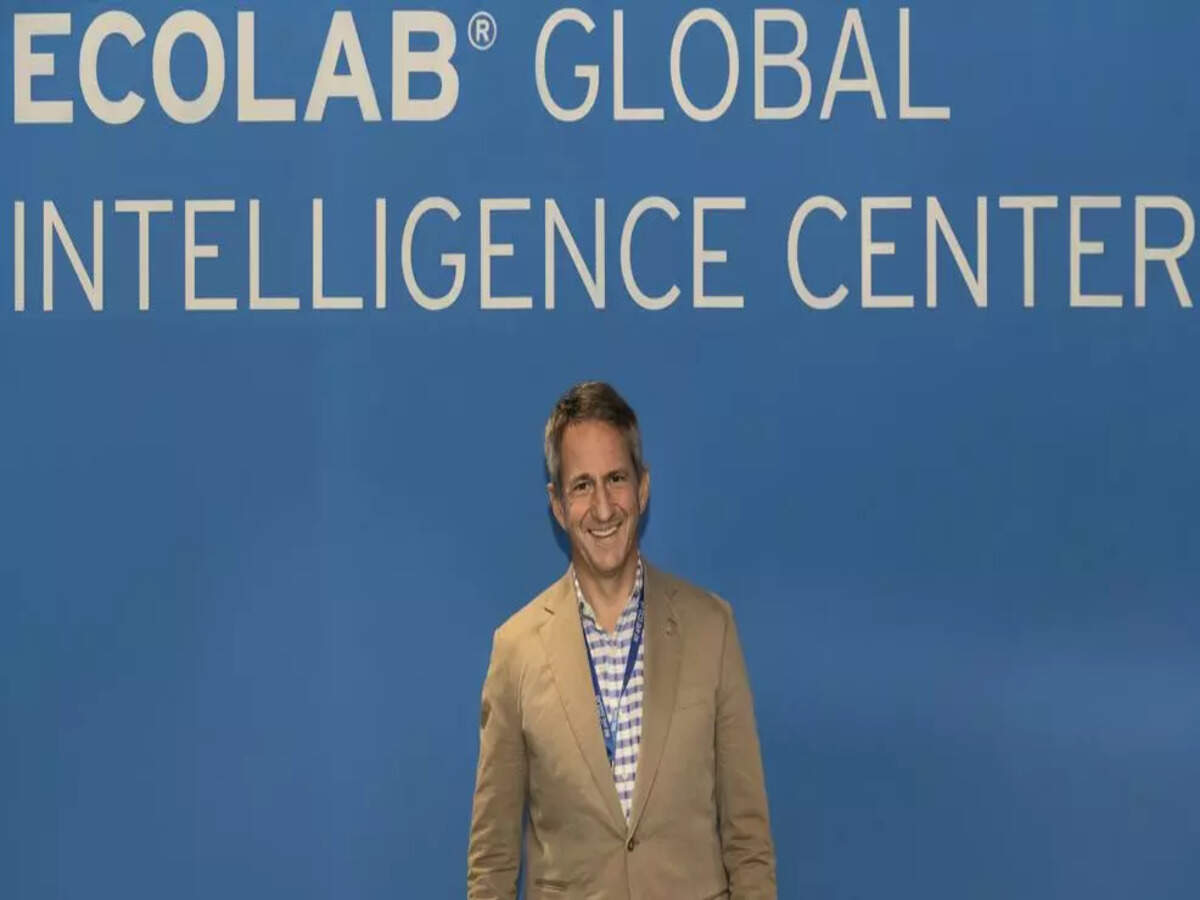
During a 2022 visit to India, he described a method that starts with questions. How much water enters a plant? Where does it go? How much comes out? Ecolab’s specialists compare a customer’s operation with stronger performers, then use chemistry, equipment and digital tools to improve it. The diagnosis comes before the prescription.
Pune figures in that story because Ecolab’s Global Intelligence Center remotely monitors customer systems. Beck described local talent as a reason for choosing the city, while distinguishing its monitoring work from digital development in Bangalore. His account makes the business sound geographically specific: expertise has an address, even when the customer is elsewhere.
He also relayed a customer’s account of hearing villagers complain that a nearby plant was taking their water. For Beck, the encounter illustrated a widening responsibility beyond the factory gate. Production and its surroundings share a resource. An efficient system can matter both to the customer signing the contract and to people who never will.
Three places where AI meets water
That argument has found a new audience in technology. Beck keeps returning to three tasks: making chips, generating the power that runs them and removing the heat they produce. Each brings water into the story. It is an effective way of making an abstract industry visible, one physical dependency at a time.
Beck’s three-part explanation of where water enters the AI value chain. Schematic, not a measure of consumption.
In 2025, he described a Digital Realty pilot across 35 American facilities. Ecolab reported reductions in water use of as much as 15%, with annual potable-water savings of 126 million gallons. Those are results for a particular program, rather than a promise for every data center. They give his argument something more concrete than a distant target.
There is another application of AI in his thinking. Ecolab’s field specialists carry knowledge gathered across industries and countries. Digital tools could make more of that knowledge available to colleagues facing a customer’s problem. Beck has described the ambition as giving an employee access to comparisons and possible improvements that previously depended on someone else’s experience.
The connection is tidy: Ecolab wants to use AI to manage industrial resources while selling resource-management technology to the companies building AI. Both depend on turning information into a useful decision. A measurement earns its keep when somebody can act on it.
A $4.75 billion expression of interest
On July 2, 2026, Ecolab closed its approximately $4.75 billion acquisition of CoolIT Systems, a supplier of direct liquid cooling for dense computing environments. A company associated with industrial water treatment had committed substantial money to the equipment around AI servers. Beck’s argument now had a purchase price.
CoolIT adds cooling technology to Ecolab’s existing water expertise. The company set a target of roughly $4 billion in Global High Tech sales by 2030. That remains a target. The distinction matters because the story is still being made: buying capabilities and turning them into durable results are separate pieces of work.
In a July 2026 essay, Beck emphasized circular water systems, liquid cooling and the concerns of communities hosting data centers. He argued that expansion should come with efficiency and transparency. His position is commercially convenient for Ecolab, which sells solutions to precisely those problems. It also gives the company a clear proposition that customers can test.
By September he was discussing water reuse on the Big Technology podcast with Alex Kantrowitz. An October company update highlighted his TBPN appearance on the same theme. The repeated message is deliberate: the infrastructure supporting AI should be designed around the resources available where it operates. A compelling forecast will not refill a local reservoir.
The answer can come from another chair
For an engineer running a complex company, Beck is surprisingly willing to discuss the usefulness of having no answer. He has said that one of his lessons as CEO was learning to trust his team to find solutions he could not supply himself. It is a sensible admission in an organization spanning scores of industries and countries.
“The most important learning has been that I don’t always need to have the answers.”
Christophe Beck, 2025
His account of innovation includes an awkward adjustment for a company proud of persistence. Teams have to tolerate failure and stop work that has reached a dead end. That asks managers to distinguish commitment from attachment. An unsuccessful idea can consume a surprising amount of time if everyone is too determined to surrender it.
In a March 2026 conversation with Ecolab colleague Dexter Davis, Beck linked participation to ownership: when people develop the answer, they have more reason to make it work. He also connected team diversity, business performance and resource conservation. These are statements of his management philosophy; their value lies in what the organization does with them.
Minnesota is part of the job
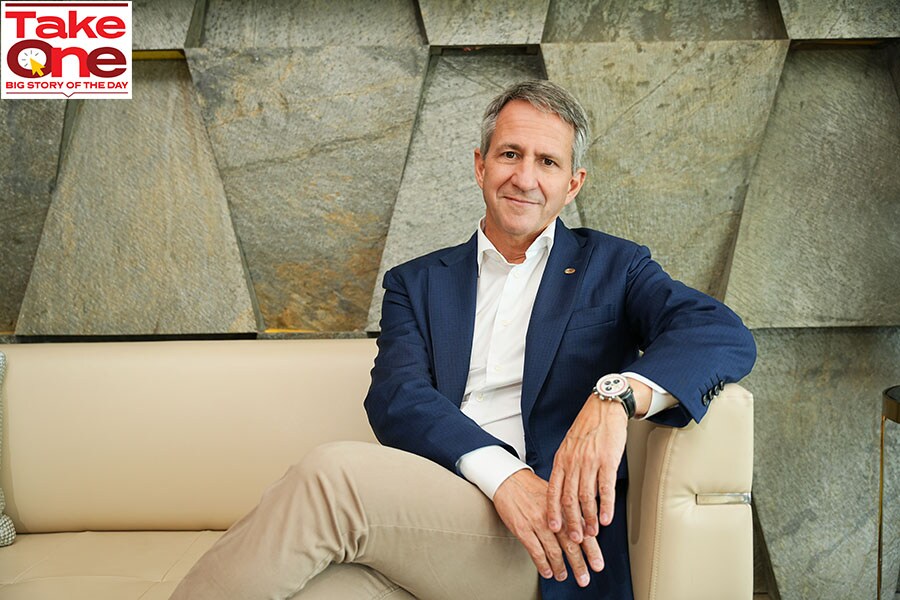
Beck holds Swiss and American citizenship and lives in the Minneapolis-St. Paul area with his family. His local responsibilities extend beyond Ecolab. He chairs GREATER MSP, serves on the Saint Paul & Minnesota Foundation board and joined Delta Air Lines’ board in December 2024. The international executive has acquired a distinctly regional set of obligations.
Discussing downtown St. Paul, he has argued that public safety, homelessness and economic development are interconnected. He co-chaired the steering committee behind a downtown investment strategy and called for government, businesses and nonprofits to work together. The questions change from industrial operations to city life, but his preference for coordinated action remains recognizable.
He is less polished when discussing the demands at home, in a useful way. Asked about being a father and husband, he acknowledged room to do better. He described trying to give family time real attention and bringing their input into his thinking about work. The answer offered an effort in progress rather than a perfected schedule.
Try another flavor
Beck’s advice to students supplies a fitting closing detail. He questioned the familiar injunction to follow your passion: how can someone know what draws them if their experience is still narrow? He used ice cream to explain the problem. A person who has only tasted vanilla has a rather restricted basis for choosing.
It is a modest, funny example from someone whose own working life has included aerodynamics, food businesses, industrial water and computing infrastructure. Curiosity allows for a change of subject. His career gives that advice some substance, without making every turn look inevitable.
The failed exam belongs here too. Beck’s account of it leaves space for someone to become different from an early result. Today his wager is that a company more than a century old can keep learning as well. The next assignment involves some very expensive computers, their neighbors, and the water they must share.