A GPU sitting in a data center looks reassuringly productive. There are cables, cooling systems, little lights. It has the air of something important happening. Yet for the company that owns it, the decisive question is less photogenic: is somebody paying? Northern Data Group has spent the past few years discovering just how much separates possessing the machinery of artificial intelligence from selling its services.
- The business: Taiga rents GPU compute; Ardent supplies high-density data center infrastructure.
- The hinge: a 2025 cloud upgrade depressed utilization before a reported recovery in 2026.
- The new chapter: Rumble acquired control in June 2026; Northern Data’s assets became part of Quake AI.
A machine can be busy buying time
Its earlier life was in cryptocurrency. Northern Bitcoin and the American infrastructure company Whinstone announced their combination in 2019; the Northern Data identity emerged around 2020. Aroosh Thillainathan, identified by the company as its founder, became CEO. The useful inheritance was practical knowledge: finding electricity, accommodating servers and removing heat. Those skills travel rather well between computing fashions.
By 2023, the group had three brands: Taiga Cloud, Ardent Data Centers and Peak Mining. Taiga supplied GPU computing for generative AI; Ardent supplied the buildings and infrastructure; Peak pursued Bitcoin. The division names were tidy. The capital requirements were less so.
In September 2023, Taiga’s announced purchase of more than 10,000 NVIDIA H100 GPUs cost approximately €400 million. Another announcement in November added about 8,200 H100s inside HPE Cray XD systems for €330 million. Together: roughly €730 million. Separately, Northern Data secured a €575 million Tether-group debt facility. These were hardware commitments and financing capacity, respectively. Adding them together would manufacture a rather impressive fiction.
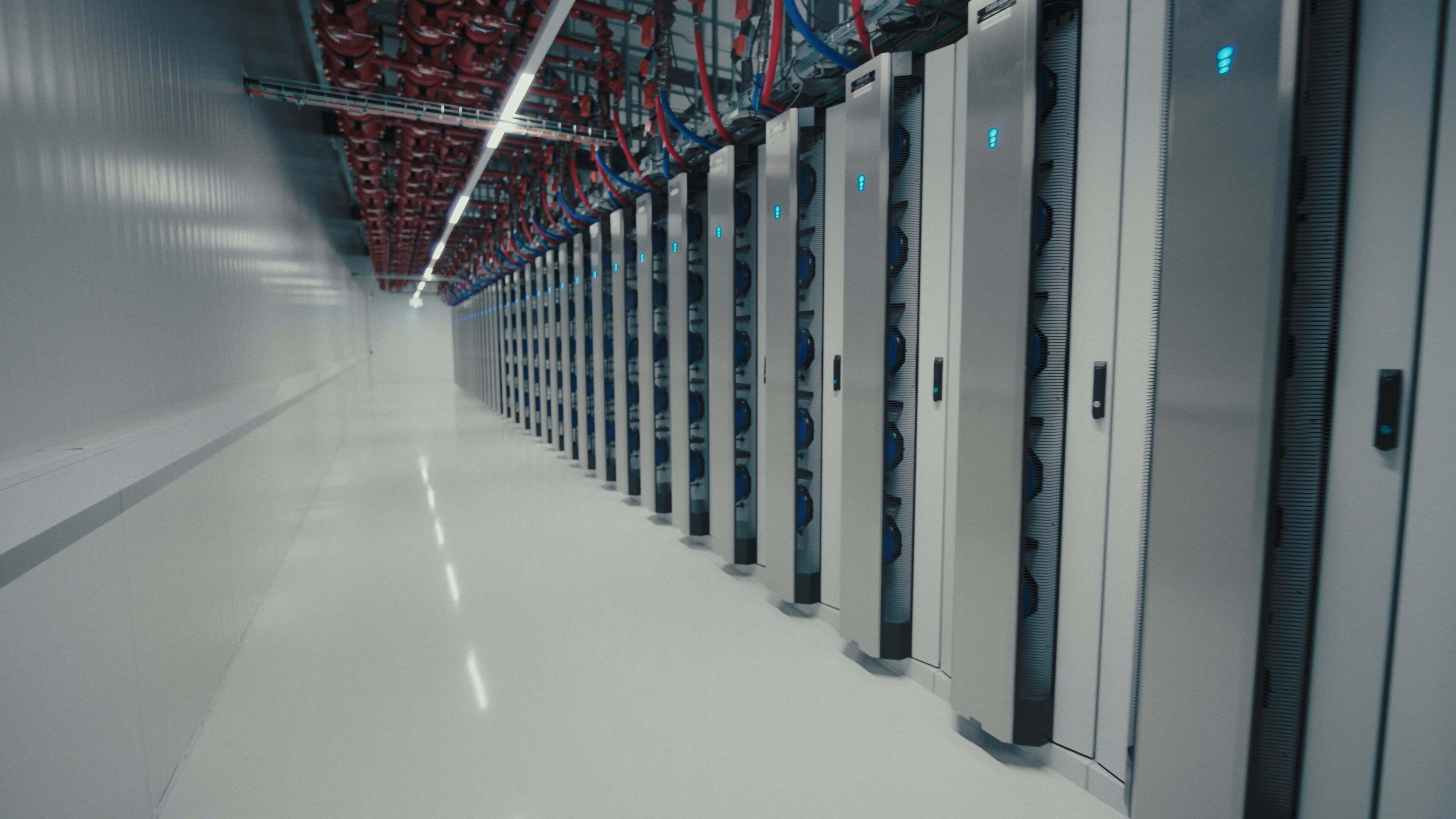
The architecture matters because large AI jobs require machines to cooperate. The analogy is an orchestra whose musicians exchange information at ferocious speed. Buying more violins will not repair a conductor who cannot keep time.
“hundreds and even thousands of nodes work together in concert”Karl Havard · Taiga Cloud · November 2023
The cloud needed a front door
Taiga generated €119.9 million in external revenue in 2024. But the accounts also disclosed €108.8 million of group revenue from one unnamed Taiga customer. That is roughly 91% of the cloud division’s external sales. A successful first act can still leave a company standing on a very narrow stage.
At the end of March 2025, Northern Data began upgrading its infrastructure for software-defined, on-demand access. The revised offering supported multiple tenants, flexible scaling and additional software functions. Its April partnership with Gcore supplied an inference and networking layer. The commercial aim was understandable: make the fleet useful to a broader set of buyers, with more ways to consume it.
The transition was costly. Continuing-operations revenue fell from €121.1 million in 2024 to €80 million in 2025. The company attributed lower Taiga utilization to the upgrade during the second quarter and early third quarter. The interruption reached the till: second-quarter continuing revenue was just €0.6 million.
Quarterly revenue, continuing operations. Rounded figures; mining excluded throughout.
By March 2026, approximately 85% of the roughly 22,000 H100 and H200 fleet was generating revenue, up from 62% in December. Northern Data’s definition deserves attention: this measures GPUs earning money, rather than the percentage of processor cycles doing useful work. Reserved and on-demand engagements had replaced more spot-market contracts. The reported recovery was commercial as well as technical.
Rent the engine room
For a customer, the proposition is access without buying the whole installation. Taiga’s current offerings include bare-metal servers, managed Kubernetes and SLURM, storage and NVIDIA AI Enterprise licensing. These serve model training, fine-tuning and inference. Its European locations include Chester, London, Sines, Boden and Norwegian sites.
The pricing page gives the abstraction a price tag. H100 SXM starts at $2.60 per GPU-hour; H200 bare metal starts at $3.00, with H200 on-demand from $3.20. Listed configurations contain eight GPUs. At the H100 starting rate, eight running for 24 hours imply $499.20 in compute charges. That calculation excludes separately priced services and assumes the rate applies to the chosen contract.
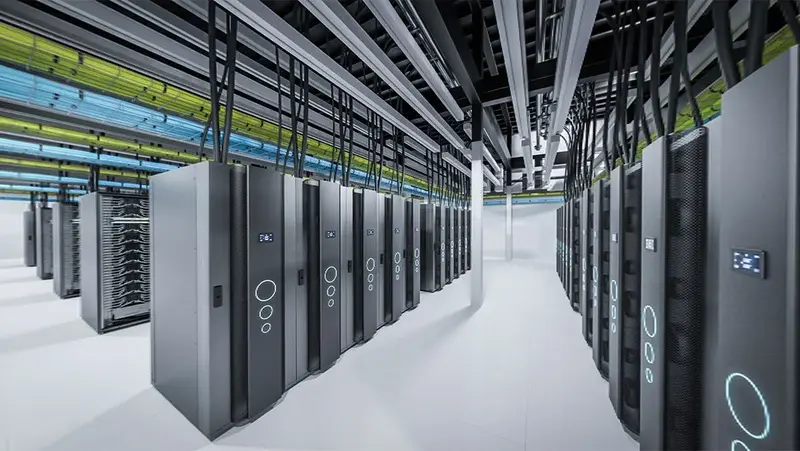
Ardent tackles the other half: power, rack space, connectivity and cooling. Its Pittsburgh page describes 2.4 MW available now, with a path to 12 MW by 2027, and support for racks above 135 kW. Capacity planned for tomorrow is not capacity available today. Buyers should keep those two columns separate.
The video company buys the plumbing
The sales effort also acquired allies. Core42’s August 2025 framework agreement provided access to up to 10,000 Taiga GPUs, following a proof of concept. “Up to” describes the agreement’s ceiling; it does not prove all those GPUs were simultaneously earning.
Peak Mining was sold in November 2025 for $50 million upfront and up to $150 million in contingent payments. Then, on June 17, 2026, Rumble acquired approximately 85.2% of Northern Data. Its renamed parent, RUM Group, announced Quake AI, combining Northern Data’s infrastructure with Rumble Cloud’s CPU, storage and networking assets.
September brought notice of an intended minority shareholder squeeze-out. It remained subject to corporate steps. Meanwhile, Northern Data’s June revenue outlook of €170 million to €190 million for 2026 remained a forecast. Ownership news and operating results belong in different ledgers.

What a buyer should borrow
CoreWeave and Nebius also sell specialized AI infrastructure. Northern Data’s distinguishing proposition is its combination of European GPU access and high-density facilities. Its advantage must be demonstrated on the buyer’s workload: throughput, reliability, data location and the complete bill. NVIDIA chips alone do not settle the comparison.
The useful lesson is to test demand and delivery together. Begin with a representative job; measure time to completion, include storage and networking, then reserve capacity where usage is predictable. A small application, or a team deeply dependent on another cloud’s services, may gain little from moving. Northern Data’s expensive education offers a modest rule: make the machinery easy to buy, and count the hours somebody actually pays for.