A handwritten truck specification sheet is an unlikely recruiting poster for an AI startup. Yet there it is among the challenges published by Hotai’s accelerator: recognize vehicle-body modification instructions, cope with different formats, and turn the result into standardized records. Somebody has paperwork to process. Somebody else may have a machine that can read it. StarFab’s business lives in the distance between those two desks.
The Taiwan-based company helps established businesses and technology startups work together. Its defining maneuver is the reverse pitch. The corporate side describes a need; startups respond with possible solutions. It is a useful reversal of the familiar startup performance, in which founders explain a technology and hope somebody in the audience has a use for it.
That starting point gives StarFab a recognizable place in a crowded accelerator market. It organizes access to industrial problems, people and places. The ambition is a commercial relationship that survives the presentation. A good slide can get a meeting. It cannot tell you whether a product belongs on a factory floor.
The buyer gets the microphone
Founder Amanda Liu brought experience from the Industrial Technology Research Institute and the semiconductor industry to StarFab. An InnoVEX speaker biography identifies her as its founder and then-CEO; recent company announcements call her chairperson. Her background helps explain the choice of terrain: businesses in which technical knowledge and industrial relationships both matter.
In a company-published interview, Liu described StarFab’s early development in stages. It began in 2016 with an emphasis on business connections. During 2017-2019, the emphasis moved toward helping startups scale through orders and strategic investment. This was a change in what assistance was supposed to produce: a founder needed more than a place to work or people to brainstorm with.
Read that progression as a commercial argument. Once a team can build something, another workshop may have diminishing value. Access to a prospective customer’s operating constraints can change the product itself. The useful mentor is sometimes the person who explains why the proposed installation will never fit the existing workflow.
“START SMALL, SCALE BIG.”
StarFab’s own four-word brief
StarFab’s stated consulting scope includes prototyping, supply-chain planning, hardware and software development, market analysis and intellectual property. Those services belong together when a startup’s product must fit somebody else’s equipment and purchasing process. An introduction creates the opening; technical and commercial work determines whether either side can use it.
- 01Enterprise
names the problem - 02Startup
proposes a solution - 03Partners
test it in context - 04Business teams
evaluate a deal
Each step has to earn the next. A match is an opportunity, not a purchase order.
A vending machine makes the case
The Flytech relationship puts some machinery behind the language. Flytech and StarFab began their accelerator collaboration in 2019. A 2023 company release described work that included integrating Flytech’s point-of-sale equipment with Yallvend’s connected-vending technology to produce mask vending machines offering multiple payment methods during the pandemic.
That is a wonderfully unglamorous example. A mask machine needs a transaction to work. It needs hardware and software to cooperate. The value of the collaboration is visible in what people can do with the finished system, without a lecture about innovation.
The same account describes mobile-robot startup TaiKo using Flytech’s Linkou factory for validation and subsequently receiving strategic investment. A working industrial site gives a robotics company a different kind of feedback from a conference booth. Routes, equipment and operating habits impose conditions that a staged demonstration can edit away.
Flytech had its own reason to participate. In a 2022 interview, executives described a move from selling hardware toward supplying fuller solutions. Startups could fill gaps in that offering and expose the company to different customer needs. The attraction was reciprocal: an established supplier could learn something commercially useful from a much smaller company.
There is a lesson here for founders approaching any corporate program. “We would like your support” is a loose request. “Your customers need this capability, and we can test it with your equipment” gives both parties work to do. The quality of the match matters more than the length of the mentor list.
Hotai brings the paperwork, data and places to test
Hotai Group and StarFab co-founded Hotai Accelerator in 2024. Its first cohort attracted nearly 100 applicants and produced several proof-of-concept projects, according to January 2026 reporting. The next recruitment push focused on AI applications across operations and decision-making, including customer service and vehicle knowledge management.
The program offers access to business locations and de-identified member and vehicle data. Its published challenges reach from recognizing handwritten specifications to making digital insurance services accessible to people with disabilities. These are sharply different jobs. Their shared feature is an identified operational setting in which a startup’s solution can be evaluated.
Access has practical value because founders otherwise have to arrange it themselves. But the program is also selective about readiness: Hotai asks for a legally established business, a competitive product and recent customer references. A team still choosing what to build faces a different task from one ready to adapt a proven product.
The CIAT Accelerator offers another route. Its published description includes four months of enterprise counseling and accepts relevant teams that have not incorporated, while asking for functional prototypes and a considered business model. The difference matters. “Accelerator” describes a family of arrangements; applicants need to read the particular invitation.
StarFab’s homepage reports this total over nine years. It also reports an 88% survival rate and more than NT$5.4 billion in startup funding. These are company-reported outcomes, not StarFab revenue.
The price is in the particular program
StarFab’s FAQ says some programs supply funding in exchange for equity, while others provide neither funding nor an equity requirement. A founder should therefore treat the program’s own terms as the relevant offer. Entry into the wider network does not imply a standard investment cheque or a universal ownership bargain.
Time is another cost. A four-month program occupies management attention even when there is no relocation. StarFab says Taiwan-based teams need not move; overseas founders receive an individual assessment of how much time to spend locally. For a small team, participation has to earn its place alongside selling, hiring and maintaining the product.
Hotai participants may also be recommended to apply for Google for Startups Cloud resources. That is an application opportunity, with eligibility conditions, rather than cash automatically handed to every graduate. Cloud support can reduce part of the development burden; it does not remove the work of preparing data, integrating systems or supporting a customer.
For the corporate participant, the corresponding commitment is people and operating access. A challenge needs someone who understands it well enough to assess a proposed fix. My reading of the model is that a sponsor’s willingness to supply that person is a more useful signal than its willingness to appear on a program poster.
AI gets the same commercial test
StarFab extended this approach through TAI1, an AI accelerator launched in May 2025 using NVIDIA Inception resources. Its first cohort announcement, published that November, selected 14 teams. The program pairs business guidance with AI hardware and software support, carrying the company’s industrial orientation into a newer recruiting category.
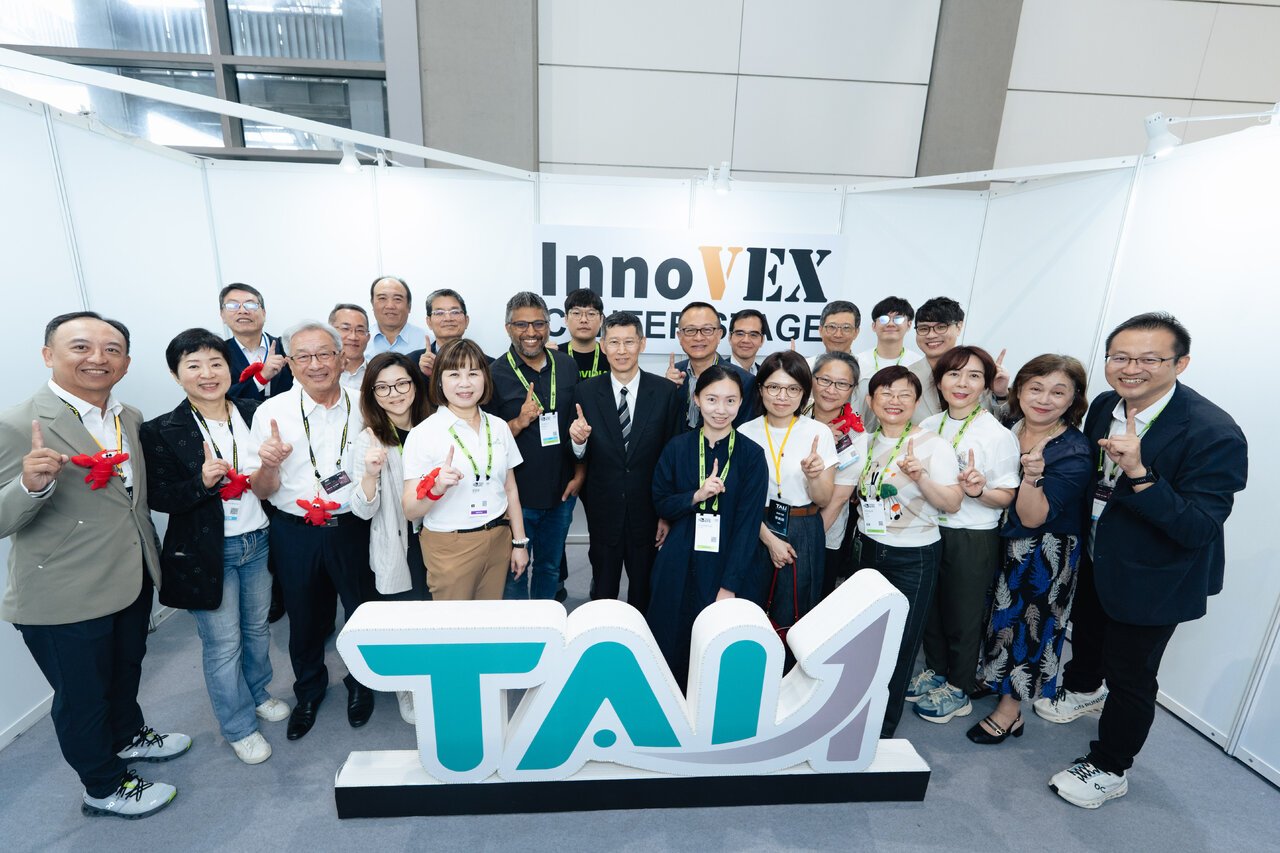
At its June 4, 2026 summit, StarFab brought together government, NVIDIA representatives and startups to discuss industrial AI commercialization. It also announced preparations for an AI fund. The wording matters: a fund in preparation is a next step, not evidence that capital has already been raised and deployed.
International connections are part of the pitch, too. In 2024, StarFab described its Hsinchu AIoT program as having matched 15 teams with enterprises from more than 50 proposals. More recently, it advertised a September 9, 2026 Kuala Lumpur event bringing 10 startups for pitching, market exchange and business matching. Overseas expansion here has an itinerary and a room to enter.
These activities place StarFab between startup development, corporate innovation and market access. An internal corporate team might perform some of the matching itself. A university incubator might help develop an earlier idea. StarFab’s proposed advantage is the combination: technical fluency, enterprise relationships and a program organized around making the two useful to each other.
The second sale is the interesting one
The recurring difficulty is commercialization. Flytech’s published account emphasizes how hard it can be for technical founders to reach end users, choose an application market and package a product. That is the early bottleneck described in the partnership: having a capability does not settle who will buy it or how it should be sold.
The reverse pitch offers a response, with an obvious condition. A corporate problem must overlap with a startup’s viable business. If solving it absorbs the team in custom work that no second customer wants, the pilot may succeed while the company remains difficult to scale. That is an inference about the model, and a useful question to take into selection meetings.
Founders can copy the sequence without joining StarFab: identify a buyer’s specific problem, find an internal owner, agree on a test and decide what result would justify a commercial conversation. Ask how the solution could travel to another customer. Corporate teams can copy the other half by describing the constraints they usually reveal only after a demonstration.
A handwritten specification sheet is a good place to end because it is such a modest place to start. It gives the technology a job. StarFab’s more interesting promise begins there: put a real problem in the room early enough that a startup can build a business around the answer.
Follow the work
Explore StarFab’s website, the CIAT program and Hotai’s corporate challenges. Follow new calls and events on LinkedIn, X and Facebook, or read its news and Medium blog.
Watch / Yallvend’s CIAT alumni interview ↗
Delta Electronics’ CIAT anniversary interview ↗