drag-and-drop
(11)
Jotform
Twenty years, 35 million users, and not a cent of venture money: how Aytekin Tank turned a coder's most boring chore into a form-building empire.
Adalo
Adalo is a no-code platform that lets anyone design, build, and publish database-driven native mobile apps and web apps - straight to the Apple App Store and Google Play - using a drag-and-drop visual canvas and AI-assisted building, without writing code. Founded in 2018 by David Adkin, Ben Haefele, and Jeremy Blalock and based in St. Louis, Missouri, Adalo has grown to hundreds of thousands of registered makers and now offers flat-rate pricing that stays fixed regardless of app usage.

Gumloop
Gumloop is a no-code AI automation platform that lets any employee build, deploy, and manage AI agents and workflows by dragging modular nodes onto a canvas. Where legacy tools like Zapier treat AI as one node among many, Gumloop makes AI orchestration the core primitive - connecting a company's internal data to leading AI models to complete complex, repetitive work. Founded in 2023 by McGill classmates Max Brodeur-Urbas and Rahul Behal, the company went through Y Combinator's Winter 2024 batch and raised a $50M Series B led by Benchmark in March 2026. It counts Shopify, Ramp, Gusto, Instacart, Samsara, and Opendoor among its customers.
Replo
Replo is a San Francisco-based software company that lets ecommerce marketing teams design, launch, and test high-converting Shopify pages without writing code. Built around a visual drag-and-drop editor, hundreds of templates, live product-data integration, and increasingly AI-driven page generation, Replo targets mid-market direct-to-consumer brands that need custom landing pages and marketing funnels fast - without hiring engineers. Founded in 2021 by ex-Uber and PlanGrid engineers Yuxin Zhu and Noah Gilmore, the Y Combinator-backed startup has grown to thousands of ecommerce customers.

VectorShift
VectorShift is an AI platform that started as a no-code builder for generative AI workflows and has sharpened into an 'AI operating system for private market investors.' Founded in 2023 by Harvard classmates Alexander Leonardi and Albert Mao and backed by Y Combinator, it lets firms turn scattered deal documents, diligence notes, and institutional memory into working AI - data-room analysis, IC memos, portfolio monitoring, and LP reporting - through a drag-and-drop interface or a Python SDK, without hiring a machine-learning team.
Strikingly
Strikingly is a no-code website builder that lets anyone launch a polished, mobile-optimized website in minutes. Founded in 2012 by three Chinese founders and the first company from China to graduate Y Combinator, it focuses on speed and simplicity over endless configuration, serving freelancers, small businesses, and personal brands worldwide. The platform now bundles one-page and multi-page sites, blogging, e-commerce stores, and built-in analytics, and became the leading website-building brand in China.
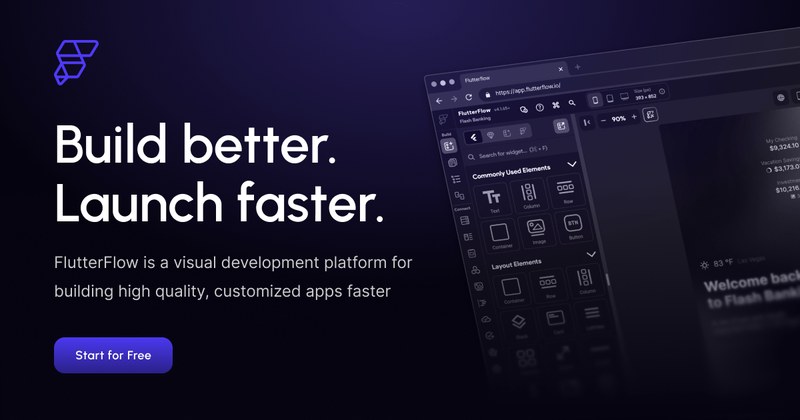
FlutterFlow
FlutterFlow is a Mountain View-based visual development platform built on Google's Flutter framework. Two ex-Google engineers built it so designers, founders, and engineers could ship native mobile and web apps without writing the boring parts. Today it has more than 1.3 million users in 200+ countries, around 10,000 paying customers, and an AI layer that turns prompts into pages.
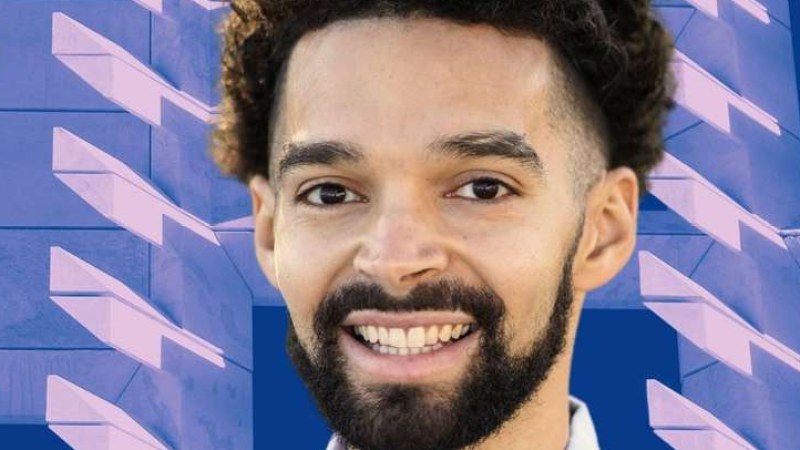
Abel Mengistu
Abel Mengistu is the cofounder and CEO of FlutterFlow, the low-code visual app builder that has enabled over 2 million users to create production-ready Flutter applications without deep coding expertise. A former Google senior software engineer who worked on Google Maps and ATAP hardware, he co-founded FlutterFlow in 2020 with Alex Greaves after a failed restaurant-recommendation startup taught them the real bottleneck was app development complexity. Accepted into Y Combinator's Winter 2021 batch after applying past the deadline, they famously survived 'No-sleep November' to build FlutterFlow 1.0 in a single month. The company raised a $25.5M Series A from GV (Google Ventures) in January 2024, has grown to 173 employees, and in 2025 launched Dreamflow - an AI-powered builder that generates production-ready app screens in roughly 10 seconds.

Alex Greaves
Alex Greaves is the Co-Founder and CTO of FlutterFlow, a visual low-code/AI-powered app development platform he co-founded in 2020 alongside fellow ex-Googler Abel Mengistu. Built on Google's Flutter framework, FlutterFlow has grown to serve over 2 million users across 200+ countries, backed by $25.5M in Series A funding led by GV and Gradient Ventures at a ~$170M valuation. A Stanford physics and CS grad who honed his craft on Google Maps' machine learning team, Greaves now leads a platform that lets developers and non-developers alike ship native iOS, Android, and web apps in a fraction of traditional development time.

David Hsu
David Hsu is the founder and CEO of Retool, a San Francisco-based developer tools company that lets engineers build internal software through a drag-and-drop interface. He founded Retool in 2017 at age 25 after pivoting from a failed fintech startup (Cashew/Oatpay) where he kept having to build internal tools from scratch. A Computer Science and Philosophy graduate from Oxford, Hsu grew Retool to $2M ARR before public launch, achieved a $3.2B valuation by 2022 with $140M in total funding from Sequoia Capital and notable angels including the Stripe founders, and now serves over 10,000 companies including Amazon, Netflix, OpenAI, and the US Army.

Webflow
Webflow is a San Francisco-based SaaS platform that lets designers, marketers, and developers build production-ready websites without writing code - or with it, if they want. Founded in 2013 after three failed attempts and a near-bankruptcy, the company grew into a $4 billion business serving over 300,000 teams including The New York Times, TED, Dropbox, Dell, Discord, and Monday.com. Its visual editor outputs clean HTML, CSS, and JavaScript automatically, while its built-in CMS, hosting, ecommerce, and now AI-powered tools make it a full-stack web platform. In 2025 and 2026, Webflow pushed deeper into enterprise with a next-gen CMS, AI prompt-to-production site building, answer engine optimization (AEO), and the acquisitions of animation library GSAP and AI content platform Vidoso.ai.