mems
(17)
Suryaprakash Ganti and the Invisible Ceiling Inside Every Chip
After years spent shrinking displays and teaching phones to read fingerprints, the engineer behind Frore Systems turned to a less glamorous adversary: trapped heat. His wager is that the next leap in computing may begin with moving air through a space barely thicker than a coin.

Sandeep Akkaraju Put Ultrasound on Silicon. The Bigger Idea Is Where It Can Go.
A backpacking year in West Africa gave a semiconductor entrepreneur a more demanding brief: build technology that travels. At Exo, Sandeep Akkaraju has spent a decade turning that conviction into a pocket-sized imaging system.

Seshu Madhavapeddy
Seshu Madhavapeddy is the co-founder and CEO of Frore Systems, the San Jose deep-tech company behind AirJet, the world's first solid-state active cooling chip, and the LiquidJet direct-to-chip line for data centers. A repeat entrepreneur with two prior exits and executive stints at Qualcomm, Samsung and Texas Instruments, he started Frore in 2018 with a simple frustration: the cooling fan hasn't fundamentally changed since the 19th century. In March 2026 the company raised a $143M Series D, crossing a $1.64B valuation as cooling became a defining constraint on AI performance.
sensiBel
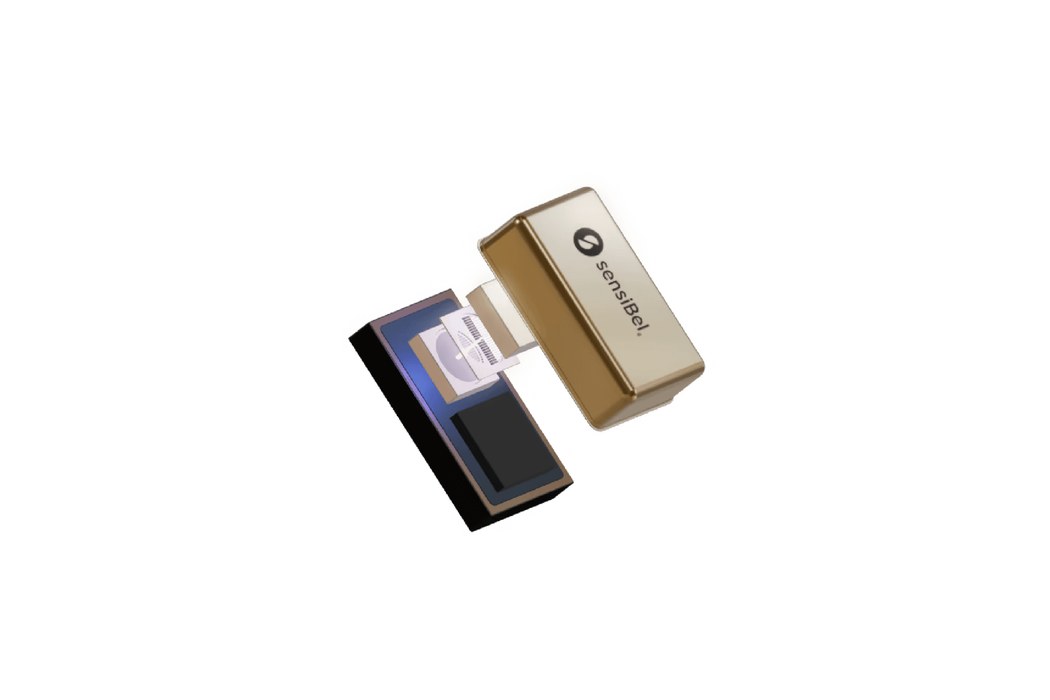
sensiBel is a Norwegian semiconductor company that makes optical MEMS microphones - tiny chip-scale devices that use a laser and photodetector to sense a diaphragm's motion instead of the electrical (capacitive) method used in almost every microphone for the past century. Its flagship SBM100B is billed as the world's first production optical MEMS microphone, delivering studio-grade specs (80 dBA SNR, 146 dB acoustic overload point, 132 dB dynamic range) in a package small enough for earbuds, laptops and microphone arrays. Spun out of Norwegian research institute SINTEF in 2017, sensiBel sells to audio, consumer-electronics and pro-audio manufacturers and counts Sennheiser among its investors.

ANELLO Photonics
ANELLO Photonics is a Santa Clara, California semiconductor and navigation company that builds SiPhOG, described as the world's smallest high-precision silicon photonic optical gyroscope. By shrinking fiber-optic-class gyroscope performance onto a chip, ANELLO delivers inertial measurement units (IMUs) and full inertial navigation systems (INS) that keep vehicles, drones, ships and robots positioned accurately when GPS/GNSS signals are jammed, spoofed or simply unavailable - across land, air and sea. Founded in 2018 by silicon-photonics pioneer Dr. Mario Paniccia and MEMS/inertial-sensor veteran Mike Horton, the company serves defense, maritime, aerospace, agriculture, construction, mining and autonomous-vehicle markets.

Frore Systems
Frore Systems is a Silicon Valley thermal-technology company that builds AirJet, the world's first solid-state active cooling chip, and LiquidJet, a direct-liquid coldplate for AI data centers. Founded in 2018 by two former Qualcomm engineers, Frore uses ultrasonic membranes to move air at over 100 mph with no visible moving parts, letting thin fanless devices and dense AI servers run cooler, quieter, and faster. In March 2026 it raised a $143M Series D at a $1.64B valuation, positioning its 'Thermal Stack' as foundational infrastructure for the AI era.

MicroVision, Inc.
MicroVision, Inc. (NASDAQ: MVIS) is a Redmond, Washington-based developer of lidar and perception technology built on more than three decades of MEMS laser beam scanning. Once known for pico-projection and its PicoP scanning engine used in consumer displays, the company has pivoted to become a supplier of automotive-grade and industrial lidar sensors - the MAVIN and MOVIA lines - plus perception software, targeting ADAS, autonomous vehicles, robotics, and a fast-growing security and defense business.

nEye.ai
nEye.ai (nEye Systems) is a Santa Clara semiconductor company building optical circuit switches (OCS) on a single chip. By fusing MEMS with silicon photonics and CMOS at wafer scale, its flagship SuperSwitch aims to move data between thousands of GPUs, CPUs and memory units with far less power and space than conventional electrical switching. Founded in 2020 by UC Berkeley photonics researchers and led by telecom-optics veteran Ashish Vengsarkar, the company raised an $80M Series C in April 2026, bringing total funding to about $152.5M as it scales foundry-based manufacturing for AI data centers.

xMEMS
xMEMS is a Santa Clara semiconductor company that builds sound and cooling out of silicon. Its piezoMEMS platform produces the world's first solid-state MEMS loudspeakers - all-silicon drivers with no moving voice coils - for earbuds, hearing aids, AI glasses and headphones, and the first 'fan-on-a-chip' active micro-cooling device that moves air inside phones, wearables and AI data-center optics. Founded in 2018, the company holds more than 300 patents and has raised roughly $129M across four rounds.

TDK InvenSense
TDK InvenSense designs the tiny MEMS sensors that let machines feel the physical world - motion, sound, pressure and ultrasound. Founded in San Jose in 2003 and acquired by Japan's TDK Corporation in 2017, it pioneered the integrated 6-axis IMU and ships motion, microphone and ultrasonic sensors into smartphones, wearables, drones, cars, robots and industrial systems. Its work pairs CMOS-MEMS hardware with proprietary fusion firmware and increasingly edge AI, turning raw physics into usable signals for billions of devices.
ACEINNA
ACEINNA is a Massachusetts-based MEMS sensor company building high-performance, low-cost inertial measurement units (IMUs), GNSS/RTK precision-navigation systems, current sensors, and flow sensors. Spun out of MEMSIC in 2017 with a roughly $50M investment, ACEINNA is best known for its open-source OpenIMU platform and for shipping centimeter-accurate positioning solutions for autonomous vehicles and ADAS at a fraction of the price of legacy systems.

Avisi Technologies
Avisi Technologies is a clinical-stage ophthalmic medical device company building VisiPlate, an ultrathin, nanotechnology-enabled aqueous shunt that drains excess fluid from the eye to lower pressure in glaucoma patients. Spun out of the University of Pennsylvania's Y-Prize program in 2017, the company is advancing VisiPlate through the FDA-cleared SAPPHIRE pivotal trial and has raised roughly $21.7M to date, including a $10.7M Series A in February 2026.

Matt Crowley
Matt Crowley is the CEO of SCINTIL Photonics, a fabless silicon-photonics company in Grenoble building single-chip DWDM laser engines for AI data centers. A Princeton-trained physicist who grew up in a family of small-business owners, he spent 25 years turning lab-stage technologies into volume products, founding and exiting two MEMS startups (Sand 9 and Vesper Technologies, the latter acquired by Qualcomm) before taking the helm at Scintil in late 2024. He argues the next bottleneck in AI is the network, not the chip, and is betting that light - not copper - will carry it.

Rui Jing
Rui Jing Jiang is the Founder and CEO of Avisi Technologies, a Redwood City-based clinical-stage medical device company developing VisiPlate, the world's thinnest freestanding ophthalmic implant for treating glaucoma. Built on University of Pennsylvania nanotechnology, VisiPlate is a multichannel aqueous shunt composed of alumina and Parylene-C that is 20 times thinner than a human hair. Rui Jing co-founded the company in 2017 as a junior at Penn's Wharton School, won the $100,000 President's Innovation Prize in 2018, secured FDA Investigational Device Exemption approval in October 2025 for the US SAPPHIRE trial, and closed a $10.7M Series A in February 2026 to advance pivotal clinical development.
SK Ganapathi
Dr. Srinivasan 'KG' Ganapathi is the founder and CEO of Vimaan Robotics, a Silicon Valley AI company deploying computer vision and machine learning to bring 100% inventory accuracy to warehouses. A serial entrepreneur with nearly 50 patents spanning magnetic recording, MEMS sensors, and supply chain digitization, Ganapathi previously founded Fidelica Microsystems (acquired by Lenovo) and Verreon Inc. (acquired by Qualcomm). With Vimaan, he is transforming how the world's largest 3PLs, retailers, and Fortune 10 companies track goods from dock to shelf - and became the first computer vision startup to receive investment from Amazon's $1 billion Industrial Innovation Fund.
Joseph Bousaba
Joseph Bousaba is the CEO of InvenSense and General Manager of TDK Corporation's MEMS Sensors Business Group, leading a global powerhouse in micro-electro-mechanical systems (MEMS) sensing solutions. With over 18 years of senior leadership in the semiconductor industry - spanning Philips Semiconductors, Qualcomm Atheros, and Qualcomm - he stepped into the top role at InvenSense in October 2024, bringing a track record of building multi-hundred-million-dollar businesses at the intersection of motion, sound, and AI-driven sensing.
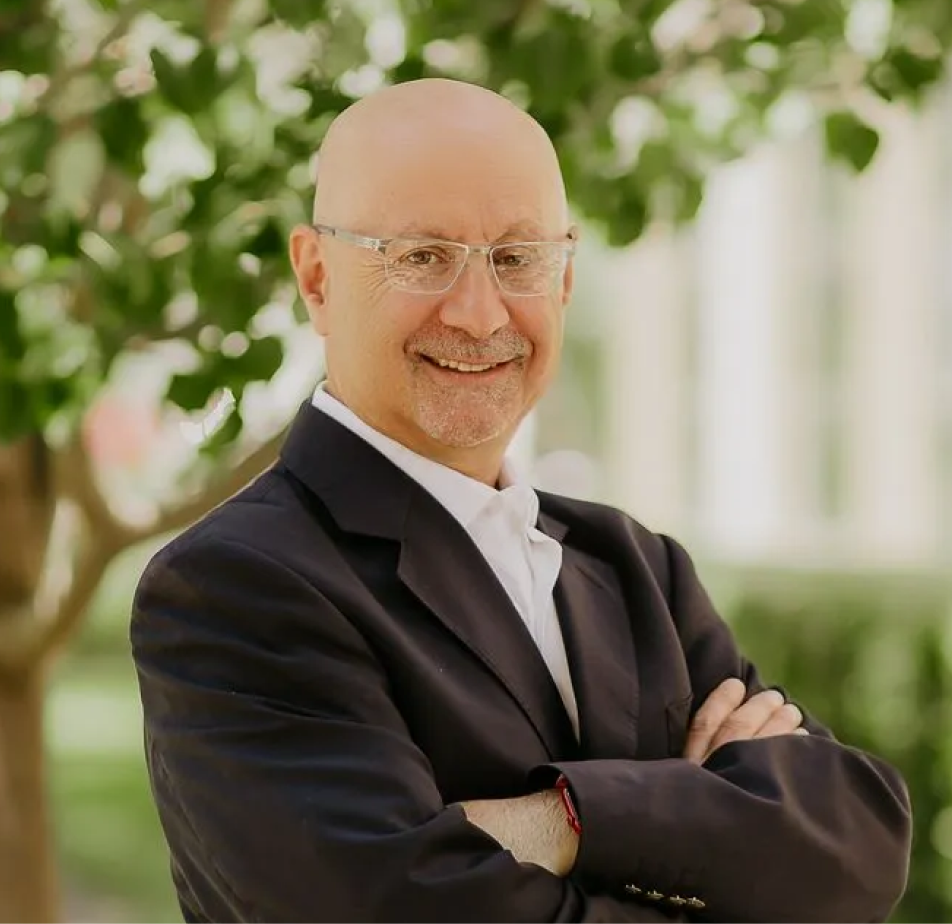
Nadim Maluf
Nadim Maluf is the co-founder and CEO of Qnovo, a Silicon Valley battery intelligence software company whose technology has shipped inside over 150 million smartphones and is now entering the electric vehicle market. Holding a PhD from Stanford, an MS from Caltech, and over 50 patents, Maluf spent three decades mastering sensors, photonics, and MEMS before channeling everything into a singular bet: that software, not chemistry, would solve the world's battery problem. His platform, SpectralX, and its automotive extension SentinelX, use real-time electrochemical diagnostics and machine learning to make batteries charge faster, last longer, and fail less often — a proposition that earned strategic investment from Hyundai and Kia.