microled
(8)
Big Screen, Small Price: AWALL Wants to Bolt a MicroLED Wall Into Your Living Room
AWOL Vision spent five years selling laser projectors. Then it bolted LED chips to a board, called it AWALL, and started shipping 108-inch video walls to living rooms.

The Company That Sells MicroLED by Refusing to Sell You Too Much of It
An integrator-built microLED brand bet that the way to win the display business was to make it boringly easy to spec, ship, and install. So far, 400-plus walls say the bet is working.
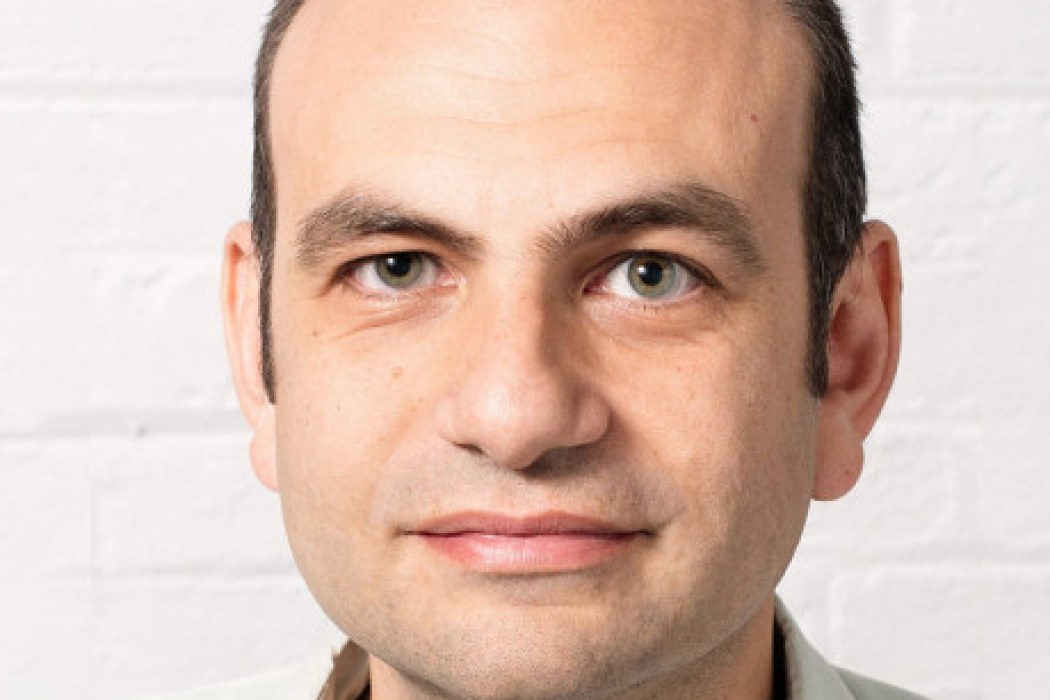
Ioannis Kymissis
Ioannis (John) Kymissis is the Kenneth Brayer Professor and Chair of Electrical Engineering at Columbia University, where he directs the Laboratory for Unconventional Electronics (CLUE) and works on thin-film materials for displays and sensors. He is co-founder and acting CEO of Lumiode, a New York startup building high-brightness micro-LED microdisplays for augmented reality and wearables. A serial entrepreneur who has spun four companies out of his lab, he is a Fellow of the National Academy of Inventors, IEEE, Optica, and the Society for Information Display, and helped launch the Makerspace @ Columbia.

Light Polymers
Light Polymers is a Santa Clara nanochemistry company built around lyotropic liquid crystals - water-based materials that can be coated directly onto surfaces to manage light. Its flagship innovation is a direct-coat polarizer that replaces the laminated films used in OLED, MicroLED, and AR/VR displays, aiming for thinner, brighter, lower-cost optics with a simpler supply chain. Founded in 2013, the company runs chemical synthesis and R&D in California and application engineering and manufacturing in Hsinchu, Taiwan.

Nanosys
Nanosys is a Silicon Valley materials company, founded in 2001 in Milpitas, California, that makes quantum dots - man-made semiconductor crystals 2 to 8 nanometers across that convert light into precisely tuned, saturated color. Its Quantum Dot Enhancement Film (QDEF) helped bring wide-color-gamut displays to mass market, and its materials have shipped in more than 70 million televisions, monitors, tablets and phones. Nanosys holds one of the largest quantum dot patent portfolios in the world and is developing NanoLED (QDEL), a self-emissive display technology in which quantum dots make their own light. In September 2023 its quantum dot business was acquired by Japan's Shoei Chemical, which now operates the Nanosys brand and its Milpitas R&D labs.
Avicena Tech
Avicena Tech builds LightBundle, a microLED-based optical interconnect that moves data between chips at terabit-per-second densities while sipping sub-picojoules of energy per bit. The Sunnyvale company is betting that the GPU clusters powering AI need a new physical layer - one that copper can't deliver and traditional silicon photonics can't match on power.

Martin Devenney
Dr. Martin Devenney is the CEO of Nanosys, the world's leading quantum dot technology company now part of Shoei Chemical. A chemist-turned-manufacturer with a PhD from Queen's University Belfast and over 35 patents, he spent eight years scaling Nanosys's quantum dot production from lab curiosity to the backbone of more than 1,000 unique display products across 70 million consumer devices. Named CEO in May 2023, he then engineered the company's acquisition by Japanese chemical giant Shoei Chemical in September 2023, positioning Nanosys to lead the next generation of display technologies including NanoLED, QD-OLED, and automotive quantum dot applications.
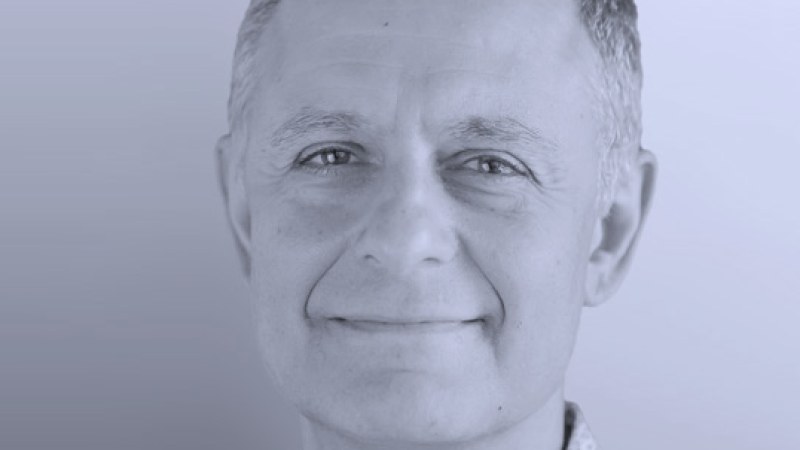
Bardia Pezeshki
Bardia Pezeshki is a serial entrepreneur and photonics pioneer who has spent three decades turning light into bandwidth. As co-founder of Avicena Tech, he is leading the push to replace copper chip-to-chip interconnects with microLED-based optical links - a bet that energy efficiency, not raw speed, is the bottleneck holding back AI infrastructure. With a Stanford PhD in electrical engineering, a prior company (Santur) that moved most of the world's long-distance internet traffic, and a $65M Series B closed in May 2025, Pezeshki is now in the race to wire the AI data center of the future with light.