The Company That Sells MicroLED by Refusing to Sell You Too Much of It
An integrator-built microLED brand bet that the way to win the display business was to make it boringly easy to spec, ship, and install. So far, 400-plus walls say the bet is working.
Walk a custom-AV integrator through the microLED aisle and watch the enthusiasm drain out of their face. The picture is gorgeous. The spec sheets are not. Pixel pitch, cabinet math, receiving cards, power redundancy, processing, mounting tolerances - every brand names it differently, and one wrong line item turns a six-figure job into a warranty nightmare. Most companies in the category respond by adding options. Just Video Walls, founded in 2022 by two people who lived that headache from the dealer side, decided the smarter move was to take options away.
The company's whole thesis fits on a bumper sticker its own marketing basically wrote: some want a screen, others want a masterpiece - but nobody wants a homework assignment. So Just Video Walls built a microLED business whose central product isn't really a panel. It's a buying process short enough that an integrator who has never touched the technology can specify, order, and install a wall without getting burned. In a category defined by fear of the unknown, removing that fear turns out to be the entire company.
Built by the people who had to install the stuff
OriginsJust Video Walls came out of roughly two decades of integration work. Co-founders Ryan Lampel and Angel Rodriguez had spent years on the wrong side of the microLED transaction - the side that has to make a manufacturer's promises come true in someone's living room. Their frustration was specific and it shows up verbatim in the company's messaging. "The real problem is integrators are expected to learn the technology and their product lines before they can even think of specifying a project," says Jim Koenig, who leads sales. That sentence is the founding grievance, and the product roadmap is the answer to it.
Rather than ask dealers to memorize an encyclopedic catalog, the company split the offer into two lanes. The Spec series is a menu of more than fifty pre-configured systems in a range of sizes and aspect ratios for indoor and outdoor rooms - point, order, done. The Custom series is a project-first configurator that starts from the space rather than the parts bin. Either way, the integrator is spared the part of the job they hate.
50+ pre-configured microLED systems, indoor and outdoor, ready to order without custom engineering. The fast path for a dealer who wants a known-good wall.
A project-first configurator that builds a bespoke wall from the room outward - for the jobs where a rectangle off a shelf won't do.
Autograph, Lunar, and the art of picking a lane
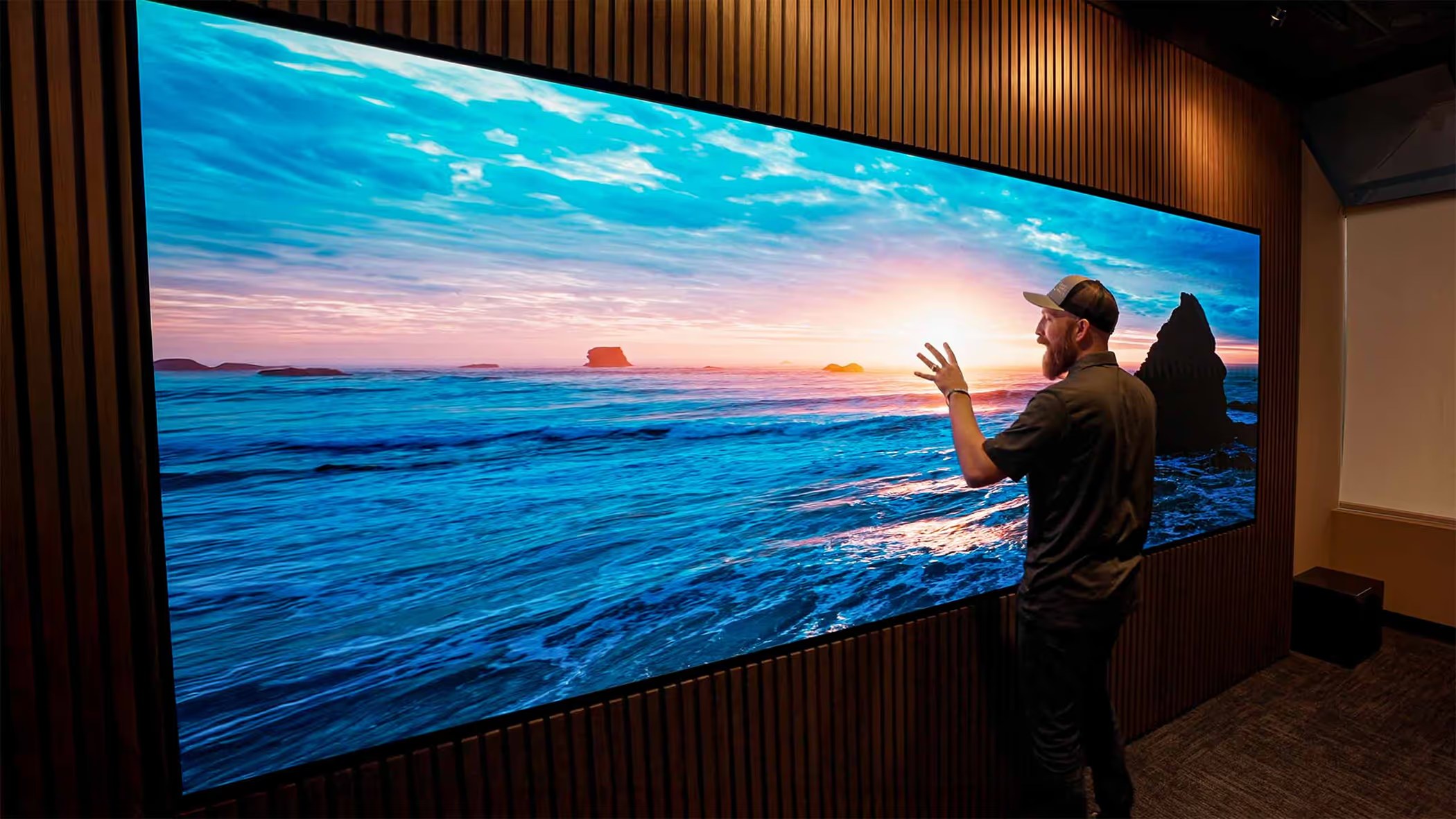
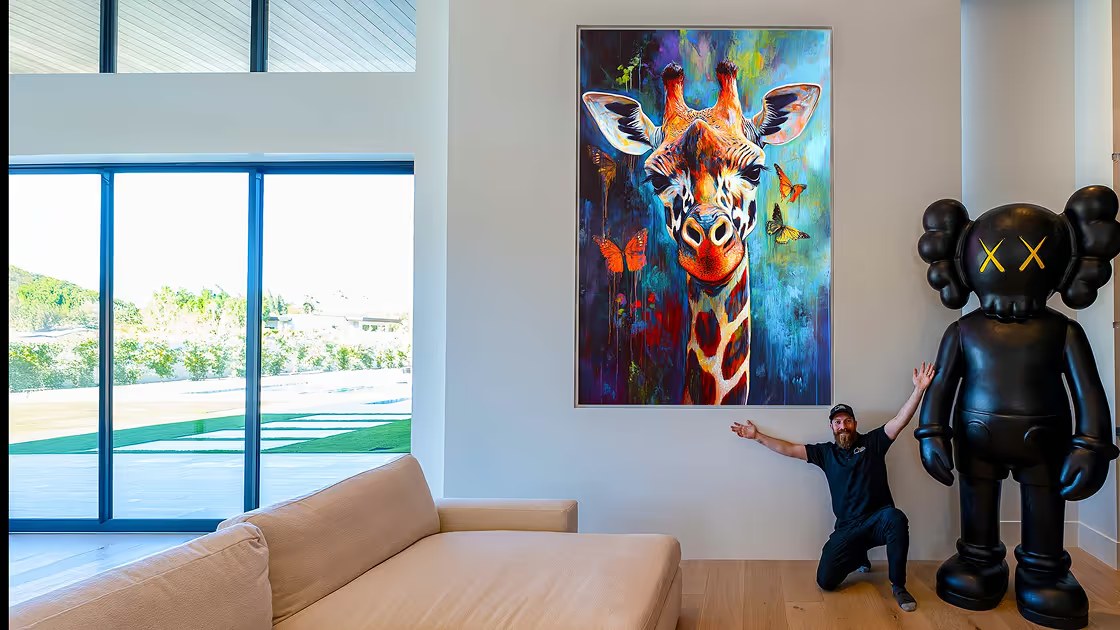
ProductsThe retail-facing lineup mirrors the same instinct. Autograph is the fully custom tier: walls sized to the room, calibrated to its lighting, and fitted with a proprietary contrast treatment the company markets as Absolute Black and keeps exclusive to that line. It is the "masterpiece" half of the tagline, aimed at high-end homes and the kind of commercial spaces where the display is the architecture.
Lunar Walls, launched in 2024, is the pragmatic other half - pre-engineered, pre-packaged systems, including a form factor called the Ledge, meant to bridge the gap between a fully bespoke build and something you can quote on a Tuesday. If Autograph is the couture, Lunar is the very good ready-to-wear. The point of having both is that a dealer never has to talk a client into the expensive path just because the cheap path was too painful to configure.
Some want a screen. Others want a masterpiece.Just Video Walls, on its own reason for existing
The channel is the product
Business modelHere is the part that makes Just Video Walls interesting as a business rather than a gadget. It does not sell to homeowners. It sells through a network of vetted custom-integration dealers - more than sixty showrooms across the US and internationally - and it treats that dealer, not the person who ends up watching the wall, as the primary customer. When you submit a project on the company's site, you are not buying a wall; you are being matched with a certified partner who is.
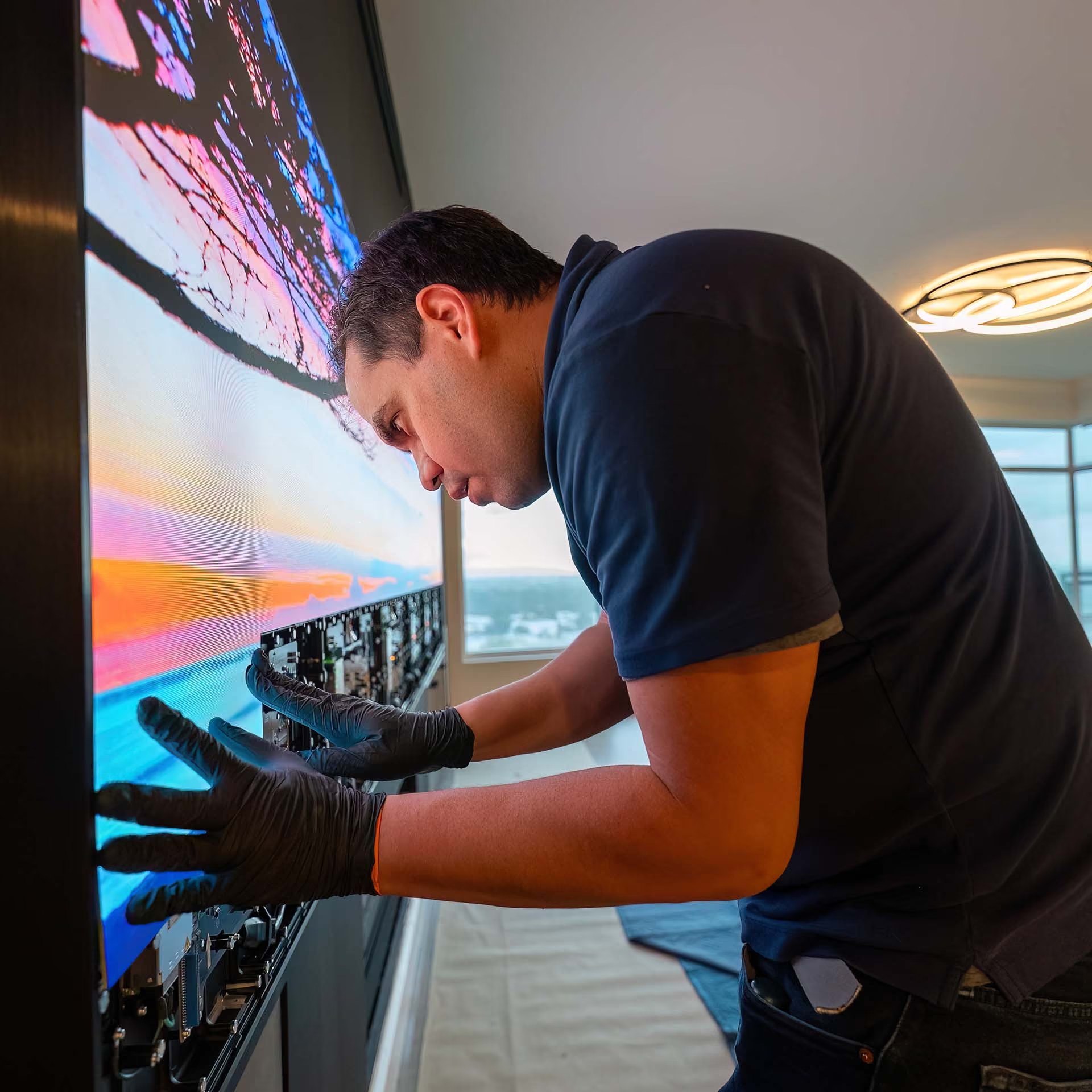
That choice cascades into everything. The company ships dealers standardized sales and marketing assets, lead-generation programs, training built specifically to flatten the learning curve, proactive project updates, and a four-tier installation support ladder. One of its stated values is integrity, and it means something concrete here: the spec tools are designed to prevent unnecessary upsells. A manufacturer talking its own dealers out of over-selling is not a common sight. It is also a genuinely hard thing for a bigger, spec-sheet-first competitor to copy, because it requires caring more about the reseller's repeat business than this quarter's margin.
Illustrative comparison of where each approach invests - JVW trades catalog breadth for a simpler, better-supported buying process.
What it actually ships
The hardware, and the showNone of this would matter if the walls were dull, so the company uses the industry's annual CEDIA Expo as a forcing function. At CEDIA 2025 in Denver it rolled out five things at once. The headline-grabber was a collaboration with Leon Speakers: a 217-inch wall paired with what may be the largest soundbar anyone has bothered to build, a single unit engineered to match the display's scale. The quieter, arguably more important debut was a WYSIWYG source-management interface - a visual way to juggle multiple inputs, de-embed audio, and lay out what appears where. It is the boring feature dealers actually asked for, which is exactly why it fits the brand.
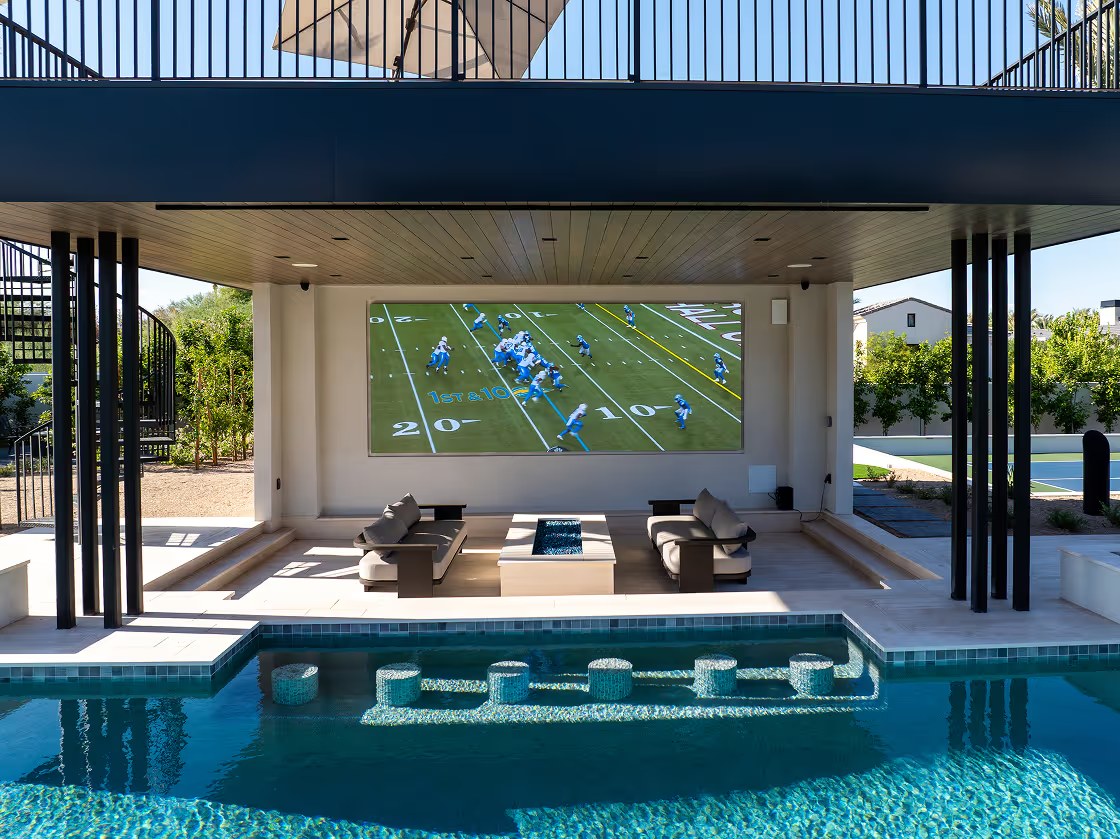
The rest of the CEDIA slate was about disappearing the hardware: a Contour trim for contemporary rooms, an Ultra-Slim trim with a slot for a fiber breakout box so the cabling vanishes, and an "Ultra LED" concept that wraps controllable Lucetta lighting around the frame so the bezel itself becomes mood lighting. And then there is the pixel-pitch arms race, where tighter is better because it lets you sit closer without seeing the grid. Just Video Walls pushed indoors to a 0.7mm pitch fine enough for gaming rigs and luxury interiors, and pushed outdoors to 0.9mm and 1.2mm - unusually tight for walls that have to survive weather.
Who it competes with, and where it can lose
The marketThe competitive set is intimidating on paper: Samsung's The Wall, LG Magnit, Sony's Crystal LED, plus specialists like SNA Displays and Planar. Those are giants that compete on raw specification and manufacturing scale. A roughly seventeen-person company is not going to out-spend them on silicon. Its wager is that in the custom channel, the relationship beats the datasheet - that a dealer who can quote, install, and get supported without stress will keep coming back, and that this loyalty compounds faster than a spec advantage.
It is worth being honest about where that wager could fail. A channel-first model only works if the channel stays healthy; if a rival floods dealers with deeper discounts or a giant decides to court the same integrators directly, the moat is relationship-thin. Simplification also cuts both ways - the very buyers who value fifty pre-configured systems today may outgrow them, and the outdoor and ultra-fine-pitch categories the company is chasing are exactly where the big manufacturers have the most to defend. For now, the recognition is real: a stack of industry awards, a Novastar nod as Global Strategic Distributor of the Year, and a social following - 30K-plus on YouTube, six figures on Instagram - that most B2B hardware brands would envy.
The lesson a reader can steal is smaller than a microLED wall and easier to afford. Pick one customer - here, the integrator, not the end user - and reorganize the entire company around making that one person's job easier. Turn your industry's most annoying step into your product. And be disciplined enough to sell people less than they might buy, because in a category full of confusion, the brand that offers calm is the one that gets called back.