In a business obsessed with speakers you can see - taller towers, glossier finishes, chrome you're meant to admire - a small company in Riverside, California made a stranger bet. The best speaker in the room, TDG Audio decided, might be the one you never notice at all. Four words became the whole philosophy: powerful sound, hidden footprint.
TDG Audio is the flagship brand of The DaVinci Group, Inc., an eight-person manufacturer founded in 2012. It builds architectural audio - in-ceiling and in-wall speakers, weatherproof outdoor units, subwoofers, amplifiers and the brackets and grills that make them disappear into drywall. The company doesn't sell a single unit on Amazon. Everything moves through custom integrators, the installers who wire high-end homes and commercial spaces. And in a market crowded with billion-dollar names, this small shop keeps doing something the giants rarely manage: inventing entire product categories.
The headline act
A soundbar that lives in the ceiling
At the CEDIA trade show in 2017, TDG unveiled the Skybar and coined a category that didn't previously exist: the in-ceiling soundbar. The pitch was almost contradictory. A soundbar is the thing you park under your TV. TDG put it overhead, splitting seven channels of home theater across a few discreet modules recessed into the ceiling. Inside the center LCR module sit six 3-inch full-range drivers plus a single pivoting titanium-dome tweeter - left, right and center, all firing from a box you have to squint to find.
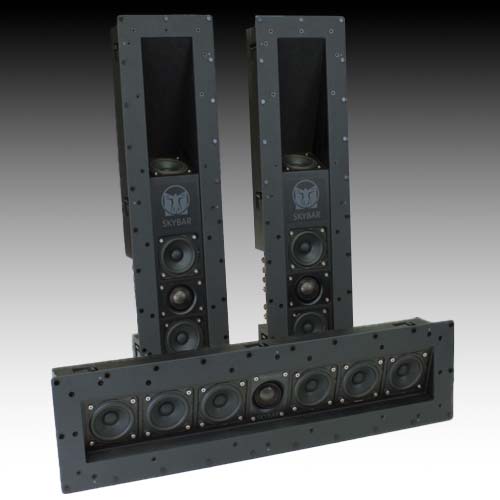
It wasn't a fluke. Before TDG existed, co-founder Jeff Francisco had already patented the world's first pivoting in-wall speaker in 2009. The company later designed the first ceiling speaker with a dual voice coil tweeter. The pattern is the strategy: while competitors ship a slightly better version of last year's speaker, TDG ships the speaker nobody thought to build.
The founders
Two lifers who left to build the weird stuff
The DaVinci Group is named after Leonardo da Vinci - the founders see audio as equal parts art and science, and they picked a namesake to match. Jeff Francisco, the CEO and president, didn't start in engineering at all. He was a professional musician and composer in Los Angeles before joining SpeakerCraft in 1985, rising to VP of Engineering and collecting loudspeaker patents along the way. Alex Chiou, the CTO, trained with premier Asian loudspeaker manufacturers and ran development at SpeakerCraft, where he designed dozens of architectural products.
In 2012 they combined decades of that expertise and struck out on their own, launching two brands under one roof - TDG Audio for speakers, Vanguard Dynamics for electronics. It's the classic move of the domain expert: spend a career learning exactly where the incumbents leave gaps, then leave to fill them.
Powerful sound, hidden footprint. TDG Audio's founding philosophy
The products
A catalog of things that shouldn't fit where they go
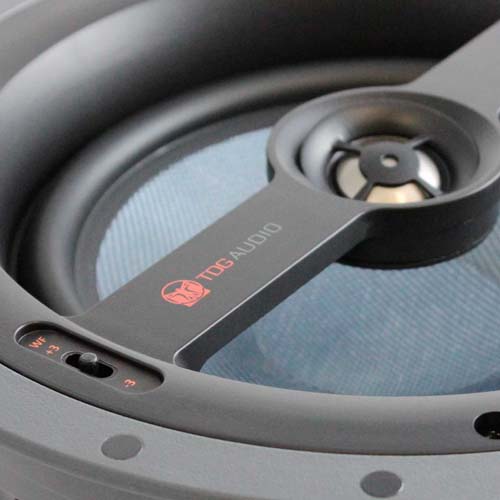
Read TDG's roadmap and it looks less like a product line than a list of "wait, they made that?" moments. In-ceiling subwoofers. Marine-rated rock speakers. Magnetic grills you can paint to match the wall. A universal streaming amplifier. Fire-rated enclosures. Each one solves the same underlying problem: how to put serious audio somewhere it was never supposed to live.
Skybar
The world's first in-ceiling soundbar - 7-channel home theater from a few recessed modules.
VAIL Cast
A universal streaming amplifier that talks to every major voice platform, phone and computer.
RADIATE
Sealed passive-radiator outdoor speakers built to IP-66 and Military Standard 810G.
VITRU4 + ICSUB-8
A 120W-per-channel four-channel amp and an in-ceiling subwoofer for bass with no floor footprint.
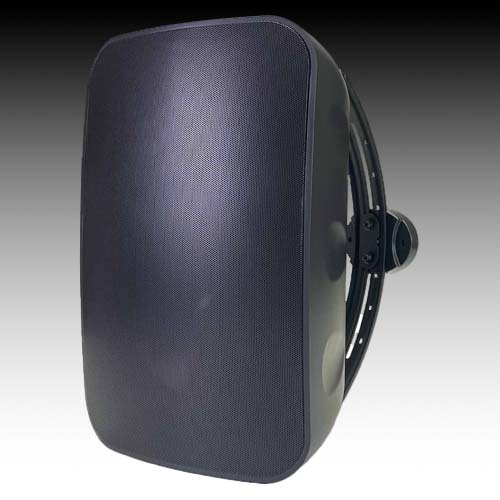
The engineering vocabulary reads like a spec-sheet dare: sealed high-grade MDF enclosures, dual full-range drivers, passive radiators for bass enhancement, pivoting tweeters that aim sound toward the listener instead of the joist above. None of it is meant to be admired directly. It's meant to vanish and let the room do the talking.
The business model
Owned by the people who sell it
Here's the part worth stealing. TDG Audio is privately held - and the owners aren't a venture fund. The company is owned by its own employees, its sales representatives and its dealers. The people recommending the speakers to homeowners have equity in the outcome. In a channel where an installer's recommendation is everything, that's not a perk; it's the go-to-market strategy. Align the incentives, and the sales force sells itself.
It also explains the refusal to chase retail. Selling only through custom integrators keeps margins healthy for the dealers, protects the brand from a race to the bottom, and lets an eight-person team punch far above its headcount. Small company, loyal channel, category-defining products - that's the whole flywheel.
The DaVinci Group draws its name from Leonardo da Vinci's mastery of both art and science - the philosophy behind every product. The DaVinci Group
Where it fits
David in a room full of Goliaths
Architectural audio is a competitive corner. TDG shares shelf space with Sonance, Origin Acoustics, James Loudspeaker, Triad, Snap One's Episode line and its founders' old home, SpeakerCraft. Most of those brands out-spend and out-staff TDG many times over. The company's answer isn't scale - it's specificity. Let the giants own the mainstream; TDG owns the firsts.
The recognition has followed. TDG has picked up Technology Integrator Excite Awards and CE Pro Quest for Quality Awards, and its VAIL Amp - the first in-wall amplifier built for Amazon Echo Dots - took a Sound + Image award. For a company you can fit around a single conference table, the trophy shelf is crowded.
The through-line
From composer to category factory
Trace the timeline and it reads like a career compounding. A musician learns speakers. A speaker engineer becomes a VP. A VP patents a first, then leaves to build a company that does nothing but firsts. TDG Audio's story isn't really about drywall and drivers - it's about what happens when people who have spent forty years inside an industry finally get to build exactly what they think it's missing.
An LA composer trades the studio for loudspeaker engineering.
Francisco patents the world's first pivoting in-wall speaker.
Francisco and Chiou launch TDG Audio and Vanguard Dynamics.
The in-ceiling soundbar creates a new category at CEDIA.
IP-66 and MIL-STD-810G rated speakers ship.
A four-channel amp and an in-ceiling subwoofer join the line.
For homeowners, integrators and builders, the payoff is simple: rooms that sound like a live performance without looking like a hi-fi shop. For everyone watching how small companies survive against big ones, TDG Audio offers a quieter lesson. You don't need scale to win a category. You need decades of knowing exactly where the gap is - and the nerve to build the thing everyone else called impossible.