Company / Hardware / Design Audio
The Brazilian Speaker Maker Betting That Sound Should Be Seen
Daniel Lima left the install trade to build handmade speakers out of aluminum, Brazilian stone, and LED light. Magna Audio's bet: audio that reads as architecture, not equipment.
There is a running joke in custom audio: the best speaker is the one you never see. Installers spend careers hiding grilles behind fabric, cutting them into ceilings, painting them to match the plaster. Daniel Lima spent years doing exactly that - and then decided the whole premise was backwards. Some speakers, he figured, should be the thing you want on the wall.
That contrarian streak is the reason Magna Audio exists. The company, handmade in Sao Paulo, Brazil, builds loudspeakers that behave like furniture and lighting fixtures as much as audio gear. They come wrapped in Italian leather, cut from Brazilian marble, or lit from the inside with dimmable LEDs. The pitch is not louder or clearer - though the company insists on both - it is that a speaker can be a piece of the architecture instead of an apology bolted onto it.
Lima, a former integrator who now carries the title Chief Design Officer, is blunt about why he built the company this way. Performance, he argues, is table stakes. What is scarce is a speaker a client actually wants to look at.
01A speaker company run by a designer
The origin
Magna was founded around 2019, and its founding story is a tell. It was, in Lima's words, "born from the need of custom projects from selective dealers" - the fussy jobs where an off-the-shelf box would not do. Lima came out of installation and lighting design rather than audio engineering, and that background bleeds into every product. The speakers look like sconces because the person drawing them thinks in fixtures, not woofers.
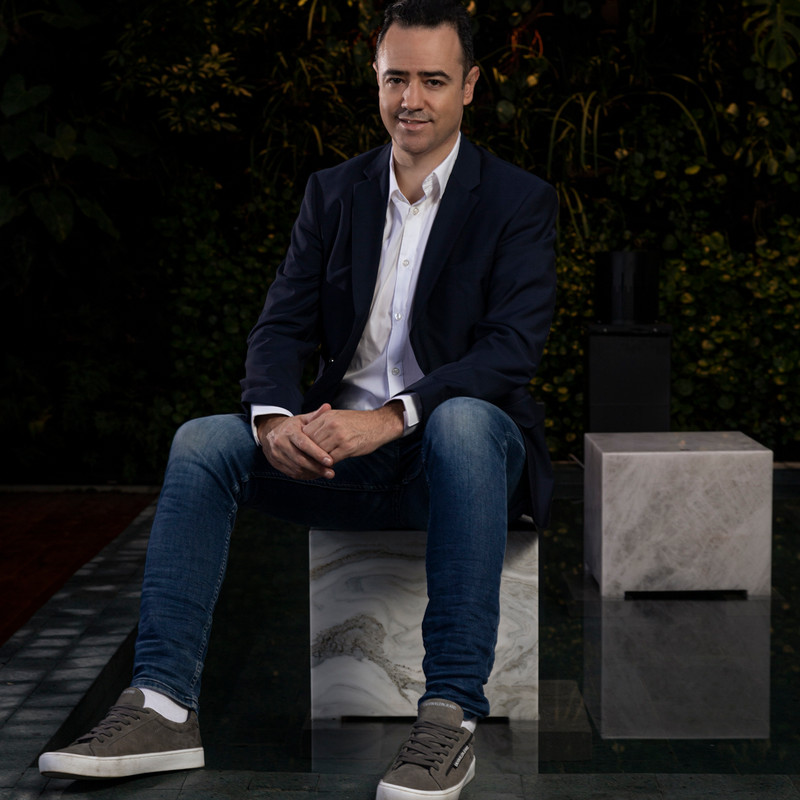
It is a small operation - roughly ten people, described as a mix of audio engineers, designers and architects - which makes the catalog it has produced faintly improbable. Magna builds for indoors and out, for two-channel listening and for column arrays big enough to fill a hotel pool deck. The connective tissue is not a driver or a crossover. It is a point of view.
02Sound you can bury, and sound you can light
The products
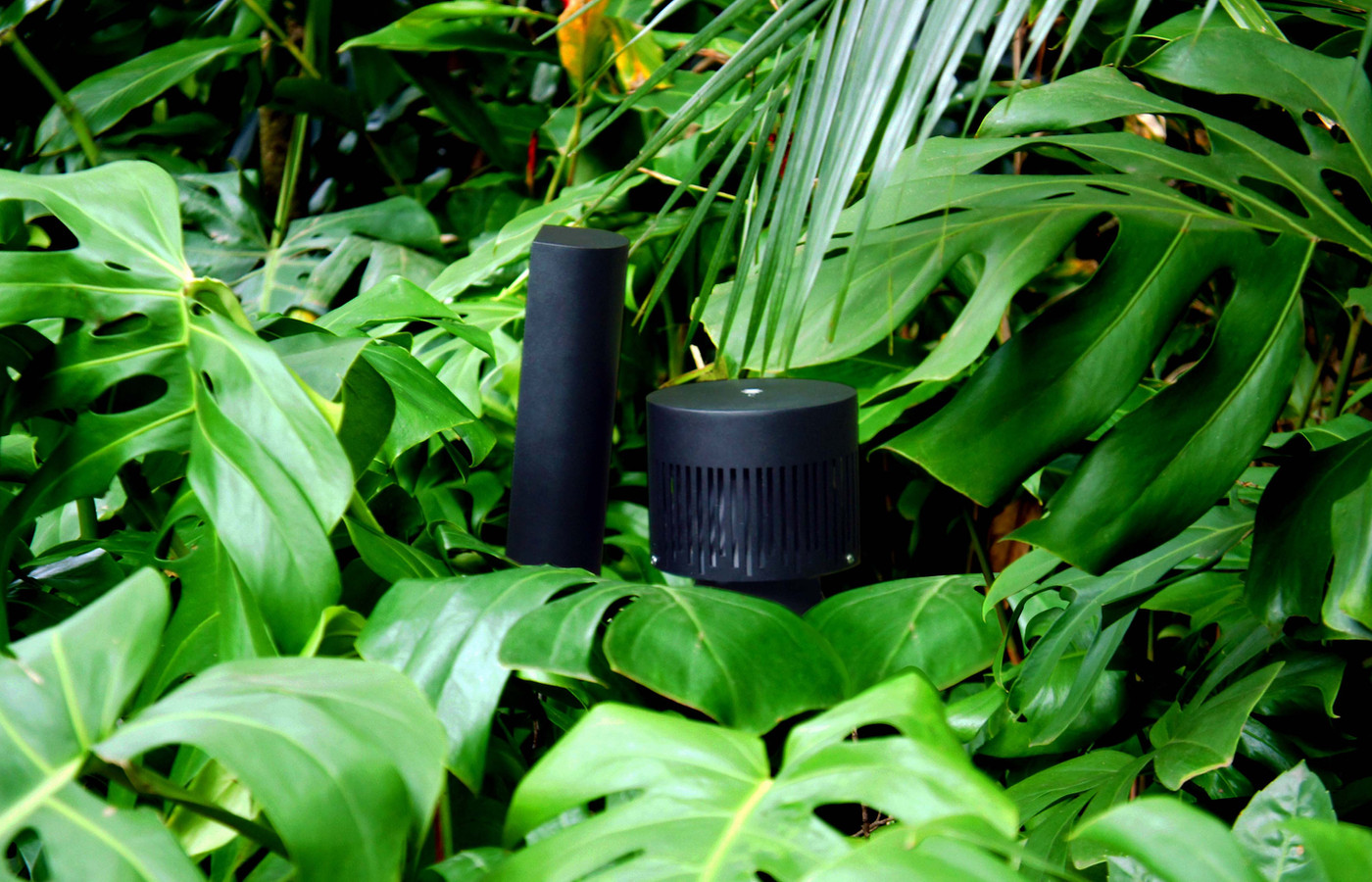
Start outside. The Polly Series is an all-weather outdoor speaker with 240 or 360-degree dispersion, an aluminum body and stainless-steel hardware for climates that eat lesser gear. Its trick is a subwoofer meant to be buried in the ground, with a 12-volt dimmable LED light glowing above it in the landscaping. It is a speaker and a garden light filed as one object - which is the entire company in miniature.
Come indoors and the aesthetic gets louder while the speaker gets quieter. The Rock Series is exactly what it sounds like: loudspeakers and subwoofers cut from natural stone - marble, granite and quartzite sourced from Brazil, Italy and Spain, plus translucent onyx that can be lit from inside so the whole thing glows. Magna's tagline for it, "sound carved in stone," is the rare marketing line that is also a literal description. The Rock F66 tower earned outdoor-product recognition at CEDIA Expo 2022, and in 2024 the line gained the Rock S12-500, a 12-inch, 500-watt stone subwoofer.

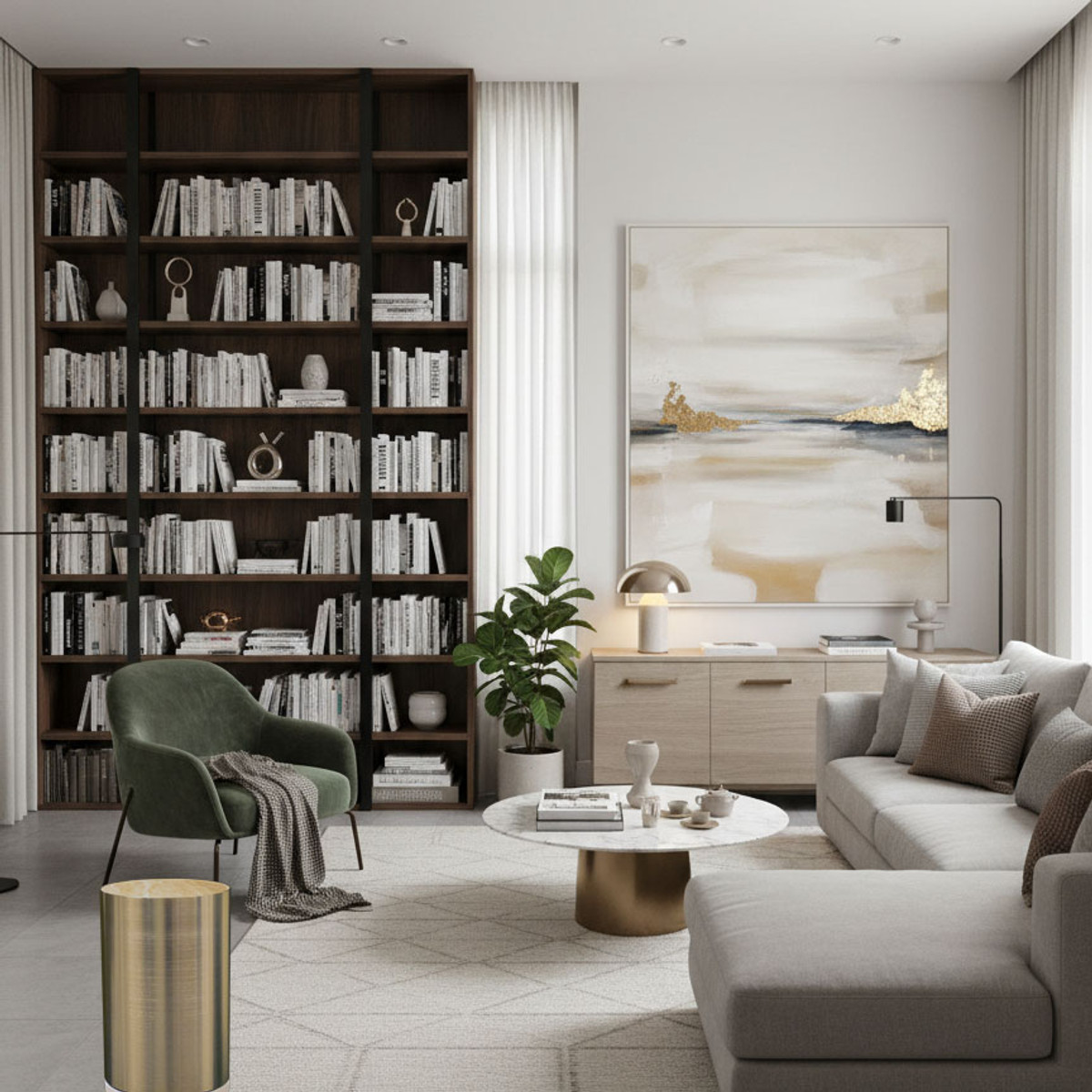
Between those poles sits the bulk of the range. The Aura Series - the company's most popular line at home in Brazil - is a circular, wall-sconce-shaped speaker in hand-built aluminum, offered with optional integrated LED lighting in warm or natural white and finishes from anodized metal to Italian leather. The Aura Cylinder takes the same idea vertical: a 360-degree omnidirectional speaker with a built-in subwoofer and, Magna says, more than 1,500 finish combinations, topped in concrete or stone. The Magnarray borrows line-array principles from concert rigs and shrinks them into scalable columns of 2, 3, 6 or 12 drivers for hotels, pools and home cinema.
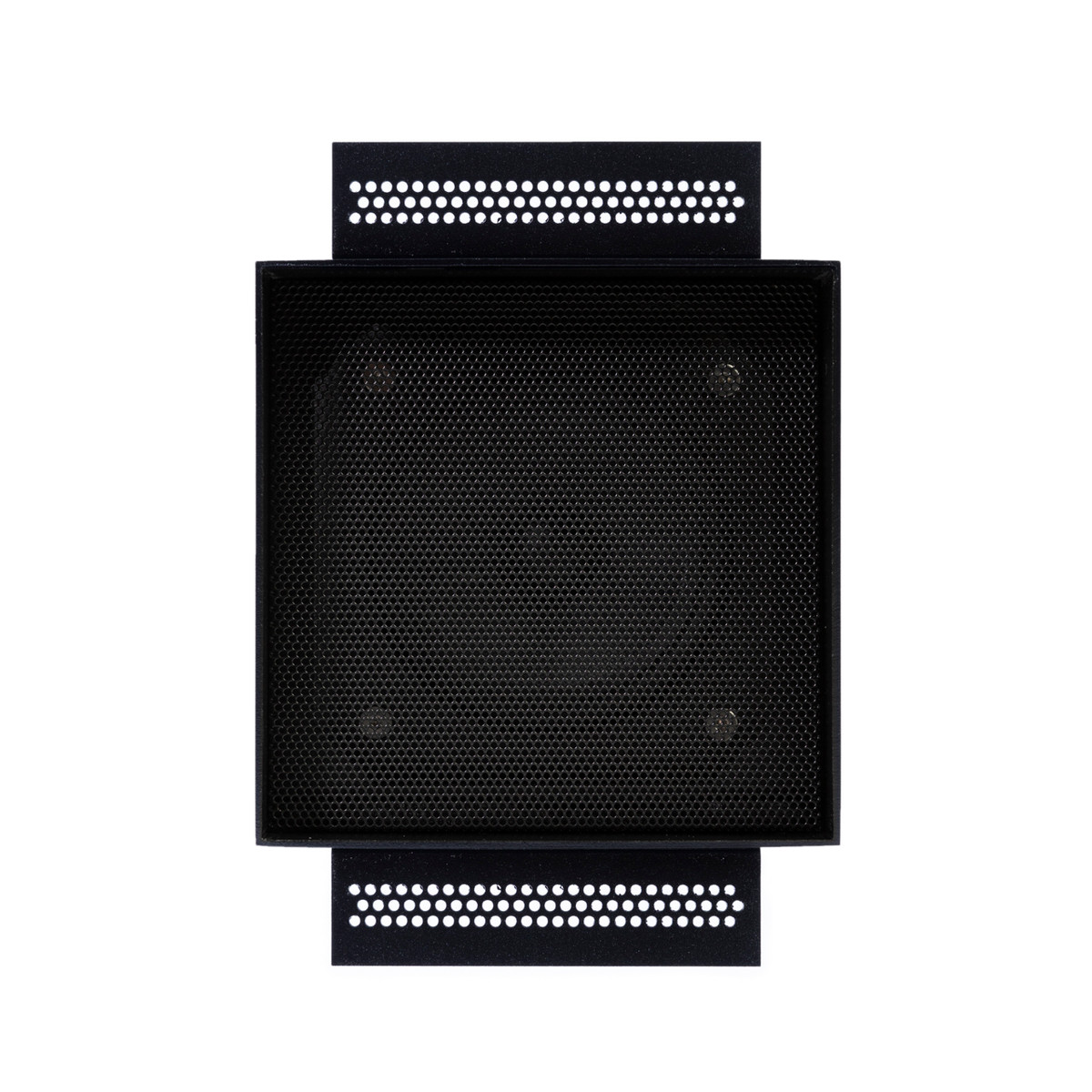
And then there is the other half of the philosophy - the speakers designed to vanish. The NoFrame Series is an in-ceiling line built to disappear into frameless lighting schemes, marketed with the almost-poetic line "audio designed to disappear, engineered to be felt." It is the exact opposite goal from the Rock Series, executed with the same design language. That two-sided instinct - show it off here, hide it completely there - is what makes the catalog coherent rather than scattered.
Built to be seen
Sculptural pieces that double as decor - stone, leather, integrated light.
03How the range stacks up
The Magnarray, by configuration
The array line is a neat illustration of Magna's build-to-scale logic: the same 3-inch full-range driver, stacked into taller columns as the room gets bigger and the loudness demand climbs.
Infographic
Magnarray output by driver count
Rated sensitivity (1W/1m), per Magna Audio. More drivers = more output and more controlled dispersion for larger venues.

04Who buys it, and how it sells
The business
Magna is a manufacturer that sells largely through the custom-installation channel - the world of CEDIA, where dealers and integrators specify audio into high-end homes and commercial projects. Its customers are luxury residences, home cinemas, distributed whole-home systems, and hospitality venues: hotels, pools, leisure spaces. The company runs dealer and "where to buy" programs, keeps international distribution partners, and handles North America from a base in Montverde, Florida while the actual building happens in Sao Paulo.
That channel choice is deliberate. A speaker sold on finish and integration is a speaker that needs a person in the room - an architect or installer who can match the stone to the countertop and the light temperature to the sconces. It is a harder sale than shipping a box to a doorstep, but it is also where the margin and the meaning live.
05Where it fits, and where it wouldn't
The market
Magna is playing in a crowded architectural-audio field. It overlaps with James Loudspeaker and Sonance on custom aluminum enclosures, with Coastal Source on outdoor and landscape systems, and with Origin Acoustics and Episode on the everyday install work. Its edge is narrow but real: the stone, the integrated lighting, and a design-first culture set by someone who thinks like an architect. Winning outdoor-product recognition at CEDIA as a first-time exhibitor from Brazil suggests the angle reads even in a saturated hall.
The honest caveat is baked into the model. This is not a brand for a shopper who wants a speaker in a cart by Friday, and it is not built for a room where nobody cares what the hardware looks like. It rewards projects with an architect, a budget for finishes, and a client who treats the speaker as part of the decor. Under those conditions, the pitch lands. Outside them, a plainer, cheaper box does the same job. Magna is not trying to win that customer - and that focus is arguably the most copyable thing about it.
The lesson for anyone building hardware is simple enough to steal: when performance has become a baseline everyone meets, the differentiator moves somewhere else. For Magna Audio, it moved to how the thing looks on the wall - and to a founder willing to say so out loud.